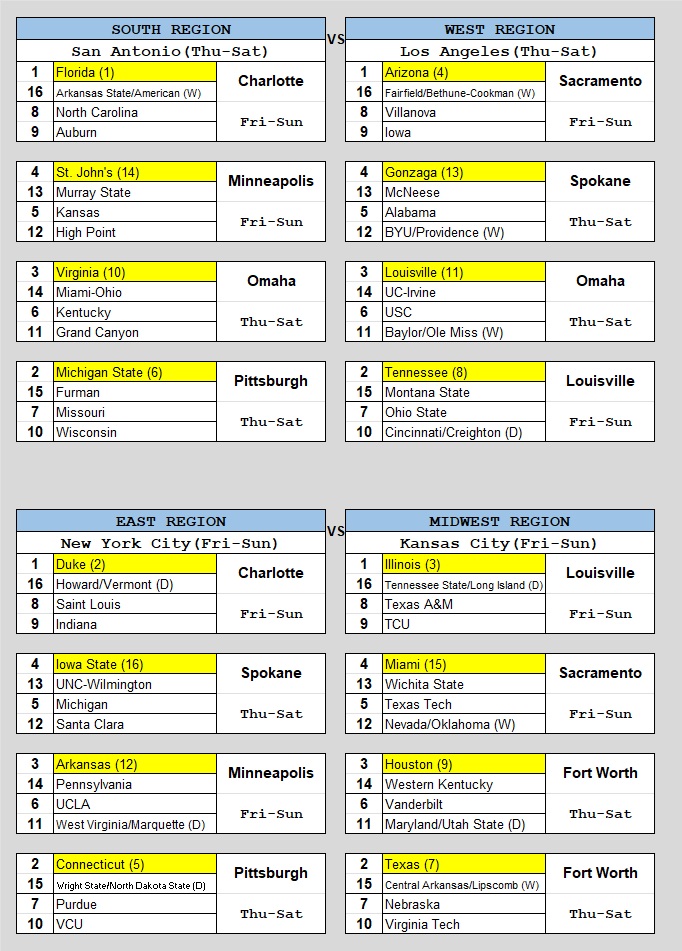
It’s our first Bracket Rundown of the year!!! Sort of. The bracket is a straight up media bracket. The seedlist was determined by the two main preseason polls, and the auto bids were determined by each conference’s Media Day picks to win the league. We reveal it line by line and show you what it looks like in a bracketed format, and we debate, discuss, and assess each team as we go. We also talk about who we think is overrated, who is underrated, and who missed the field that should have been included.
Below is a final copy of The Bracket, but don’t look at it until you’ve watched the show!!
And for all you radio lovers, below is an audio only version of the show…
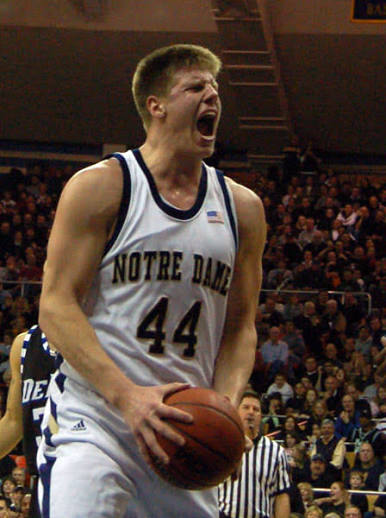
The regular season is ALMOST here as Notre Dame and Villanova will tip things off from Rome this Sunday. The Villanova alumni showed out last spring as New York won an NBA title thanks in large part to the trio of former Wildcats known as the “Nova Knicks”: Mikal Bridges/Jalen Brunson/Josh Hart. However, Notre Dame has a proud basketball tradition as well including Hall of Famer Adrian Dantley, 2-time NBA champ Bill Laimbeer, and 3-time All-American Luke Harangody. HoopsHD’s Jon Teitel recently got to chat with Luke about his incredible college career and the significance of the ” Eternal City Tip-Off” this weekend.
You grew up in the Midwest: what made you choose Notre Dame? I grew up in Indiana about 90 minutes outside South Bend. My parents/brother went to Indiana University but everything at Notre Dame was a perfect fit for me. I liked my visit there and never looked back.
You played for Coach Mike Brey: what made him such a good coach, and what was the most important thing that you ever learned from him? He is a player’s coach and our personalities meshed very well together. If you look at the players he has recruited, there were a lot of overachievers. He instilled confidence in me on an ongoing basis and always trusted me, which was huge for the trajectory of my career.
After your freshman year you improved everything from your diet to your workouts to your leadership skills: how did that summer change your life either on and/or off the court? I would say both. I recall sitting down with our strength coach about where I was trending. I was at a crossroads and had to make a choice: either go out and enjoy college as a student or consider basketball to be my job. I changed a lot of things in my life, and losing weight was great for my motor.
You were the 1st man to lead the Big East in both scoring/rebounding in consecutive seasons (2008/2009), and you remain the only man to ever average 20+ PPG/10+ RPG in Big East play for your career: how were you able to balance your scoring with your rebounding? I had a lot of individuals surrounding me who allowed me to do that. I brough some energy/ferocity to the court and Coach Brey put me in a place on the court to score/rebound.
You were 2008 conference POY and a 3-time All-American: what did it mean to you to receive such outstanding honors? Never in my life would I have imagined receiving those accolades. You can see the recurring theme is the guys around me both on/off the court. Once I reached that level where things started to take off, a lot of it was due to my network in the Notre Dame community. Just to hear you say that out loud: I must pinch myself! I never thought I would have been able to do all that, but my teammates and I challenged each other on a day-to-day basis…and it showed during our games.
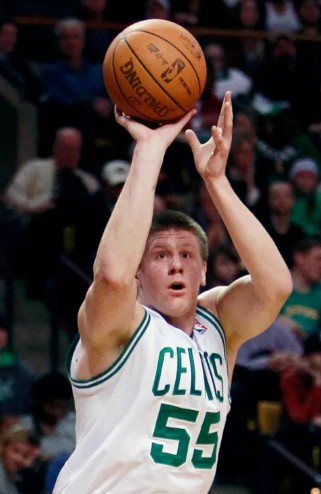
In the summer of 2010 you were drafted 52nd overall by the Celtics: did you see that as a validation of all your hard work, or the realization of a lifelong dream, or other? It meant a lot. 1 of the biggest reasons I went to Notre Dame was for my education, and never did I think I would get paid to play basketball, so that night was 1 of the most memorable moments of my life.
You later spent several years playing pro basketball overseas: what is the biggest difference between basketball in the US and basketball in other countries? I would have loved to play 10+ years in the NBA, but due to my height/athleticism the European game fit me better. In the NBA there is a lot of length, but overseas it is more a game of chess that fits my personality. It was a great experience and I enjoyed my time both on/off the court.
Your father Dave/brother Ty both played football at Indiana: who is the best athlete in the family? I would have to give that moniker to myself because of how competitive I am: you can print that! When we were growing up it was a humbling experience to face my brother in any sport, but he helped me become the player I turned out to be. It was great to be in such a competitive household.
You are currently VP/Head of Enterprise Solutions for a financial company called GeoWealth: how do you like it, and what do you hope to do in the future? After 10 years in the NBA/overseas I made a significant pivot. I always wanted to do something in financial services and entered this sector at age 32. I have been here about 6 years, and it is great because our company has a lot of people from Notre Dame. I jumped into it headfirst and really enjoyed it, so I want to keep doing this for many years to come. I will always miss basketball, but this job challenges me and the people are great, so I enjoy it.
Your alma mater will tip-off its season next weekend against Villanova in Rome: is it just a neat gimmick or is it something that everybody is talking about? Being Catholic and getting the chance to play on a stage like that in front of the Pope: you cannot beat that! It is great from a marketing standpoint, and I wish I could be there in person, but it is not in the cards for me to fly to Rome with 3 kids at home and a 4th on the way.
Chad is joined by David Griggs and John Stalica for the Preseason Under the Radar Special! We run through all 22 UTR conferences and discuss who the preseason favorites are and which teams we feel are worth paying attention to. Miami OH once again looks really strong and we talk about whether or not they can make it back inside the bubble this year. High Point, UC San Diego, and UC Irvine are other teams that we feel could be dangerous. We discuss all that, and much more.
And for all you radio lovers, below is an audio only version of the show…
-Long Island basically blew through this league last year. They were 15-3 in conference play and it was kind of a surprise that they even lost three. No starters return from that team, but they are once again the favorites. Daquan Davis comes in after a solid year at Florida State and Vasean Allette averaged double-figures for TCU. Those two guys should be dominant players in a league like the NEC. They also have some solid-looking JUCO players, so the Sharks appear to be set up for success.
-Jake Lemelman is a player to watch for Mercyhurst. He averaged just under 14ppg and is a very solid outside shooter. They also return some guys who gave them key minutes off the bench and should be able to step into bigger roles this year. They are still a transitional program, but they are positioned to make some real noise in the league.
-Central Connecticut had a solid season last year going 12-6 in NEC play, which was good enough for a 2nd-place finish. While two starters do return, they are still tasked with having to replace a lot of their roster. Most of this year’s roster seems to consist of guys who have played limited minutes in the past, so they will have to step up if CCSU is going to be in the mix this year.
-Le Moyne was a very respectable 10-8 in NEC play last year and is eligible for the NCAA Tournament this year. Just one starter is back and the roster has a lot of guys who played limited minutes at the D-1 level last year, but who were productive in the minutes that they did play. They were picked to finish 3rd (in a tie) and that seems about right. I kind of have a feeling about them: I think they can have a decent year.
-Dwan McMillan enters his second year as Wagner’s coach and like a lot of schools in the NEC the roster consists of guys with limited D-1 experience. Freddy Hassan is a player to watch. He was a good scorer/rebounder a season ago. If some other guys can step up then Wagner should be able to contend for a spot in the top half of the standings.
-Fairleigh Dickinson won just 11 total games last year and went out of the conference tournament kind of early. The expectations are not all that much higher for this year. They have some guys transferring in who put up impressive numbers outside of D-1 last year and they will need to step it up in order for FDU to be successful this year.
-Stonehill was 8-10 in NEC play last year and seems to have a roster of guys who were solid players at non-D-1 schools a year ago. Not great players: just solid. Can they step up and be successful at the D-1 level? It may be a tough transition.
-Chicago State is a team that I always find myself rooting for, but that cannot seem to get it going. I am not sure why. It is one thing to not be able to break through nationally. It is another thing to not be able to finish above the bottom of the NEC. They are in Chicago. They should be able to at least recruit NEC-caliber players who are good enough to finish in the top half of the conference. Landon Bussie is in his second year as coach and he has just one starter back. It is a mixture of JUCO players and others who saw limited mintues at Under the Radar programs a year ago. I hope they have a good year, but I am not overly optimistic.
-New Haven is in their second year of the D-1 transition. They did not do bad last year going 9-9 in league play, which is pretty solid for a transitional program. They are relying on guys who were big contributors at non-D-1 programs a year ago to step up this year.
-Brendan Johnson – JR, G – Coppin State -Tafara Gapare – SR, F – Coppin State -Nehemiah Reedus – SR, F – Delaware State -Rahmir Moore – SR, G – Delaware State -Cam Gillus – SR, G – Howard -Cedric Taylor III – SR, G – Howard -Levi Beckwith – SO, F – UMES -Saadiq Moore – JR, G – UMES -Alfred Worrell Jr. – SR, G – Morgan State -Keith Richard – JR, G – Morgan State -Bahsil Laster – JR, G – Norfolk State -Jordan Skyers – FR, G – Norfolk State -Ryan Archey – SR, G – NC Central -Maurice Vassel – JR, F – NC Central -Mitchell Taylor – JR, G – South Carolina State -Noah Treadwell – SO, G – South Carolina State
.
COMMENTS FROM DAVID:
-Howard was the dominant team in this league a year ago going 11-3 in MEAC play, finishing in 1st place, and then winning the conference tournament to advance to the NCAAs. They return four starters and that cohesion/experience should help them out again this year. Cedric Taylor is one of the better players in the conference and Cam Gillus was a double-digit scorer and a good outside shooter. Ose Okojie also returns to the lineup and they add some pretty good transfers as well. I like their experience, depth, and talent, and I do not think anyone else in the MEAC can stay with them.
-Morgan State finished just one game behind Howard last year, but all five of their starters have moved on and they are having to rebuild their roster with guys with limited D-1 experience and playing time and guys from outside of D-1.
-Norfolk State kind of struggled last year, winning just 15 total games after winning more than 20 in each of the previous four seasons, but I think they will bounce back this year. Robert Jones is a solid coach, they have two key starters back including Anthony McComb (who was the conference player of the year) and Elijah Jamison (another productive scorer). I do not like them quite as much as Howard, but I do think they can have a big year and finish 2nd.
-NC Central is having to replace their entire roster after a 3rd-place finish last year. They did pick up some guys with D-1 experience but it is very limited. They will be relying on some guys that were solid at the D-2 and JUCO levels to step up this year.
-South Carolina State won just 10 total games last year and has just one starter back. Noah Treadwell is a player to watch and they appear to have a solid freshman in Clayton Everett, but most of the roster is lacking in proven D-1 experience.
-Delaware State won just two conference games last year and finsihed 362nd in the NET. That is…not good. They do pick up several guys who put up big numbers in D-2 programs last year and we should see a few more wins this year if those guys can step up.
-It has been a long and frustrating run of really bad basketball for Coppin State. They have failed to win ten games in 11 of the last 12 seasons and expectations are not high this year. When you start going down the roster there just is not much there.
-UMES went 5-9 in MEAC play last year, which is not good but it is also far from the worst. Just one starter is back and they are picked to finish last because they just do not appear to have much in the way of D-1 talent and experience.
-McNeese has been the flagship program in this conference for the last three years and is the preseason favorite to win it again this year. They recruit the portal well and have adapted to the modern NIL/Portal era as well as any Under the Radar program has. They won 28 games a year ago and it still felt like they should have won more. Larry Johnson is back and he is good enough to start for most of the current P-4-level teams. They did lose some key players and most of the returners saw limited minutes last year, so we may see them take a step back, but this is still an outstanding program.
-Stephen F. Austin was actually last year’s 1st-place team. Unfortunately they still had to play the championship game on McNeese’s home floor and did not win it. What’s also unfortunate is that none of their starters are back. Narit Chotikavanic was a key player off the bench and MJ Russell put up big numbers for UL Monroe, so they do have a couple of really solid pieces. Coach Matt Braeuer had a great debut season last year and this team should be good again this year.
-TAMUCC ended last season with a near upset of SFA in the Southland semifinals, but with just one starter back there is not a whole lot of carryover into this season. Sebastian Robinson was a solid portal pickup from NJIT and Dan Mukuna put up big numbers in D-2 last year, so they may have the horses to keep themselves near the top of the standings this year.
-Lamar is in a reset mode after a frustrating 12-19 season a year ago. Jordan Fee takes over as coach and he has been tasked with rebuilding the roster. Quante Berry was a solid role player at Memphis last year and he will be joined by some other guys who were standout players at non-D-1 programs, but they do not appear to have much in the way of solid D-1 experience.
-Coach Jim Shaw has had a pretty solid run in his three years at UTRGV and is coming off a respectable 18-15 season. Look for them to once again be a good defensive team. They looked to NAIA/JUCO to build their roster and picked up some guys that put up some really impressive numbers. I actually like UTRGV to be a bit of a dark horse this year.
-LSU New Orleans has been rebranded. They have also been re-rostered as all five starters from last year’s Privateers team are gone. They did invest in NIL last year and seemed to have a talented roster, but went just 15-18 on the season. This year they have some good pieces as Nick Jones comes over from Wagner where he averaged nearly 15ppg and Kahlil Singleton transfers in after being a key player for Canisius. They have some good pieces. The question is can those pieces fit together to actually build something?
-Houston Christian has had more struggles than successes over the years and it looks like that will continue into this year. They have added some solid JUCO players, but do not have anyone who is a proven standout player at the D-1 level.
-Northwestern State was just 10-22 last year, and two of those wins were non-D-1, but I think we may see some improvement this year. They will not run with the teams at the top of the league, but they should be able to hold their own with everyone else. Izzy Miles is a player to watch. They also added some solid JUCO talent so Coach Rick Cabrera may be in a position to make some improvements this year.
-SELA is coming off their worst season in a while where they won just 9 total games and finished near the bottom of the league. Things may not be that much better this year. They do have some guys with D-1 experience, but we probably will not see them put up the win totals that they had been prior to last season.
-Darion Brown takes over as coach at Nicholls. The Colonels really took a step back last year winning just 14 games after winning 20 in the previous two years. From a roster standpoint, no one really jumps out as being a prolific scorer, and with so many new players and a new coaching staff it is just hard to gauge just what kind of team they are going to have.
-After a very solid 19-win season two years ago, Incarnate Word struggled last year winning just 12 total games and going 7-15 in SLC play. Coach Shane Heirman is having to replace his roster and they just do not have much in the way of proven D-1 experience and production.
-East Texas A&M had a rough year last year where they failed to make the SLC Tournament and are starting over this year after all five starters moved on. The expectations are not high. What is interesting about them is that they do bring in several international players. Most people, and this absolutely includes myself, are not familiar with international players because…yunno…they play in another country and I just never get to watch them. But, they appear to have at least put up good numbers and they may turn out to be better than what most people are anticipating. This team was picked to finish last, but they are at least worth keeping an eye on! I am more optimistic about them about ETAMU than I am the majority of teams that were voted into the bottom half.