The NBA Finals date back to 1947 (when they were known as the Basketball Association of America Finals) and the very 1st NCAA tourney was held in 1939. Olympic basketball competition is even older: it debuted as a demonstration event in 1904, and the men’s version became a medal sport in 1936, with the women finally getting their chance to go for the gold in 1976. The United States has dominated Olympic basketball competition from the start: the men have now won 17 gold medals in the 20 tournaments they have participated in during the past 88 years, while the women have won 10 gold medals in the 12 tournaments in which they have competed during the past 48 years. While we must wait 3 years until the 2028 Olympics in Los Angeles, HoopsHD’s Jon Teitel will fill the void by interviewing as many prior Olympic players/coaches as possible. We continue our coverage by chatting with Denise Curry about being 1 of the best players in UCLA history and winning a gold medal in 1984.
You were born in Montana and went to high school in California: what made you choose UCLA? We moved from Montana to Chico, CA, when I was 6 years old, and then we moved to Davis, CA, when I was 8 years old, so Davis is my hometown. Growing up there in the 1960s/1970s I heard about all the Bruins’ success under John Wooden: they had an aura about them. When they showed interest in me it became an easy decision.
In 1978 you won the AIAW National Championship: what did it mean to you to win a title as a freshman in your home gym in the 1st-ever nationally televised women’s championship game? It was 1 of the highlights of my athletic career: no doubt. We had some tough games along the way but the crowd support in the title game was fantastic. I appreciated it more as I got older, but even as a junior I realized how tough it was to win a title.
You qualified for the US Olympic team in 1980: what was your reaction when you learned that the team would not be competing due to a boycott? We knew prior to the qualification tourney in Bulgaria that there was a chance we would not attend the Games. We won the qualification tourney and were ready to go…but President Carter did not change his mind. I got to play 4 years later but many of my teammates did not get that opportunity: we were certainly disappointed at the time. I think Carter was a great man/humanitarian, but I do not know if it made a big difference on the global stage.
You were a 3-time All-American from 1979-1981 and a 1st-Team Academic All-American as a senior: how did you balance your work on the court with your work in the classroom? With a lot of support from my teammates! There was not any “hand-holding” in terms of study hall/tutors, but I knew that I wanted to become a history major and had some friends who told me what classes they thought I would enjoy. I grew up in an academic household with a lot of teachers so there was no question that I would attend college. It was not easy: when I had road trips, I had to negotiate schedule conflicts with my teachers and explain what was going on because I did not want to have to drop any classes. Our coaching staff led by Billie Moore believed that academics came 1st, and we had to take care of business.
You remain the all-time leading scorer (3198 PTS)/rebounder (1310 REB) in school history: did you realize at the time how prolific a player you were, and do you think that anyone will ever break your records? I was fortunate as a freshman to play with senior Annie Meyers, who was a great player/leader. I had a great sophomore year after she graduated, which helped me realize that I could carry a bigger load even though our opponents had game-planned for me accordingly. I knew that I could be successful at that level, and when I made the Olympic team after my junior year I knew that I was in the upper echelon. It has been a long time since I left so I do not know if anyone will break my records. You would probably need to play all 4 years on an outstanding team: I am proud of the job that Coach Cori Close and her current team has done. It is possible, but I am surprised that the records are still there. I did not play with the 3-PT line, so that could also make a difference: I hope someone breaks it.
You qualified for Team USA again in 1984: what did it mean to you to represent your country 4 years after the boycott, and what did it mean to you to win a gold medal in the city where you went to college? It was tremendous! Most of my family were able to attend, as well as some friends/teammates, so I had a lot of support. It was a proud moment and is probably the athletic highlight of my life.
You played pro basketball in Europe and won 5 national championships in 8 years: what was the biggest difference between basketball in the US vs. basketball in other countries? Back then the only opportunity there was to play professionally was overseas. Most players went to Europe/Asia, but some went to South America. I wanted to keep playing through 1984…and then just for fun I played another 6 seasons! I played in Germany/France/Italy and got paid to play the game I loved. I had decided that whenever it felt more like a job than a pleasure I would stop playing, which is why I retired in 1990.
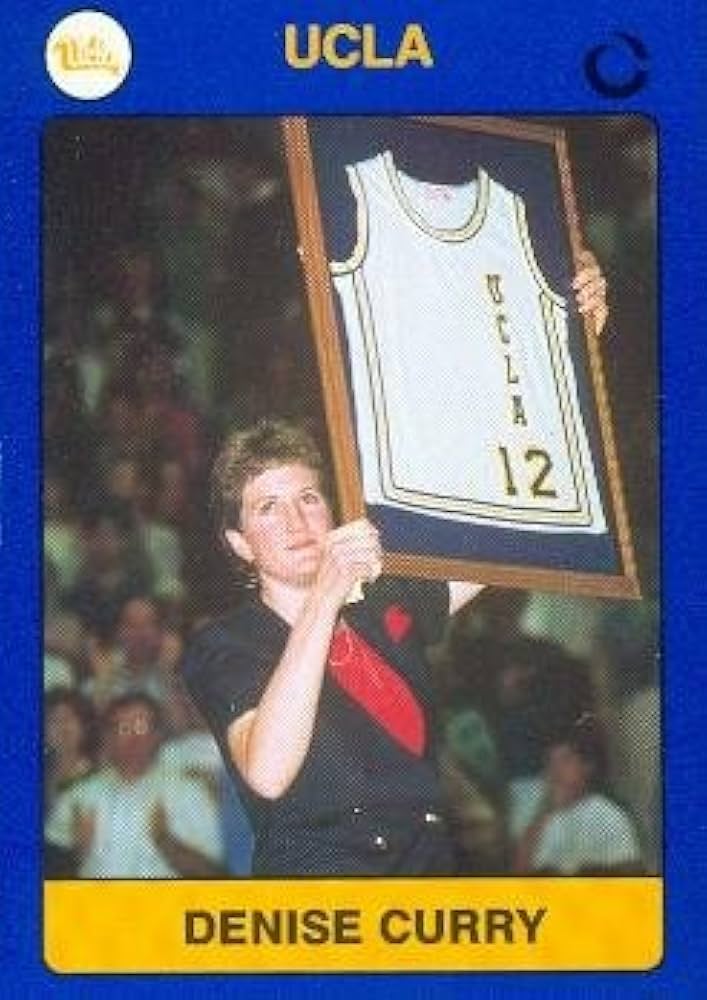
Your #12 jersey was 1 of the 1st 4 retired by UCLA in 1990, you were inducted into the UCLA Athletics Hall of Fame in 1994, you were inducted into the Naismith Memorial Basketball Hall of Fame in 1997, and you were inducted in the inaugural class of the Women’s Basketball Hall of Fame in 1999: was it as exciting a decade as it sounds?! It was very cool! The Naismith Hall of Fame did not even start electing women until the early-1990s (Lusia Harris-Stewart/Nera White in 1992). My dad was a high school basketball coach, so I was around the sport my entire life. Instead of having someone babysit me after school when I was younger, I would attend his practices. It was about loving/playing the game, then going to my dream school, then representing my country in the Olympics. The Hall of Fame was just the cherry on top, because the opportunity was not even there when I was a player.
You had a birthday last week: what did you do for the big day? It was just a low-key day that was very nice. They are not as special when you get older, but this week I am heading to the Bay Area to meet up with friends and see a pair of Valkyries games and a Giants game.
When people look back on your career, how do you want to be remembered the most? I hope that I was a good teammate, was completely invested, and gave my all.