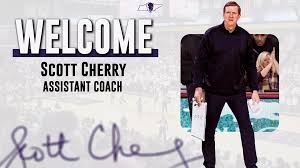
We are less than 6 weeks away from the tip-off of a new college basketball season, which means that we have plenty of time to start preparing for the action ahead. We will do so via a series of season previews featuring the best players/coaches in the country. HoopsHD’s Jon Teitel continues our coverage with new Lipscomb assistant coach Scott Cherry, who talked about winning the 1993 NCAA title as a player and his expectations for this season.
You were born/raised in New York: why did you choose North Carolina for college? It is a crazy story. I was recruited by schools like Holy Cross/Fairleigh Dickinson but I did not find anything I was searching for. As a senior a local sportscaster picked a 10-man all-star team and named me as the 10th guy. He watched me play and sent my film down to UNC. Then they started watching me and must have liked what they saw, but never saw me play live. JR Reid turned pro and Kenny Anderson decided to go to Georgia Tech, which opened 2 scholarships up for me and Kevin Salvadori.
You played for Hall of Fame coach Dean Smith: what made him such a great coach, and what was the most important thing that you ever learned from him? It is what everybody says: he treats everyone the same no matter who you are. There are guys who get to do more than others on the court due to their ability, but off the court he treated each of us like we were the best player on the team. He taught us how to dress and how to act because everything was done in a 1st class manner to prepare us for success in life in addition to basketball. We played pickup basketball together each summer because it was such a tight-knit family. We always know that we can return: even though I was a reserve who played limited minutes I am treated like royalty on campus.
You were captain during your senior year: what is the key to being a good leader? Sacrificing yourself. To be a great family/team/business you need to get all the individuals to work together and believe in the common mission. You must sacrifice what you want so that everyone will benefit. Coach Smith simplified that vision and made sure that everyone bought into that: you have to do whatever it takes for the team to be successful. We had great players during each of my 4 years: we were not the most talented team in 1993 (compared to teams like the Fab 5 or Kentucky), but it ranks at the top for me because it was the best team that got the ultimate prize. People were talking about Coach Smith never winning the big 1 so it became a rallying cry for us. We had our arguments/fights but would set them aside at the end of the day and did everything for each other. I wanted to start and play 35 minutes but that was not my role. I led in my way, but George Lynch was the spearhead of the team due to his work habits, and we all moved in the same direction. Some people told George that he needed to shoot more threes to make it to the NBA, but Coach Smith told him to just show everyone what he could do (rather than what he could not do). Some guys do it by action, some do it by word, and some do it by both. We lost in the Final 4 in 1991 and were determined to get back there and change it. There were some guys who did not buy into that and might have been super-talented…but they did not stick around very long.
You played in the 1993 title game 6-PT win over Michigan: what was your reaction when Chris Webber called a timeout that his team did not have in the final seconds (www.youtube.com/watch?v=aiJxgcka7BA), and what did it mean to you to win a title? I knew that they did not have any timeouts left…but I was more upset that the referees did not call him for traveling. As a PG who always had the ball in my hands I always paid attention to those things. I hated the situation for him but it gave us a great opportunity to win the game. Donald Williams calmly knocked down the FTs and we pulled away for the win. It was unbelievable to win a title: not many people are able to achieve it. When you watch the Fab 5 documentary it always turns out well for me! When you can hang a banner it allows you to leave a legacy, and that success will open doors and help create conversations. Those guys are forever special in my heart: not just the players but everyone on the staff. During the days after that I would wake up and wonder if it had really happened.
After graduating you played 1 year of pro basketball in Cyprus and then became a forklift salesman: how did you get into coaching? When you start playing basketball at age 5/6 and keep playing through college you want to play professionally for as long as you can. I was fortunate to play in Cyprus: it is not as glamorous as people think because you miss everything back home like birthdays/holidays, but I got to do some cool travel like visiting the Pyramids. I had lunch with a student who I met during college and he asked me what I wanted to do when I was done playing. I moved to Greenville, NC, and became a salesman for 3 years. It is like being a coach: I was selling a product and explaining what we can offer and how we will take care of you…which is what you do at a university. People buy from people so I was selling myself, which is also what you do as a coach. I learned a lot during those 3 years but was itching to become a coach.
Take me through the 2006 NCAA tourney as an assistant to Jim Larranaga at GMU:
You had a 5-PT win over defending national champ UNC in the 2nd round: how weird was it to upset your alma mater? It was weird. My son was 7-8 months old at the time and people would ask me who I would cheer for…and I said the school that is paying my check! I was not trying to beat Coach Smith, which would have felt VERY different, but we were excited to just beat Michigan State in the 1st round.
In the Elite 8 you had a 2-PT OT win over #1 seed UConn: what is the secret to being a Cinderella in March? Coach Larranaga did a great job of keeping our guys grounded/loose. Billy Packer and Jim Nantz just CRUSHED us on Selection Sunday: we were not supposed to be there so we were playing with house money. We knew that people would have to eat their words if we beat the Spartans, and after a slow start vs. UNC (we trailed 16-2 less than 5 minutes into the game) we finally got rolling. By the Elite 8 we felt that we had earned it but just tried to go out and have fun because we did something unbelievable. UConn did not help their cause by saying that they did not know any of our guys or where our school was located, which gave us a lot of motivation. We should have won it in regulation but Coach did a great job of managing our 7-man rotation because we were not that deep. We adjusted what we did defensively…and it really worked. The CAA was an incredible league back then: UNCW made the NCAA tourney, while Hofstra/ODU made the NIT. We got in and did what we thought we could do until we ran into a buzzsaw in Florida. GMU is hosting a 20-year anniversary event this December.
You spent 9 years as coach at High Point, where you won 4 straight regular season titles from 2013-2016 and were named conference COY in 2014: since you had so much previous success as a head coach, why did you decide to join Kevin Carroll’s new staff as an assistant at Lipscomb last May? When I was let go at High Point I took a few years off and we moved to Tennessee. When I decided to get back into college basketball I was okay with being an assistant. When you are a D-1 head coach there are a lot of things that come with that…and 95% of them do not involve basketball. It is challenging to manage all of that on a daily basis, so I was excited to give suggestions without having to be the decisionmaker. It is even more challenging to get a head coaching job now, but I like being a teacher/mentor and explaining how the players can become successful in life. I needed a job and had developed a relationship with Kevin on Zoom during COVID. We had been set at High Point so having to leave was a dagger, but Kevin and I stayed in touch: I later tried to get him to recruit my son to play for him in D-2! After I was let go from Central Michigan he called me and asked me if I would be interested in working for him. It is exciting for me to be at a Christian institution: it narrows our recruiting pool and lets us bring in the kind of kids who embrace what our university/program stand for. I can lay my head down at night knowing that we are doing the right things: it is like recruiting at an Ivy League school and Kevin is an incredible human being. I am an old dog who has learned a lot of new tricks: when I showed up to our 1st meeting with a pen/pencil he asked me what I was doing! I am here to help/guide/offer advice.
You played against Duke during their back-to-back title years in 1991/1992: how do you explain the rivalry to someone who has never seen it in person, and what will it be like to head back to Cameron Indoor Stadium when you play the Blue Devils in December? It is like 2 high school rivals or the neighbor down the street who you want to beat every time you play against him. Back then there was a disdain for each other and I think it is 1 of the top-2 rivalries in college sports along with Ohio State-Michigan. When we played them it did not matter what our records were. As you get older you develop a tremendous amount of respect for the things that Coach K/Coach Scheyer have been able to do. Playing in Cameron is the experience of a lifetime. We tried not to make it more than it was…but everyone knew what it was. People would not go to work the next day because it was that intense!
What are your goals for the upcoming season, and what are your expectations for the upcoming season? We have the same goals every year: a successful non-conference record (which will be challenging this year), then win the regular season conference title and set yourself up for the postseason. We do not focus on the end results: the model for our team is “live your legacy”, which involves building an army of difference-makers. If we are hungry/honest/humble, those things will lead to unity/servanthood where you want to give of yourself to others. That is the pillar of the program, and it will lead to success off the court in life. We brought in 9 new guys so our former role players will have to step up while we put together the new pieces. Good teams are able to succeed via togetherness, because we know that we have recruited enough talent to win.