In Memoriam: HoopsHD interviews Jan Volk about Reggie Lewis

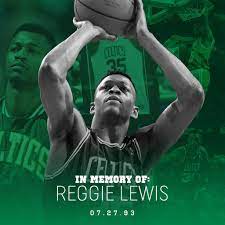
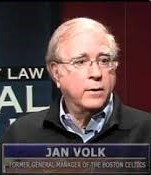
There have been plenty of great basketball players whose lives were cut short far too early and 1 of the best ever was Reggie Lewis. At Dunbar High School alongside Muggsy Bogues/David Wingate/Reggie Williams he was part of the #1 team in the country in 1982. At Northeastern University he scored 2708 PTS and went to 4 straight NCAA tourneys. After being drafted by the Celtics he became an All-Star in 1992 and averaged 17.6 PPG during his 6-year pro career. HoopsHD’s Jon Teitel got to chat with former Celtics GM Jan Volk about drafting him and attending his final game. Today marks the 29th anniversary of Reggie’s death on July 27, 1993, so we take this time to honor his life/legacy.
Reggie was a 3-time conference POY at Northeastern and still holds the school record with 2708 career PTS: what was his secret for being a great scorer? He had extraordinary quickness and a very long 1st step. He was 6’7” but his legs/lower body were proportional to someone who was 6’9”. He took advantage of his speed/quickness and could get by just about anybody. He was an excellent shooter and was extremely athletic.

In 1986 he led the conference in almost every category imaginable (FGM/FGA/FTM/FTA/REB/STL/BLK/PTS): how hard is it to evaluate a player who is head-and-shoulders above everyone else in his mid-major conference, and how much importance did you place on the fact that he scored 132 PTS in 5 career NCAA tourney games? In that era it was not the norm for players to come out early: most of them used their full 4 years of eligibility. As a consequence, you got a chance to see the developmental curve from a player’s freshman year through his senior year. That provided a greater comfort level in our analysis, even though it is not an exact science. Regardless of who he played against in college, he was facing 4-year guys who were very experienced. It is always a plus to see how players react to pressure in March. Sometimes games in the regular season can take on the intensity of a tournament game but every single game in March is intense. Reggie was a counselor at Red Auerbach’s camp for a number of years before he was eligible for the draft so we were very familiar with his skill set. He primarily played forward in college rather than guard but we projected him as a 2-guard, which when combined with his combination of size and speed/quickness gave him a tremendous advantage over most other people who he was matched up against.

In the summer of 1987 he was drafted 22nd overall by Boston (4 spots behind Mark Jackson): why did you draft him, and did you think that he would become an All-Star? We were pretty comfortable that he was an NBA player. In evaluating his play the conference was relevant but it was less concerning to us because we had seen him at Red’s camp for a number of years. The leprechaun was looking out for us because Reggie sprained his ankle at one of the pre-draft camps and struggled in that environment but we were able to see through that. I first saw him play at Northeastern when he was a freshman and he stood out even back then.

His Boston teammate Larry Bird once said, “When Reggie first came into the league he really did not know how to play the game” because he was just a shooter: how did his all-around game develop during his time in Boston? The most significant obstacle was gaining the confidence of his teammates/coaches in an environment of very accomplished/experienced guys. Coach KC Jones would usually rely on veterans rather than throw rookies into the mix early on so Reggie did not get a lot of playing time during his 1st year…but he made the most of it when he did get onto the court. He was also changing positions from forward to guard. Team scouting departments are often asked to project where guys will fit into their team’s lineup and in this instance our scouts were spot-on. At the time we spoke in terms of small forwards, 2-guards, etc. Today the nomenclature is different: he would be a “wing” player along with several other wing teammates. He was a natural 2 but it took him a year to prove that to everyone. Those who had to guard him in practice, particularly Dennis Johnson, quickly recognized his innate talent and were very supportive of him.

He scored 4.5 PPG in 8.3 MPG as a rookie but then increased his scoring to 18.5 PPG in 32.8 MPG in his 2nd year: how was he able to improve so much in only 1 year? There was no “eureka” moment: he was a hard worker and he made the most of his opportunities. He knew why he was there.

He was also known for his charitable efforts: what was he like off the court? I know that he was very tied to both the Northeastern community and the African-American community in Roxbury and felt a strong sense of giving back, which he did without a lot of fanfare. His Thanksgiving turkey giveaways were legendary but he did not do it for the accolades. He was a very quiet guy, which was one of his distinguishing characteristics.

In Game 4 of the 1992 Eastern Conference 2nd round he had 42 PTS/6 AST/5 STL in a win over Cleveland while holding Craig Ehlo to 1 PT in 45 minutes: where does that rank among the best all-around games of his career? I do not remember that game specifically because he had so many good games, including a 1991 regular season game against Chicago where he blocked Michael Jordan 4 times, which sticks out a little more in my memory (www.youtube.com/watch?v=ni7t4swtdYw).

In Game 1 of the 1993 Eastern Conference 1st round he scored 17 PTS/7-11 FG in 13 minutes before collapsing during a win over Charlotte: what caused the incident, and did you think that he would ever play again? Those are tough questions because we were doing it in real-time without any hindsight. I did not see him actually fall because the ball was on the other side of the court from me. I turned to the backcourt, saw him on the ground out of the corner of my eye, and then watched him get up. I just assumed that he got tangled up or collided with another player but there was no replay in the arena for me to review. Like everyone else, I did not have the medical background to make a judgment but it had not occurred to me that he would never play again. We were scheduled to play Game 2 a couple of days later and on the day in between Games 1 and 2 he went to the hospital for a series of tests to see what was going on. Test after test had shown no serious problems so the inference was good. Toward the end of that day I got a message that he was on his way home, which sounded good, but after he left the hospital the doctors reviewed his last test and decided that they wanted to bring him back. He ended up missing Game 2, which we did not expect, and we lost a very close game (99-98 in double-OT). I saw him soon after at the hospital and he was in a playful mood. We were due to fly to Charlotte that night for Game 3 but early that afternoon I was told that a group of medical specialists with extraordinary international credentials were to confer about Reggie’s case (the “Dream Team”). Along with Celtics CEO Dave Gavitt, I attended that meeting at the New England Baptist Hospital. At the outset we made it clear to everyone that we were there to determine whatever was best for Reggie rather than what was best for the team. There was a lot of discussion at the hospital amongst these doctors about all of the different alternatives, but in the end it was the unanimous opinion of all in attendance that he needed an implanted defibrillator. At that point it sounded to me, as a layman, that he would never play again. We all agreed that it was a medical issue and that we should not be part of the group that informed Reggie about their conclusions. When we got to Charlotte we received a message from Reggie’s wife that they were heading to another hospital to meet with another cardiologist. That was the last contact we had with Reggie for about 10 days until Gavitt and I got a call from Reggie’s agent Peter Roisman to set up a meeting with his “new” doctors. These doctors said that the stress test had been misapplied by the “Dream Team” because it did not compensate for someone of Reggie’s height. They were unable to replicate the results and thought that he was just dehydrated. It was both good/scary news: I was a witness in a subsequent lawsuit against the “new” hospital and the last question they asked me on the stand was what I thought after getting that news. I said that I hoped to God they were right.

In July of 1993 he passed away at age 27 after suffering a sudden cardiac death during an off-season shoot-around: what was your reaction when you learned of his passing, and how disgusted were you to hear that his contract would be applied to Boston’s salary cap for 2 additional seasons because opposing teams refused to approve an exemption? Reggie’s passing was of course the worst possible scenario. When I got a call from a reporter that he had collapsed and died I was absolutely devastated. You are correct that there was a salary cap issue that arose, though in context the issue was petty and paled in comparison to the tragedy of his death. Simply stated, there was a provision in the salary cap (Collective Bargaining Agreement) for season-ending injuries where the injured player’s salary could be used for a replacement player, but there was no specific provision for replacement in the case of a player’s death. We brought the matter before the NBA Board of Governors seeking a ruling that this “long-term injury” provision applied in this case. We could not find a single Governor to even second our motion for an alternative provision, which they could have done had they wanted to.

When people look back on his career, how do you think that he should be remembered the most? Regrettably, we can only project his potential…but at that point he was just starting to be recognized as a top player in the league. When we played on the road I could tell who the other teams’ fans were afraid of, and I realized that Reggie had crossed that line. He was on his way: at the end of a close game teams would try to deny passes to Larry, and now Reggie was also starting to get that same kind of respect during crunch time. There is no telling how far he would have gone.
Posted in Interviews | Tagged , , | Comments Off on In Memoriam: HoopsHD interviews Jan Volk about Reggie Lewis

Name, Image, and Lots of money: HoopsHD interviews billionaire NIL dealmaker John Ruiz

The marketplace for NIL deals for college athletes was created last summer and Miami attorney John Ruiz appears to be on the cutting edge. In January he announced that he would be spending up to $10 million for NIL deals to athletes at his alma mater (Miami) and in the past few months he has already finalized 60+ deals and has another 50+ deals pending. A few months ago he signed a deal with the #1 player in the transfer portal (Nijel Pack), then made national news after convincing Isaiah Wong to keep his existing deal rather than attempt to renegotiate it. HoopsHD’s Jon Teitel got to chat with John about creating social media impressions and clearing up the NIL guidelines.

You have been an attorney for more than 3 decades, are the founder of MSP Recovery, CEO of LifeWallet, and owner of Cigarette Racing: how did it feel to become a billionaire last year, and what is the next goal that you would like to achieve? I do not really think about the money: it just came about as a result of hard work/luck. I work the same way now that I always have: probably even a little harder! What is important is that I can do positive things with the money, which makes me feel good. I like to innovate and provide avenues for those who are less fortunate.

In January you set aside $10 million for NIL deals and have already spent more than $5 million during the past several months spread out over 60+ signed deals with Miami athletes to promote your companies (with approximately 50 more deals pending): do you feel like your money will help your alma mater win games, and how many social media impressions do you need to receive to make the publicity worth the investment? It is not just about social media impressions…but we already have over 150 million so far! As a result, a lot of people have started to follow college sports, and LifeWallet has received a lot of attention on a granular level by giving kids a chance to succeed and allowing the athletes to network. We give NIL deals to more than just the elite athletes, such as long-snappers and walk-in athletes who do not even start. There are a lot of functionalities to winning, such as chemistry. I think there is a greater probability that Miami sports will do well, but that is also due to better coaches/trainers/facilities. It is no different than a pro team that is trying to bring in athletes with good mental stability.

What kind of NIL deal did you set up with Hurricanes guard Isaiah Wong last April? I do not want to disclose the amount but I was the 1st person to set up a deal with a Miami basketball player. When Isaiah and his family saw the deal that I struck with (Kansas State transfer guard) Nijel Pack his agent contacted me.

That same month you announced that Nijel signed a 2-year deal for $800,000 plus a car: how do you think he will do next season, and what impact (if any) did that have on the Wong deal? Nijel is a very talented athlete…but the reason he got $800,000 is because he was the #1 player in the transfer portal. That has a lot of value from an NIL perspective, which is why doing such a deal was my strategy. It still is explosive because Nijel is being viewed by the entire country and his deal is a measuring stick for everyone else. The 1st day we got over 5 million views, and then it went completely viral across the nation. Every time he steps onto the court everyone will look at him more and talk about him for years to come. I think it is amazing marketing.

What was your initial reaction when Wong’s agent Adam Papas stated that his client was going to enter the transfer portal if he did not get more compensation from his existing deal, and did you feel like he was trying to “hold you hostage”? I think the agent is a good guy: I dealt with him on Nijel’s deal as well. I blame the environment that the players and their families have to navigate: they do not have the experience in making such deals. It is like free agency where you can go wherever you want, unlike a pro draft where the team gets to make the decision. We need to educate the players/families more because there are a lot of moving parts. I do not blame a talented guy like Isaiah who feels that he is better than someone else, but an NIL deal is not a contract based on pure athletic ability: that is pro sports. However, a college athlete can have more marketing value than other people.

Less than 24 hours later Wong announced that he would keep his existing NIL deal and not enter the transfer portal after all: why did you refuse to renegotiate his deal, and how satisfied are you with where things currently stand? I do not renegotiate deals: once you sign a contract you are stuck with it. Had I renegotiated it I think that it would have been a violation of NCAA rules and I owe a fiduciary responsibility to the businesses I run. I think we are now in a great place and it was a good experience for everyone to learn from.

You stated that you will help him get some other NIL deals: what do you have in mind? I tell all of the players that our own companies have a good structure in place and I am well-networked with other companies who wants to provide deals as well. Miami QB Tyler Van Dyke originally signed a $65,000/year deal, but my understanding is that he is now making more than $1 million/year. LifeWallet increases the player’s value because it helps them get branded across the nation.

You have orchestrated deals with athletes in other sports including football/women’s college basketball: do you feel that 1 sport stands out above the rest in terms of return on investment, or is it simply a factor of how many followers the person has online, or other? There are a lot of different factors. In Nijel’s situation I viewed the marketing value at that specific moment (as the top player in the portal) rather than if he was already enrolled at Miami. I think there is a greater focus on individual players in basketball (since they play both offense/defense), even though football is followed more in general. Every deal is different: you need to know when to push/pull but it is not just about athleticism. Football/basketball are the top-2 sports but I have some other deals with college baseball players.

Do you see any downside to signing deals with teenagers either on the court (if they miss a game-winning shot) or off the court (if they get arrested for behaving badly)? You always have a problem if someone behaves badly but we have provisions that can void the contract if those kinds of things happen. If you take out a loan then there is a “bad boy” provision stating that if you commit fraud then there will be consequences. I think NIL deals are positive because we take pride in giving something back to the players beyond money: we provide an understanding of how to pay your taxes, fulfill your obligations, etc. People get overcome by the notion of winning: it is not always about who has a “W” next to their name in the sports section. These are young adults in different sports who will have a life after college, and that is where we fit in very nicely. We want them to succeed afterward as businessmen/family men.

How do you navigate the uncertainty about what is/is not permitted regarding NIL deals, and how would you clear up the guidelines if you were running the NCAA? Every circumstance in life has its own application. I am a stickler for dotting the I’s and crossing the T’s because I am a lawyer so that is par for the course. I think the NCAA needs to understand that there must be an equal playing field because right now there are different laws in different states that create inequality. Florida (where I live) has a very strict NIL statute, but if you are in California then the laws are less strict. Although I hate regulation, it cannot become a monopoly so you need more structure such as a cap per business/area. That is what they did in pro sports to keep it from spinning out of control. The payroll of some college football teams can be higher than some pro teams, which is crazy!

Posted in Interviews | Tagged , | Comments Off on Name, Image, and Lots of money: HoopsHD interviews billionaire NIL dealmaker John Ruiz

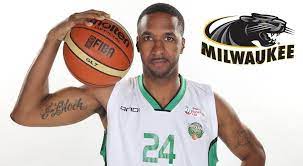
Clay Day: HoopsHD interviews Milwaukee legend Clay Tucker

The average NBA career lasts roughly 4.5 years but Clay Tucker showed that you can have a LOOOOOONG pro basketball career if you are simply willing to work hard. After leading Milwaukee to its 1st-ever NCAA tourney appearance in 2003, he did not get drafted that June…but that was just the beginning (rather than the end) of his pro career. He played in the ABA, the D-League, and all over Europe, allowing him to spend 15 years making money while playing basketball. After retiring he became a coach at his high school alma mater, giving him the chance to share a decade and a half of valuable knowledge with the next generation. HoopsHD’s Jon Teitel got to chat with Clay about making it to the NCAA tourney and almost going undefeated.

You were born/raised in Ohio: what made you choose Milwaukee? My mom had 3 sisters living in Milwaukee and I just fell in love with everything there during my visit: it felt like my 2nd home.

You played for a pair of great coaches in Bo Ryan/Bruce Pearl: what was the most important thing that you ever learned from either of them? The 1 thing I learned from both of them was the importance of being patient. They were big on all of the little details because that is what wins ball games.

In the 2003 Horizon tourney title game you had a win over Butler en route to being named tourney MVP: how were you able to play your best when it mattered the most, and how big a deal was it to make the 1st NCAA tourney appearance in school history? It was huge to lead that team to the 1st conference championship in school history. We had a heck of a group including 4 guys who scored 1000+ PTS in their career. It is a memory I will hold for the rest of my life.

In the 2003 NCAA tourney you scored 18 PTS but Dylan Page’s shot at the buzzer rolled off the rim in a 1-PT loss to Notre Dame: did you think that his shot was going in, and where does that rank among the most devastating losses of your career? I definitely thought the shot was going in because Dylan was very efficient around the basket. It is probably the most devastating loss in my entire career.

You remain atop the school’s leaderboard in several stat categories with 1788 PTS/194 STL/264 3PM: how were you able to balance all of the different aspects of your game? I was taught from a young age to be an all-around player rather than just focus on 1 aspect of the game. If I had an off-night scoring I wanted to be able to do other things to help my team win.

You were a finance major: how did you balance your work on the court with your work in the classroom? It was tough. I originally wanted to be a physical therapist but after taking a lot of difficult classes I switched to business. I was good at math so classes like statistics were pretty easy for me.

You spent 15 years playing pro basketball in the US/Europe for about 20 different teams: what is the biggest difference between basketball in the US vs. basketball overseas? European leagues are more physical. There are also different rules in the US like defensive 3 seconds, which means that you have to think about different ways to score.

In 2005 as a member of the Utah Snowbears in the ABA you scored more than 20 PPG and went 27-1: how close did you come to going undefeated, and what was your reaction like when you learned that your franchise was shutting down just days before the championship round? It was very devastating to hear that we could not keep playing after having such a great season. I had never worked harder in the preseason and then we went out and won about 26 games in a row during the regular season. We lost to Arkansas but then beat them in the next game. Arkansas wound up winning the title: it was tough to accept that because we had already beaten them.

In 2008 you were the top scorer in the Italian League: what is the secret to being a great scorer? You have to be ready to shoot at all times because you never know when you will get the ball. You also need to have confidence that every shot you take will go in.

You are currently the head coach at your former high school: how do you like being a coach, and what do you hope to do in the future? I love being a coach and giving back a lot of knowledge that I have gained over the years to the younger generation. I want to keep coaching kids who are very receptive and want to learn from me.

Posted in Interviews | Tagged , | Comments Off on Clay Day: HoopsHD interviews Milwaukee legend Clay Tucker

You had 1 JOB: HoopsHD interviews multi-sport star Johnny O’Brien

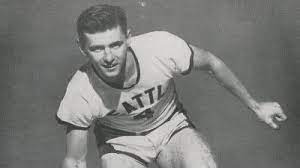
Most people are lucky to succeed in 1 occupation but Johnny O’Brien seemed to be great at everything he did. At Seattle University he upset the Harlem Globetrotters and became the first player in NCAA history to score 1000 PTS in 1 season. He later played major league baseball for 6 years, then became a city councilman and sportscaster. HoopsHD’s Jon Teitel got to chat with Johnny about beating the Globetrotters and being a great scorer. Today marks the 63rd anniversary of Johnny’s final MLB appearance for the Milwaukee Braves on July 19, 1959 (he earned a walk in the 5th inning as a pinch-hitter and scored on a single by Eddie Mathews) so we take this time to honor his life/legacy.

You and your identical twin brother Ed were known as the “Gold Dust Twins”: who gave you the nickname, and how did you like it? I believe a sportswriter in Seattle came up with that nickname but we never paid much attention to it.

You were born/raised in New Jersey: how on earth did Coach Al Brightman convince you to head 3000 miles west to college at Seattle University? We graduated from St. Mary’s High School in South Amboy, NJ. Most pro baseball teams wanted us to sign a contract but our dad wanted us to go to college instead. We won 3 straight state baseball titles in New Jersey and were playing in another tournament where Coach Brightman happened to see us play. He came up to us in the middle of a 19-inning game and asked us about our grades. We said that we had great grades…and then Ed excused himself and stole 2nd base! We thought that Coach Honey Russell was going to give us scholarships to Seton Hall but he thought that we were too small and sent us a telegram to share the bad news. We eventually got scholarships to Seattle and became the 1st members of our family to ever get onto an airplane. We showed up for an 8AM practice and the other guys did not know what to expect, but after we started grabbing the rim/dunking the ball they realized how good we were.

On January 21, 1952, you scored 43 PTS and broke your nose in an 84-81 upset of the Harlem Globetrotters in an exhibition game hosted by jazz great Louis Armstrong at the University of Washington: how did you pull off the upset, and how big a deal was it at the time? I consider it the 1st real introduction of Seattle into D-1 athletics. The Globetrotters were going to play 3 college teams that winter and donate the funds to the US Olympic team. We used a college ball in 1 half and a pro ball in the other half. The 3 college teams were going to be Army/Notre Dame/Washington but due to some miscommunication we ended up replacing the Huskies and Brightman said that it would be easier if the team got the ball to me. Our building held 14,000 fans but the fire department stopped letting people in at around the 17,000-person mark. The thing I remember the most is when movie actress Joan Caulfield came onto the court to throw the ball up for the opening tip: nobody moved because we were all staring at her! It was big-time because it showed that Seattle could play with anyone.

You finished that season as the 1st NCAA player to score 1000+ PTS in a season and you graduated with 2733 career PTS: what is the secret to being a great scorer? For me the keys were that I could jump high and was very quick. I actually had 3302 PTS if you include my freshman season but they did not count those stats back then. I know it sounds impossible…but I finished my career with 1101 FGs and 1100 FTs!

In the 1953 NCAA tourney you scored 25 PTS in a loss to Washington: where does Hall of Famer Bob Houbregs (45 PTS/20-35 FG) rank among the greatest players that you ever faced? I tell people that I “held” him to 45! He had a sensational right-handed hook shot so we overplayed him and tried to force him to the left but it did not happen very often. The whole town cheered for either Seattle or UW and all of the players were friends with each other: we would play in each other’s gyms and then go out for hamburgers afterwards. Bob and I remained great friends for our entire lives: I was actually scheduled to have dinner with him right around the time that he passed away in 2014.

That season you and your brother were each named All-American: what did it mean to you to receive such outstanding honors? The #1 item that we were most interested in getting was a college degree. We were grateful for sports because that was the vehicle that enabled us to go to college.

At 5’9” you remained the shortest All-American for 63 years until 5’9” Tyler Ulis was named an All-American for Kentucky in 2016: did you see your size as an advantage or disadvantage on the court? It is hard to answer that because even though I was 5’9” I played center! I shot over 50 FG%/80 FT% every year even though I usually had someone bigger guarding me. I had to use my quickness to get away from my defender and take my shot. I guess I would say that it was a benefit.

After graduating you and your brother were both drafted by the NBA’s Milwaukee Hawks, but instead you both joined the Pittsburgh Pirates and became the 1st twins in MLB history to play for the same team in the same game on May 10, 1953: which sport were each of you best at, and how excited was your family to see you 2 together in the majors? Our mom died while we were in college so she did not get to see that unique situation. When we would play the Braves in Milwaukee the Hawks owner Ben Kerner would take us out for a meal and try to convince us to play for him, but it would have been too hard for us to do both sports. I have a grandson who is pitching in AAA named Riley O’Brien. He throws about 94 MPH and has pitched a couple of innings in the majors so baseball keeps creeping through the family. My other grandson Connor is a good ballplayer and has a chance to get drafted. Riley made more money during his 2 days in the majors than I made in my entire rookie season! We were known as “bonus babies” and Ed decided that we would use the money to buy our father a house/car. He died 4 years later and in his will he left his sons “$1 and my love” and gave my sister Teresa the rest of his estate. Money did not become a big issue back then because we never had any. We had several guys from my high school reach the majors including Allie Clark/Tom Kelly/Jack McKeon: we were all poor so the 1 thing to do was to play sports.

After retiring you had several neat gigs including several terms as a King County Commissioner, radio broadcaster for Seattle basketball games alongside Keith Jackson, and head of security at the Kingdome: how did you like working in politics, and how did you like working with Keith? If you did not win the World Series back then you had to get an offseason job to make it to the next year. My best friend on the Dodgers was Carl Furillo and he said that his side gig was as a bartender. He asked me what I did and I said I picked up stiffs for the coroner. He asked me how on earth I could do that and I said, “I never had a single complaint from any of the customers!” I struck out on a curveball in my 1st major league at-bat against Dodgers’ pitcher Carl Erskine, after which Roy Campanella said, “Hey Johnny: I guess the basketballs do not curve like that!” Politics was much different back then: we would talk with people from the other party and we got along with each other. We did not have many split votes because we met with our department heads and entered meetings with knowledge of how to be caretakers for the county. I feel sorry for the way that things are going today.

You and your brother are enshrined in the Seattle University Hall of Fame and the athletics administration building is named the Ed and John O’Brien Center: where do those honors rank among the highlights of your career? Getting into the Hall of Fame was not a great surprise…but having the building named after us was! They called us in for a meeting and I thought they just wanted us to sponsor a golf tournament or something so I was stunned to learn that they would be putting our names on the building.

Posted in Interviews | Tagged , | Comments Off on You had 1 JOB: HoopsHD interviews multi-sport star Johnny O’Brien

National Sports Collectors Convention: HoopsHD interviews Phil Regli

The National Sports Collectors Convention (https://nsccshow.com) is an annual summer gathering of collectors/dealers who have a passion for trading cards, autographs, and any other kind of memorabilia that you can think of. First formed in 1980, it is now the premier collectibles industry event that attracts a majority of the licensing agencies from around the professional sports world. The 42nd “National” will be held during the final week of July at the Atlantic City Convention Center, and next summer it will head back to the Midwest in Chicago. HoopsHD’s Jon Teitel is unable to attend this year’s event in person so instead he will be interviewing as many of the dealers who will be there as possible. We conclude our coverage with Phil Regli and his magnificent college basketball merchandise.

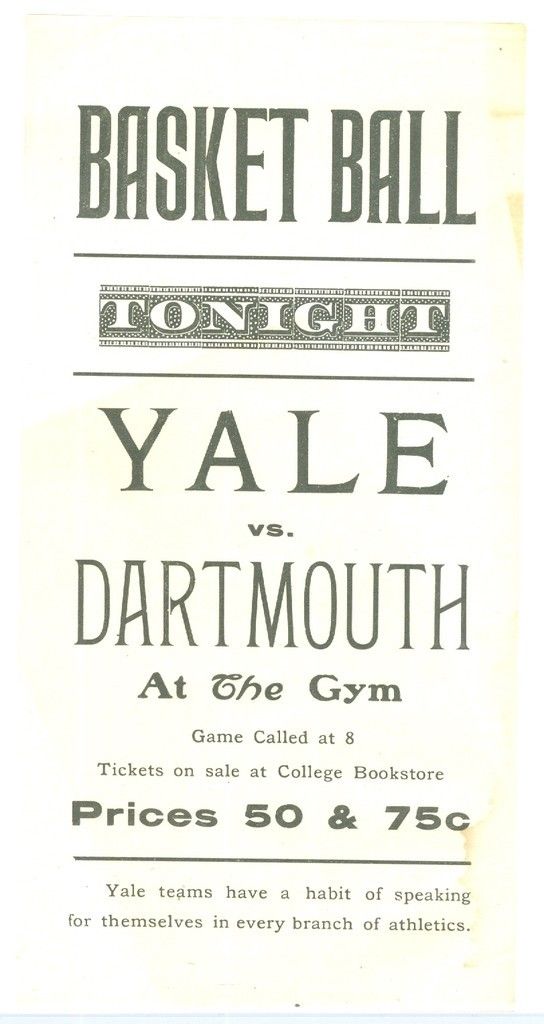
1. 1905 Yale-Dartmouth Basketball Promotional Flyer: Yale finished 2nd in the 5-team Ivy League that year with a 5-3 conference record (Note: we will not be discussing where Penn finished!), Dartmouth was an Independent at the time and finished with an overall record of 20-10-1 (they finally joined the Ivy League several years later in 1911), Phil acquired this flyer as part of a collection of vintage material, it is rare because you do not see a lot of people who have saved such flyers (Phil has only seen about 3 of them in his lifetime), this was during the beginning years of basketball when it was mostly played on the East Coast using peach baskets, this item is priced around $95


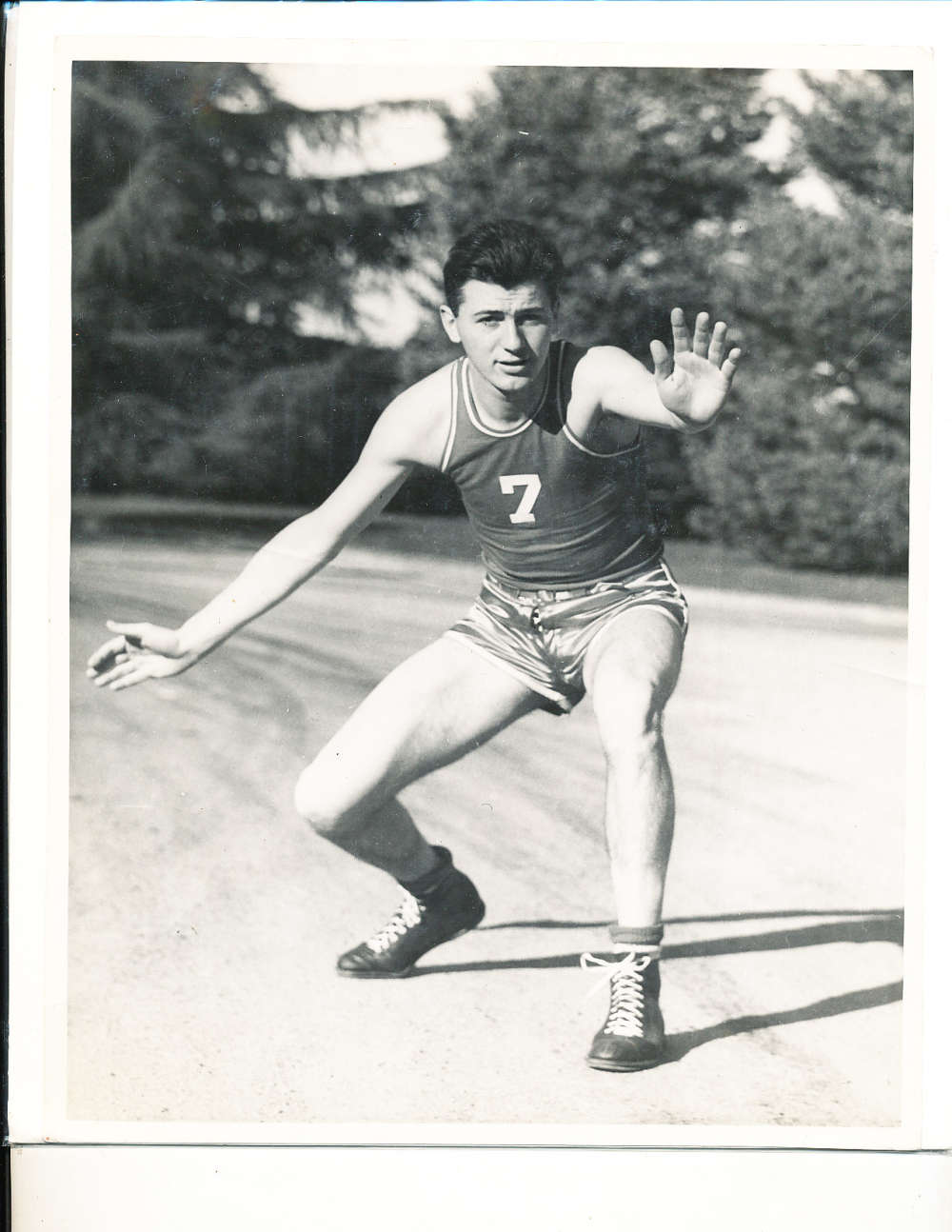
2. 1938 Hank Luisetti Stanford Basketball Team 8×10 press photo: Hank is considered to be 1 of the greatest basketball innovators ever after developing the running 1-handed shot, he became the 1st player to ever score 50 PTS in a game (against Duquesne on January 1, 1938) and was named the 2nd-best player of the mid-century (behind George Mikan) by an AP poll of sportswriters/broadcasters in 1950, he was a 2-time national POY in 1937/1938 so if you are a basketball connoisseur this is kind of cool, the photo of Hank is a famous shot that is used a lot and he was a special player for his era, this item is priced around $50


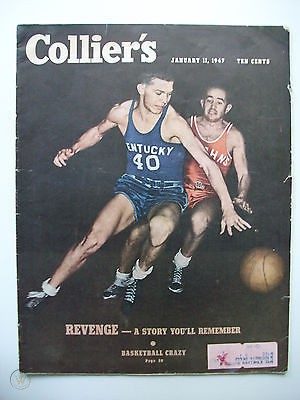
3. 1947 Collier’s magazine cover of Ralph Beard: this is the era when basketball began to capture the national attention so it is hard to find a lot of college basketball items from pre-1950, prior to this time you would not find any team on a magazine cover so Kentucky was considered the “national” team (even NBA teams did not command national attention at this time), Beard was a member of Adolph Rupp’s “Fabulous 5” team along with Alex Groza/Wallace Jones/Cliff Barker/Kenny Rollins, he was a 3-time consensus 1st-team All-American and won a gold medal at the 1948 Olympics, a lot of people collect Kentucky memorabilia and Beard was the star of that team, this item is priced around $30


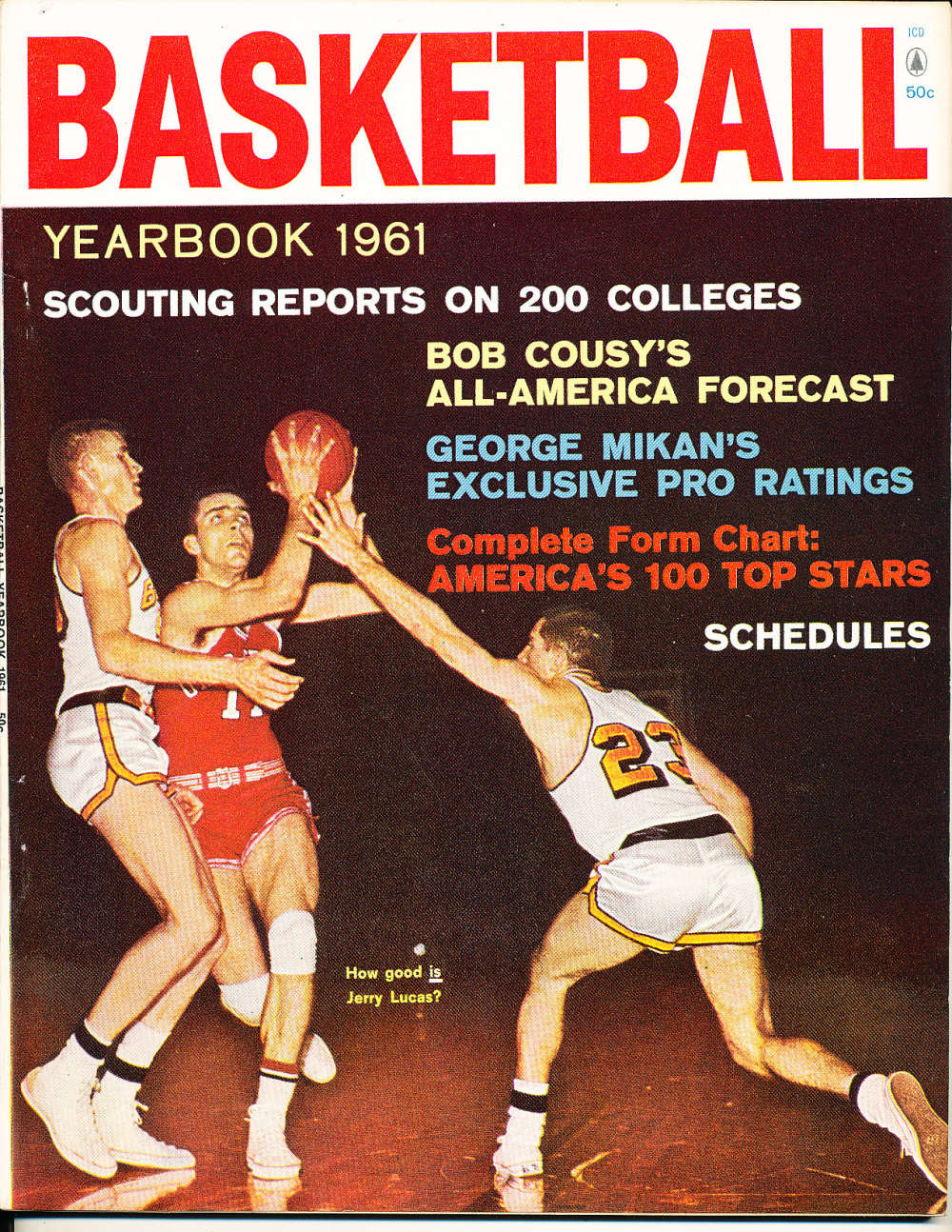
4. 1961 Basketball Yearbook Jerry Lucas: basketball-only magazines started appearing after WWII and became a full-blown phenomenon by the 1960’s, Lucas was part of the legendary 1958 Ohio State recruiting class that included 2 other future Hall of Famers (John Havlicek/Bob Knight) and another future NBA player (Mel Nowell), they won the 1960 NCAA title game over defending champion California in San Francisco and Lucas was named 1960 tourney MOP, in 1961 the Buckeyes won 32 straight games including an Elite 8 win over Kentucky where Lucas became the only college player to ever record a 30/30 game in tourney history (33 PTS/30 REB), that year he became the 1st basketball player to ever be named Sports Illustrated Sportsman of the Year, he was a 3-time 1st-team All-American and is widely considered the greatest player in Big 10 history, this item is priced around $20


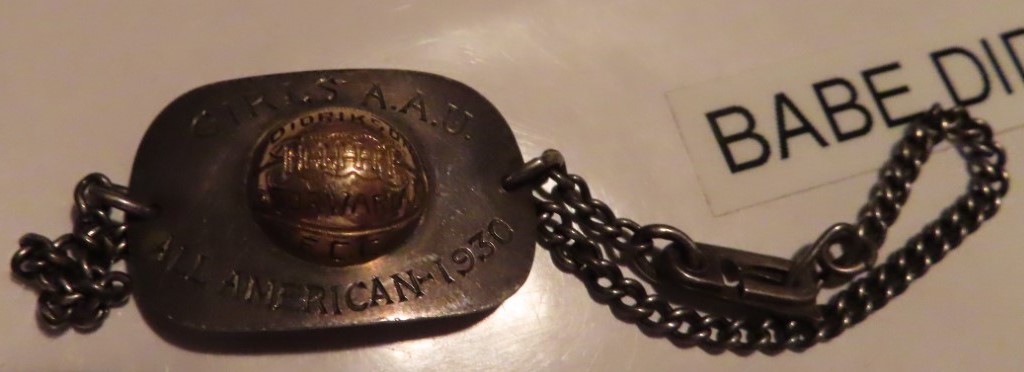
5. Babe Didrikson Zaharias 1930 National All-American bracelet: Babe is widely regarded as 1 of the greatest athletes of all time and picked up this bracelet at age 19 when her Dallas Cyclones basketball team went to the AAU Nationals and won it all, her 1st job after high school was as secretary for the Employers’ Casualty Insurance Company of Dallas…although she was employed only to play basketball on the company’s “industrial team”, this is a rare item not just because it is almost 100 years old but because it is the very 1st award won by a woman on the national level, this item is priced around $20,000(!)


If you want more information about Phil’s items then feel free to check out his website (www.cardsprograms.com) or email him at: regli@aol.com

Posted in Interviews | Tagged | Comments Off on National Sports Collectors Convention: HoopsHD interviews Phil Regli

Happy Birthday!: HoopsHD interviews Indiana legend Calbert Cheaney

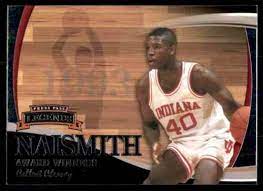
Indiana is known as “The Hoosier State” and 1 of the greatest Hoosiers ever was Calbert Cheaney. In his junior year he scored 17.6 PPG and helped lead his team to the 1992 Final 4. As a senior he won both the Wooden/Naismith awards as national POY. He was a 3-time All-American and remains the all-time leading scorer in Big 10 history with 2613 career PTS. HoopsHD’s Jon Teitel got to chat with Calbert about being a great scorer and winning all of those awards. Today is Calbert’s 51st birthday so let us be the 1st to wish him a happy 1!

You were the Indiana high school state champion in both the 300-meter dash/110-meter hurdles: how did your speed/athleticism help you on the basketball court? I made it to state in both events but did not actually win state. I attribute the fact that I played many different sports to helping me in basketball: hand-eye coordination, lateral movement, etc.

In the 1990 NCAA tourney for the Hoosiers you scored 17 PTS in a 2-PT loss to Cal after Keith Smith made 2 FT with 3.8 seconds left: how close did you come to winning the game? We were very close. Our freshman year was interesting: we went 10-0 in non-conference play but kind of got our asses handed to us in Big 10 play (8-10). We limped into the NCAA tourney and that game was back and forth the entire night. We were a team of all freshmen who were inexperienced but we worked hard that summer to get better.

In 1991 you shot a school-record 59.6 FG%: what is the secret to being a great shooter? Just work. As a coach I tell players that you cannot wave a magic wand: you need to get into the gym to work on your craft and hopefully it will carry over into games.

Take me through the magical 1992 NCAA tourney:
You scored 30 PTS/9-9 FT and had 8 REB in a win over LSU: what were your impressions of your future “Blue Chips” co-star Shaquille O’Neal (36 PTS/12 REB), and how on earth did he make all 12 of his FTs?! He was by far the best player and dominated every aspect of the game. It was fun to play against him and a real honor.

You had 17 PTS/11 REB in a win over Florida State (Sam Cassell scored 19 PTS): what did you learn from your win over the Seminoles in the 1991 tourney that helped you beat them in 1992? Not much: they had a different team in 1991 with guys like Charlie Ward. Cassell/Bob Sura added another dimension to their talented team but we were able to hold on for the win. We played them in 1993 as well.

You scored 11 PTS but were 1 of 4 Hoosiers to foul out in a 3-PT loss to eventual national champion Duke (Bobby Hurley tied his career-high with 26 PTS): how did your team force Christian Laettner into 1 of his worst NCAA tourney performances of all-time (8 PTS/2-8 FG), and did you feel the referees called it fairly on both ends of the court (Duke had a 42-16 edge in FT attempts)? At the end of the day it is tough: it is almost unheard of to have 4 guys foul out but you have to give Duke credit. We were in control in the 1st half but they turned it up a notch during a 7-minute span to start the 2nd half when they held us scoreless. They were a very good team but the officiating got to us a bit, and by the time we recovered it was too late.

You were a 3-time All-American/1993 national POY: what did it mean to you to win such outstanding honors? It was definitely an honor but also surprising because there were many other great players in 1993. Knowing all of the POYs who came before me, I was so surprised to get the call that I did not respond with as much excitement as I should have.

In the 1993 NCAA tourney you scored 22 PTS in a 6-PT loss to Kansas: after losing to them in the 1991 tourney and again in the 1992 regular season, did you feel that they just had your number? They did have our #: we said they were our Kryptonite. We had Alan Henderson healthy earlier that year and they still beat us. We went 6-7 deep during my senior year before Alan went down: when you lose your leading rebounder it really hurts you. Coach Roy Williams would send in 4 guys at a time and they wore us down: it was textbook Kansas basketball.

You finished your college career as the Big 10’s all-time leading scorer with 19.8 PPG and won a school-record 105 games: did you realize at the time how prolific a player you were? I did not. I am always about the team and my job was just to put the ball in the basket: I was pretty good at it but only wanted to get the win and uphold the Indiana tradition. If it took me scoring 35 PTS I would do that, and if not then that was fine as well.

In the summer of 1993 you were drafted 6th overall by Washington (2 spots ahead of Vin Baker): did you see that as a validation of your college career, or the realization of a lifelong dream of reaching the NBA, or other? It meant a lot. I went to Indiana to stay close to home and contribute to a team. My family could not afford to send me to college so I wanted to get a scholarship. To end up as the conference’s leading scorer is something that I never expected. I also did not expect to get drafted that high but it just has to deal with good old hard work. I looked up to guys like Dr. J/Isiah Thomas and was not sure if I could get there so to make it to the NBA was a blessing.

In 1995 you scored a career-high 32 PTS/14-18 FG in a 3-PT OT loss to Golden State (Tim Hardaway scored 30 PTS): was it just 1 of those scenarios where every shot you put up seemed to go in because you were “in the zone”? Somewhat, but it does not really matter when you lose the game. It was a fun night to play the game you love against the best players in the world.

Since finishing your 13-year NBA career in 2006 you have been an assistant coach in the NBA/college/G-League: how do you like coaching, and what do you hope to do in the future? I just try to take it 1 step at a time. I do not like sitting around the house so I really enjoy coaching and helping others develop and try to realize their dream. The game has been good to me and I just try to pay it forward.

Posted in Interviews | Tagged , | Comments Off on Happy Birthday!: HoopsHD interviews Indiana legend Calbert Cheaney