American Man: HoopsHD interviews American legend Russell Bowers

Russell Bowers was 1 of the best scorers in the nation at American University: 22.2 PPG as a sophomore, 26.9 PPG as a junior, and 23.5 PPG as a senior. He was named honorable mention All-American and graduated as the all-time leading scorer in school history, a record that lasted for almost 4 decades until it was broken in 2020. He even has great genes, as his daughter Tamecka Dixon won back-to-back WNBA titles in 2001/2002! HoopsHD’s Jon Teitel got to chat with Russell about being a great scorer and running a basketball development program with his daughter. Today is Russell’s 64th birthday so let us be the 1st to wish him a happy 1!
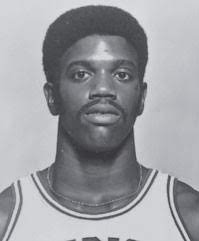
2 of your nicknames were “Boo” and “The American Express”: how did you get them, and which 1 did you like more? Boo was a childhood name that my mother gave me early on: she always called me her “little boo”. American Express came from our SID, who made up little cards with my picture and the message “Don’t leave home without it”. I like them both for different reasons but people knew me more as Boo.

You played for Hall of Fame coach Gary Williams at American: what made him such a great coach, and what was the most important thing you ever learned from him? Gary was definitely a great coach/motivator who was always prepared. He was a no-nonsense coach and good tactician who demanded that we give him our best. If we ever did not feel like giving 100%…it did not go over well!

In 1978 you were named ECC co-ROY: how were you able to come in and contribute right from the start? The summer before my freshman year I just worked really hard because I knew that the college game was another level up from high school with players who were just as good as I was. In high school you do not face a lot of D-1-caliber opponents. I spent at least 4-5 hours on the court every day that summer just trying to get prepared.

In 1980 you scored 26.9 PPG, which tied for #6 in the nation among D-1 schools (ahead of future NBA stars like Mark Aguirre/Andrew Toney): did you feel like you were 1 of the best players in the country, and what is the secret to being a great scorer? I felt confident that I was as good as most other players but the key is in the preparation. Some days I would go out and literally shoot 1000 jumpers, which gave me a lot of confidence. When I got into a game I knew that I had prepared so much that I would be able to be the best that I could be.

In 1981 you missed 19 games with a knee injury, then had an 8-PT loss to Toledo in the NIT (thanks to 29 PTS/10 REB from Harvey Knuckles): how hard was it to come back from the injury, and what are your memories of the Toledo game? It was tough: I only played about 10 games that year before getting hurt. I spent most of the year in rehab and only got back onto the court a few days before the NIT so I was not the same player. The Toledo game was 1 of the few times that I did not have a lot of confidence: it was 1 of my toughest games mentally. I did not start against Toledo, which I thought was the right move because I had just come back. I struggled a little bit and it was hard to end on that note.

You remained the all-time leading scorer in school history for 4 decades until Sa’eed Nelson broke your record in 2020: did you realize at the time how prolific a player you were, and did you think that anyone would ever break your record? I knew that I broke some of Kermit Washington’s records that had been around for awhile. Records are always made to be broken so I did think that someone would come along and break my record…but in the back of your mind you want it to stay yours forever!

Your teammate/future legendary boxing promoter Marc Roberts dropped out of school and signed you as his 1st basketball client: were you nervous about having a college dropout as your agent, and how did your relationship with him change after you switched from his teammate to his client? I remember Marc making the team as a walk-on and living next door to him in the dorm so we became really close. I was surprised when he dropped out but always knew that he would be successful because he would give his all by working the phones and trying to get into different ventures. We remained close after he left school and to this day we still have a great relationship.

In 1981 you were drafted in the 3rd round by Cleveland (2 spots behind Frank Brickowski), but did not make the roster: were you thrilled to realize your dream of getting drafted, or disappointed that you did not make the team, or other? I was thrilled to get drafted but felt that my injury might have caused me to drop out of the 1st/2nd rounds. If I were to do things all over again I would have done it differently. Cleveland had an 11-man roster at the time…but had 16 guys with guaranteed contracts! I played in Italy that summer and should have stayed there because Cleveland would have still held the rights to me the following year. I did not doubt my ability but the situation was tough.

You ended up playing professionally in Italy/Argentina/France: what did you learn from these experiences, and how did they compare to college basketball? It was a great experience that I still cherish: I got the chance to travel/see the world/make a little money. Over there they think of American players as similar to a Magic/Jordan kind of guy so they looked up to us at a high level. In college you are taking classes and get to have things take care of for you, but as a pro athlete you have to do a lot of things on your own.

You run a basketball development program called “On Point Basketball” with your daughter Tamecka Dixon (a 2-time All-American at Kansas and a 2-time WNBA champion with Los Angeles): what makes your program different from other programs, and how proud are you of everything that your daughter has accomplished? She later played over in Italy as well. At our camps we try to keep the focus on each player by gearing our workouts to small group sessions involving multiple counselors. We try to go above and beyond what other camps do by giving them a lot of attention and focusing on what each kid needs to develop their skills. I am very proud of Tamecka because she really got me started as my 1st client! We would drill together and it helped prepare her for college. She spent 13 years in the WNBA: she was able to reach a level that I could not reach and remained very consistent after she got there.

Posted in Interviews | Tagged , | Comments Off on American Man: HoopsHD interviews American legend Russell Bowers

Happy Anniversary!: HoopsHD interviews Glenn McDonald about Bob Gross

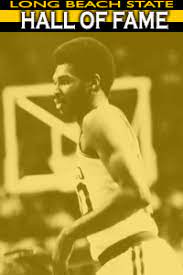
While it certainly takes some star power to get to the NBA Finals, it usually takes a total team effort to win it all. Bob Gross was the 4th-leading scorer on the 1977 Portland Trail Blazers, and only averaged around 8 PPG in his team’s sweep of the Lakers in the Western Conference Finals, but took it up several notches after falling behind 2-0 to Philadelphia in the Finals. He had 19 PTS/7 REB/5 AST in Game 3, 10 PTS in Game 4 (as his team’s 130-98 win set a record for the largest margin of victory in a Game 4 in Finals history), a team-high 25 PTS on the road in a 6-PT win in Game 5, and a team-high 24 PTS at home in a 2-PT win in Game 6 to clinch the series. HoopsHD’s Jon Teitel got to chat with Glenn McDonald (Bob’s college teammate at Long Beach State) about playing for Lute Olson and that magical NBA Finals run. Today marks the 45th anniversary of Bob winning an NBA title on June 5, 1977, so we take this time to remember his remarkable achievement.


In 1974 your Long Beach State team went 24-2 with a pair of 2-PT losses: how close did you come to going undefeated, and how did it feel to not get to play in the NCAA tourney due to the program being on probation? Our only 2 losses were at Marquette/Colorado. We had 20-something turnovers at Marquette and were dying due to the altitude in Colorado because our coach (Lute Olson) was not substituting anybody! We were really good so it would have been great to go to the NCAA tourney: we had a deep bench with everyone contributing.

What made Olson such a great coach, and what was the most important thing that you ever learned from him? He was very disciplined/demanding. Our former coach (Jerry Tarkanian) was a little looser…but everything was under Lute’s control. I was a big-time scorer in high school but Tark wanted me to become a defensive player. Lute wanted me to start scoring and we had 4-5 players averaging double-figures because everyone could look to score: it was more team-oriented.

In 1975 Bob was named All-American/conference POY: what did it mean to him to receive such outstanding honors? I think that it meant a lot to him. I was not around at the time but he was a low-key person who just took care of his business. He was athletic and knew every aspect of the game. Nothing was given to him: he worked his butt off.

In the summer of 1975 he was selected in the NBA draft by Portland (3 spots ahead of Dan Roundfield) and in the ABA draft by San Diego: why did he decide to choose the NBA over the ABA? Probably just because it was the NBA: that is what we knew from growing up. San Diego is a nice city but the ABA was not as well-established as the NBA. I do not know how the contracts compared to each other.

Take me through the magical 1977 Finals against Philly:
In the 4th quarter of Game 2 he called Darryl Dawkins an idiot, then Dawkins threw a roundhouse punch at him, but after he ducked Dawkins hit his own teammate Doug Collins (who ended up with 4 stitches): how close did he come to getting clobbered, and how did that fight affect the series? I heard about it but I do not know exactly what happened. I cannot see him doing that because he was always very quiet.

He scored a team-high 25 PTS (10-13 FG) in 25 minutes in a 6-PT win in Game 5, then a team-high 24 PTS (12-16 FG) in a 2-PT win in Game 6: how was he able to play his best when it mattered the most, and what did it mean to him to win the title? He was always focused: in the 1 year that we were teammates he always did good things against good teams. I knew that he was an NBA player who belonged in the league. He could go out and defend anyone, even a Hall of Famer like Dr. J. He was an integral part of what was going on.

He set a record for highest FG% in an NBA Finals series by shooting 67%: what was his secret for being a great shooter? His shot selection more than anything else: he never forced the issue, which is what made him a good offensive player. He felt comfortable every time that he took a shot.

In 1978 he was named All-Defensive 2nd-team: what made him such a great defender? He was not extremely quick but could read angles and cut them off by getting to the spot before his opponent did. He was patient on defense and would dictate where people were going. He was a strong individual so he could push people off the block. He had the pride to not get beat: that is what defense is about. He worked hard on both ends of the court.

After Portland cut him in 1982 he signed with the Clippers: how did it feel to spend his entire pro career with 1 team and then have them turn their back on him? I do not think it was anything that he held against Portland: he was always a professional and he knew what the league was about. Those situations sometimes happen but he did not hold any grudges.

After retiring he formed Bob Gross Enterprises, Inc. (a residential home-building company) and currently works for another construction company: how did he get into the industry, and how does he like it? I know that he still works up in Portland and I hear he is pretty successful.

When people look back on his career, how do you think that he should be remembered the most? As a hard-working individual who tried his best to succeed at whatever he was doing.

Posted in Interviews | Tagged , , | Comments Off on Happy Anniversary!: HoopsHD interviews Glenn McDonald about Bob Gross

2022 NBA Mock Draft (Version 2.0)

The NBA Draft is scheduled to take place on June 23rd and until then we will do our best to predict where everyone will get selected. Some websites do their mock drafts based on “best player available” but we try to focus on team needs: for example, if a team like Houston already has Jalen Green at the 2-spot then they are probably not selecting a shooting guard with the 3rd overall pick. Please see our 1st round predictions below and then tweet us your comments regarding what looks good and what might need a re-pick.

#. TEAM: NAME, POSITION (SCHOOL/YEAR OR COUNTRY/LEAGUE)
1. Orlando: Jabari Smith, PF (Auburn/FR)
2. Oklahoma City: Chet Holmgren, PF/C (Gonzaga/FR)
3. Houston: Paolo Banchero, PF/C (Duke/FR)
4. Sacramento: Jaden Ivey, PG/SG (Purdue/SO)
5. Detroit: Keegan Murray, PF (Iowa/SO)
6. Indiana: Bennedict Mathurin, SG/SF (Arizona/SO)
7. Portland: AJ Griffin, SF (Duke/FR)
8. New Orleans: Shaedon Sharpe, SG (Kentucky/FR)
9. San Antonio: Johnny Davis, SG (Wisconsin/SO)
10. Washington: Dyson Daniels, PG/SG (G-League)
11. New York: TyTy Washington, PG (Kentucky/FR)
12. Oklahoma City: Jalen Duren, PF/C (Memphis/FR)
13. Charlotte: Ochai Agbaji, SG (Kansas/SR)
14. Cleveland: Malaki Branham, SG/SF (Ohio State/FR)
15. Charlotte: Jeremy Sochan, PF (Baylor/FR)
16. Atlanta: Tari Eason, SF/PF (LSU/SO)
17. Houston: Mark Williams, C (Duke/SO)
18. Chicago: Ousmane Dieng, SF (France)
19. Minnesota: Nikola Jovic, SF/PF (Serbia)
20. San Antonio: Jalen Williams, SG/SF (Santa Clara/JR)
21. Denver: Jaden Hardy, SG (G-League)
22. Memphis: Blake Wesley, PG/SG (Notre Dame/FR)
23. Brooklyn: MarJon Beauchamp, SG (G-League)
24. Milwaukee: Walker Kessler, C (Auburn/SO)
25. San Antonio: EJ Liddell, PF (Ohio State/JR)
26. Dallas: Kendall Brown, SF/PF (Baylor/FR)
27. Miami: Caleb Houstan, SF (Michigan/FR)
28. Golden State: Christian Braun, SG (Kansas/JR)
29. Memphis: Kennedy Chandler, PG (Tennessee/FR)
30. Oklahoma City: Patrick Baldwin Jr., PF (Milwaukee/FR)

Posted in News and Notes | Comments Off on 2022 NBA Mock Draft (Version 2.0)

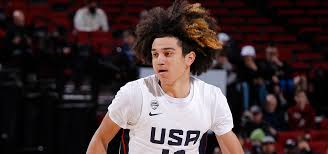
Going for the Gold: HoopsHD interviews U18 National Team member Anthony Black

It is only June but it has already been a heck of a year for Anthony Black. In January he was named a McDonald’s All-American. In March he was named MVP after leading Duncanville High School to a state title game win over McKinney High School. In April as a member of Team USA he won the Nike Hoop Summit. Earlier this week he was named a finalist for the USA Basketball Men’s U18 National Team…and if all goes well then he will be adding a gold medal to his trophy case in the weeks ahead. Earlier today HoopsHD’s Jon Teitel got to chat with Anthony about winning a state title and signing with Arkansas.

(photo credit: usab.com)

You played football at Duncanville High School before giving it up as a senior to focus on basketball: how good of a wide receiver were you, and do you have any regrets about choosing basketball over football? My body just kind of developed by senior year so basketball became a better fit for me. I would say that I was a decent football player.

Last January you were named a McDonald’s All-American: what did it mean to you to receive such an outstanding honor? It was just a blessing to be selected: there are a lot of people who deserve to make it but only 24 get picked each year.

You led your team to a 35-1 record and the UIL Texas Boys State title this year: how close did you come to going undefeated, and what did it mean to you to win it all? Our only loss was to Richardson by 2 PTS in OT last December so we were pretty close to going undefeated. After that game we felt that we would not lose again so it was very special to win a state championship.

You received offers from several great schools including Gonzaga/TCU but signed with Arkansas last April: what was the biggest factor in your decision? The coaching staff showed a lot of interest in me and I think that they will help me become a better player.

Past Razorback stars like Mason Jones/Moses Moody/JD Notae have all stated that Coach Eric Musselman is demanding but also has great intentions: what kind of coach brings out the best in you? I prefer to have a coach who gets on my case because it will make me better.

You are part of 1 of the best recruiting classes in the nation thanks to the Razorbacks bringing in not 1 but 2 other McDonald’s All-American next year in Nick Smith Jr./Jordan Walsh: how well do you know either of them, and what makes them such great players? I know both of them pretty well. Nick is a great scorer/all-around player while Jordan is a great athlete who does a little bit of everything as a glue guy.

Last April as a member of Team USA at the Nike Hoop Summit you had 2 REB in a 102-80 win over the World team: which of your teammates impressed you the most (Dariq Whitehead/Cam Whitmore/other)? I would say Cam. It was the 1st time I ever saw him play in person and he really surprised me by how good he was.

You are 6’7”: what position do you play now, and what position will you feel most comfortable at in college? I played PG in high school and plan to do the same in college but will probably split time at the point with Nick.

Your father Terry played basketball at Baylor and is now in the school’s Sports Hall of Fame: who is the best athlete in the family? Definitely me! My little brother is also pretty good.

Last Tuesday you were named a finalist for the USA Basketball Men’s U18 National Team: what does it mean to you to represent your country, and what would it mean to you to win a gold medal? It is just a blessing to be selected to play with a bunch of other talented guys. It would be great to win a gold medal in Mexico and then bring it back home to the US!

Posted in Interviews | Tagged , | Comments Off on Going for the Gold: HoopsHD interviews U18 National Team member Anthony Black

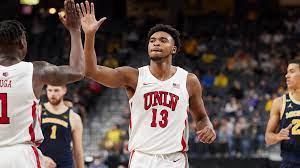
2022 Draft Preview: HoopsHD interviews UNLV prospect Bryce Hamilton

The NBA Finals have not started yet but it is time for 28 other teams to start preparing for next season. The lottery was held on May 17th, the final deadline for early entry withdrawal is June 1st, and the draft will take place on June 23rd. We will spend the rest of this month interviewing as many members of this year’s draft class as possible. HoopsHD’s Jon Teitel commences our coverage by chatting with Bryce Hamilton about scoring 45 PTS in a game and what it would mean to him to get drafted.

In the 2018 CIF-SS D-1 title game as a senior at Pasadena High School you scored 22 PTS in a loss to Chino Hills: where does 2020 lottery pick Onyeka Okongwu (38 PTS/14 REB/3 BLK) rank among the greatest players that you have ever faced? Big O is definitely in my top-5 when it comes to the greatest players I have ever faced. He was so dominant in high school on both ends of the floor and nobody could mess with him!

What made you choose UNLV? I was being recruited the hardest by UNLV compared to all of the other schools. I took a visit down there and it just felt like home and seemed like the best fit for me.

You appeared in all 31 games as a freshman: how were you able to come in and contribute right from the start? Just being able to find a way to get onto the floor. It is not easy to play as a freshman so I had to do other things that stood out besides scoring in order to get onto the court.

You had 3 different head coaches during your time in Vegas (Marvin Menzies/TJ Otzelberger/Kevin Kruger): how were you able to stick it out for the past 4 years despite all of that change? It was very tough to stay at UNLV with all of the coaching changes. I just tried to control what I could control and think positively about the situation, which helped me during my 4 years here.

Last January you scored a career-high 45 PTS/8-14 3PM in a win at Colorado State: was it just 1 of those situations where every shot you put up seemed to go in because you were “in the zone”? Yeah. It was a game where we were down a couple of starters so I knew that I had to step it up a bit to help our team win. When I started to see the ball go in, I gained more confidence as the game continued.

You ended up leading the conference with 21.8 PPG: what is the secret to being a great scorer? I put in so much work during the offseason (and also in-season) to have an all-around offensive game. I think the secret is just staying in the gym and believing in the work that you have put in when it is game time.

You were named 1st-team all-conference twice in the past 3 years: what did it mean to you to receive such outstanding honors? It meant a lot to get 1st-team all-conference. It would not have happened if our team had not done well in conference so I credit my teammates/coaches for pushing me to get better every day, especially last year. Our conference was very good with really talented players on every team.

Last spring you declared for the NBA draft: why did you decide to return last year, and are you definitely going pro this year? I decided to return last year because I knew the time was not right to stay in the draft: I needed 1 more year to develop my game and prove that I am an NBA player. Going through that process definitely helped me because I got so much better approaching my senior season. This year I feel like the time is right to go pro and prove that I belong and am here to stay.

Your father Kevin played for Hall of Fame coach Don Haskins at UTEP, and your brother Blake and cousins Isaac/Daniel/Jordan all play pro basketball overseas: who is the best athlete in the family? I will have to go with myself as the best athlete in the family. My brother/cousins have all accomplished a lot in their pro careers but being the youngest I was able to watch them, learn a lot from them, and apply it to my own game.

What would it mean to you to get drafted, and what is the plan if you do not get drafted? It would mean a lot to me to get drafted. It is something that I always dreamed of as a kid and I know that it would be a great feeling. If I do not get drafted then the plan does not change at all. My goal is to make the NBA and I will keep working until I get there. Everyone has different paths to get into the league so it will just be extra motivation if I do not get drafted.

Posted in Interviews | Tagged , | Comments Off on 2022 Draft Preview: HoopsHD interviews UNLV prospect Bryce Hamilton

MMMBob: HoopsHD interviews former Omaha coach Bob Hanson

Bob Hanson was the face of Omaha basketball during his quarter-century of service as head coach, and remains the winningest coach in program history despite retiring almost 3 decades ago. HoopsHD’s Jon Teitel got to chat with Bob about playing basketball at Wyoming and going to the Final 4 as a fan. Today marks the deadline for the Bob Hanson Family Maverick Basketball Scholarship (which supports student-athletes who have shown good academic success and demonstrated on/off-floor leadership during the previous academic year) so we take this time to remember Bob’s life/legacy.

You played basketball at Wyoming: how good a player were you back in the day, and how did you get into coaching? My wife and I went to a small school in Wyoming called LaGrange. It was a big day when Coach Bill Strannigan came to my hometown to sign me. I played well on the freshman team and toward the end of my sophomore year I scored 18 PTS in a game for the varsity, then became a 2-year captain. I was thinking of becoming an accountant but Bill suggested I try coaching instead. I coached the freshman team after I graduated, then coached a high school team for 1 year, and then came back to coach college kids. I later worked for Forddy Anderson, who became the only coach to lead his team to the NIT and NCAA in the same year. It was a start-up college but we had some great teams with several players who ended up playing pro basketball.

You made the NCAA D-2 tourney as coach at Omaha 7 times in a 10-year stretch from 1975-1984: how were you able to be so successful over such a long period of time? I had some good training and knew that I needed to get good players so I recruited well. It was a battle because we did not have dorms as a commuter school so it was hard to compete with other teams, but we tried to make it a strength (“you can live off campus!”). We got a lot of players from all over the Midwest but mostly Illinois/Nebraska.

In 1990 you got into a scuffle with North Dakota State coach Erv Inniger: how big a deal was it at the time, and are you surprised we do not see more disagreements these days? It was just a case where I congratulated him on the win in a derogatory way and he gave me a push and I took the charge! I looked over and all of my players were in a dogpile on the floor so I just walked off.

You spent 25 years with the Mavericks and remain the winningest coach in school history: do you think that anyone will ever break your record? I do not know, but what makes it easier now is that sometimes they play 38 or 39 games/year due to the existence of so many different tournaments. I worked for the NABC in New York City, which was a great experience. Some of the Summit League teams used to get 9000 fans/game, but now their numbers are down because the rivalries are not the same and you can watch so many great games on your TV from around the country.

What are your memories of the 1996 NCAA tourney as an assistant to Tom Asbury at Kansas State (Clayton Shields had 25 PTS/10 REB in a win by New Mexico)? 1 of our best players did not get to play in that game (Shawn Rhodes, who I had to take to the hospital before the game with a stomach ailment that might have required surgery), and I think his absence affected us greatly. We had a nice team that year and thought that we would go pretty far. We played Marshall 1 year when Billy Donovan was their coach: we pressed them and ended up winning.

You have attended almost every single Final 4 over the past half-century: what is your favorite Final 4 memory? I keep going and try to stay in touch with all my coaching friends and watch games every night. The 1st game my family went to was in Albuquerque and I thought that New Mexico State did not have a chance of winning…but they did. Villanova’s upset of Georgetown in the 1985 title game at Rupp Arena was pretty remarkable as well.

You worked for the Greater Wichita Area Sports Commission as president/CEO before retiring in 2020: how did you like the job, and what do you hope to do in the future? People told me that I should probably retire, as many of my former players have. I recently found out that 1 of my players had passed away but I tried to keep doing it as long as I can. It is hard to raise $1 million/year, but when we were able to build a new arena in Wichita it was a great accomplishment and I learned a lot. The question I got at every meeting was, “Can it be nice enough to host an NCAA tourney game”, and we have now done so a couple of times! The California Attorney General said their schools cannot travel here due to some religious laws, but we do not think it will end up affecting us.

When people look back on your career, how do you want to be remembered the most? I want them to feel that we had successful teams who played hard and had great character. I was fortunate to have players/coaches who went on to have further success and make more money than I did: it made me very proud. I have developed friendships all over the country which have been great for me and my family. We became friends with the Krzyzewski family: my wife wrote him a letter to congratulate him on winning the Olympics…and 3 days later she got a thank-you note in return, which was pretty impressive to us. My whole family joins me for trips to the Big 12 and NCAA tourneys so basketball will always be a part of our life. I go to a lot of college games during the year and enjoy seeing all of the nearby teams.

Posted in Interviews | Tagged , | Comments Off on MMMBob: HoopsHD interviews former Omaha coach Bob Hanson