Happy Birthday!: HoopsHD interviews UNCW legend Brett Blizzard

Some people think of UNC-Wilmington as a place where basketball players are trained to become D-1 coaches, such as Mark Byington/John Calipari/Billy Donlon/Todd Lickliter. However, the best Seahawk of them all was Brett Blizzard, who remains the school’s all-time leader with 2144 PTS/371 3PM/249 STL. He was a 4-time 1st-team All-CAA player, a 3-time CAA tourney MVP, and a 2-time All-American. After graduation he spent almost 15 years playing pro basketball overseas, and currently works as a trainer for young basketball players who want to make it to the next level. HoopsHD’s Jon Teitel got to chat with Brett about being a great 3-PT shooter and getting the only NCAA tourney win in school history. Today is Brett’s 41st birthday so let us be the 1st to wish him a happy 1!
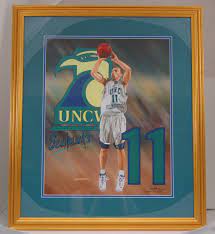
As a freshman at UNCW you started all 31 games, led the team in scoring with 15.6 PPG, and were named CAA ROY: how were you able to come in and be so successful so quickly? All the credit should go to my teammates: there were a lot of seniors on that team who went to the coach and said that I needed to shoot more. I just reaped the benefits of all their passes/screens.

You made 94 3-PT shots and won the Ed Steitz Award as the top 3-PT shooting freshman in the nation, and at the time you graduated your 371 3PM was top-20 in NCAA history: do you feel that you are 1 of the best 3-PT shooters in NCAA history, and what is your secret for 3-PT shooting? I feel like I could shoot with anybody. I was not the best but feel that I am among the best. I worked hard at it and the stats show that: the secret is just repetition/confidence.

You are the only player to ever be named 4-time 1st-team All-CAA, as well as the only player to win 3 CAA tourney MVP awards: how were you able to remain so consistent throughout your career, and how were you able to play your best when it mattered the most? Every summer I just tried to add something new to my game. I was motivated because I knew that other guys were out there working hard and I was also motivated by being at a mid-major. I got fired up for the conference tourney and lived for those moments but the key was that the entire team/coaches were focused and everyone played their role.

What are your memories of the 2000 NCAA tourney, the 1st in school history (you scored 5 PTS in a loss to #2-seed Cincinnati)? I remember how tall Kenyon Martin and the guy with the neck injury a couple of years later (DerMarr Johnson) were. They blocked a lot of our shots (9 in total) and just overmatched us.

In the 2001 CAA tourney title game you scored 8 PTS but Ed Williams’ tip-in at the buzzer was waived off in a 35-33 loss to George Mason: what was it like to play in 1 of the lowest-scoring games of the shot-clock era? It seemed like the game took forever: it was a ridiculous battle of scouting-report defense because we knew each other so well. We were both well-prepared and it seemed like the game would never end.

What are your memories of the 2001 NIT (you scored 18 PTS/5-10 3PM in a 9-PT loss to Dayton)? We were a little mad about not making the NCAA tourney and most of us did not expect to make the NIT. It was a close/tough game and their fans were packed in there. We played okay but just not good enough to win.

Take me through the 2002 NCAA tourney:
You scored 18 PTS in 43 minutes and made 2 FT with 2 seconds left to clinch a 4-PT OT upset over USC: where does that rank among the biggest wins of your career, and how did that game change your life? I definitely think that was the game that put UNCW over the hump and got us some national recognition. It was also great for the city of Wilmington. We were happy to be there the 1st time back in 2000 and brought cameras to capture the moment, but the 2nd time in 2002 we were there to win. To be a mid-major you are always the underdog so to beat a major team in the tourney was huge.

You scored a tourney-school record 29 PTS in a 9-PT loss to eventual national runner-up Indiana: what was the feeling like in your locker room afterwards, and what was the reaction like when you got back to campus? We played hard and had a lot of confidence. We were not sad about losing but rather upset because we thought that we could have beat Indiana. Everyone on campus was still fired up when we got back. There was a lot of respect and love from the community.

In the 2003 NCAA tourney you scored 15 PTS but Drew Nicholas made a 3-PT shot at the buzzer for a 2-PT win by defending champion Maryland (www.youtube.com/watch?v=gkviatDWwdY): where does that rank among the most devastating losses of your career? It seemed like Drew’s shot was in the air forever. It went right over my head in slow motion and I thought “No, this is not about to happen”. It was a helpless feeling and we were shocked when it went through the net.

You remain the school’s all-time leader in PTS/STL/3PM: did you realize at the time how prolific a player you were, and ho were you able to balance your scoring with your defense? I did not think about how good I was at the time: I just compared myself to the big superstars who got more attention than I did. I felt like I had to prove myself every year so I never got a big head or got cocky. A lot of my steals were due to my teammates helping on defense. I had a good knack for reading the situation and getting a lot of deflections: it was not like I was guarding guys for 94 feet the entire way down the court.

You played professionally in Italy and became eligible to play on the Italian national team thanks to a distant Italian relative: what did you learn from these experiences, and how did they compare to college basketball? I learned that professional basketball is a business. You lose the camaraderie that exists in college because now it is your job. Being that far away is tough for a lot of players to handle as you have to deal with a lot of new things. It was a great experience but you miss your family/friends a tremendous amount. College is about team unity/love for the game…which goes out the window when you become a pro!

Posted in Interviews | Tagged , | Comments Off on Happy Birthday!: HoopsHD interviews UNCW legend Brett Blizzard

Basketball and Brains: HoopsHD interviews Dixie State Academic All-American Hunter Schofield

Hunter Schofield is 1 smart basketball player…and that ain’t just whistlin’ Dixie! The Dixie State big man had a sensational senior season by leading his team in rebounding and finishing 2nd in scoring, then topped it off last month by being named an Academic All-American. He had a perfect 4.0 GPA last spring as an exercise science major and is planning to become a physical therapist in the future. Earlier this week HoopsHD’s Jon Teitel got to chat with Hunter about facing an undefeated Gonzaga team and his super-athletic family.

You were born/raised in Utah and began your college career at Salt Lake CC: what made you choose Dixie State? It was a really easy decision for me to come here after seeing the campus/meeting the coaches. It is pretty close to home and just felt like the right fit for me.

You play for Coach Jon Judkins: what makes him such a good coach, and what is the most important thing that you have learned from him so far? He has so much experience and finds a way to connect with each player on a personal level so it is easy to trust him. I have learned a lot from him about the details of the game: he has been able to help me improve individually and is great to play for.

Last year was the school’s 1st year as a D-1 program: what was the best part? It was huge for me. I always dreamed of playing at the D-1 level, which is another reason that I wanted to come here. It was cool to play against some really good teams.

Last December you scored 8 PTS in a loss at Gonzaga (Academic All-American of the Year Corey Kispert scored 25 PTS): where do the Bulldogs rank among the greatest teams that you have ever seen, and were you surprised that they lost to Baylor in the NCAA title game? They were for sure the best team that I have ever played against: they have no weak spots. I was surprised to see them lose but it is hard for any team to go undefeated.

Last February you scored a career-high 31 PTS/11-16 FG in a 4-PT win at Utah Valley: was it just 1 of those scenarios where every shot you put up seemed to go in because you were “in the zone”? It definitely was 1 of those types of games. I am from Spanish Fork (which is about 20 minutes from UVU) so I had a lot of family watching that game. I got into a rhythm and everything was falling.

Last month you were named 2nd-team Academic All-American: what did it mean to you to receive such an outstanding honor? It feels really cool to see all of your hard work pay off and get recognized. I have always focused on getting good grades so it was a great accomplishment.

You are an exercise science major: what is exercise science, and what do you hope to do in the future? It is about studying human movement. I plan to become a physical therapist and will be applying to physical therapy programs in the year ahead.

You had a perfect 4.0 GPA last spring: how do you balance your work on the court with your work in the classroom? Sometimes it is difficult so you have to be willing to stay up late: even after you come home from practice and are tired you need to take time to do your schoolwork. When you have road games you also need to get your assignments done: you have to stay organized and stay on top of it.

What was the hardest part of being a student during a pandemic, and what was the hardest part of being an athlete during a pandemic? As a student all of our classes got moved online for a while, which was a lot different than being in a classroom so it was a big adjustment. As a basketball player we would have had summer workouts without the pandemic so it was hard that we did not get together as a team until August and did not have as much preparation time as we would have normally had.

Your wife Lauren was an All-American volleyball player at Dixie State and your father Jeff played basketball at Weber State: who is the best athlete in the family? That is a hard question! I have a lot of athletes in my family: my siblings/cousins also played college sports so it is hard to say who is the best. It helped me see what it takes to become a college athlete and has helped me in my own career.

Posted in Interviews | Tagged , | Comments Off on Basketball and Brains: HoopsHD interviews Dixie State Academic All-American Hunter Schofield

Basketball and Brains: HoopsHD interviews Navy Academic All-American Cam Davis

It is a safe assumption that most people in the Navy enjoy the water, and Cam Davis is no different. He graduated with a 3.43 cumulative GPA as an ocean engineering major, and will continue his studies this summer as part of the MIT/Woods Hole Oceanographic Institute Joint Master’s program. He is not too shabby on the court either, as he was named 1st-Team All-Patriot League this year after leading his team with 17.1 PPG. Earlier today HoopsHD’s Jon Teitel got to chat with Cam about facing a future NBA All-Star in high school and the next step in his education.

You led your high school team to the 2016 Missouri Class 5 state championship game and scored 17 PTS in a loss to Chaminade: how good was Jayson Tatum (40 PTS/14 REB) back in the day, and could you tell at the time that he was going to become a superstar? He was good enough to put 40 PTS on my head! He was very polished even as a high school player and his game continued to explode at Duke and in the NBA. We had the feeling that he would be a top draft pick/great college player and he is now on pace to become 1 of the best NBA players ever from Missouri.

You were valedictorian at your high school: what made you choose Navy? My recruiting was going pretty slow into my senior year but 1 of my buddies was recruited by the Academy and graciously passed along my info to them. I talked to the coach and he was willing to take a chance on me. I went out and saw the campus and loved everything that it stood for. It was the perfect opportunity for me to step into and has helped me get to some pretty incredible places.

You were elected Athletic Teams Commander, commonly known as “Captain of Captains” at the academy: what is the key to being a good leader? An open line of communication between the people you are leading and the people who are leading you. I did my best to get done whatever needed to get done and people were able to voice their opinions. It was important for me to actively communicate with my athletes/captains and we did a good job of setting the standard.

Last January you were chosen for the MIT/Woods Hole Oceanographic Institute Joint Master’s program, which will combine course work in Cambridge with hands-on research at Woods Hole over the next 27 months: how excited were you to get selected, and what do you hope to do in the future as an ocean engineering major? That was probably my best day at the Academy besides graduating. We were at practice and 1 of my mentors showed up and announced it in front of everyone: I was speechless. The ocean is 1 of the last frontiers we have to explore: we know more about space than about the ocean. I want to contribute to finding out more about this ecosystem and what it can do to help us. I think it will be 1 of my most rewarding experiences.

You led your team in scoring during each of the past 2 years: what is the secret to being a good scorer? Just putting the work in. I was never the best player on any team I had played on and then I got thrown into the fire. My teammates looked up to me and saw that the work I had been putting in was paying off.

You started 13-2 last year but missed the final 3 games of the season due to COVID protocol: did you think that your team was going to beat Loyola MD in the Patriot League tourney after beating them 3 straight times in a 30-day stretch to finish the regular season, and how devastated were you after the 8-PT home loss? I was confident that we could take care of business at home…but it is really hard to beat a team 4 times in a row. If I would have been out there then I think we would have made the NCAA tourney, but that is how the cookie crumbles. I was not devastated because my last game at Navy was a win and not many people can end their career like that. I will hang my hat on that and hope to leave a legacy at Alumni Hall.

Last month you were named 3rd-team Academic All-American: what did it mean to you to receive such an outstanding honor? It is probably the most significant honor that I have ever received because it is about being more than just a basketball player. I am also a leader/scholar and I care about my academics so it meant the world to me. When you look at some of the other names on that list it is very humbling.

You recently graduated with a 3.43 GPA: how do you balance your work on the court with your work in the classroom? It is all about priorities/sacrifice. You can sometimes get stuck in “lazy mode” but you need an accountability partner to kick you in the butt. The Academy throws so many things at you that you cannot get everything done in 1 day so you have to prioritize things throughout the week. There is nothing unfair: they are trying to build you into an officer and my last 2 semesters featured the best grades I had at the Academy.

What was the hardest part of being a student during a pandemic, and what was the hardest part of being an athlete during a pandemic? As a student we had to attend online classes and it was so easy to become distracted: it is important to show your dedication. As an athlete there was continuous change with things getting canceled/rescheduled. You have no sense of time but you have to practice/play with a sense of urgency. The military is all about that so it prepared our team well.

Your parents Adrian and Christina both played D-2 basketball: who is the best athlete in the family? The best athlete in our family is actually my younger brother Adrian. He ran track/played football in high school: he can just glide across the track while also being able to lift 500 pounds. Basketball-wise it is me, no doubt. My dad used to let me win when I was a kid and then he realized that my confidence level had gotten too high! I give my parents all the credit for putting me in the gym and chasing my missed shots around. They taught me everything and I am so glad that I got to share it with them.

Posted in Interviews | Tagged , | Comments Off on Basketball and Brains: HoopsHD interviews Navy Academic All-American Cam Davis

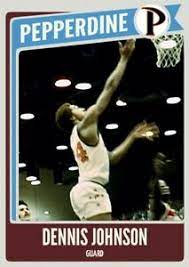
Old School DJ: HoopsHD interviews Gary Colson about Dennis Johnson

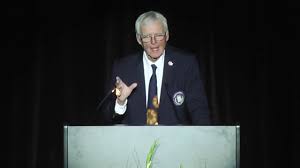
1986 was a painful sports year for the state of Massachusetts. It began with the Patriots getting destroyed by the Bears in Super Bowl XX on January 26, then saw the Bruins swept by the eventual-champion Canadiens in the 1st round of the NHL playoffs on April 12, and ended with the Red Sox losing Game 7 of the World Series to the Mets on October 27. The only ray of sunshine appeared during the summer as the Celtics beat the Rockets to win their 16th NBA title. That Celtics squad featured 5 future Hall of Fame players: Larry Bird/Dennis Johnson/Kevin McHale/Robert Parish/Bill Walton. Johnson (aka “DJ”) was no stranger to winning: he was 1979 Finals MVP with Seattle and won his 1st of 2 titles with Boston in 1984. He passed away in 2007 but HoopsHD’s Jon Teitel got to chat with Gary Colson (DJ’s college coach at Pepperdine) about his star player’s great defense and clutch performances. Today marks the 35th anniversary of DJ scoring 10 PTS in the Finals-clinching Game 6 on June 8, 1986.

1 of 16 children of a social worker and cement mason in Compton, Dennis began his college career at Los Angeles Harbor College where he averaged 18.3 PPG/12 RPG (as a 6’3” guard!), led his team to a state title…and was thrown off the team 3 times during his 2 years there: what made him choose Pepperdine, and how did you 2 get along? I got a call from Coach Jim White who said I should look at this kid named Johnson. He was the 10th man as a senior on his high school team and his mom made him work at a grocery store rather than go to college. He would play pick-up ball at Harbor during the evenings and his mom eventually let him enroll there. I sent my assistant to watch him play 1 night: he jumped center against a 7’ guy, won the tip, and played pretty well! I realized that he had good potential and he decided to come with us. I had a 6’10” big man from Brazil named Marcos Leite who played in 4 Olympics and NFL Hall of Famer Ollie Matson’s 6’5” son Ollie Jr. Dennis joined our team and played his role: we ended up winning the conference and made the NCAA tourney. We beat Memphis/Utah and then had to play UCLA in Pauley Pavilion in the Sweet 16. We played a heck of a game and lost by single digits. Pete Newell was in the stands because his son Greg was on our team. Pete was associated with the Trail Blazers and drafted Dennis as part of a supplemental draft based on the fact that he had sat out his freshman year. Dennis asked me what to do and I told him that if he could get a nickel out of the deal then he should take it. 15 years later they were hanging his jersey at Boston Garden and Larry Bird said he was his best teammate ever. Dennis and I got along perfectly: I had never heard about him getting kicked off the team and Jim was the 1 who recommended him to me. He met his wife Donna at Pepperdine and was with her until he passed. He was not the man and was just competing for playing time with everyone else.

His family’s home burned down during December of his lone season at Pepperdine: how close did he come to leaving school, and how were you able to convince him to stay? His mom wanted him to drop out of school but I convinced him to stay. We talked and were able to work it out. She was a great mother: not many people could take care of 16 kids. We recruited Dennis’ brother Joey at New Mexico: he was a 7’ high jumper and a great athlete but not the best basketball player.

He spent his NBA career as both a PG and SG: where do you think was the best position for him on the court? He was just an average shooter with us but he became a pretty good shooter in the pros. I got to see Dennis a lot when I worked with Jerry West in Memphis: he was on the road quite a bit and I still have photos of him with his big smile.

In the 1978 NBA Finals with Seattle, he set a record for guards with 7 BLK in a 1-PT win over Washington in Game 3 but made 0-14 FG in a 6-PT Game 7 home loss: what did you think of his later acknowledgment that he “choked” and that this game was an important lesson to make him a better player? It did not faze me a bit. I remember the blocked shots.

In the 1979 Finals he averaged 23 PPG/6 RPG/6 APG and was named MVP after winning the series in 5 games: how was he able to play his best when it mattered the most? I know that Coach Lenny Wilkens helped him a lot: they were pretty tight. He was just a late-bloomer: it was a little bit of a miracle.

He won 2 more titles with Boston in 1984/1986 and lost 2 titles to the Lakers in 1985/1987: did it reach a point where you just expected to see him in the Finals when you turned on the TV every single summer? I was a college guy who moved all over so I was not big into the NBA. However, after working for Jerry, I cannot wait to watch the Warriors win another title! The rules are so different: 24-second clock, where to inbound the ball after a timeout, etc. I also learned a lot from Coach Hubie Brown as well.

He made 9 consecutive All-Defensive 1st or 2nd teams: what made him such a great defender? His defensive ability was unbelievable: he would get 2-3 SPG due to his long arms/great hands. He was able to read the opponent as they brought the ball up the floor: you had to be careful where you put the ball on the floor around him. It was not about mid-air deflections: he would just steal the ball right out of their hands.

He was also known as a clutch player who made several game winning plays in the NBA Finals including a 19-foot buzzer-beater to win Game 4 of the 1985 Finals over the Lakers (www.youtube.com/watch?v=8LTfvfObCUI) and the game-winning layup with 1 second left in Game 5 of the 1987 Eastern Conference Finals to beat Detroit (www.youtube.com/watch?v=LYKdI_Xm9es): what made him so clutch? He was fearless. When we won the conference we had to beat teams like San Francisco who had guys like Bill Cartwright. We had 1 game that went to overtime and I told Dennis that if we won the game I would give him an All-Star watch/ring that I got from Jerry. We won the game and I jumped up: when I came down the items were gone!

He missed only 48 regular season games during his 14-year career and played in 180 playoff games (which remains top-20 in NBA history, 1 spot ahead of Michael Jordan’s 179): how was he able to remain so durable for his entire career? He was not the best player on our team but Pete Newell could see something that nobody else did. We did not get any exposure at Pepperdine unless we made the NCAA tourney: nobody would see us play for several months during the winter.

He passed away in 2007 after a heart attack at age 52 and was voted into the Hall of Fame in 2010: when people look back on his career, how do you think that he should be remembered the most? Mr. Cinderella! When I speak at clinics I always say that you never know. They are always in awe that a 10th man could turn into a Hall of Famer. We should not have beaten Utah but they made a mistake at the end of the game: if we had not gone to UCLA then maybe his whole career never would have happened. I believe in fate: certain things are just going to happen.

Posted in Interviews | Tagged , , | Comments Off on Old School DJ: HoopsHD interviews Gary Colson about Dennis Johnson

The Hoops HD Report May Session: The Hartford Fustercluck

This entire show pretty much focuses on Hartford’s decision to reclassify down to Division III.  That in and of itself is disappointing, but their stated reasons for doing it and some of the ways they have gone about communicating it are even more infuriating.  We examine some of that, look at some of what is in the Carr Report, talk in general about the costs and expenses of D1, and most importantly let Zach, who is a long-time supporter of Hartford, vent some of his frustration.

Oh yea, and one more thing!!  We have brought back the Team of the People for the 2021-2022 season!!  And…well…I won’t give away who it is (because if you can’t figure it out you’re a..well..you know).

And for all you radio lovers, below is an audio only version of the show…

Posted in Hoops HD Report, Podcasts, Videocasts | Tagged , , | Comments Off on The Hoops HD Report May Session: The Hartford Fustercluck

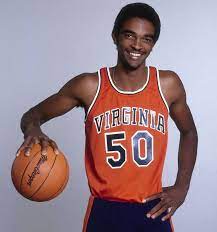
Shot of His Life: HoopsHD interviews Terry Holland about Ralph Sampson

Allow me to set the stage for you. The year is 1986. The Lakers are the NBA defending champs after they became the 1st visiting team to ever win a championship in the Boston Garden in the spring of 1985. They appeared ready to win back-to-back titles after starting the following season 24-3 and eventually clinching their 5th straight division title with a record of 62-20. After sweeping San Antonio in the 1st round and beating Dallas 4-2 in the Western Conference Semifinals, the only thing standing in the way of an NBA Finals rematch with Boston was a Houston team featuring a pair of Twin Towers in Hakeem Olajuwon and Ralph Sampson. Olajuwon scored a game-high 30 PTS in the decisive Game 5 but was ejected in the 4th quarter after fighting with Lakers forward Mitch Kupchak. The score was tied at 112 with 1 second left as the Rockets were inbounding from half-court. Everyone in the Forum expected the game to be headed to overtime…and then Sampson did this:
www.youtube.com/watch?v=yXOts9kaiLQ
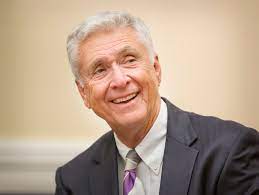
HoopsHD’s Jon Teitel got to chat with Sampson’s college coach Terry Holland about his 3-time national POY and 1 of the most famous shots in NBA history. Today marks the 35th anniversary of Sampson’s sensational series-winner on May 21, 1986.

As a 7’3” center Sampson led his Harrisonburg High School team to a pair of Class AA state basketball titles (1978/1979) and set a McDonald’s All-American Game record with 10 BLK in a 1-PT win by the East in 1979: how crazy were all of the college recruiters back then, and how did you convince him to come to Virginia? As you can imagine the recruiters flocked to see and recruit this phenomenally gifted big man. His high school coach Roger Bergey did a great job of protecting him and allowing him to live a normal life as much as possible under the circumstances. He finally chose Virginia that June because we waited patiently while respecting the Sampsons’ privacy, and at the end his family wanted him to stay close to home so his many fans in the area could still follow his career.

He won a gold medal for team USA at the 1979 Pan Am Games in Puerto Rico: how did having a trio of Hall of Fame coaches in the huddle (head coach Bobby Knight/assistant coach Mike Krzyzewski/manager Fred Taylor) prepare him for the college game? Ralph and Isiah Thomas were 2 high school players invited to go on the trip in order to practice with the team and help prepare them for future international competitions. It was a star-studded coaching staff that included Knight’s own college coach (Taylor) and 1 of his former players (Krzyzewski) in administrative roles. Ralph lost a lot of weight on the trip so he began his first season at Virginia weighing just 188 pounds. He took a real beating during the 1st half of the season, but by the end of that year Ralph had gotten stronger and was a real force, as indicated by his performance in the 1980 NIT (particularly the championship game).

In the 1980 NIT title game he had 15 PTS/15 REB in a 3-PT win over Minnesota (becoming the 1st freshman to ever be named NIT MVP): what did it mean to him to win such an outstanding honor, and what was the reaction like when you got back to campus? Ralph’s improvement was phenomenal by this time. He dominated the semifinal game against a powerful UNLV team and then stood toe-to-toe against Minnesota’s Kevin McHale in the championship game. Shortly after the NIT championship, Boston Celtics GM Red Auerbach came to Charlottesville and Harrisonburg to visit Ralph and his family. Auerbach offered to use the 1st pick on Ralph if he would make himself available for the upcoming NBA draft. Ralph told Auerbach and others in future years that he was not leaving Virginia until he graduated with his class. He had promised his mother that he would graduate in 1983 and then go to the NBA, thus Ralph became the last 3-time national POY to graduate with his entering class.

In February 1981 Orlando Woolridge made a 15-foot fade-away jumper at the buzzer in a 1-PT win by Notre Dame to end your 28-game winning streak (www.youtube.com/watch?v=yDR0IrYN3v0): did you think the shot was going in, and do you think that we will ever see another team go undefeated for an entire season? If Kentucky could not do it in 2015 then it may never happen again. There are just so many great players on every good team today that it is unlikely.

Take me through the 1981 NCAA tourney:
Al Wood scored a semifinal-record 39 PTS (14-19 FG) in a win by eventual national runner-up UNC: how hard is it to beat a team 3 times in 1 season (you had swept the Tar Heels earlier that year)? We had a 1st round bye and found ourselves in a low-scoring game vs. Villanova in the 2nd round but hung on to win 54-50 for Virginia’s 1st-ever NCAA tourney win. In the regional semifinals we played a solid Tennessee team, won 62-48, and expected to have a rematch with Notre Dame in the Regional Finals. However, BYU eliminated the Irish thanks to Danny Ainge (www.youtube.com/watch?v=berr6EXIr7A) and we beat BYU in the regional final to advance to the Final 4. Our opponent in the NCAA semifinals was our conference rival North Carolina, who we had swept in the two regular season match-ups. However, Al Wood was unstoppable while scoring a semifinal-record 39 PTS. It is always tough to beat a team 3 times in row: Dean Smith’s North Carolina teams rarely lost anytime and rarely, if ever, lost 3 games to the same team in a single season.

Sampson had 10 PTS/11 REB in 17 minutes in a 4-PT win over LSU in the last-ever 3rd-place game (which was delayed after John Hinckley, Jr. shot President Ronald Reagan): how were you able to keep the team motivated after losing in the semifinals, and how did it feel to play a game after the assassination attempt? Both teams lobbied the Tournament Committee to cancel the 3rd-place game but the plea fell on deaf ears. It was a hard-fought game but both teams seemed to be playing “not to lose” rather than playing to win. Our 2 outstanding seniors (Jeff Lamp/Lee Raker) scored for us and Ralph was content to set them up while playing an excellent game of rebounding/defending/passing.

In December 1982 he had 12 PTS/17 REB in a 5-PT loss to NAIA school Chaminade: do you think you would have won the game had he not suffered a knee injury and pneumonia that caused him to miss the 2 previous games in Tokyo? Ralph played a great game in the “showdown” game in the Capital Centre vs. Georgetown and Patrick Ewing despite being very dehydrated from a bad case of the flu. He became even more dehydrated during the long flight to Tokyo early the next morning. Out team doctor had Ralph on IV fluids and would not let him play against Houston’s NCAA Finalist team in the 1st game in Tokyo, but we won anyway and then won our next game against a nationally-ranked Utah team before heading to Hawaii and our game with Chaminade.

He is 1 of 2 players (along with Bill Walton) to ever be a 3-time Naismith Award winner as national POY: do you feel like he is 1 of the best college basketball players ever? Ralph was on track to be recognized as 1 of the best players ever before a back injury and subsequent knee problems in his 3rd year ended his opportunity to continue a phenomenal streak that included 3-time national POY in college and 4 consecutive years as an All-Star during his 1st 4 years in the NBA, which included an MVP award in his 2nd All-Star appearance.

In December 1983 he had 28 PTS/18 REB and a career-high 13 BLK in 49 minutes in a 3-PT OT win over Chicago en route to being named ROY at the end of the season: what was his secret for blocking shots (besides being 7’4”), and how was he able to make such a smooth transition from college to the NBA? During Ralph’s freshman year in college he set a record for freshmen but was in constant foul trouble. Our coaching staff convinced Ralph that the “threat” of a blocked shot would be more effective in the long-term. Over the next 3 seasons Ralph became a terrific defender who intimidated opponents and led our teams to unparalleled success.

Take me through the magical 1986 playoffs:
In Game 5 of the Western Conference Finals he took an inbounds pass with 1 second left and made an off-balance twisting turnaround jumper at the buzzer in a 2-PT win over the defending champion Lakers (1 of the most memorable moments in playoff history): where does that rank among the most amazing shots you have ever seen? It was an incredible shot that sent the Rockets onto the Finals.

In Game 5 of the Finals he punched Jerry Sichting twice and Dennis Johnson once before getting ejected early in the 2nd quarter against a Boston team that is still considered 1 of the best ever: how did the fight start, and what kind of temper did he have? Most people who knew Ralph called him a “gentle giant”, but some teams tried to rough him up in order to make him lose his temper, even though he rarely responded to such baiting.

When people look back on his career, and how do you think he should be remembered the most? Ralph should be remembered as a truly great college player who excelled in the NBA until a series of injuries limited him to All-Star performances in only his 1st 4 professional seasons.

Posted in Interviews | Tagged , , | Comments Off on Shot of His Life: HoopsHD interviews Terry Holland about Ralph Sampson