Happy Birthday!: HoopsHD interviews John Cox about MK Turk

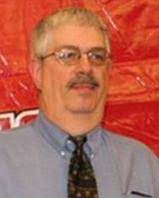
It has been 25 years since MK Turk was head coach at Southern Miss yet he remains the only coach in school history to make multiple NCAA tourney appearances. He also made 6 NIT appearances and won the NIT title in 1987. In 1991 he was inducted into the Southern Miss Athletic Hall of Fame and in 2005 he was inducted into the Mississippi Sports Hall of Fame. Coach Turk passed away in 2013 but HoopsHD’s Jon Teitel got to chat with John Cox (the “Voice of the Golden Eagles”) about the winningest coach in school history. Today would have been Coach Turk’s 79th birthday so we take this time to honor his life/legacy.
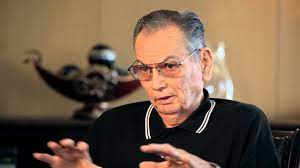
Turk led his team in scoring as a player at Livingston University in the 1960s and was named most outstanding athlete: how good a player was he back in the day, and how did he get into coaching? People who knew him and saw him play tell me that he was really, really good and had a great JC/college career. They say he played the way he eventually coached: he was unselfish, team-oriented, and willing to do whatever it took for his team to win. He always wanted to coach and when the opportunity presented itself he took it and never looked back. He used to say that he was born to coach and never really wanted to do anything else.

He spent 2 decades as head coach of Southern Miss: how was he able to be so successful over such a long stretch of time? I think what made Turk successful was his positive attitude and his belief that if he could get the type of players that would fit his system then they could do some things at Southern Miss that had never been done before. He sort of drew a circle around Hattiesburg that stretched out a couple of hundred miles and he and his staff were determined to get the best players they could within that radius. He and his staff did an amazing job of finding players who were sometimes off the radar but who they projected would be good/productive players at some time in their careers…and most of them did. He brought a fast-break, fast-paced, pressure defensive style to Southern Miss that allowed him to be successful over that stretch.

In the 1981 NIT he had a 2-PT loss to Holy Cross: how close did he come to getting the win? It was a great atmosphere with a great crowd: the best there had ever been at Southern Miss to that point. There was a lot of excitement in Hattiesburg when the Eagles received their 1st-ever postseason bid. People held out hope that they might make the NCAA tourney…but after the Eagles were eliminated from the Metro conference tourney they found out that they had been bypassed by the NCAA tourney. They received an invitation to the NIT and learned they would be hosting Holy Cross at Green Coliseum in the opening round. When the 2 teams met on March 12th before about 7000 fans, Holy Cross defeated the Golden Eagles 56-54 thanks to a 10-foot base line jumper at the buzzer, several missed USM shots, and an injury to USM’s Ronald Jackson. Jackson was kicked in the back of the ankle just 7 minutes into the game and reinjured his left foot. He did not return until 4 minutes remained. Turk said that without Jackson, “We had to alter our plans and it forced us to do some things that we do not normally do.” The Eagles played 29 minutes without a center. Neither team led by more than 4 PTS and the lead changed 16 times. Holy Cross coach George Blaney said after the game, “We kept our poise after turnovers, especially late in the game when we could have let the game get away from us. After the 1st half I told my players that they had played their best half of basketball all season and to hang with it because we were going to need it again in the 2nd half.”

In 1986 he was named Metro Conference COY: what did it mean to him to win such an outstanding honor? I think like any coach that was sort of a validation for the kind of job that he had been doing at Southern Miss. I think it meant a lot to him to have accomplished that in a league that included coaches like Hall of Famer Denny Crum. Of course, he was the type of man who gave all the credit to his assistant coaches/players and would have said it was a team effort, but after inheriting the program and then taking it to the point where they were a contender in the Metro Conference and then being named COY was very special to him.

What are your memories of the 1986 Metro conference tourney (Myron Hughes scored 29 PTS in a 1-PT win by Cincinnati)? The Golden Eagles blew an 11-PT halftime lead and fell to Cincinnati 75-74. The foul line had been an ally for the Eagles in their productive 1st half as they drained 14-15 attempts while Cincinnati hit only 1-4. However, the 2nd half saw the Bearcats reverse the trend by hitting 18-19. Kenny Siler was averaging 15 PPG for the Eagles but made just 1 basket in 4 attempts en route to 3 PTS. USM would now await word from the NIT selection committee and Turk believed the Eagles would receive an invite, which they did. I believe Turk thought that team was playing pretty well at that point in the season and might have a chance to contend for the Metro title but the Bearcats knocked them out. “I do not see how a 1-PT loss to a fine team like Cincinnati should diminish our team’s chances,” Turk said after the game. “I have said all along that I thought we deserved to go to a postseason tournament.”

In the 1987 NIT title game the Golden Eagles made 11-24 shots from behind the arc in a 4-PT win over La Salle: what did it mean to him to win a title, and what was the reaction like when the team got back to campus? I think MK thought that was his greatest accomplishment as a coach at Southern Miss, especially considering what they had to do to win it. After a home game against Mississippi to open the NIT they had to go to St. Louis on St. Patrick’s Day to play the Billikens and they won in OT. They were selling green beer that night at old Kiel Auditorium…and had to quit selling it at halftime! Turk thought they would get another home game after that but were sent to Nashville to play Vandy, where they won to advance to New York and win the 50th anniversary of the event. When the team came home there was an amazing turnout to welcome them back. Green Coliseum was full of people cheering on the Eagles and on the way home from the Jackson Airport people were on nearly every overpass returning to Hattiesburg with signs and flags and everything. I think with everything that was involved it meant a lot to him to accomplish something that I am sure people thought might never be done.

In February 1988 Bimbo Coles scored a conference-record 51 PTS to help his team overcome an 18-PT deficit in a 141-133 2-OT win by Virginia Tech: where does that rank among the most devastating losses of his career? It was an amazing game that came a short time after Southern Miss had beaten Virginia Tech 127-102 at Green Coliseum. I do not know if it was more disappointing than any other game but it sure would have been a great victory. In the highest-scoring game in Metro Conference history, Virginia Tech avenged an earlier loss to the Golden Eagles by winning 141-133 in double OT on February 6th in Blacksburg. USM came from behind to send the game into its 1st OT at 110 apiece, and came from behind to force a 2nd OT at 122-122. Tim Anderson and Bimbo Coles hit back-to-back 3-PT shots while USM failed to score on 3 straight possessions as Tech built a 132-126 lead with 1:20 remaining, then hit 9-13 FTs down the stretch to ice the victory. Coles dissected USM’s defense by scoring a conference-record 51 PTS, dished out 11 AST, and made 18-27 FTs while teammate Wally Lancaster scored 39 PTS. John White scored 41 PTS for USM (tied for 2nd-most in school history) while Derrek Hamilton scored 30 PTS. The loss dropped the Golden Eagles to 15-4 and dropped them from a 1st-place tie in the Metro.

In the 1990 Metro conference tourney LaBradford Smith had 24 PTS/9 AST in a 3-PT win by Louisville: do you think that Russell Johnson’s shot with 6 seconds left was taken in front of the 3-PT line or behind it? At the time I thought it was good…but when you go back and watch the tape of the game you can see that his toe was on the line: not by much, but it was on the line. There was never a 3-PT signal from the officials. It was a shame to lose that 1 because it was being played in Biloxi, MS, with a sellout crowd and an NCAA bid on the line. It would have meant a great deal to Coach Turk to win that one over Coach Crum. It was a great battle that day between Felton Spencer and Clarence Weatherspoon.

He remains the winningest coach in school history: what made him such a great coach, and do you think that anyone will ever break his record? I think that what made him such a great coach was his passion for the game. He had been taught the game the right way while growing up in Bardwell, KY. He never shied away from a challenge: the bigger the game, the better we played. He was a player’s coach and was not afraid to listen to them and make decisions based on what they told him. He knew the game and knew how to handle players: I thought that he was a terrific game coach. I am unsure if anyone will ever break his record but I know that he would have enjoyed watching someone give it a try.

He passed away in December 2013: when people look back on his career, how do you think he should be remembered the most? As a man who loved his family, his school, and his players, and who never doubted that he could help take Southern Miss where it had never been before. It was the most exciting stretch of basketball in the history of Southern Miss, with record crowds and people standing on their seats. I loved the man and I think Southern Miss fans did too. He has left his imprint on Southern Miss basketball that will never go away, and was admired by his peers in the coaching ranks.
Posted in Interviews | Tagged , , | Comments Off on Happy Birthday!: HoopsHD interviews John Cox about MK Turk

Even Keels: HoopsHD interviews McDonald’s All-American Trevor Keels

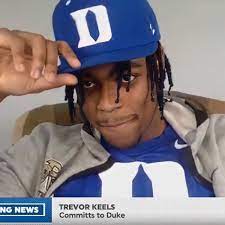
If you want to win an NCAA title then you usually need a good coach, a great resume…and a McDonald’s All-American. Only 1 championship team since 1979 had not featured such a player (Maryland in 2002) until Baylor broke the streak last month. The McDonald’s All-American Game has not taken place during the past 2 years due to COVID, sadly. However, the rosters were announced on February 23rd after selecting the 24 best players in the nation from a list of several hundred nominees. If you do not think that these guys can make an immediate impact then just ask Coach Mark Few how he liked having 2020 honoree Jalen Suggs at Gonzaga! Duke seems to be 1 of the big winners as Coach Mike Krzyzewski will have a trio of 2021 honorees (Paolo Banchero/AJ Griffin/Trevor Keels) join him in Durham this fall. Yesterday HoopsHD’s Jon Teitel got to chat with Trevor about being named a McDonald’s All-American and his NBA playoff prediction.

You attend high school at Paul VI in Virginia, which has produced several top recruits in recent years including Anthony Harris (UNC)/Brandon Slater (Villanova)/Jeremy Roach (Duke): how is your school able to keep getting such top-notch talent every single year? They do a great job of recruiting middle school players and are a great school both on and off the court.

Last year you made the WCAC championship game where you lost to #1-seed DeMatha: how close did you come to pulling off the upset? We came pretty close and it was a great game. We fought but they hit some tough shots with their seniors stepping up in big moments.

You went on to win the Virginia Independent Schools Athletic Association title: what did it mean to you to win a championship? It meant a lot. After losing to DeMatha a lot of teams would have put their heads down and stopped playing but we came together and realized that our season was not over. We watched some film of our loss and did a great job of sacrificing so that we could be happy at the end of the year.

You were a team captain this year: what is the key to being a good leader? You have to be vocal: if you do not say anything or try to just be nice all of the time then it will not work. You always have to tell the truth to your teammates even if it is during a losing streak. It is also important to change bad habits.

What has been the hardest part of being a basketball player during a pandemic? It was hard for certain people who did not get recruited because colleges could not come see them play in person. It was frustrating for me because I wanted a senior season in front of packed crowds but we only ended up playing 11 games: you just have to adapt.

In February you were named a McDonald’s All-American: what did it mean to you to receive such an outstanding honor? It meant a lot to see my name announced on ESPN. I have dreamed about that since I was a little kid and am grateful that all of my hard work paid off.

You are 6’5”: what position did you play in high school, and what position will you feel most comfortable at in college? I played SG in high school but in college I will play wherever they want me to and will give it my best.

You received offers from several great schools including Kentucky/Villanova/Virginia but signed with Duke last month: what was the biggest factor in your decision to play for Coach Mike Krzyzewski? The biggest factor was who I trusted the most. All of my top-4 schools were great and have Hall of Fame coaches but I had the best relationship with Duke. It has been my dream school all of my life: the brightest lights and the biggest stage.

You became a triple-double machine this year: how do you balance all of the different aspects of your game? I do not chase points: I am a team player and will do whatever it takes to win. If I have to pass/rebound instead of focusing on my scoring then that is what I will do.

Your favorite player is Kevin Durant: do you think he will win a title with the Nets this year? Brooklyn is definitely winning the title and KD will be Finals MVP: he is too good!

Posted in Interviews | Tagged , | Comments Off on Even Keels: HoopsHD interviews McDonald’s All-American Trevor Keels

Happy Birthday!: HoopsHD interviews Portland State legend Freeman Williams

Most college basketball fans know that Pete Maravich is the leading-scorer in D-1 history, but if you asked them who was #2 you would probably receive a lot of wrong guesses. The correct answer is Freeman Williams, who led the nation in scoring for 2 straight years in 1977/1978 and graduated from Portland State with 3249 career PTS. He was drafted 8th overall by the Celtics in 1978 and became 1 of the most efficient scorers in the league, finishing his NBA career by averaging 14.7 PPG despite only playing 20.5 minutes/game. HoopsHD’s Jon Teitel got to chat with Freeman about scoring 81 PTS in a game and being part of the film “White Men Can’t Jump”. Today is Freeman’s 65th birthday so let us be the 1st to wish him a happy 1!

You were a member of Team USA at the 1977 World University Games in Bulgaria (along with Larry Bird/Darrell Griffith/Sidney Moncrief): what did it mean to you to win a gold medal, and was that that greatest team you have ever been a part of? It was definitely the best team that I ever played on: most of them went to big-time colleges and ended up having successful NBA careers. Our coach was Denny Crum, who was also great. Winning a gold medal was 1 of the greatest accomplishments of my life.

In December 1977 as a senior at Portland State you made 17 FG (which remains a Rupp Arena record) and scored 39 PTS in a loss at Kentucky: how were you able to play so well against a great team in their legendary gym? Even though I was the nation’s leading scorer, a lot of people said that it was only because I played against weak competition. When we got the chance to play against major schools I tried to play my best.

In February 1978 you scored 81 PTS (still the 3rd highest total in NCAA history) on 37-56 FG (including 54 PTS in the 1st half) in a win over Rocky Mountain College: how on earth were you able to take 56 shots, and at halftime were you thinking that you could make it to 100 PTS? I did not know how many points I had at halftime because nobody told me. However, I knew that it was a special night because everything I shot went in: left-handed, right-handed, you name it!

In 1977 and 1978 you led D-1 in scoring, and you are still the #2 scorer in D-1 history with 3249 PTS (trailing only Pete Maravich): what was your secret for being a great scorer, and do you consider yourself to be 1 of the best players in NCAA history? I do consider myself to be 1 of the best. I had always been a scorer and was expected to put up a lot of shots. If I did not score then we would lose so when the ball came to me I would shoot it. To be #2 to the great Pete Maravich is exciting.

You were also a 2-time All-American: what did it mean to you to win such outstanding honors? Most of the other All-American players like David Greenwood (UCLA)/Jack Givens (Kentucky) came from big schools and all of them got drafted as well.

In the summer of 1978 you were drafted 8th overall by Boston (2 spots behind Larry Bird) and then traded to San Diego a couple of months later: what did it mean to you to get drafted, and what did it mean to you to get traded? I will never forget getting the call from Celtics owner Red Auerbach after they drafted me. If I had stayed in Boston then I would probably have a couple of championship rings but I have no regrets: I was just happy to be in the NBA.

In January 1980 you scored a career-high 51 PTS vs. Phoenix: was it just 1 of those scenarios where every shot you put up seemed to go in because you were “in the zone”? Phoenix had a good team with guys like Paul Westphal/Truck Robinson but it was hard to stop me when I was making so many shots.

In 1981 you scored 19.3 PPG in only 24.1 MPG, becoming the only player to ever score 18+ PPG in less than 25 MPG and the only player to ever lead his team in scoring while coming off the bench: why did Coach Paul Silas decide to have you come off the bench, and how were you able to be so effective? After we traded Lloyd Free to Golden State, Coach Silas named Phil Smith/Brian Taylor as our starting guards because they had more experience than I did. However, I was always in the game during the 4th quarter and got to take a lot of shots down the stretch.

You finished in the top-10 in 3PM each year from 1980-1982 and were #2 in 3P% in 1981: what was your secret to 3-PT shooting? I always used to shoot from long-range in college even though they did not have a 3-PT line. When I got to the NBA it was nothing really new for me.

You played fictional playground legend Duck Johnson in the film “White Men Can’t Jump”: how did you get the part, and how did you like being an actor? I was lying in bed 1 day when the phone rang: it was Marques Johnson calling me to say that he was auditioning for a movie and that I should try out as well. I auditioned for director Ron Shelton and he ended up hiring me. It was great to play against Wesley Snipes/Woody Harrelson: they were very nice guys.

Posted in Interviews | Tagged , | Comments Off on Happy Birthday!: HoopsHD interviews Portland State legend Freeman Williams

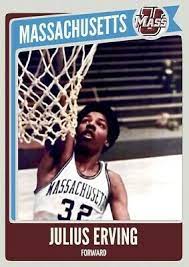
Our favorite Doctor: HoopsHD interviews Al Beaubien about Julius Erving

Few basketball players have had a better year than Julius Erving did in 1976: Slam Dunk contest champ, scoring champ, all-defensive 1st-team, all-ABA 1st-team, All-Star, league MVP, Playoffs MVP, and league champ. Not too shabby for a guy who only played 2 years of college basketball, although it was a heck of a 2 years. After enrolling at UMass in 1968 he averaged 26.3 PPG/20.2 RPG in 2 years on the varsity while becoming 1 of only 6 players to average 20 & 20 during their college careers. He turned pro in 1971, had a Hall of Fame career in the ABA/NBA, and later fulfilled a promise to his mother by earning a bachelor’s degree in creative leadership and administration. HoopsHD’s Jon Teitel got to chat with UMass alum Al Beaubien about his memories of the man known simply as “Dr. J”. Today marks the 45th anniversary of Erving winning the ABA title with the New York Nets and being named Playoffs MVP on May 13, 1976.

Erving was nicknamed “Dr. J”: who gave him the nickname, and how did he like it? He was never really known by that nickname in college: it sort of evolved after he got to the pros. I know that a good friend of his gave it to him.

In 2 varsity seasons at UMass he averaged 26.3 PPG/20.2 RPG: how did he balance his scoring with his rebounding? He had a great ability to jump/rebound and could score both inside/outside. He worked hard at his game: he did not just show up and play. He played on an undefeated freshman team, the 1st in school history: he did not average a ton of AST but was a good passer. We did not keep stats on BLK back then but he definitely had multiple BLK every single game. Coach Jack Leaman was drooling to get Julius and Al Skinner on the court at the same time…but it did not happen until Julius attended Al’s retirement ceremony! He played against Syracuse on his 21st birthday and had 1 of the greatest performances that I have ever seen: 36 PTS/32 REB/7 AST! Our gym only held about 4000 but there must have been around 6000 people crowded in there that evening. The crowd sang “Happy Birthday” to him before the game and he did not flinch 1 bit: I was sitting in my usual seat behind the basket.

He left college early to pursue a pro career and scored 27.3 PPG as a rookie with Virginia while leading the ABA in offensive REB: how was he able to make such a smooth transition from college to the pros? He was just a good player. Some people probably thought that he was not that good because he went to UMass but he stepped up his game against the best opponents we played. He fouled out of his final game against North Carolina in the NIT. The coach was looking forward to picking out a game during his senior year where he would let Julius loose to just score as many PTS as he could.

He won the 1976 ABA Slam Dunk Contest with a dunk from the FT line (www.youtube.com/watch?v=tNTgdcBDqJ4) and is considered by many to be the greatest dunker of all time: how crucial was his athleticism to his success? His hands were absolutely huge: the only player I ever saw with bigger hands was Connie Hawkins. It was easy for him to palm the ball and he was so graceful. When he went up in the air and someone tried to get under him, he could just adjust in mid-air and go right around them. I heard stories from his sophomore year that the team could dunk during the pregame as long as the refs were not out there watching. There were guys who would mill around the hallway and then signal the team when the refs were close to coming out! He put on a heck of a show: even dunking 2 balls at the same time.

Off the court he became 1 of the first basketball players to endorse products, had a shoe marketed under his name, and even starred in the 1979 film “The Fish That Saved Pittsburgh” (www.youtube.com/watch?v=sv5W7XRhvfY): did it reach a point where he was simply 1 of the most popular athletes in the country? I do not know about that. There were still some great around like Wilt Chamberlain/Bill Russell and by the end of the career Larry Bird/Magic Johnson/Michael Jordan had arrived.

In the 1980 NBA Finals with the 76ers he executed the legendary “Baseline Move” where he made a reverse layup from behind the backboard to avoid getting his shot blocked by Kareem Abdul-Jabbar (www.youtube.com/watch?v=TQ2apIiatlg): did people realize at the time how incredible a move it was? It was an amazing shot! That was before ESPN became popular but it still got replayed a ton of times: even my grandsons have seen it and go “wow!” The other 1 that I remember was the dunk over the Lakers (www.youtube.com/watch?v=SrlBgLdGKZM).

He won 3 scoring titles and his 30,026 PTS in that ABA/NBA combined remains in the top-10 all-time: what was his secret for being such a great scorer? I know that 30,000 PTS was quite important to him: he mentions that specifically in his autobiography. He was not a great shooter and there was no 3-PT line at the time but he could always score. He worked hard to make himself what he was.

He is 1 of the few players in the modern basketball era to have his number retired by 2 different franchises (Nets and 76ers): these days you see plenty of future Hall of Famers switching teams (Kevin Durant/LeBron James/Chris Paul/etc.) but how big a deal was it back in 1976 when Erving switched teams? The only real switch was from the Nets. It was sad in a way because he started with Virginia but they sold him to the Nets before they went belly-up. When he joined Philly it was another deal where the ABA was going to fold. It was so different back then with no free agency but did not seem like that big a deal: now it is totally different.

In 1993 he was inducted into the Basketball Hall of Fame and in 1996 he was named to the NBA’s 50th Anniversary All-Time team: where do these accomplishments rank among the highlights of his career? When I 1st saw him play on campus he was a great player and a class act. He worked hard and played at the highest level and was honored as 1 of the greats.

He won 3 championships/4 MVP awards: do you think that his lasting legacy will be as a winner or a great player or a combination of both? I think that he is a combination. When he went to the 76ers he had some tough times at 1st: not on a personal level but simply adjusting to putting the right crew on the floor. I was happy when he finally won a title with Philly even though he had already won a pair of ABA titles. He led the league in scoring/rebounding as well.

Posted in Interviews | Tagged , , | Comments Off on Our favorite Doctor: HoopsHD interviews Al Beaubien about Julius Erving

In Memoriam: HoopsHD interviews Vinnie Cazzetta about his father Vince

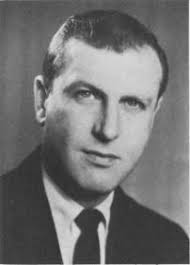
It is difficult to make a significant impact when you only have 1 opportunity to get it right…but that is exactly what Vince Cazzetta did back in 1968. After leading Seattle University to 3 straight NCAA tourney appearances from 1961-1963, he spent 4 years as an assistant at Rhode Island. In 1967 he was hired as head coach of the Pittsburgh Pipers during the very 1st season of the American Basketball Association, and ended up beating New Orleans in Game 7 of the Finals to win the title. He was named Coach of the Year but resigned after the team owners refused to give him a raise when the franchise moved to Minnesota. HoopsHD’s Jon Teitel got to chat with Vince’s son Vinnie about his father’s winning ways in both college and the ABA. Today is both the 53rd anniversary of Vince winning the very 1st ABA title on May 4, 1968, and the 16th anniversary of his passing on May 4, 2005, so it seems like an appropriate day to both celebrate his success and remember his legacy.

Your father served in the Army at the Battle of the Bulge during World War II: what impact did the war have on him both as a father and as a coach? As a father he never talked much about the war at all, but we knew that he had a couple of toes freeze during the war. However, I remember him vividly retelling his grandkids some of his old war stories. As a coach he was a taskmaster: there was no gray area. When things got crazy in the 1960s he would not bend at all and his players responded well to his discipline.

In 1958 he replaced his childhood friend John Castellani as coach at Seattle after Castellani lost to Kentucky in the title game the previous spring and then resigned due to improprieties (providing airfare to a pair of coveted recruits): how was he able to step into such a sticky situation and make the best of it? He inherited a solid core of players so John did not leave the cupboard bare. It might have been easier back then due to the lack of media attention/outside distractions. He was ahead of his times in terms of recruiting: Seattle had more African-American players than a lot of other schools at the time. He would go up and down the East Coast to find talented players.

What are your memories of the 1961 NCAA tourney (Jerry Hahn had 13 PTS/12 REB and made a shot with 4 seconds left in a 2-PT win by ASU) or 1962 NCAA tourney (Mel Counts had 20 PTS/15 REB in a 4-PT OT win by Oregon State)? I do not remember these games but I recall him mentioning that the 4 or 5 best teams in the entire tourney were all from the West Coast and he ended up having to play them all. Nowadays all of those good teams would be split up around the country and only meet in the Final 4.

He resigned as coach of Seattle with 9 games left in the 1963 season after a dispute with the athletic director: what was the nature of the dispute, and how could he walk away from a team that was on its way to its 3rd straight NCAA tourney? My dad was the kind of guy who would sit down with the media at a local restaurant on a regular basis and talk with them about anything. He would not give the canned answers you hear today so a lot of the Seattle-area media encouraged him to seek more power within the organization. The AD and Jesuit administration started to get nervous about the high level of success he was having. I played at a Jesuit university (Fairfield) and it is still like that even today: you cannot have it both ways. There was a concern that people might think it was a basketball factory that was not strong academically. If he were alive today I think he would say that he would have done things differently because he had to start all over as an assistant coach at Rhode Island. I cannot imagine someone like Coach K starting over.

He spent 1 year as head coach of the ABA’s Pittsburgh Pipers in 1968, who beat New Orleans in 7 games to win the 1st-ever ABA title led by MVP Connie Hawkins: why did he decide to take the job, and what did it mean to him to win the title? He was looking to move up the ranks and thought about becoming a college head coach, but he decided to take a new challenge in the professional ranks. Hawkins was the star but he had great role players around him. All of the African-American players worked hard for him because he motivated them. It was a thrill for him, as it would be for any coach on any level.

That same year he was named ABA COY: what did it mean to him to win such an outstanding honor? It was both humbling and rewarding. The ABA was still trying to feel its way around after starting very quickly. He did not have a lot of time to mold players from different background into a team…but he did. They made a key trade during the season that really solidified things.

He resigned as coach of the Pipers after team owners refused to give him a raise in order to help move your family to Minnesota (where the franchise was relocating to): why on earth did the team change cities after winning the title, and how do you feel about his decision to place his family over his job? The reason they moved is because ABA Commissioner George Mikan had to live in a city where there is a franchise. When the Muskies moved after the season Mikan convinced the Pipers’ owners to move from Pittsburgh to Minnesota. He was making about $12,000 at the time and was offered a choice: a $1000 raise or relocation costs for our family (but not both). My dad felt we had to establish roots and he knew that if we moved to Minnesota then we would just end up moving again sometime soon (which became true when the Pipers ended up moving back to Pittsburgh).

He later served as a professor in the Sports Management department at UMass Amherst and as a scout for the Minnesota Timberwolves/Toronto Raptors: how did he like his post-coaching gigs, and which 1 did he enjoy the most? In his heart of hearts he always wanted to coach. I would see him watching games on TV late at night and asking out loud why a player did a certain thing. I think he enjoyed his TV/radio broadcasting work the most, as it allowed him to stay in contact with his friends in the coaching business and catch up on old times. My siblings and I all played sports growing up: when our coaches would ask him for advice he would always stay out of it because he did not think it was his place to do so. He would never put down another coach because he was just a fan of the game. He never pushed us to play basketball: we pushed ourselves.

He passed away in 2005: when people look back on his career, how do you think he should be remembered the most? I think he should be remembered as a coach who was ahead of his time. He was a visionary and a great student of the game. Basketball was more than just coaching to him. He never played basketball growing up: he was self-taught and always studying the game.

Posted in Interviews | Tagged , , | Comments Off on In Memoriam: HoopsHD interviews Vinnie Cazzetta about his father Vince

In Memoriam: HoopsHD interviews Jan Dunbar about Ott Romney

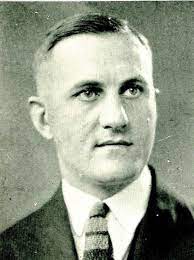
George Ottinger “Ott” Romney was born in 1892 but his legacy as an athlete/coach has lasted well into the 21st century. He served as a head coach in football/track/basketball at at Montana State from 1922-1927 and at BYU from 1928-1936. His basketball teams were successful due to a fast break offense and pressure defense and Montana State later named the 1st gymnasium built on campus after him. In a family of famous politicians (his 1st cousin George was governor of Michigan and former Massachusetts governor Mitt Romney is named for Ott’s younger brother) he served as a great example of how to get things done. He passed away exactly 48 years ago ago on May 3, 1973, but HoopsHD’s Jon Teitel got to chat with Ott’s niece Jan Dunbar about his life/legacy.

During World War I he gave up a Rhodes scholarship to join the Army: how important were academics to your family, and how did his military service affect his coaching ability? Rhodes Scholarships were suspended in 1914 due to the war so he could not participate. Academics were always of major importance to the 5 Romney brothers. In those early days students of ability often were invited to skip grades. He was 16 when he graduated from Salt Lake High School, 19 when he graduated from Utah, and then attended Harvard Business School in 1914. As my father Dick used to say with a laugh, “What were we to do with a brother who read the dictionary for fun!?” All 5 brothers graduated from college and 4 of the 5 served in the armed forces in WWI: the youngest brother Floyd was born in 1902 and was too young to serve. Ott was a Lieutenant in Naval Aviation. He later was Chief of Community Services, Department of the Army (Recreation) and also served on the President’s Youth Program. It is obvious that Ott’s military service affected his coaching ability. He had leadership qualities which must have been enhanced by both his experiences in the Navy as well as working with young people. It would seem that his coaching career greatly influenced his later work with recreation on the national level. Their maternal grandfather George Martin Ottinger was credited with establishing the art department of the U. of Deseret (the forerunner of the U. of Utah) and as a painter he is widely touted as the “Father of Utah Art.”

He coached for 6 years at Montana State, where he won at least 80% of his games in each season except 1, then went to BYU and won at least 18 games in each of his 7 seasons there: how was he able to be so successful at Montana State, and why did he decide to go to BYU? Ott had a very extroverted personality, which was enhanced by his sonorous voice and vivid vocabulary. He had natural leadership qualities and was very colorful. In the days when coaches spent much of their time trying to attract good high school athletes to their institutions, he was gifted at this due to his friendly/outgoing persona. I can only conjecture but I suppose he saw a career advantage in the long run by moving to BYU. Many aspirations were changed by the Depression.

His “Golden Bobcats” were 1 of college basketball’s 1st legendary teams and after he moved on to BYU his former players went on to win the 1929 Helms national title led by Cat Thompson (who was 1 of the greatest players of the 1st half of the 20th century): do you think he was happy that his former team won the title, or sad that he did not stick around to lead them to victory? Uncle Ott maintained a close relationship with Montana State and was always interested in the school and his athletes’ careers after he left. It was they who awarded him his honorary doctor’s degree and named the Romney Gym after him.

He also spent 14 years as a football coach at Montana State/BYU and had a record of 66-47-7: which sport did he enjoy more, and how was he able to balance the 2? I could only guess but I would say that he liked basketball best. My father coached basketball/football/track for a number of years at Utah State and it was indeed a balancing act. I supposed it was the same for Uncle Ott at Montana State/BYU. It was football practice in the afternoon and basketball in the evening, or basketball in the afternoon and track in the evening, or vice-versa. Weekday dinners with the family were an unknown quantity!

He served in some national positions, including chairman of the National Recreation Policies Committee and member of President Eisenhower’s Council on Youth Fitness: how did he gain such national respect for physical fitness, and what did it mean to him to contribute in such prominent roles? Ott had a very magnetic personality and was a “public speaker” at many banquets. When he found himself in the neighborhood of the federal government, he found a venue for his speaking/organizing ability and his athletic career lent credence to his resume. I vaguely recall that he taught for a short time at American University in Washington, DC: he was just in the right place at the right time.

He had several athletic brothers, including Dick (All-American basketball player/College Football Hall of Fame coach), Woody (All-American basketball player/owner of the minor league baseball Denver Bears), and Milt (QB for the Chicago Bears/coach of the Texas basketball team): who was the best athlete in the family, and have the athletics genes been passed down to the current generation? He had 4 athletic brothers. However, the “Woody” you mention is not Ott’s brother, but rather WW “Woody” Romney. Elwood “Woody” Romney was a cousin. Ott’s brother Wilford “Woody” Woodruff played football/basketball for Utah. It is difficult to say who was the best. Naturally I am biased because I know the career of my father EL “Dick” Romney more than those of my uncles. My father often said that he grew up in “Romneyville”, a name for our family of cousins in the area of Salt Lake City called “The Avenues”. We had athletic events among the kids all the time. There were the “Big Romneys” and the “Little Romneys”. I think my father may have been the best basketball player and Mitt may have been the best football player. My father’s career as a coach certainly was the longest: 3 decades at Utah State (1919-1949) and then a decade as Athletic Commissioner of the Mountain States Conference (1949-60). The legendary qualities of the family of Romney athletes lives on because all of them were outstanding, gifted, successful, charismatic, and “grassroots”, in the sense of being athletes because they loved it. They were not large men but large enough; smart, crafty, inventive, and they attracted a lot of attention. I would call them “cerebral” athletes/coaches. The 5 brothers were raised to be competitive among themselves and with the world beyond “Romneyville.” Mitt went into the business world and lived far away from Utah but may have been the best athlete of the bunch. I do not think anyone would argue that Dick was the best coach. I do not know enough about the subsequent careers of the “genes’ in the family. The 5 brothers produced only 7 children among them (2 boys/5 girls) and none of us were more than average in athletic ability.

When people look back on his career, how do you think he should be remembered the most? I think Ott became something of an institution, paving his own way in the athletic/recreation fields. If you met him or were around him for long you could see that he was a personality who held center-stage. He had that vocabulary, that charm, that great big voice, and that great big chin. He was not built like the nurtured athletes of today: he just WAS an athlete, and my father was the same. They could run and jump but mostly they could talk: they had credibility and stage presence. How many athletes do you know who had tea with King George VI and Queen Elizabeth while the bombs fell on London? That was a long way from Third Ave. and E St. in Salt Lake City!

Posted in Interviews | Tagged , , , | Comments Off on In Memoriam: HoopsHD interviews Jan Dunbar about Ott Romney