Happy Birthday!: HoopsHD interviews Liberty legend Julius Nwosu

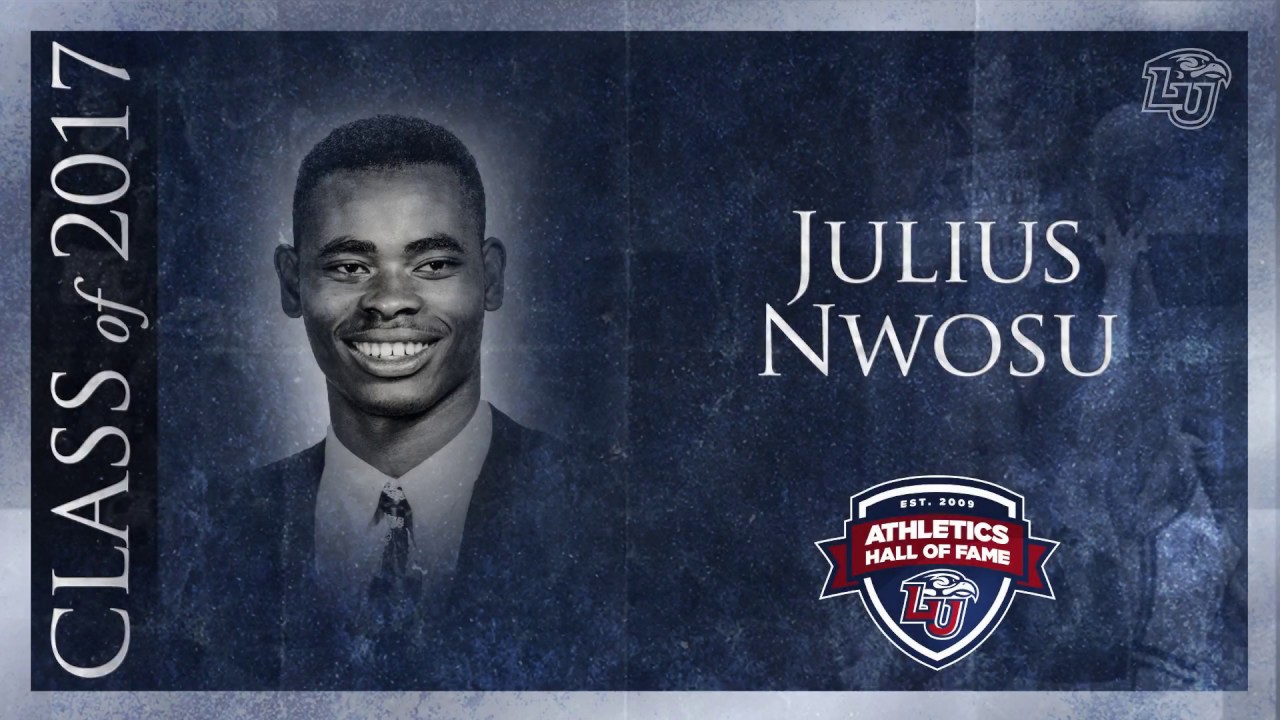
Julius Nwosu took a very interesting path to the NBA. He was born in Nigeria, then attended college at Liberty, where he averaged 14.3 PPG/7.4 RPG while shooting 56.2 FG%. He did not get drafted but was signed by San Antonio in 1994 and joined a fantastic frontcourt that included future Hall of Famers Moses Malone/David Robinson/Dennis Rodman. He continued to play basketball around the globe, ending up in 14 different countries during his 14-year pro career. HoopsHD’s Jon Teitel got to chat with Julius about growing up in Nigeria and playing in the NBA. Today is his 50th birthday so let us be the 1st to wish him a happy 1!
You were born/raised in Nigeria: how did you 1st get into basketball, and why did you decide to go to Liberty? I played volleyball/handball/soccer growing up but then I started getting taller than all of my teammates. We would watch Hakeem Olajuwon’s games on TV. Everyone else was pushing me to get into basketball when I was about 15-16. I am a Christian and attended a Baptist church: we had a missionary every summer from Florida and the guy asked me if I wanted to play in the US at a Christian university.

You were named All-Conference as a junior and senior: did you feel like you were 1 of the best players in the conference? I think so: I was 1 of the dominant centers in the Big South at the time.

In 1993 you tied a Big South tourney record with 18 REB and made 9-10 FG in a 4-PT loss to Radford: was it just 1 of those scenarios where every shot you put up seemed to go in because you were “in the zone”? It was 1 of those big rivalry games and I was ready to go right out of the gate.

You also finished 2nd in the conference in shooting as a senior (61.5 FG%): what is you secret for being a great shooter? I was not that good of a shooter from outside as a freshman but I worked on my shot during the summertime. I wanted to shoot from 3-PT land as a senior but the coach would not let me!

In 1994 you signed as a free agent and played 23 games for the Spurs: what is your favorite memory from your time in the NBA? 1 time I was voted as Player of the Week off the bench and my teammates were all happy for me.

Your team made it to the Western Conference Finals that season: what is the biggest difference between the regular season vs. the postseason? I was just a rookie with a lot of veteran players who played hard, but when you get to the playoffs you try to leave everything on the floor. If you have a broken finger during the regular season you would let it heal, but in the playoffs you just wrap it up and try to go as far as you can.

You played for the Nigerian national team at the 1998 FIBA World Championship, but due to bad medication bought at a market in Lagos you were suspended for doping and could not finish the tournament: how did you feel when you learned about your suspension, and what impact did it have on your reputation (if any)? We spent a month in the capital of Nigeria prior to the FIBA games and I got malaria and was very sick. I took some medicine (including Nyquil) the night before the game hoping that I would wake up refreshed. I have never had a drink or a smoke so drug testing was never a problem for me when I was playing professionally. I did not list Nyquil on the list of medications that I was taking because I did not even think it was illegal. I tried to play the next season but every team I talked to told my agent that they were concerned about my failed test, so I ended up having to go to Russia and played for a team that never paid me.

You played in 14 different countries during your 14-year pro career: what did you learn from these experiences, and how did they compare to the NBA? It was amazing to play overseas. When I 1st came out of school and played in Spain there was a huge gap between Europe and the US, but nowadays most of the pro teams abroad could blow out any US college team. The system in Europe is about playing as a team and moving the ball, whereas the NBA is about individual talent. When I watch college basketball I see so many guys doing things the wrong way due to flaws in the system.

You later became a coach in Texas: how did you like the job, and what do you hope to do in the future? I would like to coach college basketball. Due to all of my experience I think that I could make a difference. For example, when you are playing defense on the post you cannot front your opponent all the time because he will push you outside and then have the ball dumped inside to him, but it seems like a lot of college players do exactly that. Most mid-level NCAA coaches end up borrowing a system from a high-level coach and then their assistants just learn their own coach’s system.

When people look back on your career, how do you want to be remembered the most? I was a guy who liked to play defense so when I look back I wonder if I should have tried to score more often. I am probably the only player who has won 15 championships because I have played in so many different places and was willing to do whatever it took to win. I was relentless on the court and worked very hard.
Posted in Interviews | Tagged , | Comments Off on Happy Birthday!: HoopsHD interviews Liberty legend Julius Nwosu

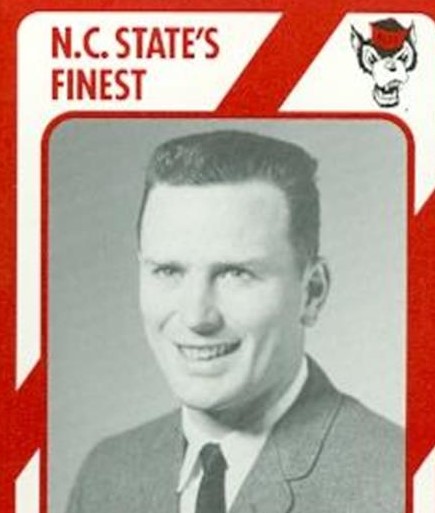
In Memoriam: HoopsHD interviews Lou Pucillo about Everett Case

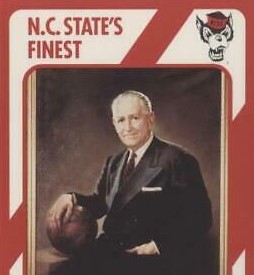
Everett Case was born in 1900, less than 1 decade after the game of basketball was played for the very 1st time in 1891. After graduating from college in 1923 he spent the next 4 decades as 1 of the most successful coaches of his era: 726 wins in 23 years as a high school coach (including 4 Indiana state championships), followed by 377 wins and 6 NCAA tourney appearances during 18 years as head coach at NC State. He was inducted into the North Carolina Sports Hall of Fame in 1964, the Indiana Basketball Hall of Fame in 1968, and the Basketball Hall of Fame in 1982. HoopsHD’s Jon Teitel got to chat with 1959 ACC POY Lou Pucillo about his legendary coach. Today marks the 55th anniversary of Case’s passing on April 30, 1966, as we reflect on his life/legacy.

Case was nicknamed the “Old Grey Fox”: how did he get the nickname, and how did he like it? I learned about the nickname when I got here in 1955. He had grey hair, which is how he got the nickname. NC State conducted a national coaching search after losing 15 straight times to UNC. In fact, the guy who suggested they hire Case was legendary shoe salesman Chuck Taylor!

He compiled a 726-75 record in 23 years as a high school coach, including winning 4 Indiana state titles from 1925-1939 at Frankfort High School: how was he able to dominate for almost a quarter-century? He was a great coach and had great athletes.

After leaving the Navy in 1946 he became coach at NC State, where he won 9 straight conference titles to begin his tenure there: how on earth as he able to come in and be so good right from the start? He brought a lot of his players from the military who were very mature. He played a full-court press and started beating everyone.

He was responsible for a variety of innovations (numbers on jerseys, cutting down the nets after a big win, announcing starting players before the game, the backcourt 10-second rule, reviewing film to prepare for a game): which 1 did you like the most? We used to only have numbers on our warm-up shirts so it was nice to get numbers on our actual jerseys.

He unleashed his “Hoosier Hotshots” in an up-tempo style of basketball that the fans loved: how was he able to get so many players from Indiana to come east to Raleigh? That is where his roots were, which is why he focused his recruiting efforts there. The guys from the Northeast were more about the give-and-go, while the Midwestern guys were more strong/physical.

What are your memories of the 1947 NIT (Ralph Beard had 15 PTS in a win by eventual national runner-up Kentucky)? That was a bit before my time but I know for a fact that both he and Wildcats coach Adolph Rupp were very competitive.

In 1949 the school built the largest basketball facility in the Southeast (12,400-seat Reynolds Coliseum): how much of a factor was Case in making this a reality? The original gym was just a small place where farmers would come in to see the horse shows. When the administration hired Case in 1946 they convinced him that they would build the biggest arena in the area. He threatened to leave after they failed to follow through despite his initial success so they decided to finish the building.

In the 1956 NCAA tourney Henry Nowak scored 29 PTS and Fran Corcoran made a jumper with 5 seconds left in a 1-PT 4-OT win by Canisius: where does that rank among the most devastating losses of Case’s career? It was the most devastating loss of his career and was also tough on me and my freshman teammates. We were listening to the game on radio: it was supposed to be a sure win because Canisius did not have anyone over 6’4”. If we had won that game then I was going to go to my hometown of Philly to see us play in the following round in the Palestra. Vic Molodet was 1 of the best players I ever saw but he was called for 3 charging fouls in the 1st half, which was unheard of back then.

He was named ACC COY 3 times during a 5-year span from 1954-1958: what did it mean to him to receive such outstanding honors? He was very competitive and loved basketball: he was not married so his philosophy was to “eat, sleep, and dream basketball”. His goal was to have a basketball court in every driveway.

The ACC basketball tourney was largely his idea: how did he come up with the idea, and how did he convince the other schools to go along with it? A lot of coaches did not like the idea of a conference tourney but he was positive that it was a good idea because it worked well when he was growing up in Indiana. However, UNC coach Frank McGuire did not like it because he thought it would undo all of his team’s hard work during the regular season.

Before passing away in 1966 he instructed that his body be laid facing NC Hwy. 70 so he could “wave” to later Wolfpack teams as they traveled to Durham/Chapel Hill: how big were those in-state rivalries back in the day? I blow my car horn every time I drive past him! As the team was driving to the 1974 Final 4 to face UCLA, Coach Norm Sloan ordered the bus to stop by Coach Case’s resting place so that the team could pay its respects. The in-state rivalries were huge. Everyone knows about UNC/Duke but Wake Forest was an underrated team: it was all because of Bones McKinney. All of the schools were within 30 miles of each other, which is almost unheard of outside of Philly.

He was inducted into the Basketball Hall of Fame in 1982: when people look back on his career, how do you think he should be remembered the most? He should be remembered as the 1 who got it all started. He was a great recruiter/promoter. Case would have local North Carolina businessmen meet the opposing coach at the airport and give him the 1st-class treatment: the best hotels, a bottle of liquor waiting for him in his room, etc. That is how he was able to get so many great teams like Louisville/Cincinnati to come play at the Dixie Classic.

Posted in Interviews | Tagged , , | Comments Off on In Memoriam: HoopsHD interviews Lou Pucillo about Everett Case

Happy Birthday!: HoopsHD interviews former VMI player/coach Charlie Schmaus

Charlie Schmaus was recruited by several great colleges back in the 1960s including Florida State/Maryland but decided to go to VMI. It was a good choice: he led the team in scoring for 2 straight years in 1965/1966 and was selected 36th overall by the Cincinnati Royals in the 1966 NBA Draft. He later spent 6 years as head coach at his alma mater, including a 26-4 record in his very 1st year that included a trip to the 1977 Sweet 16. HoopsHD’s Jon Teitel got to chat with Charlie about playing/coaching in the NCAA tourney and becoming a realtor. Today is Charlie’s birthday so let us be the 1st to wish him a happy 1!

You played at Ford City High School for Coach Herb Rupert, who won 7 section titles as an assistant coach and 11 more as a head coach: what made Rupert such a great coach, and what is the most important thing you ever learned from him? Coach Neenie Campbell came before Rupert and also won a few titles so there was a great tradition there. We were like the Yankees of Section 1 basketball even though we were from a small town. Growing up we watched the kids ahead of us at Ford City and wanted to do the same thing when we were that age.

You were a 2-time 1st-team All-SoCon player at VMI and also played football: which sport did you enjoy more, and which 1 were you better at? I also played 3rd base for 3 years: baseball was my 1st sport and I was pretty good at it, but once I got to high school I started playing more basketball. I went to VMI for a couple of reasons: my high school sent a lot of successful athletes there, and my teammate who played PG was also going to VMI. It was an honor to go to a military school back in the 1960s. I got better each year and made the Helms All-American team as a senior. Had I gone to a bigger school like Maryland then I would not have had as much of a chance to develop.

What are your memories of the 1964 SoCon tourney final (you scored 19 PTS in a 5-PT win over GW)? The biggest win we had was actually in the SoCon semifinals over Davidson, as I tipped in a shot at the end to beat them. Davidson was #4 in the nation at the time and featured future NBA #1 overall pick Fred Hetzel and future Hall of Fame coach Lefty Driesell. Our team was pretty tired going into the final but I still had plenty energy: we put VMI on the map with that win.

In the 1964 NCAA tourney you scored 5 PTS in a loss to Princeton: what was it like to face Bill Bradley (34 PTS/12 REB/8 AST)? Bradley was a great player. I had to guard him even though he was a couple of inches taller than me: he just kept coming off of picks and knocking down shots. I felt that I did a good job on him, as he scored most of his points at the end after we started to press. It was almost a home game for them since we played at the Palestra. Fans could smoke indoors at the time and we were the 3rd game of the day so it was like a fog in there!

In the summer of 1966 you were drafted in the 4th round by Cincinnati (1 spot ahead of Archie Clark): did you see that as a validation of your college career or the realization of a lifelong dream of reaching the NBA? It was quite an honor, but my military commitment kept me from going to the NBA and playing with legends like Oscar Robertson. The ABA was also starting up around that time: I regret not having the opportunity because I think that I could have made a roster somewhere. I did get to play basketball in the Air Force, which was fun.

Take me through the 1976 NCAA tourney (you were an assistant to Coach Bill Blair, your former VMI teammate):
Ron Carter scored 19 PTS and had a tourney-school record 14 REB in a 6-PT win over Tennessee (Ernie Grunfeld had 36 PTS in the losing effort): how were you able to hang on for the win, and was Grunfeld just unstoppable that night? We were lucky that the “Bernie (Bernard King) and Ernie” show was not in prime time that night. We had a good team: 4 of our 5 starters averaged double-digits that season. Carter was my hometown recruit out of Pittsburgh…and he ended up breaking all of my records!

Carter had 21 PTS/12 REB in a 5-PT OT win over DePaul: was Carter just “in the zone” that entire week? Coach Ray Meyer had a bunch of giants down low while our biggest guy was only 6’7” but our PG made a lot of FTs down the stretch. We just worked the motion offense (started by Bobby Knight at Indiana) and tried to get mismatches. Carter would go inside or outside based on who was guarding him.

Will Bynum scored a tourney-school record 34 PTS in a loss to Rutgers: how was Bynum able to play his best when it mattered the most, and what was the feeling like in your locker room afterwards? Bynum was a great player/shooter, but he liked to pass so we had to beg him to shoot sometimes! We were a smart team and shot over 50% from the field that year. We were disappointed that Carter was on the bench with foul trouble most of the game, but Rutgers was undefeated.

In 1976 you became VMI coach after Blair left, and went 26-4 and won the SoCon tourney in your very 1st season: what did you learn from working under Blair, and how were you able to come in and be so successful so quickly? Most coaches will agree that you are only as good as your players: I was fortunate that 4 of my 5 starters that 1st year were players who I had recruited as an assistant. I firmly believed that if it ain’t broke you should not fix it! We finished 20th in the AP poll, which I was very proud of, but if Bill was there then we would have done the same thing.

In 1977 you were named SoCon COY: what did it mean to you to win such an outstanding honor? I am proud of it, but again, it is the players who win the games. We had a good rapport: Bill probably should have won the COY award the year before. As a VMI man I am proud to have been a part of all 3 titles in school history.

Take me through the 1977 NCAA tourney:
Bynum and Carter each scored 18 PTS in a 7-PT win over Duquesne (Norm Nixon: 27 PTS): what did you team learn from the 1976 tourney that helped you in the 1977 tourney, and could you tell at the time that Nixon was going to be a star? Coming from Pittsburgh, neither Carter nor I were recruited by Duquesne so we had a little extra motivation going into that game! Winning breeds winning so we were not afraid of anyone. We knew that Nixon was their #1 guy but we felt that he could not beat us all by himself.

Carter had 28 PTS/10 REB in a loss to Kentucky: where does Carter rank among the best players you ever coached, and could you tell that the Wildcats were poised to win it all the following year? Kentucky had everything going for them: good guards, Jack Givens, their Twin Towers, etc. We played well in the 1st half but just got worn out by Rick Robey/Mike Phillips in the 2nd half. They also had Truman Claytor coming off the bench and he had a career game with 29 PTS/13-15 FG. Carter was an All-American and outscored Givens that night. UNC was also in the East regional with us and Dean Smith was very complimentary of our team after the game, which I will always remember. We just enjoyed the experience.

You currently work in real estate in North Myrtle Beach, SC: how do you like the job, and what do you hope to do in the future? We have been here for almost 3 decades now and just love it. Real estate is similar to recruiting, which is good because I am a people person. All of my coaching friends come to visit because of the beaches, golf courses, etc. I am an observer of the officials for women’s games, which helps me stay involved in the sport: basketball will be in my blood forever.

Posted in Interviews | Comments Off on Happy Birthday!: HoopsHD interviews former VMI player/coach Charlie Schmaus

Happy Birthday!: HoopsHD sends its best wishes to Eastern Washington legend Rodney Stuckey

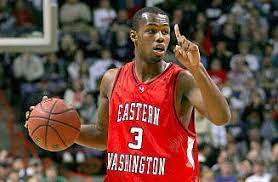
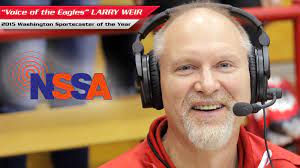
Rodney Stuckey only played basketball at Eastern Washington for 2 years but he certainly made the most of his time there, scoring 24.2 PPG while being named conference ROY as a freshman and scoring 24.6 PPG while being named conference POY as a sophomore. After being drafted 15th overall by Detroit in the summer of 2007 he broke his hand during the preseason but bounced back to make the NBA All-Rookie 2nd Team as his team made the Eastern Conference Finals. He played 10 years in the NBA, averaged 12.9 PPG in 612 career games, and shot 82.7 FT%. HoopsHD’s Jon Teitel got to chat with both Rodney as well as Eastern Washington radio play-by-play announcer Larry Weir about Rodney’s great career. Rodney turns 35 today so let us be the last to wish him a happy birthday!

You grew up near Seattle: what made you choose the Eagles? RS: I grew up in Kent. Coming out of high school I was a couple credits short of qualifying but Eastern allowed me to come there and get my academics right under Prop 48. LW: He did not qualify academically right out of high school so he could not accept any offers from Pac-10 schools. He did not want to go the prep school/JC route so he went to Eastern Washington to focus on academics for 1 year. He was a smart kid who just had a bad living situation where school took a back seat to survival. He was an Academic All-American in college and was tremendously bright.

In January of 2006 you scored a school-record 45 PTS (including 23 PTS in the final 8 minutes) and had 5 STL in 32 minutes in a 10-PT loss at Northern Arizona: was it just 1 of those scenarios where every shot you put up seemed to go in because you were “in the zone”? RS: I do not remember it well but I guess you could say that I was in the zone. LW: No: it was just 1 of those situations where NAU did not have anyone who could guard him! He was physically stronger than most opponents and was a man among boys. He would draw fouls, get to the line, and make his FTs. He was arguably the best player the conference has ever seen until Damian Lillard came along. He was just better than the competition.

In 2006 you scored 24.2 PPG and became the 1st Big Sky freshman to ever be named conference POY: how were you able to come in and dominate right from the start? RS: Sitting out the 1st year really helped me analyze the speed/physicality of college basketball. I just focused on being in tip-top shape and was motivated to get better off the court. It also helped me in the classroom. LW: He was very skilled and received good high school coaching. I think the year he spent sitting out and not practicing with the team caused him to miss the sport and come back with a vengeance as he worked to improve. He was a Pac-10 player in a low-major conference. Eastern did not have a tremendous team besides him, which made it even more amazing: everyone knew that he was the man so he faced a lot of gimmick defenses.

In the 2006 conference tourney semifinals you scored 26 PTS but missed a shot at the buzzer in a 2-PT OT loss to Montana: where does that rank among the most devastating losses of your career? RS: There are no devastating losses: I just missed a shot. Montana was/is a great program: I had a couple of buddies on that team. LW: I would guess that it would be the toughest for him as we did not even make the conference tourney the following year: at the time they only took the top-6 teams.

In 2007 you averaged 24.6 PPG (#7 in the nation) and 2.4 SPG: how did you balance your offense with your defense? RS: I was always in the passing lanes on defense and tricking the offensive player into making a pass they thought they could make. LW: The 1 guy we did have was Paul Butorac who was a pretty good shot blocker, which allowed Rodney to take some chances to get into passing lanes to try and make a steal. Even if the team allowed an easy layup the coach did not mind because Rodney could get out on the break and score in transition. He had good anticipation to make some things happen.

You also led the conference that year with 84.7 FT%: what is the secret to being a great FT shooter? RS: Just repetition and practice. If you keep doing it over and over it will start going in. I never left the gym without making 10-20 in a row. LW: Probably repetition: to me it is more about consistency/confidence/concentration. Some guys might get fatigued or just not think they will make it…but that was not Rodney. He took it seriously and put in the work and did what he needed to do.

In the summer of 2007 you were drafted 15th overall by Detroit (6 spots behind Joakim Noah): did you see that as a validation of your college career, or the realization of a lifelong dream of reaching the NBA, or other? RS: Both of those things. Every little kid has a dream of making it to the pros and my dream came true. It was a blessing and a lot of fun. It was a hard decision to leave college and my buddies but it was just time for me to go. LW: I am sure that it was all of that. It was his dream to play pro ball and he worked very hard to get there. Eastern was going to be very good the following year but you need to get out if you have designs on the NBA and might not have a team that is good enough to make the NCAA tourney. A few years ago there was a guy much like Rodney named Tyler Hall who was on the radar of many NBA teams at Montana State, but he stayed for 4 years because he thought that he could improve his stock, but unfortunately he went undrafted. It would have been fun to see Rodney stay for 4 years and realize how high he ranked in NCAA history.

In 2008 you made the NBA All-Rookie 2nd team: how were you able to make such a smooth transition from college to the pros? RS: It was all about the veteran guys on my squad. I was fortunate to be on a team with Tayshaun Prince/Chauncey Billups/Lindsey Hunter and a great coach in Flip Saunders. Joe Dumars was in the front office and all of their knowledge helped me a lot: I had a lot of outlets to get ready mentally. I broke my hand that year but got to sit back and watch the speed/physicality for the 1st 3-4 months. LW: In a lot of ways his game translated well at the time. He was never an outstanding shooter but was a powerful athlete with size/strength. The game has changed a bit in the past decade but back then the bigger-bodied guys were more important than the 3-PT shooters.

You had a 10-year NBA career but only played 75+ games in a season twice: did injuries prevented your from having the career that you desired? RS: I had a really bad ankle problem: there was a bone in my foot that was killing me and gave me a lot of pain. I also pulled some hamstrings, which was very frustrating, but I was blessed to play 10 years in the NBA, which not a lot of people can say. Everyone is dealt a different hand and now I am starting my life after basketball. I am actually about to open up my own gym in partnership with Shoot360. There will be a lot of interactive shooting guns that will give you feedback and it will be a fun gym. LW: Probably not. I think most of his injuries early on were more of a fluke than a torn ACL that kept getting hurt over and over. Rodney always took really good care of himself but was not a long/lean guy so I think that he had more difficulty with stress on his tendons because he was a muscular person.

In January of 2009 your #3 jersey was retired by Eastern Washington: when people look back on your career, how do you want to be remembered the most? RS: I have always been a very humble guy who has given back. I was a good teammate/person and everyone would tell you the same. LW: He is the best player in school history in my opinion and was a solid NBA player. You never heard a lot of things about him causing a lot of trouble. He was a tremendous young man who did something that I have never seen before. He came here on an official visit in 2004 and was just standing around watching practice. The coaching staff introduced him to me and said that he was going to make the NBA. At the end of practice he walked all the way across the court to say goodbye to me: it shows the quality of the young man because I was just a radio guy standing around. That always caught me: he probably gets pigeon-holed as a non-qualifier but it was due to life circumstances getting in the way. He was not lazy and I always enjoy talking to him when he comes back to campus.

Posted in Interviews | Tagged , , | Comments Off on Happy Birthday!: HoopsHD sends its best wishes to Eastern Washington legend Rodney Stuckey

The Hoops HD Report: Final Four Recap

Chad and the panel look back at the Final Four and National Championship games and discuss how good this Baylor team was, and what a career Scott Drew has had bringing them from one of the worst power conference programs in the country to one of the blue bloods of the sport.  We also address the issue of how people feel Gonzaga is overrated or overvalued and look at how successful they have been in recent years despite not winning a national championship.  We also look back at other big moments in the tournament, discuss some of the bigger coaching changes, and give our final thoughts of the season.

And for all you radio lovers, below is an audio only version of the show…

Posted in Hoops HD Report, Podcasts, Videocasts | Comments Off on The Hoops HD Report: Final Four Recap

Puppet Ramblings: Final Four Thoughts

-For starters, BIG TIME congrats to Scott Drew and the Baylor Bears.  They survived a rough schedule in one of the nation’s toughest conferences, they had to overcome a COVID protocol shutdown at a crucial point in the season, their run to the national title game involved beating three protected seeds, plus a Villanova team that was red hot after winning the Big East Tournament and a Wisconsin team that was potentially dangerous, and they blew a Gonzaga team off the floor in National Title game.  This was a program that not only had no real basketball culture or history when Scott Drew arrived.  They were a program that was coming off one of the worst scandals and NCAA smackdowns in all of recent history.  So to take what was undeniably a complete mess and turn it into a national power is one of the greatest accomplishments in the history of coaching.  It really is.  They hadn’t just sucked for half a century.  They had sucked for half a century AND all but got the death penalty from the NCAA.

-I also want to say something about this Gonzaga program, and this year’s team in particular.  A lot of people say Gonzaga is overrated and they always choke in the tournament.  Whenever you hear anyone say that, do the best you can to not listen to them any further.  They are too stupid to listen to, and while I don’t think stupidity is necessarily contagious, I don’t know that for sure.

-Gonzaga has been to six straight Sweet Sixteens.  That’s more than anyone else.  On top of that, they’ve been to four Elite Eights, and been the national runners up twice during that stretch.  That is simply a remarkable run.  That’s not “choking.”  Only one team doesn’t lose their last game in the NCAA Tournament, yet Gonzaga is the only one who can win all but the national title game (twice) and be given that label.  Let’s compare this year’s team to the 2014-2015 Kentucky team.

-Gonzaga had just as many top 50 wins as that Kentucky team (13) despite playing fewer games overall.

-Gonzaga had more wins against teams that finished in the top 25 than that Kentucky team despite playing fewer games overall.

-Gonzaga went one round further.  The Kentucky team that year lost in the Final Four to a Wisconsin team that then ended up losing in the national title game.

Hence, I submit that this year’s Gonzaga team was objectively more accomplished than the 2014-2015 Kentucky team that everyone still says is so great and that no sane person would try to argue was a team that choked.


-The national title game, and the first Final Four game were kind of clunkers, but the UCLA vs Gonzaga Final Four game was one of the best played college basketball games I’ve ever seen.  It was an absolute classic where every time it looked like Gonzaga had momentum, UCLA would fight back.  The fact that it was UCLA, and that they have won 11 national titles, should take at least a little bit of the sting off that loss since…well…it’s not like they’ve never been this far or had those moments, but that is one thing about great games.  A team can play great, and still not win, and that’s what happened to UCLA the other night.


-The season from hell is FINALLY over!!  Thanks to all the players and coaches for making this season happen.  It’s hard enough as it is during normal times, but it was infinitely harder with COVID hanging over everything.  As a fan of the sport, I’m grateful that we got to have the season that we did, and want to thank everyone that made it happen regardless of how many games your teams won.  Hopefully we are now on a countdown back to normalcy!!  We will see you in full arenas next year!!

….and, we will see you periodically throughout the offseason as well.  We will try and get some good guests and show topics lined up and come at you with at least one podcast per month until October.  We will start those tonight!!

Posted in News and Notes | Comments Off on Puppet Ramblings: Final Four Thoughts