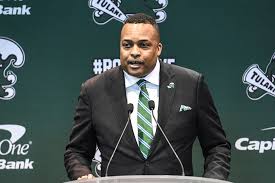
The Olympians: HoopsHD interviews Tom Dirato and Jack Herron about 3-time Olympic coach Henry Iba

The NBA Finals date back to 1947 (when they were known as the Basketball Association of America Finals) and the very 1st NCAA tourney was held in 1939. Olympic basketball competition is even older: it debuted as a demonstration event in 1904 and the men’s version became a medal sport in 1936, with the women finally getting their chance to go for the gold in 1976. The United States has dominated Olympic basketball competition from the start: the men have won 15 gold medals in the 18 tournaments they have participated in during the past 84 years, while the women have won 8 gold medals in the 10 tournaments in which they have competed during the past 44 years. Those of you who were looking forward to the 2020 Olympics opening ceremonies in Tokyo on July 24, 2020 will have to wait an extra 364 days, as the coronavirus caused a postponement until July 23, 2021. Due to the absence of college basketball since mid-March, HoopsHD’s Jon Teitel decided to fill the void by trying to interview as many prior Olympic players/coaches as possible so that you have something to read this summer while not watching the Summer Games. We continue our coverage by chatting with former Oklahoma State color analyst Tom Dirato and former player Jack Herron about Coach Iba winning back-to-back NCAA titles and becoming the 1st coach to ever win multiple Olympic basketball gold medals. Today would have been Coach Iba’s 116th birthday so we are proud to celebrate his memory.


In 1925 the St. Louis Cardinals offered Iba a contract to play pro baseball (he turned it down because he could not hit a curve ball) and in 1926 he led the state of Missouri in scoring as a basketball player at Westminster College: which sport was he best at, and which sport did he enjoy the most? Tom Dirato: I am guessing basketball! Having talked to him on many occasions I know that he had a warm spot in his heart for baseball. Jack Herron: I called my close friend Moe Iba (Hank’s son) to ask him about this and he said even he did not know. His dad was quite an athlete in his day but his inability to hit the curve meant that he was not geared to pro baseball. He later coached baseball and even won a state title. He played basketball with several other legends including Wyoming coach Everett Shelton and the father of OSU 3-sport star Dick Soergel. In his very 1st year as basketball coach at Northwestern Missouri State in 1930 he went 30-0 thanks in large part to future Hall of Famer Jack McCracken. Many of his best players came out of junior college: he would have tryouts, bring in 200 players, and then keep the best ones around. My dad had to tryout in Stillwater and was packing up his car afterward because he thought that he did not make the cut until Mr. Iba told him to unpack. If you ask any of his former players they will tell you that what they admired the most was his discipline/integrity.

As head coach at Oklahoma A&M his teams were known for being methodical and controlling the ball, which often led to low-scoring games: why did he choose that offensive philosophy, and what made it so effective? TD: That was the style of play back in the day. His former player Eddie Sutton said that was just the way it went: there was no shot clock/3-PT shot so defense was certainly the priority. His practices were legendary as to how hard the team worked: they would go 3 times/day, which they cannot do anymore. They centered on man-to-man defense, rebounding, and the finer points of the game. JH: My dad played for him from 1940-1943. Iba received a lot of criticism for his style of play and he even wanted to speed it up himself. However, if we had the ball and a 1-PT lead then the other team was in trouble! Freshmen were ineligible during my era so we spent 6 weeks doing nothing but playing defense against the varsity. I have been around some of the best coaches ever including John Wooden/Bobby Knight. Coach Knight was the best at developing a game-plan but Iba was the best at controlling the ball. 2-time NAIA championship coach Bob Vanatta once said, “You might think that you can run against Oklahoma State…but if Mr. Iba does not want you to run then you will not run!” When classes were not in session we would have 3-a-days from 8AM to midnight with only a few breaks for meals: it was brutal. When I later got to reminisce with Hall of Fame coach Don Haskins about his time playing for Iba he said that the 1 thing he remembered was those 3-a-days. Girlfriends were a no-no but if you got married then they were okay: all of the players’ wives would say that he was the nicest man.

He was known as the “Iron Duke of Defense” and his “swinging gate” defense (a man-to-man with team flow) helped his teams lead the nation in scoring defense 16 times during his first 23 seasons in Stillwater: where does he rank among the greatest defensive coaches ever? TD: I would think right around the top. Other coaches in Stillwater have preached it, including disciples like Sutton. Mr. Iba founded it and it continues today. Bobby Knight said that he learned much of his philosophy from Henry, who was so demanding of his players. He was hard on his players and sometimes difficult to be around but he just wanted his players to live up to what he expected. JH: We led the nation in defense during my playing days due to ball control. Coach Tex Winter recruited me and we became great friends. We later lost to Tex when he was coaching Kansas State and we only took 40 shots: Tex said that any team that takes only 40 shots deserves to lose! We controlled how many shots were taken and did not change from that. The basis of our defense was to cover the point of the ball. As soon as an opposing player got the ball we would be “in his jock” and run him in certain directions. If the ball was on 1 wing then we would keep 1 foot in the lane on the other side of the floor so that we could “swing” our defense. I had to cover the best player on the other team for 64 games: I took pride in it…but you had better be in condition if you want to do that.

The Aggies made 3 NIT semifinals from 1938-1944, 6 Elite 8s in a 10-year span from 1945-1954, and became the 1st team to win consecutive NCAA titles in 1945/1946: how was he able to be so successful in the postseason for such a long period of time? TD: He would be the 1st to tell you that he had good players but his system was also important. When you showed up you knew what you would have to do. I do not think that his postseason success was a reflection of the time of year: they played hard all season long. The NIT was a big tournament back then because only a few schools made it. Most of his players said that they got better from the time they arrived on campus to the time they left. JH: He made 8 NCAA tourneys and was the 1st coach to make 4 Final 4s. Coach Knight made a point to befriend former coaches like Pete Newell/Iba and he said, “When the shadow is cast on basketball, the biggest shadow is Iba”. John McLendon was his scout who was sent all over the world to check out other teams and Coach Iba took in every word that John reported back to him. Mr. Iba invented the motion offense that was later used by Knight/Mike Krzyzewski. Dean Smith came to Stillwater to study our 4-corners offense back in the day: people think that Dean invented it but he learned it from Iba. Many of his former players who became coaches like Wilbur “Sparky” Stalcup later sent several of their own high school stars to play at Oklahoma State. He was a great coach of big men: when Bryant Reeves showed up to play for Eddie Sutton he was a work in progress but Sutton took those big-man drills and turned him into an All-American. A lot of the difference-makers on Iba’s teams were big/strong/tough guys who had returned from the war. When he scouted players, the most important thing he looked at was whether they were coachable.

He also spent many years as athletic director: how did he balance being a coach with being an administrator? TD: I was not here at the time but it could not have been simple. According to 1 story, he looked around as athletic director and surveyed the situation and decided that he would emphasize other sports besides football, but I do not know if that was indeed the case. I do not think that he ignored the football situation but that is the folklore and you still hear it today. JH: I got on the Olympic Committee after being successful as an Air Force coach. I got to reconnect with Iba in Dayton at the 1971 College All-Star Game. Only a person of Iba’s stature could get Oklahoma State into the Big 8: the revenue from football games made a world of difference. I grew up in Norman: if OU loses a game then the whole town goes into a depression. Iba’s theory was that he might not win a football title but the Cowboys could excel in all of the other sports (baseball/wrestling/etc.). The pressure of trying to fund all of those sports was tough on him as an athletic administrator.

It was rumored that he hated his in-state rival so much that he refused to set foot in Norman unless it was for a road game against the Sooners: how do you describe “Bedlam” to someone who has never seen it in person? TD: I am a big advocate of that after doing radio for 30 years! I do not know if it is as fierce now as it was 20-25 years ago but both schools want to come out on top. When I 1st arrived it was hot and heavy and the fire will never die down. It is more friendly now but I could see him saying that. I promise you that the juices are flowing. When the 2 schools tangle all bets are off but the intensity is off the charts. JH: Mrs. Iba would invite Curt Gowdy to dinner before he announced basketball games in Stillwater…and told him that she thought he was spending too much time covering OU football! I remember listening to 2 guys arguing about Bedlam back in 1975: in our state it is big. The most exciting basketball game you will ever go to is when OU comes to Gallagher-Iba Arena in front of 13,000 people. 1 of the best players at OU was Kenny Pryor, who was an All-American at Phillips 66 with Bob Kurland. Kurland came to Kenny’s funeral and toward the end of the service they had a band play “Boomer Sooner”: people would not believe it but I saw Kurland stand up for that! Iba was friends with OU basketball coach Bruce Drake so that rumor is absolutely false: Iba came to Norman to visit me several times. My dad’s blood was orange but he is in a famous picture of Kurland holding his hand 2’ above the rim: that photo was taken at Bedlam in Norman in 1943 and actually led the NCAA to create the goaltending rule.

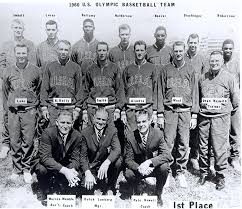
He was the 1st coach to ever win multiple Olympic basketball gold medals (1964/1968): what did it mean to him to coach team USA? TD: He loved his country. We would shoot the breeze at practice and he would relate some of the stories. He coached his Olympic teams just like his college teams: there was no messing around. I thought that he was the perfect choice: a lot of our work ethic was embodied in what he brought to the team. JH: Hindsight is 20-20 but if I was in Munich then I wish he would have hustled the team into the locker room after they won it and then gone through World War III if necessary to keep the gold medal. He told me, “I was on the worldwide stage and I was representing the US: you have to remain civil/dignified so I could not have done that to the world”. Jerry Shipp was an AAU All-American who was on the 1964 Olympic team: he told me that before they took the court to face the Russians in the gold medal game Iba told him to shut out the best player on the opposing team…and he did.

In 1968 he was inducted into the Hall of Fame: where does that rank among the highlights of his career? TD: He was a very humble man but I am sure that he appreciated it. He was happier when 1 of his players/friends received an honor: it was not about him. I never got the impression that he was overcome by it but I am sure he was proud of being on that wall. JH: He was named to so many Halls of Fame and won so many awards but I do not think it was paramount in his career. Coach Wooden was so humble even though he was the 1st person to ever make the Hall of Fame as a player and coach. I know that Mr. Iba wanted to make the Hall of Fame but it did not define his legacy.

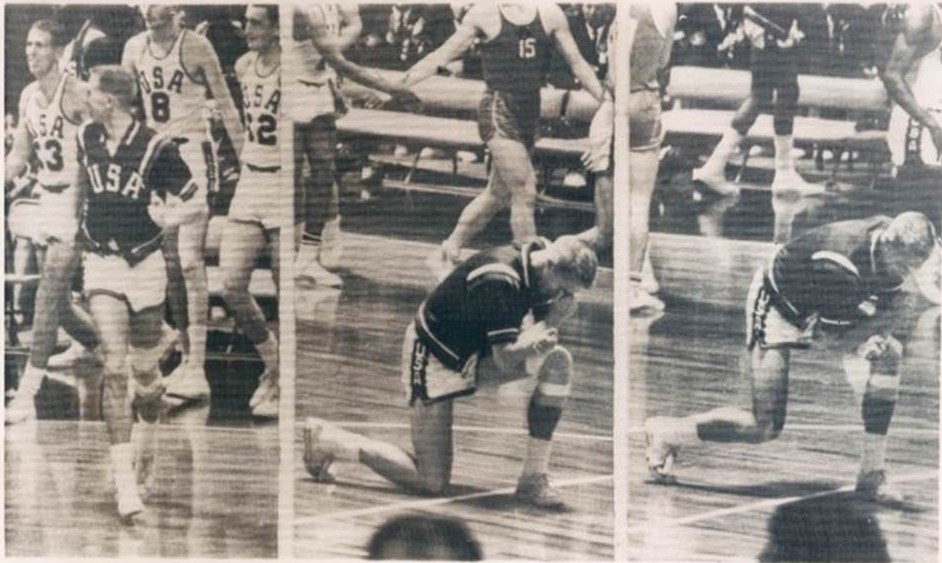
In the 1972 Olympic gold medal game his team had a controversial 51-50 loss to the Soviet Union after the clock was reset twice, which broke team USA’s 63-game winning streak since Olympic basketball debuted in 1936: what impact did that game have on his life (if any)? TD: I am sure that it stung but he never went into great detail about it with me. It would be hard to take for anyone, much less an intense competitor like Mr. Iba. We had the game won a couple of times but the referees kept giving the Soviets more chances. I am unsure if he ever got over it: we all felt that he was shafted. JH: The Air Force named me to the Committee due to my relationship with Mr. Iba. I wrote him a letter to see if he could get me into the Olympics. I also talked to 3-star Air Force general George Simler to see if he could help me out and he wrote a letter saying that I should be allowed to do whatever I wanted: he was my meal ticket! We held many phone calls and I traveled to meetings all over the country. I asked the head of USA Basketball why Iba was the only guy allowed to coach the Olympic team: he told me that the only person who all of the different entities (AAU/NCAA/etc.) could agree on was Iba! I did not want him coaching forever because the other countries were getting better: basketball had improved abroad while we were still using young college/AAU players so the talent level was tightening up. I think it was inevitable that the US was going to lose at some point. It also hurt us when some of the best players refused to come to the Olympic Trials. Spencer Haywood came out of junior college but saved us in Mexico City in 1968. If we could have gotten the best college players in America then I think we could have kept winning. We could not take some of the best ones because they had already signed pro contracts. I wish that Wooden would have been allowed to coach in at least 1 Olympics.

He was a 2-time national COY, his coaching tree includes many former players/assistants who became Hall of Famers (such as Larry Brown/Don Haskins/Bobby Knight) and the United States Basketball Writers Association award for the college basketball coach of the year is called the Henry Iba Award: what is his lasting legacy on the college basketball coaching profession? TD: Some of the giants in the business like Tom Izzo/Mike Krzyzewski have paid homage to him regarding how they approach the game both on/off the floor. Anyone who has had success can be traced back to Iba or 1 of his disciples. To mention his coaching tree is insufficient: he had an impact on so many people. He came around 1 day to watch Eddie coach: when he saw Bryant Reeves for the 1st time he said, “This boy is a project but he will be good because he has great hands.” We were talking about practice and he told me that he listened to me on the radio and then paid me the ultimate compliment: “You know the game and you know what you are talking about…but you talk too damn fast!” It was a long time ago but I will remember that forever. He had an intimidating presence but was such a kind/gentle person and a gem of a man. We loved to be around him and he is still dearly missed. JH: I was at the press conference when they introduced Eddie Sutton as head coach: Mr. Iba was in his 80s but showed up in a suit to welcome Eddie. He would stand next to me at practice and tell me how to move without the ball: I wondered how this old son-of-a-gun knew all of this stuff until realizing that he was the genius who had invented it! He was a great human being who would level with us about many things after our playing days: he always took the high road. We referred to him as “the Man” as in “You can lie to yourself and to God…but you better not lie to the Man”!

Posted in Interviews | Tagged , , , | Comments Off on The Olympians: HoopsHD interviews Tom Dirato and Jack Herron about 3-time Olympic coach Henry Iba

The Olympians: HoopsHD interviews Jerry Johnson about 1936 Olympic gold medalist Francis Johnson

The NBA Finals date back to 1947 (when they were known as the Basketball Association of America Finals) and the very 1st NCAA tourney was held in 1939. Olympic basketball competition is even older: it debuted as a demonstration event in 1904 and the men’s version became a medal sport in 1936, with the women finally getting their chance to go for the gold in 1976. The United States has dominated Olympic basketball competition from the start: the men have won 15 gold medals in the 18 tournaments they have participated in during the past 84 years, while the women have won 8 gold medals in the 10 tournaments in which they have competed during the past 44 years. Those of you who were looking forward to the 2020 Olympics opening ceremonies in Tokyo on July 24, 2020 will have to wait an extra 364 days, as the coronavirus caused a postponement until July 23, 2021. Due to the absence of college basketball since mid-March, HoopsHD’s Jon Teitel decided to fill the void by trying to interview as many prior Olympic players/coaches as possible so that you have something to read this summer while not watching the Summer Games. We continue our coverage by chatting with Jerry Johnson about his father Francis winning a gold medal at the very 1st Olympics in 1936. Today would have been Francis’ 110th birthday and we are proud to celebrate his memory.

 (photo credit: Rich Hughes)

 (photo credit: usab.com)

Your father was born/raised in Kansas: what made him choose Wichita State? He was born in a little town called Hartford that is about 15 miles outside Emporia. My grandfather passed away when my dad was only 11. He had several siblings including his older brother Gene, who later became a coach. My dad ended up at Wichita State because Gene was the head coach there. My dad was also a champion magazine-seller, which helped him make a little money. He would trade a subscription for a chicken or 2 and he would just load them into a coop on his truck and then go sell them elsewhere. He did not graduate because he had too many other things going on during his senior year, but after getting married my mom made him go back and graduate.

What did he like the most about playing for Gene, and what was the not-so-best part? The best part is that they thought an awful lot alike. The hardest part is that Gene was a cocky kind of guy and my dad was the complete opposite of that. My dad would only say nice things about other people and was only married to 1 woman his whole life, while Gene had several wives.

In addition to basketball he played football, pole vaulted, and ran hurdles for the track team: which sport was he best at, and which sport did he enjoy the most? He is the only 3-sport 3-letter winner in the school’s Hall of Fame. Uncle Gene is in that Hall of Fame as well. He was the best at basketball but enjoyed playing all sports. He also became a really good golfer and even won a city championship 1 year. Playing cards/shooting pool was a given and my dad was excellent at both.

He allegedly had great hand-eye coordination that served him well in many sports including trap shooting/billiards: was it something that he was born with or did he have to practice it all the time in an attempt to become perfect? He was pretty much a natural athlete. 1 of the things that frustrated me the most was that he could eyeball a fence and see whether it was straight/level. I flew jets in the Air Force and was a good high-jumper so perhaps it is genetic. He would go to the Officers’ Club for card night and come home with a big wad of money: he never came home short because he could read the other players’ tells. He was a great storyteller and a great listener.

After graduation he played AAU basketball where he was a 3-time All-American and won national titles with the Globe Refiners and Healey Motors: what did it mean to him to receive such outstanding honors, and what did it mean to him to win a pair of titles? He was really proud of all of that. He coached my church league team and we had the best team in the league because he was such a great teacher. I have that same fault with my kids because if something is worth doing then it is worth doing right. He sponsored a junior college team for 25 years and was recognized for doing that: he just liked to see good basketball being played.

Gene was an assistant coach for team USA at the 1936 Olympics: were there any allegations of nepotism when your dad made the team? No: there were several players from the Globe Refiners who also made the team. My dad could have coached the Globe team himself because he was such a good player/teacher. Both Gene/my dad succeeded everywhere they went: my dad even helped Gene purchase a car dealership. My dad had a strong sense of right/wrong.

He was named captain of team USA: what did it mean to him to represent his country, and what did it mean to him to win a gold medal? It was the highlight of his life. He was the only unanimous selection by the sportswriters to be captain. Gene argued with the head referee and the ref tried to humble him by having my dad foul out of the gold medal game.

He served in the Navy during WWII: what impact did his service have on him either on or off the court? His service started after his basketball career. He had a bad ankle and his nose was broken 7 times: he had no septum left so they just took the bone out. He was the worst car driver you have ever seen because he would keep moving his foot up and down on the gas pedal. He was an elite athlete with a college degree and the Navy needed a lot of officers right after Pearl Harbor. He was part of Class 42-B that included athletes from many other sports, including future Olympic coach Bruce Drake. That got him into Annapolis and he got a ring from there, which was frowned upon by the guys who spent 3-4 years there to get their own ring. He was a player-coach for the Cadets’ basketball team and they won most of their games. 1 time he called a timeout, put himself into the game with his prematurely gray hair, and told a 6’7” player on the other team that if he kept bullying his teammates he would be sorry. The guy was later carried off the court…but nobody saw the foul that led to it! My dad had his neck broken once as well after crashing into the stage under 1 of the baskets. He knew how to use his butt/shoulders to get separation.

After retiring from basketball he worked for the John Deere Company and became a noted horse rancher who eventually produced 25 national/world champions: how was he able to follow his on-court success by becoming so successful off the court? He is in the National Appaloosa Horse Hall of Fame, as is 1 of our horses. I got him into the business and then he took over when I entered the Air Force. He was a national judge at horse shows. The key to any success is organization: he learned it from both basketball and the Academy. He set up a filing system on all of the Cadets and took the same color-coded flip cards with him to John Deere to keep track of all of their parts.

He passed away in 1997: when people look back on his career, how do you think that he should be remembered the most? He had several nicknames but 1 of them was “Senator”. I do not know how he got it but it was a sign of respect. He always called everyone by their name or “Sir”, and a lot of people respected that.

For more info about the 1936 US Olympic team check out “Sporting Labor in the Hollywood Studio System: Basketball, Universal Pictures, and the 1936 Berlin Olympics” by Professor Alex Kupfer at: https://cinema.usc.edu/spectator/35.2/2_Kupfer.pdf and “Netting Out Basketball 1936” by Rich Hughes at: www.amazon.com/Netting-Out-Basketball-1936-Remarkable/dp/1770679707

Posted in Interviews | Tagged , | Comments Off on The Olympians: HoopsHD interviews Jerry Johnson about 1936 Olympic gold medalist Francis Johnson

The Olympians: HoopsHD interviews 2-time Olympic gold medalist Ruthie Bolton

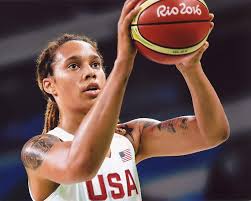
The NBA Finals date back to 1947 (when they were known as the Basketball Association of America Finals) and the very 1st NCAA tourney was held in 1939. Olympic basketball competition is even older: it debuted as a demonstration event in 1904 and the men’s version became a medal sport in 1936, with the women finally getting their chance to go for the gold in 1976. The United States has dominated Olympic basketball competition from the start: the men have won 15 gold medals in the 18 tournaments they have participated in during the past 84 years, while the women have won 8 gold medals in the 10 tournaments in which they have competed during the past 44 years. Those of you who were looking forward to the 2020 Olympics opening ceremonies in Tokyo on July 24, 2020 will have to wait an extra 364 days, as the coronavirus caused a postponement until July 23, 2021. Due to the absence of college basketball since mid-March, HoopsHD’s Jon Teitel decided to fill the void by trying to interview as many prior Olympic players/coaches as possible so that you have something to read this summer while not watching the Summer Games. We continue our coverage by chatting with Ruthie Bolton about winning a pair of gold medals. Today marks the 24th anniversary of Ruthie having 15 PTS/5 STL in a 111-87 win over Brazil to clinch her 1st gold medal.

You had 19 siblings, 1 of whom was your older sister Mae: how close were you 2, and what was it like to be teammates with her at Auburn? We are pretty close and it was a beautiful thing to play together in college. She was always bossing me around but in a good way because she felt the need to take care of me. Our relationship grew from there and she has always been overprotective of me: she was even my agent at 1 time and still helps me out with some management things.

Take me through the 1988 Final 4:
In the semifinal you had a Final 4-record 10 STL in a win over Long Beach State: what is the secret to playing great defense? I think the girl who I stole the ball from the most (Penny Taylor) still has never forgiven me! I did not have the prettiest game back then but I loved proving myself so I wanted my team to know that they could depend on me. I got better down the stretch and was known for my aggressiveness on the national team. I still tell people that if you can lock down someone on defense then your coach will notice it.

In the title game you scored 16 PTS in the 1st half of a 2-PT loss to Louisiana Tech: how tough was it to go against fellow future Hall of Famer Teresa Weatherspoon in the 2nd half (as you went scoreless)? When I think about that it just reminds me that Teresa was such a tough player and a great defender as well. I did not have a scorer’s mentality so if I was not open then I did not force the issue. I think they were not expecting me to score so much in the 1st half and they just made some adjustments at halftime. Even though we did not win we still made history: I respect her highly and if anyone ended up beating me then I am glad it was her.

Take me through the 1989 Final 4:
In the semifinal your team set a Final 4 record by only committing 6 turnovers in a 5-PT win over Louisiana Tech: was your team out for revenge against the defending champs, and how sweet was it to beat them? We were big on defense, which helped us win 119 games during my 4 years. I was clueless but just played with a lot of heart. I tried to create my identity and prove myself to my coach: I was a late-bloomer who just needed time to develop my game. I often think about how my resilience helped me succeed: I am probably in the 1% of players who took a Greyhound bus to show up to college and prove themselves! My dad taught me that having a tough mindset and being confident were very important. ESPN did a documentary on my life story: I was not an All-American but got better every year and never took “no” for an answer. That is also a major theme of my book called “The Ride of a Lifetime” (www.amazon.com/Ride-Lifetime-Ruthie-Bolton/dp/0977728005).

In the title game you lost to Tennessee: what was it like to face a conference rival with a national title on the line, and how did you prepare to face a team coached by Pat Summitt? Tennessee was just amazing: they were our Achilles heel and always gave us the biggest challenge. It was so sad to see a coach who had such a huge impact on her sport pass away before her time a few years ago. They came out of a timeout and the game turned completely around: her players were motivated and just flipped the switch. I remember Coach Summitt talking to us during the Olympics: she fired us up so much that we were ready to play!

After graduation you spent about a decade as a 1st Lieutenant in the Army Reserves: what impact did your service have on you either on or off the court? Teamwork is what I learned the most about: even when you are part of a team you still have individual responsibilities. It was a springboard for my professional career and helped me build my mental toughness. We would get out on the obstacle course and by the end of the day I had done something that I did not think I could have done. I encourage kids to join the military if they need time to grow and learn about themselves.

At the 1996 Olympics in Atlanta you led team USA with 23 STL in 8 games to win the gold medal (then won another gold medal 4 years later in Sydney): where do you think that 1996 team that went 60-0 ranks among the greatest in the history of the sport? We really made history that year after making a ton of sacrifices. I am still living it and those memories remain a huge part of my life. We spent a lot of time away from our families and had some intense training, but it made it so worth it because we were so determined to see the process come alive. The only thing we cared about was winning a gold: there was no Plan B and anything else would have been a failure. I appreciate that our entire coaching staff and our teammates were committed to a common goal: there was beauty in our struggle. When we stepped onto the court against the Brazilians Coach Tara VanDerveer told me that I had to play the best defense of my life, and I told her that I would. I was in the zone and there was no stopping me. Coach did a great job of preparing us: we were ready to show the world what we could do.

You played 8 years in the WNBA for Sacramento and were a 2-time All-Star: when you were growing up did you think that there would ever be a women’s pro league in the US, and how excited were you when you learned that it was actually going to happen? I had a lot of options and was prepared to go overseas. When I 1st heard about it I was so excited to play in my home country so it was a dream come true. I never thought that it would happen when I was growing up: I cannot believe that it has been around for 20+ years. I think that our Olympic success was a big factor in the league being founded and I feel like we were the pioneers. My kids are so proud of my success, which makes me so happy, but I want them to create their own identity and do great things themselves. I had to work hard for what I got and I want them to understand that.

After a career-threatening injury in 1998 your knee was repaired by former Olympic speed-skater/orthopedic surgeon Eric Heiden: is he a better athlete or doctor?! He was not supposed to do my surgery but the other doctor was out of town at the time. After he told me that he was a 5-time Olympian I figured that he was a good choice! He said that it would be a hard injury to come back from but I was able to bounce back with my everyday determination to not let circumstances keep me from overcoming my injury. I wanted to show my critics that I could play at that level again.

You remain in the top-35 in WNBA history with 312 3PM: what is the key to making shots from behind the arc? I was a late-bloomer in terms of shooting but I think that the key is repetition. You have to challenge yourself and get into the gym and shoot. Even if I am playing in a charity game I want to compete and play hard: when I go after loose balls my opponent will not believe it. I will never let anyone outwork me: you have to be willing to pay the price.

In 2011 you were inducted into the Women’s Basketball Hall of Fame: where does that rank among the highlights of your career? I was pregnant at the time so I was not able to look like a sexy basketball player but it was still great to be there. I never thought that I would become a Hall of Famer but it reminded me how far I had come after not being recruited. I thanked my high school coach for challenging me to dig deeper: if it was easy then perhaps I would not have worked as hard. They only give you 5 minutes to discuss the past 25 years of your life, which is not easy, but it was beautiful.

You previously worked as head coach for the women’s basketball team at Vacaville Christian High School: how do you like coaching, and what do you hope to do in the future? I coached in the past but then shifted to player development. I am hoping to get a job at the next level but am still doing some speaking on women’s empowerment. Hopefully the big man upstairs has that plan for me and I love coaching. 

To learn more about Ruthie’s amazing career you can purchase the SEC Storied film “Mighty Ruthie” at: www.youtube.com/watch?v=N1j4dQiLPUg

Posted in Interviews | Tagged , | Comments Off on The Olympians: HoopsHD interviews 2-time Olympic gold medalist Ruthie Bolton

The Olympians: HoopsHD interviews 2-time Olympic gold medalist David Robinson

The NBA Finals date back to 1947 (when they were known as the Basketball Association of America Finals) and the very 1st NCAA tourney was held in 1939. Olympic basketball competition is even older: it debuted as a demonstration event in 1904 and the men’s version became a medal sport in 1936, with the women finally getting their chance to go for the gold in 1976. The United States has dominated Olympic basketball competition from the start: the men have won 15 gold medals in the 18 tournaments they have participated in during the past 84 years, while the women have won 8 gold medals in the 10 tournaments in which they have competed during the past 44 years. Those of you who were looking forward to the 2020 Olympics opening ceremonies in Tokyo on July 24, 2020 will have to wait an extra 364 days, as the coronavirus caused a postponement until July 23, 2021. Due to the absence of college basketball since mid-March, HoopsHD’s Jon Teitel decided to fill the void by trying to interview as many prior Olympic players/coaches as possible so that you have something to read this summer while not watching the Summer Games. We continue our coverage by chatting with David Robinson about winning a pair of NBA titles and a pair of gold medals. Yesterday marked the 24th anniversary of David scoring a game-high 28 PTS in a 95-69 win over Yugoslavia to clinch his 2nd gold medal.

You went to college at the Naval Academy and wore #50 in honor of your idol Ralph Sampson: how much of an influence was your dad on your college decision, and what was it like to have a triple-double (27 PTS/13 REB/11 BLK) when you finally got to face Sampson in the NBA in 1990? My dad enlisted/served for 20 years. Ralph was an amazing college player and I was a big fan of his while growing up in Virginia.

In 1986 you set an NCAA record with 14 BLK vs. UNC-Wilmington and finished that season with a D-1 record 207 BLK: what is the secret to blocking shots? Patience/anticipation. You have to be able to read people. Now guys can jump into you and get calls so you have to see where their momentum is going.

In the 1986 FIBA World Championship you scored 20 PTS against Arvydas Sabonis in a 2-PT win over the USSR to win the 1st World Championship gold medal for the USA in 32 years: how good was Sabonis back then, and which of your teammates impressed you the most (Tommy Amaker/Sean Elliott/Steve Kerr/other)? Sabonis was phenomenal: at 7’2” he could run/pass/shoot from distance and was as complete a player as I had ever seen. Sean was 1 of the most impressive guys we had and Derrick McKey was another great guy due to his skill set/length. Sean was a much better shooter than I had ever expected for a guy his size.

What are your memories of the 1987 NCAA tourney (you had a tourney-school-record 50 PTS/22-37 FG and 13 REB in a loss to Michigan in your final college game)? I remember losing the most. Michigan had a nice team and we were never really that close so I was just trying to do my best to help us win. When you score 50 PTS in a loss it is just a footnote. 

You had 19 PTS/12 REB in the 1988 Olympic semifinals (the 1st Olympic matchup against the USSR since the controversial 1972 gold medal game), but Rimas Kurtinaitis scored 28 PTS in a 6-PT win by the eventual gold medalists: where does that rank among the most devastating losses of your career? Pretty high…but the losses help shape you going forward. We were still trying to hold up the honor of the US and had only lost 1 game in our country’s history so I felt personally responsible. We were very close and had the team to do it.

After being drafted 1st overall by San Antonio in the summer of 1987 you spent 2 years fulfilling your service requirement with the Navy before joining the Spurs in 1989, where you were named ROY after leading the team to the greatest 1-year turnaround in NBA history (from 21–61 to 56–26): how were you able to make such a smooth transition to the NBA after being away from the sport for 2 years? I do not think that I had a magic bullet. The Spurs changed their roster around and brought in some veteran players, which helped change our team’s mentality. A 21-win team does not expect to win but when you bring in veteran guys like Terry Cummings/Maurice Cheeks who have had previous success it helps a lot.

In the 1992 Olympics you were part of the “Dream Team” that won a gold medal in Barcelona, and in the 1996 Olympics you scored 28 PTS/9-11 FG in the final against Yugoslavia in front of an Olympic basketball record crowd of 34,600 in Atlanta: do you think that we will ever see another team as good as that 1992 team, and was it extra-special to win the 1996 gold medal in front of the home-country crowd? There will be other teams as good as the Dream Team in terms of talented guys on the floor but how do you compare LeBron James to Michael Jordan? That Dream Team will remain special for so many different reasons. In terms of charisma and changing the sport that team is unmatched. Everywhere I go around the world I see generations of people who grew up with that. The players today are super-talented and the past couple of Olympic teams would have been competitive against us because we were not all at our peak. 1996 was phenomenal: I was not 100% at the time but we had guys like Shaquille O’Neal/Patrick Ewing so I got to provide some leadership. It was phenomenal to win it in the US.

In February of 1994 against Detroit you became 1 of 4 players (Nate Thurmond/Alvin Robertson/Hakeem Olajuwon) to ever record a quadruple-double (34 PTS/10 REB/10 AST/10 BLK): where does this rank among the best all-around games of your career? I do remember that game against my former teammate Sean Elliott. When you look back historically it is very significant but it was hard to appreciate it at the time because I was just doing my thing. Looking back on it is very cool…especially when my kids notice stuff like that!

In the final game of the 1994 season you scored a franchise-record 71 PTS (including 47 in the 2nd half and 28 in the 4th quarter) against the Clippers to beat out your Olympic teammate Shaq for the league’s scoring title: was it just 1 of those scenarios where every shot you put up seemed to go in because you were “in the zone”? I definitely felt like I was in the zone but it was more intentional. I always prided myself on being an efficient player so scoring a lot of PTS did not often make our team better. Our coach John Lucas wanted me to go out and be the best I could be on 1 given night so I was reluctant but once I started it became such a fun thing to do. It was a very cool accomplishment even though all I usually cared about was winning. I am really glad that it happened because I would never had tried to do it on my own. I am so glad that Lucas pushed me to do it because you never know what you can do until you try.

In Game 5 of the 1999 Finals you had 15 PTS/12 REB in a 1-PT win on the road over the Knicks to clinch your 1st title, and in Game 6 of the 2003 Finals you had 13 PTS/17 REB to beat the Nets and win your 2nd title: what did it mean to you to win your 1st title, and was it harder/easier to win the 2nd title? No title is easy! You are always fighting and there are always 1-2 teams who are in your way. They were both incredibly difficult and very rewarding but I was very fortunate to win them both.

Posted in Interviews | Tagged , | Comments Off on The Olympians: HoopsHD interviews 2-time Olympic gold medalist David Robinson

The Olympians: HoopsHD interviews Jack Herron about 2-time Olympic gold medalist Bob Kurland

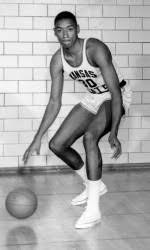
The NBA Finals date back to 1947 (when they were known as the Basketball Association of America Finals) and the very 1st NCAA tourney was held in 1939. Olympic basketball competition is even older: it debuted as a demonstration event in 1904 and the men’s version became a medal sport in 1936, with the women finally getting their chance to go for the gold in 1976. The United States has dominated Olympic basketball competition from the start: the men have won 15 gold medals in the 18 tournaments they have participated in during the past 84 years, while the women have won 8 gold medals in the 10 tournaments in which they have competed during the past 44 years. Those of you who were looking forward to the 2020 Olympics opening ceremonies in Tokyo on July 24, 2020 will have to wait an extra 364 days, as the coronavirus caused a postponement until July 23, 2021. Due to the absence of college basketball since mid-March, HoopsHD’s Jon Teitel decided to fill the void by trying to interview as many prior Olympic players/coaches as possible so that you have something to read this summer while not watching the Summer Games. We continue our coverage by chatting with former Oklahoma State player Jack Herron about Bob Kurland winning back-to-back NCAA titles in 1945/1946 and a pair of gold medals in 1948/1952. Today marks the 68th anniversary of Bob scoring 8 PTS in a 36-25 win over the Soviet Union to clinch his 2nd gold medal.


(photo credit: usab.com)

Kurland was born/raised in Missouri: what made him choose Oklahoma A&M? They had a good engineering school and a great coach in Hank Iba who squeezed every ounce of ability out of each of his players. The reason they won games was the character of his players. Mr. Iba was from Missouri and had really good teams at Northwest Missouri State with several players who later became coaches themselves.

What made Iba such a great coach, and what was the most important thing that Bob ever learned from him? My dad played with Bob and said that he worked with Coach Iba for hours after practice on big-man drills (such as put-back dunks when a shot went off the backboard).

As a 7’ center he was the 1st player to dunk during a game (at Temple in 1944) and also known to leap above the rim to grab opponents’ shots (which led to the NCAA banning defensive goaltending in 1945): was his success based more on size or skill or athleticism or a little of everything? Kurland might not have been the strongest guy but he had great agility. He knew what he was doing so he could sweep the boards and guard opposing big men.

He was an “A” student who served as president of the student council in 1945/1946: how was he able to balance his work on the court with his work in the classroom/on campus? His roommate was Sam Aubrey, who later became head coach after Mr. Iba. Everyone had part-time jobs back then so Bob must have done a good job of balancing everything. Several of the players on those championship teams were war veterans and many of them ended up playing pro basketball after graduating.

He led the NCAA in scoring as a senior including 58 PTS in his final regular season game vs. St. Louis: was it just 1 of those scenarios where every shot he put up seemed to go in because he was “in the zone”? He had taken a lot of flak for not scoring more and I think that Coach Iba wanted to show everyone what Kurland could do so he just turned him loose. St. Louis was a good team back then including guys like future Hall of Famer Ed Macauley. Bob was just a darn good player and may have shot every single time that he touched the ball that night. He was picked by the press as 1 of the best players from the 1st half of the 20th century along with other legends like John Wooden.

He was a 3-time 1st-team All-American, won back-to-back NCAA titles at Oklahoma A&M in 1945/1946, and was named tourney MOP both years: where do you think that he ranks among the greatest college basketball players ever? He led the team in scoring both years so you would have to pick him as tourney MOP. We felt that we had the best 6’3”-6’5” guards in the country and after adding Kurland to that lineup we felt that we could beat anyone. I do not think there is any doubt: you have to list him among the best players ever.

He won a pair of gold medals with team USA at the 1948/1952 Olympics (becoming the 1st basketball player to ever win multiple gold medals) and got to carry the US flag in the 1952 closing ceremonies in Finland: what did it mean to him to carry the flag, and what did it mean to him to win a pair of gold medals? He had enough pride that he would have wanted to carry the flag and win the gold medal: he was a man of great character.

He led the AAU Phillips Oilers to 3 national titles in a 4-year stretch from 1947-1950 and was an AAU All-American for 6 straight years from 1947-1952: did it reach a point where he was considered the best basketball player in the country? There was no doubt that he was the best in the country. I have 2 photos of him playing against George Mikan in the mid-1940s: I think they split all of their battles against each other but the main difference is that Mikan chose to go pro. Phillips gave Bob a good job and paid him well so he stayed with them.

He was inducted into the Naismith Hall of Fame in 1961 and the College Basketball Hall of Fame in 2006: where do these rank among the highlights of his career? If there were any other Halls of Fame then Bob would be in those as well!

He passed away in 2013: when people look back on his career, how do you think that he should be remembered the most? I stayed in touch with him and his wife until he passed away. Mr. Iba sized him up and recognized that he had the ability to succeed. Great coaches just have an eye for talent and then make something out of you. For a guy who was a superstar I will mainly remember him for treating me as well as he did.

Posted in Interviews | Tagged , , | Comments Off on The Olympians: HoopsHD interviews Jack Herron about 2-time Olympic gold medalist Bob Kurland

The Olympians: HoopsHD interviews 1984 Olympic gold medalist Sam Perkins

The NBA Finals date back to 1947 (when they were known as the Basketball Association of America Finals) and the very 1st NCAA tourney was held in 1939. Olympic basketball competition is even older: it debuted as a demonstration event in 1904 and the men’s version became a medal sport in 1936, with the women finally getting their chance to go for the gold in 1976. The United States has dominated Olympic basketball competition from the start: the men have won 15 gold medals in the 18 tournaments they have participated in during the past 84 years, while the women have won 8 gold medals in the 10 tournaments in which they have competed during the past 44 years. Those of you who were looking forward to the 2020 Olympics opening ceremonies in Tokyo on July 24, 2020 will have to wait an extra 364 days, as the coronavirus caused a postponement until July 23, 2021. Due to the absence of college basketball since mid-March, HoopsHD’s Jon Teitel decided to fill the void by trying to interview as many prior Olympic players/coaches as possible so that you have something to read this summer while not watching the Summer Games. We continue our coverage by chatting with Sam Perkins about winning an NCAA title in 1982 and a gold medal in 1984. Today marks the 36th anniversary of Sam having 14 PTS/3 BLK in a 104-68 win over Uruguay in Olympic round-robin pool play.

In the 1982 NCAA title game you scored 10 PTS in a 1-PT win over Georgetown: did you think that Michael Jordan’s game-winning shot was going in, and what did it mean to you to win a title? We were so into the game that his shot had to go in: we had no other option besides James Worthy. Jimmy Black found Michael wide-open after the Hoyas’ defense had shifted so much to the strong side. It looked dead-center to me so I felt glad when it went in.

In April of 1984 you showed up for the Olympic trials at Indiana University with 73 other players, and after cutting the squad to 20 by the end of week 1 you saw Charles Barkley/John Stockton/Terry Porter get cut in May and Johnny Dawkins/Chuck Person get cut in June: how difficult was it to impress Coach Bob Knight, and did you think that you would make the final cut after seeing so many other great players being sent home? I was kind of surprised because everyone I had heard about in college was there. We were all on different courts so after seeing those great guys get cut I realized it was a real tryout. I remember CM Newton telling me that I had to pick it up even though I thought that I was playing well so I was fortunate to make that team.

You were 1 of 4 consensus 1st-team All-Americans from that season who made the final roster (along with Jordan/Patrick Ewing/Wayman Tisdale) and you even had another future Hall of Famer as a teammate (Chris Mullin): what was your reaction when you walked into the 1st day of practice and just looked around at all of that talent? It was surreal at the time to be a part of something that I never thought I would. To see so many other great players was a great compliment to our college careers. When Coach Knight showed up he had great applause for all of us so I thought that I was on the right track.

After the final roster was selected you went out on the road for a coast-to-coast tour of 9 scrimmages against NBA players: how were you able to go 9-0 as a bunch of college kids facing a bunch of pros, and what was it like to play at the Hoosier Dome in front of 67,000 fans? It was crazy at the Hoosier Dome. To string together 9 wins was part luck/part skill but we were hungry/focused while playing for team USA. We knew that the challenges would be great and that we would face great competition in the Olympics. We played hard in those 9 games: the NBA guys were trying to stay in shape and we were just trying to get over the hump after beating each other up in practice.

You were eventually named co-captain of team USA and scored 12 PTS in a 96-65 win over Spain in the gold medal game: what did it mean to you to represent your country, and what did it mean to you to win a gold medal? It meant a great deal to me because it complimented my 4 years of college. It was another accolade that I really appreciated. To win a gold medal with guys I had so much respect for was worth the ride. I am glad to have had a hand in that and it was an experience that I will never forget.

On April 12, 1990 you scored a career-high 45 PTS/19-26 FG/13 REB/7 AST for Dallas in a 7-PT win at Golden State: where does that rank among the best all-around games of your career? It was a night where everything seemed to go in. I was ready to play but am not sure what got into me. I almost busted my hand on the rim from slamming the ball in so hard 1 time. I did not realize how many PTS I had until halftime: Coach Dick Motta said he did not realize I was a scoring machine after getting 27 in the 1st half! Nobody would ever dream that I could score that many on that team. Coach told me to just go out and play and not let anyone hold me back. It was all within the flow of the game rather than being a selfish thing.

On January 15, 1997 you scored 26 PTS and tied an NBA record by making all 8 of your 3-PT shots for Seattle in a 44-PT win over Toronto: was it just 1 of those scenarios where every shot you put up seemed to go in because you were “in the zone”? There is a story behind that game. I woke up late that day and only arrived 1 hour before the game so I did not get to practice my pregame shots. I was worried that I did not have a good stretch/routine as I came into the game off the bench: my 1st shot went in and I could not believe it. The game stayed like that all night long: I only took 8 threes but they all went in. My teammate Detlef Schrempf said “Don’t miss” because he wanted me to get the record but after he told me it was on my mind. I heard Raptors coach Darrell Walker say “Do not let Sam get the ball” but my coach tried to get me the ball before he eventually took me out. Going 8-8 was so special that it became my music production company name: “8 for 8”!

You appeared in 3 NBA Finals with 3 different teams during a 10-year span from 1991-2000: did you get sick of seeing Coach Phil Jackson every June (since he beat you each time)!? Yes. The last time we crossed paths coming off the court and he just shrugged his shoulders. There is no reward for finishing 2nd but it was a memorable experience to get to the Finals so often. There are plenty of guys who could have taken my place but I had fun. I wish that I could have won 1 but that is how it goes. I thought the Lakers were my best chance of getting 1 but we did not fare well against the Bulls. Seattle/Indiana also tried to get over the hump but we could just not get past Phil.

You later became a member of the Board of Directors of the Special Olympics: why did you decide to join the board, and which of your former fellow Olympians impressed you the most (Nadia Comaneci/Donna de Varona/Michelle Kwan/other)? I joined the Board after someone saw that I was doing some work through school at UNC and in the NBA. I always took time out to do something for Special Olympics and they invited me to attend some games. I thought the relationship would be great after I advocated for people with intellectual disabilities. I remain an ambassador for them, continue to promote awareness, and am a conduit to other people to generate more interest. I finally met Nadia but was more interested in meeting Maria Shriver (whose mother Eunice Kennedy Shriver founded the Special Olympics in 1968): I could not believe it when I showed up 1 time and she was actually sitting next to me! I also got to know Michelle Kwan and we talked a lot: she is really tiny (5’2″) and we often sat together at board meetings.

You remain part of the last amateur US basketball team to win an Olympic gold medal: do you think that we will ever go back to using college players, and do you think that we should? The way things are set up they will probably continue to use pro players. The NBA is getting younger and has a lot of talent. There was 1 year that we had high hopes before Argentina beat us in the 2004 semifinals and it just messed up our progress. I do not think that we will use amateur players again because a lot of college players are 1-and-done or have other options so I do not think USA Basketball would want to rely on them. When the stars leave and the remaining players are not ready to be stars it is not the best option.

Are there any thoughts you would like to share about everything that has been going on in our country recently (George Floyd/protests/police/other)? In recent months we have seen surmountable change in everyone’s attitude. The thing that stands out to me was people of many races witnessing such a heinous crime to an innocent Black man. Prior to that we saw a young man get shot while jogging and another woman killed while sitting in her own apartment. It has generated rage in so many people of all nationalities because they took it personally. You see the outpouring of support from state to state and even from some foreign countries. It showed that the paradigm has changed just slightly and the energy is focused on legislative reform. We see so much hate from people who resist but we have no reason not to get along. When you cannot find an answer for why some White people hate Black people, you realize that we have had deluded information for too long and we should just stop and think. We must reflect on our actions and what is about to happen. We have a person in office who is trying to preach hate/separatism and everyone’s soul has been hurt. We have to take a stand and not let it happen over and over again. There is a lot of good will/desire to get along and it will turn around eventually.

Posted in Interviews | Tagged , | Comments Off on The Olympians: HoopsHD interviews 1984 Olympic gold medalist Sam Perkins