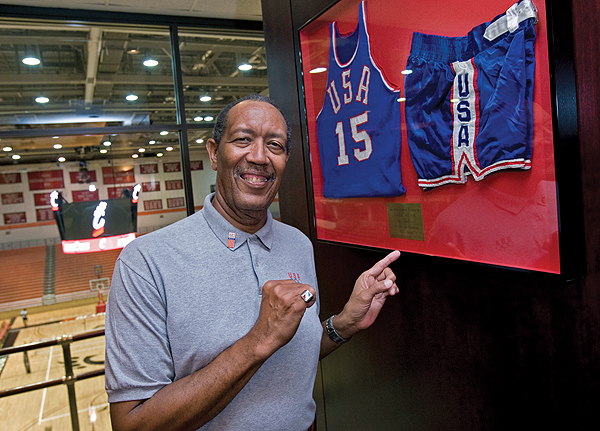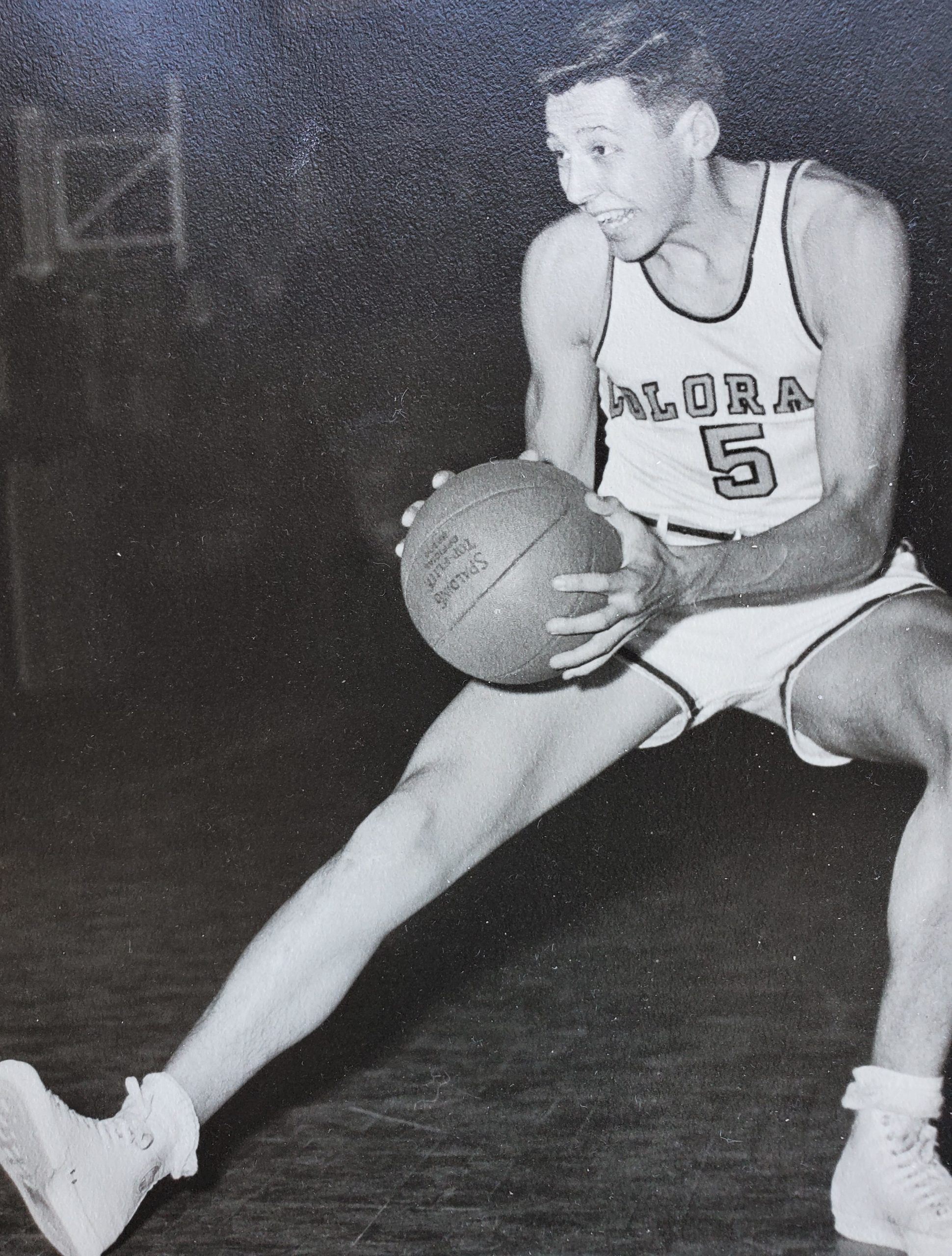
Memories of MJ: HoopsHD interviews David Dumars about his Hall of Fame brother Joe

When the NCAA tourney got canceled in March we entered a whole new world, which included a sports void the likes of which we have never seen before. The fine folks at ESPN came to the rescue in mid-April with “The Last Dance”, a 10-part miniseries about the 1998 Chicago Bulls and their quest to win a 6th NBA title in an 8-year span before Coach Phil Jackson and most of his star players all went their separate ways. While it has been comforting to spend the past several Sunday nights with behind-the-scenes stories from Steve Kerr/Scottie Pippen/Dennis Rodman, the star of the show as always is Michael Jordan. Even though the documentary concluded on May 17th, HoopsHD’s Jon Teitel has dug through his archives and discovered oodles of unpublished interviews about Jordan’s career, from his early days as the leading scorer for team USA at the 1983 Pan Am Games to a 55-PT playoff performance during Chicago’s final title run in 1998. We continue our trip down memory lane by chatting with David Dumars about Detroit using “The Jordan Rules” to beat Chicago in the 1988 Eastern Conference semifinals and Jordan later calling his brother Joe “the best NBA defender I ever faced”.

In 1985 your brother Joe became the 1st men’s basketball player in Southland history to be named 4-time 1st-team all-conference, and he remains the only 4-time All-Southland tournament selection: how was he able to come in as a freshman and contribute right from the start and then continue to dominate throughout the rest of his college career? He had a strong mindset and worked on it a lot. He was confident and just came out and played.

He graduated from McNeese State as the 11th-leading scorer in NCAA history: did you realize at the time how prolific a player he was? I was off playing football but I heard that my little brother was putting up some big numbers. I knew that he could score but never realized how high he was on the list. Scoring was always going to be there but in the NBA he focused on his defense.

Take me through the legendary 1987 Eastern Conference Finals as a member of the Pistons:
After Boston won the 1st 2 games at home, Detroit won the next 2 games at home by a combined 44 PTS: what do you remember about the bench-clearing brawl between Bill Laimbeer and Larry Bird in Game 3? I actually remember a brawl between Laimbeer and Robert Parish that took place right under the basket (www.youtube.com/watch?v=e7A9-21vRGw).

Boston had a 1-PT win in Game 5 on Bird’s famous last-second steal/assist to Dennis Johnson: did you realize at the time how famous the play would become? No. I remember that the Pistons had that game wrapped up in Boston Garden and would have went back to Detroit up 3-2 in the series. It was a huge turnaround because I think that they would have won it all that year.

In the 1988 Eastern Conference semifinals Detroit used “The Jordan Rules” to beat Chicago in 5 games: what was Joe’s reaction when Michael Jordan later called him “the best NBA defender I ever faced”? I have talked to Joe about that. He admits that he played him tough but no 1 person could stop Jordan: it took a whole team! He knew that he would have to play defense to make the team: most guys just want to be a scorer.

In 1989 he won his 1st NBA title and was voted Finals MVP after scoring 27.3 PPG in the series: what did it mean to him to win a title, and how was he able to play his best when it mattered the most? When those opportunities come along you have to give it your all. We grew up watching the Lakers-Celtics battles on TV so he had all the motivation he needed to beat the Lakers.

In 1990 he won his 2nd-straight title despite learning after Game 3 that your father passed away (he prepared to return home until your mother told him to finish the job): how hard was it for him to get back on the court after your father died, and did you feel like he honored your father’s memory by winning the title? My father would have wanted him to keep playing: when Joe got drafted my dad told him to treat it like a job. He always instilled in us the value of doing the best that we could do. It was a hard thing but we learned growing up to do our job.

In 1994 he was a tri-captain for team USA at the FIBA World Championship (along with Reggie Miller/Shaquille O’Neal): what did it mean to him to represent his country, and what did it mean to him to win a gold medal? Every kid would love the chance to represent their country. My dad always taught us to be humble and never talk about ourselves because if we did a good job then other people would talk about us. Joe was proud just to be on the team and it was a very powerful moment for all of us.

In 1996 he became the 1st recipient of the NBA Sportsmanship Award, which has since been re-named the Joe Dumars Trophy: why was sportsmanship so important to him, and how did it feel to have the award named after him? It goes back to the way that we were brought up: we did not showboat and just played the game the right way. He respected his opponent but also had a killer instinct. To have that trophy named after him was a great reflection on our family and 1 of his proudest accomplishments.

He spent his entire 14-year career with Detroit (becoming 1 of only a handful of guys to play 1000+ games with their original NBA team), where he was a 6-time All-Star/5-time All-Defensive player: why did he stay there his entire career, and why don’t more players remain loyal to their 1st team? Everything you have asked about goes back to my dad: he was on the job for 37 years and it is a reflection of him. He taught us not to chase anything because we could do a great job wherever we are. Joe just made the best of his time in Detroit and raised his family there.

In 2006 he was inducted into the Hall of Fame: when people look back on his career, how do you think that he should be remembered the most? As a guy who did it the right way. He was never in trouble and was a really humble player who was hard-working/dedicated.

Posted in Interviews | Tagged , , | Comments Off on Memories of MJ: HoopsHD interviews David Dumars about his Hall of Fame brother Joe

Memories of MJ: HoopsHD interviews Jim Reynolds about Gerald Wilkins

When the NCAA tourney got canceled in March we entered a whole new world, which included a sports void the likes of which we have never seen before. The fine folks at ESPN came to the rescue in mid-April with “The Last Dance”, a 10-part miniseries about the 1998 Chicago Bulls and their quest to win a 6th NBA title in an 8-year span before Coach Phil Jackson and most of his star players all went their separate ways. While it has been comforting to spend the past several Sunday nights with behind-the-scenes stories from Steve Kerr/Scottie Pippen/Dennis Rodman, the star of the show as always is Michael Jordan. Even though the documentary concluded on May 17th, HoopsHD’s Jon Teitel has dug through his archives and discovered oodles of unpublished interviews about Jordan’s career, from his early days as the leading scorer for team USA at the 1983 Pan Am Games to a 55-PT playoff performance during Chicago’s final title run in 1998. We continue our trip down memory lane by chatting with Chattanooga radio play-by-play man Jim Reynolds about former Mocs star Gerald Wilkins, who competed against Jordan in the 1987 Slam Dunk Contest and lost the the 1993 Eastern Conference Semifinals with Cleveland after Jordan made a series-winning jumper over him at the buzzer.

In the 1983 NCAA tourney in Houston when Gerald was a player at Chattanooga he scored 11 PTS in a 1-PT loss to Maryland: what was your 1st impression of freshman Len Bias (who made a game-winning jumper at the buzzer)? Chattanooga was up for most of the game and thought they would win but Maryland made a run at the end of the game. The final play was designed for Adrian Branch but he was covered so the ball went to Bias and he made the shot. At halftime I told someone that I was glad I packed for 2 games!

What are your memories of the 1984 NIT (Chattanooga had a 5-PT OT win over Georgia and then a 2-PT loss to Tennessee)? Coach Murray Arnold had worked with Georgia coach Hugh Durham in the past so they were good friends. Some people wondered why Gerald had not gone to Georgia like his brother Dominique did. It was a bigger deal for Chattanooga than it was for the Bulldogs. They had tried to play their in-state rival Tennessee time and again in the regular season but the Volunteers did not want to play them so there was a lot of hype around that game.

Take me through the 1985 NIT:
He scored 26 PTS/12-18 FG in a 2-PT win over Clemson: how was the team able to hang on for the win? I remember seeing Clemson coach Cliff Ellis pacing up and down the street outside the arena after the game because he was surprised that he lost.

He scored 27 PTS including a shot at the end of regulation in a 1-PT OT win at Lamar: where does that shot rank among the best of his career? It is among the best. Chattanooga was down by 7 PTS with 1:19 left but they kept making shots and Lamar kept missing FTs. They made a long pass to Gerald for the game-tying shot that was very similar to the famous Grant Hill-to-Christian Laettner play several years later: Gerald was kind of a legend before then but that 1 made him famous in school history. We did not have a big traveling party back then but there was a lot of celebration late into the night after that 1. When they went back to the hotel to eat the players were all eating 2-3 lobsters each and there was some discussion about how to divide the bill!

In the summer of 1985 he was drafted in the 2nd round by the Knicks: what did it mean to him to get drafted? Dominique was a big deal by then so when they announced that Gerald had signed at Chattanooga they would refer to Dominique as his older brother. There is a fine line between cocky and confident and he was the most confident player I have ever seen: he was just matter of fact about his plan to end up in the NBA. Gerald was much smarter with his money/entourage after watching how Dominique had some problems that got discovered by the media. He made some big changes in his eating habits before the draft and was in the best shape of his life.

He finished 4th at the 1986 Slam Dunk Contest (including a perfect score of 50 in the 1st round) as Spud Webb won the title over Dominique in Atlanta: what is the best dunk he ever made, and where does Dominique rank among the best dunkers that you have ever seen? We were on the road when Dominique won the 1985 Slam Dunk Contest, which back then came with a cash prize of $10,000. Gerald said that he was rooting for Dominique because he was going to give Gerald half of whatever he won! There is no particular dunk that stands out in my mind but I remember LSU assistant coach Rick Huckaby dissing Gerald after a bad game due to a broken toe.

He was also a participant in the 1987 Slam Dunk Contest (www.youtube.com/watch?v=poEE_mfHKN0), the 1st of 2 in a row won by Michael Jordan: what was it like to compete against a guy who was taking off from the FT line? My memories of Gerald in the pros are actually as the Jordan stopper: he relished the role and accepted the challenge of guarding the best player on the court.

In Game 4 of the 1993 Eastern Conference Semifinals with Cleveland he scored 22 PTS but Jordan scored 31 PTS and made a 15-foot turnaround jumper over Gerald/Hot Rod Williams to clinch the series for eventual champion Chicago: was he getting sick of seeing Jordan bring an end to his playoff run for the 4th time in 5 years? I am sure that was frustrating for him: all he cared about was contributing to victories.

He later wrote a 17-volume curriculum about the history of basketball: why did he decide to write it? I saw him a few years ago when he was watching his daughter Holli play basketball at Furman. He just loved the sport and was a very intelligent guy.

He also spent a couple of summers training Andrew Bynum: what kind of contribution has he made as a trainer? 1 of our former assistant coaches was Johnny Taylor, who was picked 17th overall by Orlando back in 1997 (8 spots behind Tracy McGrady). He trained with Gerald a lot before getting drafted and Johnny always mentions how important Gerald was to his own development.

His son Damien played pro basketball for 15 years, his daughter Holli was SoCon ROY at Furman, and his daughter Jasmyn was crowned Miss Georgia USA in 2012: how proud is he of everything that his kids have accomplished? Gerald takes a lot of pride in being a father. He was very involved with helping Damien improve during his college career. His kids probably care as much about basketball as he does, which certainly means a lot to him. I think that he is just enjoying being a dad at the moment.

Posted in Interviews | Tagged , , | Comments Off on Memories of MJ: HoopsHD interviews Jim Reynolds about Gerald Wilkins

Memories of MJ: HoopsHD interviews Hall of Famer Dominique Wilkins

When the NCAA tourney got canceled in March we entered a whole new world, which included a sports void the likes of which we have never seen before. The fine folks at ESPN came to the rescue in mid-April with “The Last Dance”, a 10-part miniseries about the 1998 Chicago Bulls and their quest to win a 6th NBA title in an 8-year span before Coach Phil Jackson and most of his star players all went their separate ways. While it has been comforting to spend the past several Sunday nights with behind-the-scenes stories from Steve Kerr/Scottie Pippen/Dennis Rodman, the star of the show as always is Michael Jordan. Even though the documentary concluded on May 17th, HoopsHD’s Jon Teitel has dug through his archives and discovered oodles of unpublished interviews about Jordan’s career, from his early days as the leading scorer for team USA at the 1983 Pan Am Games to a 55-PT playoff performance during Chicago’s final title run in 1998. We continue our trip down memory lane by chatting with Hall of Famer Dominique Wilkins about tying his career-high with 57 PTS in a win over Chicago in 1986 and setting an NBA record by making all 23 of his FTs in a win over Chicago in 1992.

You won back-to-back MVP awards after leading Washington High School to a 55-1 record and a pair of North Carolina state titles in 1978 and 1979: what do you remember about the 1 loss, and what did it mean to you to win 2 titles? It was great to win back-to-back titles: that is something that very few people get to experience. The 1 loss came at the end of my sophomore year. I remember our coach telling us that if we could stick together as a team and buy into what he was trying to teach us that we would not lose another game for the next 2 years…and he was right!

In 1979 you scored 16 PTS for the East in a 1-PT OT win in the McDonald’s All American Game: which of the other players impressed you the most (Ralph Sampson/Isiah Thomas/James Worthy/other)? It is hard to say: there were a bunch of great players in that game.

You came close to leaving Georgia after your sophomore year but were advised to stay in school by Maurice Lucas: what kind of relationship did you have with Lucas? I had a very special relationship with Maurice: he was a very close friend of mine who prepared me for life in the NBA.

What are your memories of the 1982 NIT semifinals (you scored 15 PTS but Russell Cross scored 25 PTS including a layup with 4 seconds left to clinch a 1-PT win by Purdue at Madison Square Garden)? I was not supposed to play due to a severely twisted ankle. I still do not know how I was able to play that night.

You were named SEC POY as a junior and were a 2-time All-American: what did it mean to you to win such outstanding honors? Some of the greatest players in NBA history were in college at that time so those were great honors.

In 1982 you were drafted 3rd overall by Utah (behind Worthy/Terry Cummings), but after refusing to sign with the Jazz you were traded to Atlanta several months later for John Drew/Freeman Williams/cash (which is considered 1 of the most lopsided deals in NBA history): why did you decide to leave school early, and how did you feel about returning to the state of Georgia? It was time to leave: Coach Hugh Durham told me that I had done everything I could and that it was time for me to go pro. It was heaven to go from Georgia to Atlanta: I could not have asked for a better situation at the time.

In December of 1986 you tied your career-high with 57 PTS in 40 minutes in a win over Chicago (Michael Jordan scored 41 PTS): did playing against Jordan bring out the best in you? He always brought out the best in me and I think that I brought out the best in him as well.

You finished that season by winning the scoring title with 30.3 PPG (then finished 2nd to Jordan in 3 of the next 7 seasons): where does that rank among the highlights of your career? It ranks very high because it was tough to win the scoring title at the time. With all the rules back then like hand-checking and the physical play you knew that if you could score 30 PPG then you had earned it.

You were named to 9 straight All-Star teams from 1986-1994, including an incredible 154-149 OT win by the West in 1987: how on earth did your East team lose that year with a starting lineup of you/Moses Malone/Larry Bird/Julius Erving/Jordan?! The West had a pretty good starting lineup itself: Magic Johnson/Alvin Robertson/Worthy/Tom Chambers/Hakeem Olajuwon! It was a serious shootout and an up-and-down game.

In Game 7 of the 1988 Eastern Conference Semifinals you scored 47 PTS (a record for the most PTS in a Game 7) in a 2-PT loss to Boston (Bird scored 20 PTS/9-10 FG in the 4th quarter): where does that rank among the best games that you were ever a part of? It is probably 1 of the greatest games in NBA history as you had 2 guys who just did not want to lose.

In December of 1992 you set an NBA record by making all 23 of your FTs in a win over Chicago (the entire Bulls team made 12-19 FT): what is your secret to FT shooting? Just concentration and practicing the same routine over and over again. Dirk Nowitzki now holds the playoff FT record (24-24 in a win over Oklahoma City in May of 2011) but I believe that I still hold the regular season record.

In 1994 you helped “Dream Team 2” win a gold medal at the FIBA World Championships: what did it mean to you to represent your country, and what was the reaction like in the locker room afterward? It was the most exhilarating thing in the world to represent my country. To be a part of that was great.

In 1996 you left the NBA to play in the Greek League and were named Final 4 MVP after having 16 PTS/10 REB in a win over Barcelona to win the Euroleague title: what was the biggest difference between the NBA vs. pro basketball in Europe? The NBA is more physical than Europe and has the best players in the world. Europe is more of a hybrid jump-shooting league with an up-and-down game.

In 1999 you played your final NBA season alongside your brother Gerald with Orlando, and your nephew Damien spent almost a decade in the NBA: what was it like to play alongside your brother, and how good was your nephew? It was great playing with my brother: I wanted to play at least 1 year with him before I retired. Nobody even thought that my nephew would make it but he had a few good years.

Since 2004 you have served as the Hawks’ VP of Basketball and you are also a color analyst for Hawks games: how do you like the 2 jobs? It is just wonderful to stay connected to the team.

Posted in Interviews | Tagged , | Comments Off on Memories of MJ: HoopsHD interviews Hall of Famer Dominique Wilkins

Memories of MJ: HoopsHD interviews former Chicago Bulls assistant coach Gene Littles

When the NCAA tourney got canceled in March we entered a whole new world, which included a sports void the likes of which we have never seen before. The fine folks at ESPN came to the rescue in mid-April with “The Last Dance”, a 10-part miniseries about the 1998 Chicago Bulls and their quest to win a 6th NBA title in an 8-year span before Coach Phil Jackson and most of his star players all went their separate ways. While it has been comforting to spend the past several Sunday nights with behind-the-scenes stories from Steve Kerr/Scottie Pippen/Dennis Rodman, the star of the show as always is Michael Jordan. Even though the documentary concluded on May 17th, HoopsHD’s Jon Teitel has dug through his archives and discovered oodles of unpublished interviews about Jordan’s career, from his early days as the leading scorer for team USA at the 1983 Pan Am Games to a 55-PT playoff performance during Chicago’s final title run in 1998. We continue our trip down memory lane by chatting with Gene Littles about working as an assistant in Chicago to Doug Collins.

(photo credit: history.bulls.com)

In 1959 at McKinley Tech you were 1  of the best basketball players in the metropolitan DC area and were named to the All-Met team along with future NBA #1 overall pick Fred Hetzel, future NCAA championship coach John Thompson, and future Notre Dame president Edward Malloy: what was the DC basketball scene like back then, and could you ever imagine that your fellow players would go on to success in such diverse fields? Back in the day we played for the fun of the game: it was not like today where everyone wants to make it to the NBA. We just wanted to be the best players in our neighborhood/city.

You were an NAIA All-American at High Point: what did it mean to you to win such an outstanding honor? It was exciting to find myself in a situation where I made the All-American team 3 out of 4 years. I would have also made it as a freshman if I had not broken my hand. At the time it was just called High Point College so I was just trying to get a degree. It was a big honor to be named all-state alongside players from Duke/UNC.

You remain the all-time leading scorer in school history with 2398 PTS: did you realize at the time how prolific a player you were, and do you think that anyone will ever break your record? I think that it will be tough to break because good players just do not stay in school anymore after the scouting service tells them how great they are. Being from DC the closest pro team back then was the Baltimore Bullets so we did not see NBA games and did not think about getting to the next level.

In the spring of 1969 you were drafted in the 5th round of the NBA draft by New York (4 spots behind Willie Wise) and in the ABA draft by Dallas: did you ever consider going to the NBA, and why did you decide to join the ABA? The NBA was paying more money and was trying to buy up all of the young players. I wanted to stay in Carolina and be around my son but it is a whole different ballgame nowadays. I later got to know Knicks coach Red Holzman at coaching meetings and realized that I could have come off the bench behind Hall of Famers like Walt Frazier/Earl Monroe. However, I felt no regrets and had a good career.

In 1973 as a player for Carolina you lost Game 7 of the Eastern Division Finals to Kentucky: how close did you come to winning it all, and what was the reaction like in your locker room afterwards? We should have beaten the Colonels. I was the backup PG and scored about 17 PPG off the bench. I did not finish the game and we ended up losing a close 1. It was a great series and probably our best season in Carolina.

In 1975 you won the ABA title in your only season with Kentucky while playing with Artis Gilmore/Dan Issel: where do those 2 players rank among the best you ever played with, and what did it mean to you to win the title? I still have my ring and put it on every so often: if you are going to have a championship ring you should wear it! If you watch Hubie Brown on TV you will sometimes see him wearing his own ring. We challenged 1975 NBA champ Golden State to a “Super Game” but they turned us down. It was quite an honor to play with a pair of Hall of Famers in Artis/Dan: I later worked an an assistant under Dan. We had great camaraderie as well as our own plane, which most other teams did not have.

Your coach in Kentucky was Hubie Brown: what made him such a great coach, and what was the most important thing you ever learned from him? I played for a lot of different coaches in the ABA and Hubie was the most prepared coach  I ever played for. If you see him on TV you will hear him talk about all of the stats/tendencies of every single player. He was a no-nonsense coach even during practice.

After your playing career you were a head coach/assistant coach for several different NBA teams, including the Chicago Bulls during the Michael Jordan era: what is the biggest difference between being a head coach and being an assistant? You have a different relationship when you are an assistant because you can tell them what they want to hear. However, as a head coach you have to tell them exactly how it is and you cannot deviate from that. Moving over that 1 seat on the bench makes it a whole different game: there is a lot more stress/pressure.

You currently coach youth basketball teams in Arizona: how do you like it, and what do you hope to do in the future? I love the youth game. My son Gino played on an AAU team in high school and I enjoyed working with him and traveling to national tournaments. Stanley Johnson was 1 of my players and we were ranked as high as #2 in the country in our division. It was exciting to see a bunch of 14-year olds grow up and then make it to college.

When people look back on your career, how do you want to be remembered the most? I guess just as a person who loved the game. I did not play for the honors/rewards/recognition: I always played for the fun of it. I loved the game and played hard.

Posted in Interviews | Tagged , , | Comments Off on Memories of MJ: HoopsHD interviews former Chicago Bulls assistant coach Gene Littles

Memories of MJ: HoopsHD interviews Ricky Wilson

When the NCAA tourney got canceled in March we entered a whole new world, which included a sports void the likes of which we have never seen before. The fine folks at ESPN came to the rescue in mid-April with “The Last Dance”, a 10-part miniseries about the 1998 Chicago Bulls and their quest to win a 6th NBA title in an 8-year span before Coach Phil Jackson and most of his star players all went their separate ways. While it has been comforting to spend the past several Sunday nights with behind-the-scenes stories from Steve Kerr/Scottie Pippen/Dennis Rodman, the star of the show as always is Michael Jordan. Even though the documentary concluded on May 17th, HoopsHD’s Jon Teitel has dug through his archives and discovered oodles of unpublished interviews about Jordan’s career, from his early days as the leading scorer for team USA at the 1983 Pan Am Games to a 55-PT playoff performance during Chicago’s final title run in 1998. We continue our trip down memory lane by chatting with former GMU star Ricky Wilson about getting drafted by the Bulls in 1986 and cutting Jordan’s hair.

You grew up in Hampton, VA: what made you choose George Mason? I really wanted to go to Old Dominion: I had attended basketball camps there for a few summers and they were right in my backyard. I took a visit during my junior year of high school when not a lot of teams were recruiting me. Coach Rick Barnes was at GMU and really endeared himself to my mom/dad and made them feel comfortable. I visited the school and kind of liked it but my cousin who joined me loved it. I just felt like it was the right fit for me.

You played for Coach Joe Harrington: what made him such a good coach, and what was the most important thing you learned from him? He was there for all 4 of my years there, which was huge. You are probably closest to the coach who recruited you (which was Rick) but I spent a lot of time with Coach Harrington every single summer. They both cared about my development as a student-athlete and Joe taught me about the ramifications of my decisions.

Take me through the 1986 postseason:
You made the CAA tourney title game before losing to Navy: could you tell at the time that tourney MVP David Robinson (26 PTS) was going to become a Hall of Famer? I cannot say that I envisioned that. We really felt that we could overcome obstacles and did not think there was any team we could not beat. David was an indomitable force and it was apparent that he was really good. I did not give our opponent his just due: I actually have a video of me dunking on him! He was probably the best center in the country. I actually played in San Antonio in 1988 while he was still completing his military service. He was not a national star at the time because he was unheralded until his junior year when he started dunking every ball/blocking every shot. He could also run like a deer and was a beast in the paint: Coach Barnes recruited him when he was 6’7” but at Navy he grew to 7’.

In the NIT you had a 2-PT win over Lamar before losing to Providence: what are your memories of your NIT run? I remember both games quite well. I was really afraid before the Lamar game because I feared that it might be my last game as a college player. We played them in Beaumont and used that as motivation to make a last-second shot. That Providence team with Coach Rick Pitino/Billy Donovan just shuffled players in and out: they probably had a 10-man rotation and pressed us the whole time.

You still rank in the school’s all-time top-5 with 405 career AST: what is the key to being a good PG? I had to learn that position. My freshman year I was a backup to a good PG (John Niehoff): he could not even touch the bottom of the net but he knew exactly when/where the ball needed to be. He told us to run, he would find me with a pass, and then I would attack the rim for a dunk. I became a starter as a sophomore and learned to have a keen understanding of how to make the players around you better. Brian Miller was a better shooter than I was so I brought that skill set out of him.

In the summer of 1986 you were drafted 52nd overall by Chicago (8 spots ahead of Drazen Petrovic): did you see that as a validation of your college career or the realization of a lifelong dream of reaching the NBA? It definitely was not the latter. As a kid it was really cool to watch guys like George Gervin/Gus Williams but I did not go to college expecting to get drafted. I was at a camp that day and a camper was the 1 who actually told me that I got drafted! I was super-excited but did not understand that it was the beginning of the odyssey. At the start of my senior year I did not think I was a shoo-in to get drafted, but after graduating and playing in some pre-draft camps against highly-ranked players and proving myself against them I felt that it might happen.

You were still 1 year away from having Phil Jackson/Scottie Pippen join the Bulls: did you have any interaction with a young 3rd-year player named Michael Jordan? I met Michael before I even graduated. I would cut hair to earn a couple of bucks. When Michael was in town to visit a guy I knew named Howard White they called me over and I cut Michael’s hair in Howard’s house in Maryland. Michael at least knew my name but I would not have made an NBA roster without getting to see how hard he worked during practice/in the weight room/etc. It was obvious from the start that he was playing a different game and had a better work ethic than anyone else. When I realized that he showed up earlier than I did, it made me second-guess how badly I wanted to make it.

In the 1988 Western Conference 1st round with San Antonio you were swept by the eventual champion Lakers: what was it like to face the defending champs with legends like Magic Johnson/James Worthy/Kareem Abdul-Jabbar? At 1st I was in awe of their team: they showed up with a different mindset than anyone else. There was some popular movie at the time that required an entire theater to be rented out: it might have been “Colors”. I was there and Byron Scott/Michael Cooper/Magic went as well so I had a chance to see them in a relaxed atmosphere. Once the game started it was weird to face a 6’9” PG like Magic. Kareem was still an effective post player (at age 41) so neither of the 1st 2 games at the Forum were close. I enjoyed being in that setting against those kinds of players. Once the ball is tossed up the butterflies go away…but I knew that we were not going to beat them.

You spent the next several years playing pro basketball in the US/overseas: what was the biggest difference between the NBA vs. other pro basketball leagues? Most NBA players have been reared from an early age to vie for 1-2 spots on a roster. You are busting your tail every day just to be the last man on the bench and nobody wants the coach to think that they are expendable. In Europe many of the guys worked during the day and simply showed up at night for practices/games. Basketball was just something they did rather than who they were. It was much less stressful in Europe: 1 game a week, shorter seasons, and practices at convenient times. In my era everyone wanted to be in the NBA but I decided to go to Europe, make some money, and learn about another country.

You spent several years as a color analyst for your alma mater: how did you like the job? I loved doing color with play-by-play guy Bill Roland. I remember listening to a game while driving in the car and wondering about what was happening during the game. I sat down with Bill and we went through the rehearsal of a game. When I 1st started doing it I would erupt in a screeching voice when something big happened but I later learned to control my emotions. I am a fan of the sport who loved watching Mason’s games and eventually I grew to become a part of it.

When people look back on your career, how do you want to be remembered the most? I think my contribution to George Mason was a huge part of where the school is now…although I do not think that many of the students there now would know who I am. To still be among the AST leaders after 30 years is cool but what I enjoyed the most were my teammates who I still remain close with. We reach out to each other and discuss what we are doing in our lives: there is a brotherhood and I was a part of an amazing group of individuals who made the NIT. Without the bricks that we laid I do not think the future success would have been possible.

Posted in Interviews | Tagged , | Comments Off on Memories of MJ: HoopsHD interviews Ricky Wilson

Memories of MJ: HoopsHD interviews Fred Huff and Mike Evans about Jack Hartman

When the NCAA tourney got canceled in March we entered a whole new world, which included a sports void the likes of which we have never seen before. The fine folks at ESPN came to the rescue in mid-April with “The Last Dance”, a 10-part miniseries about the 1998 Chicago Bulls and their quest to win a 6th NBA title in an 8-year span before Coach Phil Jackson and most of his star players all went their separate ways. While it has been comforting to spend the past several Sunday nights with behind-the-scenes stories from Steve Kerr/Scottie Pippen/Dennis Rodman, the star of the show as always is Michael Jordan. Even though the documentary concluded on May 17th, HoopsHD’s Jon Teitel has dug through his archives and discovered oodles of unpublished interviews about Jordan’s career, from his early days as the leading scorer for team USA at the 1983 Pan Am Games to a 55-PT playoff performance during Chicago’s final title run in 1998. We begin our trip down memory lane by chatting with former SIU SID Fred Huff and former Kansas State player Mike Evans about Jack Hartman, who passed away in 1998 but was Jordan’s coach when team USA won a gold medal at the 1983 Pan Am Games.

(photo credit: usab.com)

Hartman played basketball/football at Oklahoma A&M where his basketball coach was Hall of Famer Hank Iba (who he later worked for as a grad assistant): which sport was he best at, and what was the most important thing he ever learned from Coach Iba? Fred Huff: Jack only played 1 year of basketball before Iba told him to choose a sport. He chose football and was a decent QB: he later played 1 year in the CFL for Saskatchewan and was named an all-league QB. Mike Evans: Discipline: without a doubt he took a very stern approach to basketball and the way that we did things.

In 1962 as coach at Coffeyville CC his team beat Lon Morris to win the NJCAA national title and finish 32-0 (becoming the 1st unbeaten team to capture the JC national title): how was he able to keep his team focused for every single game that year? ME: He was 1 of the best prepared coaches that I have ever seen, with both his staff and his players. He was a detailed guy who taught us our opponents’ strengths/weaknesses and knew what would work best against them.

In the 1967 NIT title game as coach at Southern Illinois he beat Marquette to clinch the title (Walt Frazier was named MVP with 21 PTS/11 REB): why did he turn down a bid from the NCAA tourney, and what did it mean to him to win a title? FH: SIU was not a D-1 team back then and had lost the NIT title game each of the previous 2 years. They had a great team that year that had a 2-OT loss at Louisville before getting revenge on their home court. Their only other defeat was a 5-PT loss to SMU in El Paso after getting invited to a tournament there by his good friend/former Oklahoma A&M classmate Don Haskins. We had gotten a lot of press due to our past postseason performances: Hartman had the team vote on it and they decided to roll the dice with the NIT. It meant everything to him (as well as to the school) to win the title. The only people who knew about SIU athletics before then were those who knew about our gymnastics program! I spent 2 weeks in New York to beat some drums: it was easy to publicize a small school that ended up winning it all. We had a huge win over St. Peter’s and then every newspaper jumped on our bandwagon. Marquette coach Al McGuire called us the 2nd-best team in the country.

In the 1975 NCAA tourney as coach at Kansas State, Chuckie Williams scored 35 PTS for the Wildcats (including a 20-footer with 5 seconds left in regulation), but Rudy Hackett scored 28 PTS including a left-handed shot at the buzzer in an 8-PT OT win by Syracuse: where does that rank among the most devastating losses of his career? ME: It was a tough loss for all of us but we were in rebuilding mode. It was devastating but it was still a great accomplishment to make the regional final after losing guys like Lon Kruger/Dean Harris.

What are your memories of the 1976 NIT (James Lee had 20 PTS/12 REB in a 3-PT win by eventual champion Kentucky)? ME: We had a really good 1st half but they made an adjustment in the 2nd half to get the ball to their big men in the middle and we did not have anyone who could handle their size.

In the 1977 NCAA tourney Butch Lee scored 26 PTS in a 1-PT win by eventual champion Marquette: how angry did Coach Al McGuire get after getting called for a technical foul in the 2nd half after an official thought that a choking signal McGuire gave to his team was directed at the official? ME: I do not remember that incident but I think that game was the most devastating loss. We had a lead late and a chance to win but there were a lot of questionable calls down the stretch. We should have had a 3-PT play at the end but did not get the continuation call from the refs.

That summer he signed a 5-year contract to coach his alma mater but then changed his mind 1 day later: why did he 1st sign the contract, and what made him change his mind? ME: Everybody has a dream job and at the time I think that he wanted to coach at Oklahoma State where his mentor (Coach Iba) had taught him the game. He just had some 2nd thoughts about it and decided to come back to Kansas State.

What are your memories of the 1980 NCAA tourney (Tony Branch scored his only 2 PTS of the game on a 15-foot jumper that bounced several times before going in with 1 seconds left in a 2-PT OT win by Louisville)? ME: It was just another example of great coaching by Jack. He accumulated some really good talent because he was a great recruiter. He may not have had the most talented teams but he always got the best out of what he had.

In 1981 he was named national COY: what did it mean to him to win such an outstanding honor? ME: Anytime you can accomplish something like that it is special. He devised his offense to fit what we did best from year to year and deserved that honor many times over.

In the 1981 NCAA tourney Rolando Blackman scored 14 PTS including a 16-footer with 2 seconds left in a 2-PT win over #1-seed Oregon State: where does that rank among the greatest wins in school history? ME: It is probably 1 of the greatest! Rolando was an incredible player and Jack knew to put the ball in his hands and what play to run in the crucial moment.

At the 1983 Pan Am Games he helped lead team USA to a gold medal as head coach: what did it mean to him to win a gold medal, and could he tell at the time that his leading scorer (Michael Jordan) was going to become a superstar? ME: That is just who Jack was: a winner. I am sure that he realized Jordan’s potential even back then but he was not a big talker.

His former player/assistant Kruger took over for him after he retired in 1986: when people look back on Jack’s career, how do you think that he should be remembered the most? FH: As the greatest basketball coach in SIU history. When he 1st got to campus they played in a 1600-seat gymnasium. When the school announced its all-century team Hartman was 1 of the 4 coaches selected. ME: As 1 of the best coaches in the history of college basketball. He accomplished so much and is a Hall of Famer in my mind.

Posted in Interviews | Tagged , , , , | Comments Off on Memories of MJ: HoopsHD interviews Fred Huff and Mike Evans about Jack Hartman