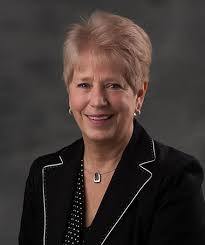
The Olympians: HoopsHD interviews 1992 Olympic bronze medalist Clarissa Davis-Wrightsil

The NBA Finals date back to 1947 (when they were known as the Basketball Association of America Finals) and the very 1st NCAA tourney was held in 1939. Olympic basketball competition is even older: it debuted as a demonstration event in 1904 and the men’s version became a medal sport in 1936, with the women finally getting their chance to go for the gold in 1976. The United States has dominated Olympic basketball competition from the start: the men have won 15 gold medals in the 18 tournaments they have participated in during the past 84 years, while the women have won 8 gold medals in the 10 tournaments in which they have competed during the past 44 years. Those of you who were looking forward to the 2020 Olympics opening ceremonies in Tokyo on July 24, 2020 will have to wait an extra 364 days, as the coronavirus caused a postponement until July 23, 2021. Due to the absence of college basketball since mid-March, HoopsHD’s Jon Teitel decided to fill the void by trying to interview as many prior Olympic players/coaches as possible so that you have something to read this summer while not watching the Summer Games. We continue our coverage by chatting with Clarissa Davis-Wrightsil about winning the 1986 NCAA title at Texas while going undefeated and winning a bronze medal in 1992. We also wish her a very happy birthday today!!
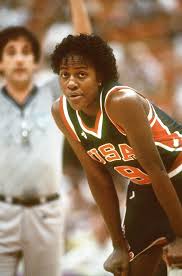
As a senior at John Jay High School in San Antonio you scored a career-high 75 PTS while playing only 3 quarters in a 100-19 win over Edgewood: was it just 1 of those scenarios where every shot you put up seemed to go in because you were “in the zone”? I think that game was against Memorial High School because they were in our district. I was the dominant scorer on my team anyway but obviously you need your teammates to feed you the ball. I did not know what the record was: it was not until my coach took me out that I realized I had broken the record. I thought it was cool that everyone helped to facilitate that and was all in with me.

Take me through the magical 1986 NCAA tourney as a player at Texas:
You were the only newcomer on the Longhorns as a freshman: how were you able to fit in with all of the veterans, and how much pressure was there on the team after going undefeated during the regular season? My background helped me prepare to play with the veterans. Prior to that I had played weekend pickup games against military servicemen. My aunt is 5 years older than me and was a collegiate athlete so she would being me along to play against other collegiate female players. Once I arrived in Austin I realized that I could compete at the D-1 level. I do not think that we felt any pressure: we had been upset by Western Kentucky at the buzzer in the 1985 NCAA tourney so the entire team was focused on winning a title. We were not surprised because we were supposed to win. We competed very hard in practice: it was even tougher than our actual games. We had so much depth that we had All-Americans/Olympians who came off the bench but we were all in great shape and shared the ball.

In the title game you were named tourney MOP after getting 24 PTS/14 REB off the bench in a win over USC to complete the 1st undefeated season in NCAA women’s history: what did it mean to you to win a title? I also had 32 PTS/18 REB in the semifinal against Western Kentucky. USC was 1 of my top college choices when I was in high school but I realized that to be the best you have to beat the best. I told my mom that I wanted to play on TV and win a title so it was crazy to have the opportunity to do just that 1 year later. I was not even the 6th man: I was more like the 3rd player off the bench and just did whatever I could do during whatever time was given to me. It was like a dream come true and to cap it off by helping our selfless seniors win a title and lift me up as MVP and share what we had all been working toward said a lot about our team. It was the true meaning of a team: there were no agendas and we just all played to win.

After entering the 1987 NCAA tourney with only 1 regular season loss you had a 4-PT loss to Louisiana Tech in the Final 4 after they shot 73.9 FG% in the 2nd half: how much of a home-court advantage did you have while playing on your home court with a crowd of over 15,000 people (the largest in history of the sport), and where does that rank among the most devastating losses of your career? We gambled on that game that Teresa Weatherspoon would not be a scorer and used her man to double in the post, but that day she shot the ball very well and hurt us. Home court does not mean anything when your opponent treats it like their own gym. It was just not meant to be: the best team will usually win a series but in a single-game elimination tourney anyone can win on any given night. We were poised to repeat and definitely should have but you have to take every loss as an opportunity to get better.

Your 19.9 career PPG remains #1 in school history: what is the key to being a great scorer, and do you think that anyone will ever break your record? It is surprising that it has stood for this long. I had some foot/knee injuries as a sophomore and junior so it is incredible for any of my records to still be standing. The key is never settling and always striving to be better by working on your game. I spent my offseason expanding my game, especially on the offensive end.

You were a 2-time All-American/2-time national POY: what did it mean to you to win such outstanding honors? It means a lot but I always valued hard work and as a freshman I had to claw for every second of playing time on the clock. It was tough to go from the top recruit in the country to a place where I came off the bench but I learned that I had to perform at an extremely high level both in practice and during games. I am extremely thankful because there are people who played 4 healthy years and never won any titles/individual awards. My faith in God and the discipline and structure of the program made me the player that I was.

You played pro basketball for 10 years: what is the biggest difference between college basketball and pro basketball? I was finally able to showcase all of my skills as a pro after only playing PF at Texas. My natural position was SF so I got to shoot the ball more from the 3-PT line and handle the ball more after graduating. It helped that I could play with my back to the basket and defend kids who were 6’5” but I could flip it around on offense and play the role of a big guard. I had fun as a pro and enjoyed a very productive career. When I was growing up I was very athletic and the sport came naturally to me, but after I got injured I developed a new sense of appreciation for the kind of work it would take to remain a good player: if you want to be successful as you mature you have to work on both your offensive/defensive skills. I also learned a lot about leadership and versatility: when you are 1 of only 2 foreigners on a team overseas you have to try to be the best at everything and instill confidence in your teammates.

After a knee injury forced you to be an alternate on the 1988 Olympic team that won a gold medal, you won a bronze medal with the 1992 Olympic team: how frustrating was it to miss out on the gold, and what did it mean to you to win the bronze? It was tough to miss out in 1988. It was a phenomenal journey to go through all of the tryouts but then I bumped knees during a scrimmage the day before they made the final cut. It was like a fairy tale that took a terrible twist because I was supposed to make that team and win a gold medal. I remember that night: it was a flood of emotions and I just could not understand why I could not control things, but it gave me the determination to become even better than I was before. I still have 5 screws and a scar on my knee, but post-surgery I was a statistically better player and ended up playing for another 10 years. I was excited to make the team in 1992 because by that time I was a full-time guard. I wanted to make it as a 6’1” SF vs. playing with my back to the basket as a PF even if I ended up getting cut from the team: it was a big accomplishment for me to play the game from the outside in. It was unfortunate to not win the gold medal because we were such a talented team: we just did not perform well in the semifinals against the Unified Team. Making that team as 1 of the best players in the world was a feat in itself. It used to just be a 2-week training camp but after that year they changed it so that the players would be together all year long.

After retiring you worked for the San Antonio Spurs from 1999-2002 and later served as Chief Operating Officer for the WNBA’s San Antonio Silver Stars from 2002-2006: how did you like working for the Spurs, and what were your duties as COO? It is a great organization and I learned a lot. I had the opportunity to observe everything from the ground floor. I oversaw the business operations which involved everything from ticket sales to marketing, and also oversaw basketball operations like coaching and staffing and who to draft. The Spurs trained me for a couple of years before I joined the Silver Stars, which was also a great experience. When you are a player you do not realize everything that happens in the front office but there are a lot of people working tirelessly to create a product that the fans will enjoy.

In 2000 you founded a non-profit sports-based mentoring organization for girls in San Antonio called TeamXpress: why did you create it, and what have you been able to accomplish so far? My husband and I started it as our way to give back. You see many players accrue a lot for themselves but they do not always help those around them. It is not good enough to just have a team: I wanted to show the girls what I accomplished via every aspect of my career, from playing in college to playing overseas to the business side of the game. I want to empower these young women to make the right choices and improve their skills. I do a lot of teaching and incorporate some terminology and plays from the pros. We have helped about 100 girls get scholarships to schools like Tennessee/Baylor and even had several McDonald’s All-Americans. For some kids it is their only way out of a tough situation and allows them to pursue higher education. It is very rewarding to me and is my way of giving back with no strings attached: my reward is seeing them do the things that I was able to do.

In 2006 you were inducted into the Women’s Basketball Hall of Fame: where does that rank among the highlights of your career? That is right up there. Being able to come back from a major knee injury and end up being honored by people who have been there and done that allowed me to take my little place in history. It is a part of who I am and I am definitely thankful for it. I retired on my own terms while I was still in great shape because I wanted to go out on top. I cherish those memories and it was great to have my family/friends/past coaches experience that very special day with me.
Posted in Interviews | Tagged , | Comments Off on The Olympians: HoopsHD interviews 1992 Olympic bronze medalist Clarissa Davis-Wrightsil

The Olympians: HoopsHD interviews 1992 Olympic bronze medalist Linda Hargrove

The NBA Finals date back to 1947 (when they were known as the Basketball Association of America Finals) and the very 1st NCAA tourney was held in 1939. Olympic basketball competition is even older: it debuted as a demonstration event in 1904 and the men’s version became a medal sport in 1936, with the women finally getting their chance to go for the gold in 1976. The United States has dominated Olympic basketball competition from the start: the men have won 15 gold medals in the 18 tournaments they have participated in during the past 84 years, while the women have won 8 gold medals in the 10 tournaments in which they have competed during the past 44 years. Those of you who were looking forward to the 2020 Olympics opening ceremonies in Tokyo on July 24, 2020 will have to wait an extra 364 days, as the coronavirus caused a postponement until July 23, 2021. Due to the absence of college basketball since mid-March, HoopsHD’s Jon Teitel decided to fill the void by trying to interview as many prior Olympic players/coaches as possible so that you have something to read this summer while not watching the Summer Games. We commence our coverage by chatting with Linda Hargrove about competing in the hurdles at the 1968 US Olympic Trials and winning a bronze medal in 1992: today marks the 20th anniversary of her coaching the Portland Fire to its 1st win in franchise history.

You were the national high school record holder in the hurdles in 1967 and competed in the hurdles at the 1968 US Olympic Trials in Los Angeles: how did you get into track and field, and how close did you come to making it to Mexico City? There were very few opportunities for girls in any sport in Kansas in the 1950s/1960s. In junior high our county (Cowley County) held a 1-day play day where all the kids in the county got together to compete in track and field events. It was during this time that I found out I could outrun anyone (boy or girl) in my county. My high school principal, Moon Stinson, took an interest in me and taught me how to run the hurdles. During this time I was also taking baton lessons and my teacher’s father, Loyd Boren, saw something special in me and wanted to work with me on the long jump. We ended up organizing a girls’ club track team (the Stridettes!) and began competing across the state during the summer. I won many events and after the Topeka Cosmopolitan Track Club picked me up I began competing on a national level in 1965. I competed in most big events across the country over the next 3 years but did not make the finals in the Olympic Trials. Some of the high schools started including girls in their track meets. I did not know about the national high school record that I set in 1967 (my junior year) until I was a freshman in college. Coach Stinson called me to let me know after he saw my name in a record book: things were not very organized back then. My goal as an athlete was to be an Olympian: when that dream died in 1968 I could have never guessed that 24 years later I would become an Olympian, but this time as a coach and not an athlete.

You created the women’s basketball program at Cowley Community College in 1972 and proceeded to win 11 of 12 league championships: what was the hardest part of getting the program off the ground, and how were you able to dominate right from the start? Cowley president Dr. Gwen Nelson asked me to come there and create the women’s basketball program. As a student at Cowley from 1968-1970, Dr. Nelson had seen me recruit/organize a track team. I told him at the time that I did not know much about basketball but he indicated that he recognized how competitive/organized I was and thought that I would do a great job. I ended up coaching volleyball/basketball/track/tennis/softball. I also was the cheerleading sponsor and director of admission at Cowley during my 17 years there. The state of Kansas was located in Region 6 of the NJCAA and during my last several years at Cowley I was also the Region 6 Director, where I organized all of the Region 6 tournaments for the 22 junior college teams in Kansas. When I first started we did not have a place to practice or uniforms or transportation or players or much competition. There were few schools who had women’s teams at that time. Title IX had just been passed and our president was very progressive and wanted to get going. I did not feel like we were really successful until I was able to get my sister (Debbie Adams) to come play for me at Cowley. She helped set the bar for the success that we enjoyed over many years. She came back to Cowley and was my assistant coach for many years and ended up taking over the volleyball team for me. Kansas was way behind Oklahoma in providing opportunities for girls’ basketball teams so I tried to recruit players out of Oklahoma. They were still playing the 6-on-6 half-court game but their players were really skilled. The toughest part was finding competition and girls who wanted to play. We practiced in a city recreation center or our campus gym during the noon hour. I would drive a van to our games and try to motivate our players to work hard and be competitive. I loved trying to build something special and at the time I did not really see obstacles: just opportunities.

In addition to your duties as basketball coach you also coached volleyball/women’s track and field/softball, served as Director of Admissions/Intramurals, and were a cheerleading sponsor: how were you able to wear so many different hats all at once? During this time I also had 2 children, finished my bachelors/masters degrees, and taught classes. My husband/kids became very involved in the recruiting process and would come to games with me most nights. My son’s favorite song was the National Anthem: he always wanted to get to the games in time to hear it! My daughter picked the cheerleaders she liked best and would cheer for that team. My husband Ed was a high school/college athlete and just loved watching games so it became very much of a family affair for us.

You graduated magna cum laude from Southwestern College in 1975 and got a master’s degree from Wichita State in 1985: how much importance do you place on academics? I have always believed strongly in education. I was the first member of my family to get a college degree and my sister Sue became Dr. Sue Woodworth before recently retiring as a university professor. My sister Debbie retired after teaching at Cowley College for over 30 years and my brother Dale is a high school superintendent at the high school that we all graduated from (Udall High School).

In 1987 you were named NJCAA national COY: what did it mean to you to receive such an outstanding honor? This was a really wonderful honor for me. It was voted on by the junior college coaches across the country and I had the opportunity to address about 1000 coaches at the Coach of the Year banquet during the Women’s Final 4 in Austin, TX. It was definitely one of the highlights of my career.

You were an assistant coach for team USA at the 1992 Olympics: what did it mean to you to represent your country, and what did it mean to you to win a bronze medal? As a young girl I dreamed of going to the Olympics and representing the USA so this felt like a dream realized for me. I had been coaching for USA Basketball for several years but it was not until we won a gold medal at the World Championships in Malaysia that the dream of becoming an Olympian started to realistically take shape. Working with most of the best players/coaches in the world was so special. We traveled with the Dream Team, stayed in the Olympic Village in an apartment on the Mediterranean Sea, and participated in the opening ceremonies. We were in a beautiful city (Barcelona) and tried to soak up the culture of the Olympics and Spain. It was a bit of a distraction being with the Dream Team: they were the best basketball team ever assembled and we felt like we had to fight to get any recognition. I remember USA Basketball created a t-shirt that said “Little girls dream too” which had pictures of all of the players. We were always trying to answer questions about why we were in the Village while the men were in a hotel: people perceived that we were being treated differently than the men’s team. I never felt that personally: we wanted to live in the Village but the men (especially Michael Jordan) were celebrities. They needed to have their privacy somewhat protected but I do believe that it was a distraction for our team and contributed to our 3rd-place finish. Not winning the gold medal was a huge disappointment. The Eastern bloc countries consolidated and formed a Unified team. They were good but I felt that we did not play our best.

You spent several years as a WNBA head coach/GM/scout in Portland/Washington: what is the biggest difference between pro basketball and college basketball? The biggest difference is recruiting. In the pros you need to evaluate players just like in college, but now you have to try to figure out which players will be taken before you make your pick and target the players that you have a chance to draft. As a GM, I also spent so much time trying to figure out how to make our team stronger, whether it was through the draft or trades or managing the salary cap, which were all things that I did not have to worry about as a college coach. At the pro level everyone is really motivated to be the best but managing egos is a little more challenging. I really loved both levels of basketball. The pro level is much tougher physically because you play so many more games in a compact time frame. An injury to a key player can really have a devastating effect on your success since they do not have a lot of time to recover between games.

Your husband Ed is 1 of the best softball coaches in the country and was inducted into the NJCAA Softball Hall of Fame in 2007: who is the best softball player in the family, and who is the best coach?! It depends on who you ask! We were very different as players: Ed was a power-hitter and had a really strong arm, while I was a really fast runner and had a good glove. We both made many all-star/all-state teams but I made All-American in a national tournament in 1978 so I would give the edge to me: haha!! In his defense, he was coaching all of the teams that I played on. He has the better overall win-loss record as a coach so I guess that he would be considered the better coach. I have always said that while it is tough being a coach, it is tougher still to be married to a coach…and we each did both of those things for 30+ years. Over the years we have learned when to be there to offer support and when to give some space, but the main thing is that we always, always knew that we had each other’s back.

You have hosted the ProHoops Combine for the past 11 years, which allows pro basketball executives to evaluate incoming talent: how did you come up with the idea, and how difficult was the decision to cancel it last April due to the coronavirus? When I retired in 2008 I had several WNBA GMs/coaches ask me to run a combine before the draft. The WNBA used to run a combine and as a coach/GM myself I would rely on that event to help solidify my thoughts about the draft/free agency. Jessie Kenlaw, my long-time assistant in Colorado/Portland/Washington, and I decided to provide this opportunity for players/decision makers in pro basketball. It started off pretty small but has grown into the premier combine at the Women’s Final 4. Last year we had over 50 foreign coaches/agents as well as the WNBA coaches/GMs on hand to evaluate about 90 players. It has turned into a great opportunity for everyone involved. It was tough to cancel the event in New Orleans this year but once the NCAA cancelled the Final 4 we knew that the decision makers would not be there. The thing that sets the ProHoops Combine apart from others is the involvement of all the decision makers in women’s pro basketball being there to evaluate players in person. We have invited all of the players who planned to participate this year to our 2021 event in San Antonio so I hope that they will get the exposure they need next spring.

In 2007 you were inducted into the Kansas Sports Hall of Fame: when people look back on your career, how do you want to be remembered the most? The induction to the Kansas Sports Hall of Fame was really huge for me. To grow up in the state and then be recognized in that way was a very humbling experience. I went in the same year as Jackie Stiles/Darren Dreifort so that made it even more special. I hope people remember me as someone who put family first and loved to compete/work hard.

Posted in Interviews | Tagged , | Comments Off on The Olympians: HoopsHD interviews 1992 Olympic bronze medalist Linda Hargrove

The Hoops HD Report: May Session (May 32nd)

Rather than admit we are a day late, we are just going to call this our May 32nd show!

Chad and the panel take a look at some of the notable coaching changes that we’ve seen in the offseason, most notably Steve Forbes to Wake Forest and Rick Pitino to Iona.  We also look at the impact that COVID 19 has had on the upcoming NBA Draft and how that’s impacting the college players that have declared for it, and how it could impact the upcoming college season.  All that, and much more…

And for all you radio lovers, below is an audio only version of the show…

Posted in Hoops HD Report, Podcasts, Videocasts | Comments Off on The Hoops HD Report: May Session (May 32nd)

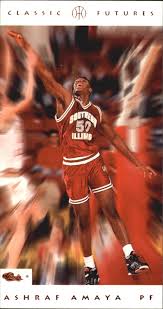
Memories of MJ: HoopsHD interviews Ashraf Amaya

When the NCAA tourney got canceled in March we entered a whole new world, which included a sports void the likes of which we have never seen before. The fine folks at ESPN came to the rescue in mid-April with “The Last Dance”, a 10-part miniseries about the 1998 Chicago Bulls and their quest to win a 6th NBA title in an 8-year span before Coach Phil Jackson and most of his star players all went their separate ways. While it has been comforting to spend the past several Sunday nights with behind-the-scenes stories from Steve Kerr/Scottie Pippen/Dennis Rodman, the star of the show as always is Michael Jordan. Even though the documentary concluded on May 17th, HoopsHD’s Jon Teitel has dug through his archives and discovered oodles of unpublished interviews about Jordan’s career, from his early days as the leading scorer for team USA at the 1983 Pan Am Games to a 55-PT playoff performance during Chicago’s final title run in 1998. We conclude our trip down memory lane by chatting with Ashraf Amaya about playing for a Washington team that lost to Chicago in the 1997 playoffs after Jordan scored 55 PTS in Game 2 of the Eastern Conference 1st round.

You went to high school in Illinois: what made you choose Southern Illinois? I was recruited by 1 of their awesome assistant coaches when I was 15 years old and I formed a good relationship with him before anyone else saw my potential.

In the 1990 MVC tourney title game your team missed a shot at the buzzer in a 3-PT loss to Illinois State: how much of a home court advantage did they have at Redbird Arena, and where does that rank among the most devastating losses of our career? They have a great fan base and definitely had a home-court advantage. It was a heartbreaker for me: I have had other heartbreaks in the pros but that 1 stuck with me for a long time because we had a very talented team.

In 1992 you led the MVC in scoring and were named conference POY: what did it mean to you to win such an outstanding honor? It was not something that I played for but it was a great honor. I was pretty much a back-to-the-basket player but 1 way I could control the game was by rebounding. I think that it was a reflection of our entire team.

You averaged a double-double during each of your junior/senior seasons: how did you balance your scoring with your rebounding? Rebounding was a necessity and something that I had to do. I was a 6’6” center in college and a 6’8” PF in the pros but 1 thing that I could control was how hard I played. Rebounding is not necessarily about size/athleticism: it is about hard work.

In the 1993 NCAA tourney you scored 10 PTS in a loss to Duke: what was it like to face the 2-time defending champions featuring Bobby Hurley (25 PTS/6-7 3PM) and Grant Hill (14 PTS)? You talk about tough losses: that basically ended my college career in Chicago in front of a lot of my family/friends. I did not think that I would be facing double/triple teams but they were the most talented team I faced in college. A few years later I was in the locker room with Grant when he was with the Pistons: he looked at me and said “I hate your guts!” I asked him why and he said that Coach K just kept repeating, “Amaya Amaya Amaya”: I did not realize how seriously they took me.

After going undrafted you eventually played for Vancouver in their inaugural season (1995–96): what was it like to play for a brand-new team that was created from scratch? It was a blessing and a great learning experience. I was fortunate to play with some great veterans like Byron Scott/Kenny Gattison who taught me what to do…and more importantly what NOT to do. If they said that they needed a pastry at 6AM I would go get it, and then they would take me to dinner later that night and tell me all kinds of stories about all of their battles. The losing aspect was not as fun: we set a record for the most losses (67) that thankfully has been surpassed.

You played for Washington the following season: what is your favorite memory from your time in the NBA, and how good was that 69-win Chicago team that swept your team in the 1st round of the playoffs (Michael Jordan scored 55 PTS in Game 2)? Chicago had a phenomenal team with Jordan in his prime: rarely do you step onto the court with guys like Rod Strickland/Juwan Howard and feel that you are outmatched. We were just in their way. My most memorable moment was in a packed arena in Canada: the fans did not know when to cheer and loved it when the ref twirled his arms during a traveling call! They stood up the entire game and it was deafening: our coach had to scream during huddles and it was a great experience to see how sports touched so many lives.

You spent several years playing pro basketball overseas: what is the biggest difference between the NBA and pro leagues in other countries? The 2 biggest differences are resources/talent. There is talent in Europe, which you see when their players get drafted and then come to the US to make an impact like Drazen Petrovic/Dirk Nowitzki/Manu Ginobili: they were ballers who could play. The teams that have the greatest success overseas can find talent and have great resources. We played Barcelona 1 year when they brought Anderson Varejao/Marc Gasol OFF THE BENCH! They could afford to buy enough talent to have the depth necessary to just beat you down. We have to put our best product out there: the game has caught up some and it is exciting to see.

At the 1998 FIBA World Championship you had a 2-PT loss to Russia in the semifinals before beating Greece to win a bronze medal with team USA: what did it mean to you to represent your country, and which of your teammates impressed you the most (Jimmy King/Brad Miller/other)? I played with a couple of gentlemen I knew: I won a European title with Jimmy Oliver later on and we had a good mix of players with NBA experience like David Wood. Coach Rudy Tomjanovich was phenomenal but a lot of people thought that it was a letdown because the lockout kept us from having stars like Scottie Pippen. I played against some of the Greek guys so I wanted to blow them out. It was great to represent my country and we bonded very quickly. Mateen Cleaves hurt his ankle in Monte Carlo and it had a big impact on our team.

What have you been up to since retiring, and what do you hope to do in the future? I have a training company and work with a lot of athletes. I have helped over 100 kids get D-1 scholarships and have also focused on helping kids with special needs. I have worked with Kevin Ware at JustBreathe815 to help young individuals become productive members of society.

Posted in Interviews | Tagged , | Comments Off on Memories of MJ: HoopsHD interviews Ashraf Amaya

Memories of MJ: HoopsHD interviews Frank Brickowski

When the NCAA tourney got canceled in March we entered a whole new world, which included a sports void the likes of which we have never seen before. The fine folks at ESPN came to the rescue in mid-April with “The Last Dance”, a 10-part miniseries about the 1998 Chicago Bulls and their quest to win a 6th NBA title in an 8-year span before Coach Phil Jackson and most of his star players all went their separate ways. While it has been comforting to spend the past several Sunday nights with behind-the-scenes stories from Steve Kerr/Scottie Pippen/Dennis Rodman, the star of the show as always is Michael Jordan. Even though the documentary concluded on May 17th, HoopsHD’s Jon Teitel has dug through his archives and discovered oodles of unpublished interviews about Jordan’s career, from his early days as the leading scorer for team USA at the 1983 Pan Am Games to a 55-PT playoff performance during Chicago’s final title run in 1998. We continue our trip down memory lane by chatting with Frank Brickowski about playing for Bulls assistant Johnny Bach during college and facing the Bulls in the 1996 NBA Finals as a player with Seattle.  

Your 2 college coaches at Penn State (Johnny Bach, who won  3 rings with the Bulls from 1991-1993, and Dick Harter) were both known for their emphasis on defense: what made them such great coaches, and what is the key to being a great defensive team? Bach was old school and a brilliant strategist who had a great career in the NBA working with Phil Jackson. Harter was really aggressive and he slowed the ball down so that our opponents would have problems scoring.

What are your memories of the 1980 NIT (you had 16 PTS/17 REB in a 4-PT loss to Alabama)? We were nervous but had a great experience. I had a good game but we did not play well as a team.

You were a 79% FT shooter in college, but your FT% actually decreased during each of your 4 seasons (from 84% as a freshman to 77.8% as a senior): how did that happen, and why do you think it is so hard for most big men to make FTs? I have no idea why my percentage went down but it did not concern me because I still made most of them. Big men just do not practice FT shooting enough in today’s game: it is a lost art.

In the summer of 1981 you were drafted in the 3rd round by the Knicks but you went abroad for a few years to play in Italy/France/Israel: what did you learn from the experience, and how did pro ball overseas compare to the NBA? I learned that I loved traveling/learning about different cultures. My mom was born in France so I enjoyed it there a lot. The level of play does not compare to the NBA but it helped me get my feet wet. You have to produce or you will not have a job.

In 1984 you returned to the NBA with the Sonics: why did you decide to return, and why did you go to Seattle? The NBA is where I always wanted to be…and the Sonics were the 1st team to guarantee me money. Lenny Wilkens was a great coach.

As a member of the Spurs in 1990 you had a 3-PT OT loss to Portland in Game 7 of the Western Conference Semifinals after Terry Porter scored 36 PTS and stole an inbounds pass with 5 seconds left: how great was Porter in that game, and how devastating was that loss for your team? David Robinson was a rookie. Terry is a good friend of mine and was a great player. Rod Strickland made a good pass at the end of the game but Sean Elliot was a rookie and kind of froze. I think that Rod unfairly took a lot of blame for that. It hurts any time that you lose Game 7.

After making only 16 threes during your 1st 10 years in the NBA you made 32-79 from behind the arc (40.5%) during the 1995-96 season: how were you able to incorporate the 3-PT shot into your arsenal at age 36, and did you regret not doing so a decade earlier? I was not asked to shoot threes earlier in my career. It was more out of necessity late in my career and it helped open the floor for everyone else.

In the 1996 NBA Finals against Chicago you and Dennis Rodman (who grabbed an NBA Finals-record-tying 11 offensive REB in Game 2 and another 11 in Game 6) each picked up several technical/flagrant fouls for your physical play: what was it like to play against Rodman, and where does that 72-10 Bulls team rank among the best you have ever seen? Rodman was a brilliant rebounder but there was no “physical play”: he just flopped and the refs kept calling fouls! That Bulls team was 1 of the best ever but it is hard to compare them to the Lakers/Celtics teams of the past.

You averaged 10 PPG/4.7 RPG during your 12-year career, and your 51.9 FG% remains in the top-75 all-time: how satisfied are you with your career, and what is the secret to being a good shooter? I am thrilled with my career, and appreciate it the longer I am away from it. They key to shooting is just practicing and having a sound form. If you shoot day in and day out, it will give you a lot of confidence.

You currently work for the National Basketball Players Association: what do you do for them, and what do you hope to do in the future? I am the West Coast rep and I help out with education to save players from getting into real trouble. We see it making a difference so the future plan is just to keep supporting the players.

Posted in Interviews | Tagged , | Comments Off on Memories of MJ: HoopsHD interviews Frank Brickowski

Memories of MJ: HoopsHD interviews Anthony Bonner

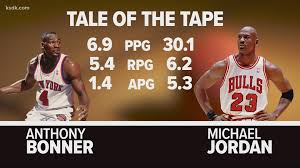
When the NCAA tourney got canceled in March we entered a whole new world, which included a sports void the likes of which we have never seen before. The fine folks at ESPN came to the rescue in mid-April with “The Last Dance”, a 10-part miniseries about the 1998 Chicago Bulls and their quest to win a 6th NBA title in an 8-year span before Coach Phil Jackson and most of his star players all went their separate ways. While it has been comforting to spend the past several Sunday nights with behind-the-scenes stories from Steve Kerr/Scottie Pippen/Dennis Rodman, the star of the show as always is Michael Jordan. Even though the documentary concluded on May 17th, HoopsHD’s Jon Teitel has dug through his archives and discovered oodles of unpublished interviews about Jordan’s career, from his early days as the leading scorer for team USA at the 1983 Pan Am Games to a 55-PT playoff performance during Chicago’s final title run in 1998. We continue our trip down memory lane by chatting with Anthony Bonner about beating the Bulls in the 1994 Eastern Conference Semifinals after Jordan had retired and watching Reggie Miller put up a Jordan-esque performance for the Pacers in the 1995 Eastern Conference Semifinals.

(photo credit: ksdk.com)

In 1981 your older brother Irvin was shot/killed while home on leave from the Army: what impact did his death have on your life? I was in junior high school at the time and had been very active in football and the Boy Scouts but after his death I felt myself drifting toward people that I should not have been hanging out with.

In the 1989 NIT title game with St. Louis you had 11 PTS/11 REB in an 8-PT loss to St. John’s: how much of a home-court advantage did they have while playing at Madison Square Garden? I never really thought about it: they were just so much more physical than us as a Big East team with big guys like Jayson Williams. They were able to wear us down over the course of the game.

In March of 1990 you scored a school-record 45 PTS (including your team’s last 19 PTS in regulation) and had 20 REB in an OT win over Loyola Chicago: was it just 1 of those situations where every shot you put up seemed to go in because you were “in the zone”? It kind of felt like that. It went into OT and we ran a play over and over called the “Bonner series” where the offense had to go through me. Loyola was a good team but they could not stop me so I just kept shooting.

You finished that season by leading the nation with 13.8 RPG: what is your secret for being a great rebounder? It was my most valuable attribute and helped me get into college and stay there. I am an aggressive person by nature and was blessed to learn what it took to play hard. Little did I know that it would help me get into the NBA: the key is to have the individual hunger for the ball.

You made it back to the NIT title game in 1990 and had 19 PTS/11 REB in a 2-PT loss to Vanderbilt: what was the feeling like in your locker room after your final college game? It was very sad to end that 4-year period both academically and athletically. I had no idea if I would be drafted and we had lost a championship game AGAIN…so it was a long night for sure.

You remain the all-time leading scorer/rebounder in school history: did you realize at the time how prolific a player you were, and do you think that anyone will ever break your records? I was a rebounder so I had no intention of being the all-time leading scorer: it just kind of happened thanks to a coaching staff that helped me maximize my skills. I think that someone will eventually break my record: they are exposed to the sport year-round via AAU and are bigger/stronger/faster.

In the summer of 1990 you were drafted 23rd overall by Sacramento (6 spots ahead of Toni Kukoc): did you see that as a validation of your college career, or the realization of a lifelong dream of reaching the NBA, or other? I was really thankful to have an opportunity that I did not think was possible. I did not start playing basketball until high school, which is when I had a growth spurt. Nobody in my family had even gone to college so I had no sense of entitlement that I deserved to be a pro. I think God ordained it for my life.

Take me through the 1994 NBA playoffs as a player with the Knicks:
Kukoc made a 22-footer at the buzzer in a 2-PT win for the Bulls in Game 3 of the Eastern Conference Semifinals: what did you think was going on after Scottie Pippen argued with Phil Jackson and was not on the court for the final play? I had no idea what was going on until after the game but I remember Pippen not being in the game at the end and Kukoc making the shot. It was not “bad blood” but rather “competitive blood”. Phil won 11 rings so he knew something that we did not!

Hubert Davis made 2 FTs with 2.1 seconds left in a 1-PT win in Game 5 after referee Hue Hollins called a foul on Pippen: did you think that it was the right call, and do you think that you would have lost the series if the call had gone the other way? Quite possibly…but I learned a long time ago that referees rarely change their calls. Pippen had to contest the shot because Davis was a great shooter. It was the right call so we have to live with it: they get it right more than 90% of the time.

In Game 4 of the Finals you beat Houston by 9 PTS, which was the night after the Rangers beat the Canucks in Game 7 of the Stanley Cup Finals to end their 54-year championship drought: what was it like to be in the Big Apple the night before, and did the Rangers’ win have any impact on your own team? To be in NYC in the summer of 1994 was incredible! The Knicks had a drought of their own so it was a big deal everywhere in the city.  Those kinds of moments do not come along all the time and are magical when they do. The city was so deserving: there are no fans as passionate/loyal and they are truthful whether you are playing good/bad.

In Game 7 John Starks shot 2-18 from the field in a 6-PT loss to Houston: was it surreal to be playing for a championship just 2 days after the OJ Simpson car chase, and did your team just ran out of gas after playing in an NBA-record 25 playoff games? The OJ thing was not a factor to us: I understand that the TV station broke into the game so the fans might have been captivated by it but the 12 guys in our locker room had the goal of being the last team to leave the court in 1994. The 25 playoffs games were grueling but there was no team that was better prepared/coached to handle such a playoff run with guys like Pat Riley/Jeff Van Gundy. We just ran into a resilient opponent.

Take me through the 1995 Eastern Conference Semifinals against Indiana:
Reggie Miller scored 8 points in 8.9 seconds to help the Pacers rally from a 6-PT deficit at the end of Game 1: where does that rank among the most clutch performances that you have ever seen? I would have to say it is #1 right now. I have seen Michael Jordan/Larry Bird do some amazing things but Reggie’s boldness/awareness to take the shots and know where he was standing on the court was phenomenal. I cannot even call it being in the zone: he had such disdain for the Knicks that it allowed him to go into a whole other stratosphere.

Patrick Ewing made the game-winning shot with 1.8 seconds left in Game 5 but missed a finger roll in the final seconds of a 2-PT loss at home in Game 7: what made Ewing such a great player, and did you think that his finger roll was going in? I thought that every shot he took was going in: he was a great teammate who led by example. It was his team/his city/his time: nobody deserved a title more than he did. It was a heartbreaker but I was thankful to play in an era of guys who were skilled/tough. Ewing was a true professional.

After retiring you became a religious speaker: how do you enjoy your work, and what do you hope to do in the future? I am actually a minister who tries to live what is in the Bible and then share that with people who need answers. I try to encourage young people to be the best that they can be and honor what God has given them. It is more important to attain your purpose than to attain stuff.

Posted in Interviews | Tagged , | Comments Off on Memories of MJ: HoopsHD interviews Anthony Bonner