Keeping up with the Joneses: HoopsHD interviews former Toledo star Larry Jones

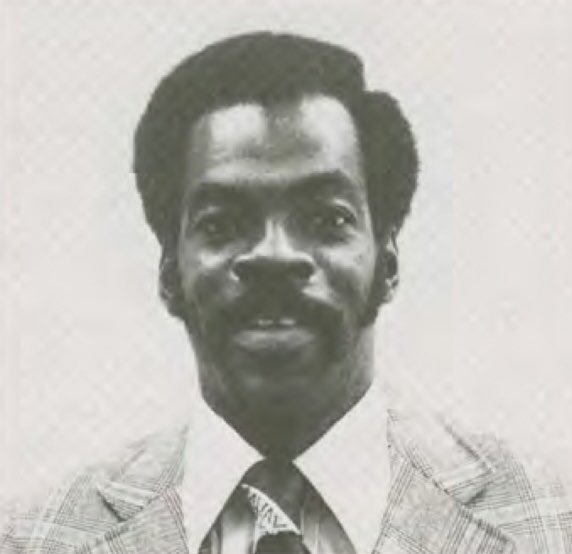
This was supposed to be a big month for the Jones family. We have seen other coaching brothers make the NCAA tourney in recent years (Archie/Sean Miller, Bobby/Danny Hurley, etc.), but this was going to be the year of the Jones. Yale coach James Jones made the tourney last year and had a legendary upset of Baylor in 2016, and after 16 years as a head coach his brother James finally made it this year as head coach at BU. Then the NCAA tourney was canceled and we were left to wonder “what if”. For those of you who do not remember the ABA, allow us to introduce you to Larry Jones: member of the original all-ABA 1st-team, 1st ABA player to ever score 50 PTS in a game, and 1st president of the ABA Players’ Association. HoopsHD’s Jon Teitel continues our 7-part series of Joneses past and present by chatting with Larry about leading the MAC in scoring for 3 straight years and being part of the highest-scoring backcourt in pro basketball history.
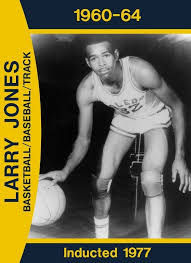
You won a total of 8 varsity letters at Toledo (3 in track, 3 in basketball, and 2 in baseball): which sport were you best at, and which 1 did you enjoy the most? I was always a really good baseball player so that was my 1st love. I guess that I enjoyed basketball the most because it provided me with a living, but if I could have been a great baseball player then I think I would have done that.

In the 1962 season-opener you scored 35 PTS against Butler (the most by any Butler opponent all year) before fracturing your right wrist and missing the rest of season: how devastating was it to have your season end after 1 game, and how close did you come to signing with the Lakers after they drafted you in 1963? I went in for a layup, got undercut, and landed on my wrist. I must have had a cast on for 3-4 months, which is a LONG time when you are a young person. It was devastating when it happened because I was looking forward to doing well as a senior. I did not go to college looking to play pro basketball: I only started thinking about it towards the end of my junior year.

You led the MAC in scoring for 3 straight years (1962-1964) and were named an All-American in 1964: how were you able to be so dominant in college? I did not have a lot of scholarship offers despite being a good high school player who was also a pretty good student. When Toledo recruited me they talked about the importance of getting a good education.  They also had a good program and a great coach.

You own the 2nd-highest career scoring average in Toledo history (20.9 PPG): did you realize at the time how prolific a player you were? I was a team-oriented player so I never thought about scoring a ton of PTS. I am a packrat so I was looking through some old articles and read that my coach said I was the most well-rounded player he ever coached. I was a pretty good rebounder for a 6’2″ guard.

In the summer of 1964 you were drafted 20th overall by Philly (1 spot behind Jerry Sloan): did you see that as a validation of your college career, or the realization of a lifelong dream of reaching the NBA, or other? It was good to be drafted. My parents got divorced early in my life so playing pro basketball allowed me the opportunity to buy my mother a house after a couple of years, then a house for my dad the following year. I was only making about $10,000 back then: the houses cost more than my annual salary! The most touching thing for me was to provide them with that after all of their sacrifices.

The final game of your rookie season was a 1-PT loss to Boston in Game 7 of the 1965 Eastern Division Finals after John Havlicek’s famous steal of Hal Greer’s inbound pass in the final seconds: what was it like to face the 6-time defending champions, and what was the feeling like in your locker room afterward? Back then it was the pinnacle to play against the Celtics in the Boston Garden. I used to think about the history of some of the places I played: I remember walking through the Boston train station to get to the court. In NYC to get to MSG you had to go through a back-door alley: there was no plush lounge! Havlicek is 1 of the most interesting players in history: he played in the shadow of Jerry Lucas at Ohio State, and I wonder how he would have done if he played for a team other than Boston. He always seemed to come up with the big play: he had a motor that never stopped. Speaking of locker rooms, it was a shock for me to see guys smoking cigarettes/drinking beer.

In 1967 you joined the ABA for its inaugural season and became a member of the original all-ABA 1st-team (along with Mel Daniels/Connie Hawkins/Doug Moe/Charles Williams): why did you decide to join the ABA, and how were you able to come in and be so successful so quickly? It is a funny story. I got cut from the 76ers and played for the Wilkes-Barre Barons in the Eastern League, which had some outstanding players like Paul Silas/Bob Love. Larry Costello was a 6-time NBA All-Star…but in the Eastern League he sat on the bench behind me/Levern Tart. I got my Masters degree after going back to school during the summertime. I got a tryout with Baltimore and made the team but got cut after 1 week. I wrote letters to almost every team in the ABA but only Denver was willing to pay for me to come and tryout. I flew West for a tryout with the Lakers: Coach Fred Schaus picked me up at the airport and said the only other player he had ever picked up at the airport was a guy named Jerry West! Denver told me not to sign with the Lakers so they gave me a contract for the same amount that the Lakers did. I asked my mother for some advice but she told me to decide for myself. I started driving West on I-70 and headed left toward Denver because some people said that I had problems going left: true story! My shot was not working too well during my 1st few games but then I got it going after that. I think Denver was the best sports city I have ever seen: they embraced everyone even if you were the last guy on the bench.

In November of 1967 you became the 1st ABA player to ever score 50 PTS in a game when you had 52 in a win over Oakland: was it just 1 of those scenarios where every shot you put up seemed to go in because you were “in the zone”? It was 1 of those days where everything was dropping for me: I had almost 40 PTS in 1 half. My teammates kept getting me the ball so they deserve a lot of credit.

What are your memories of the 1968 Western Division Semifinals (a 5-PT loss to New Orleans in the 5th and final game)? New Orleans was a good club. I think that I broke my hand in the 1st quarter of the 1st game but still scored about 37 PTS that night. The Buccaneers had Jimmy Jones/Larry Brown/Doug Moe/Red Robbins/Steve Jones.

In August of 1968 you were elected the 1st president of the ABA Players’ Association: why did you take the job? I sent out an inquiry to see if there was interest in forming a Players’ Association. The front office called me in and said that I should stop because the league was still in its infancy stage but I kept on making inquiries. We found an attorney who really got it rolling. I remember going to testify before the Senate: it was a heck of an experience. We were in Indianapolis getting ready for the 1970 All-Star Game and we told the league that we were not going to play unless we were allowed to form a union. The game was going to be on TV that weekend so they relented. I later had a hard time getting a job in the ABA: I tried to get a spot on the 76ers after their horrible 9-win season in 1973 but they had about 25 guards in training camp. I was just glad to make the team but after Freddie Boyd got injured I became a starter: the key is to be ready when the opportunity comes.

You scored 30+ PTS in an ABA-record 23 straight games with Denver in 1968-69, led the ABA that season with 28.4 PPG, and your career 21.2 PPG is #9 in ABA history: what is the secret to being a great scorer? Part of it was playing with some great teammates who got me the ball and part of it was being a good shooter. I probably shoot as well now as I did back then…although nobody is checking me these days! I would just go out and shoot a lot. While a lot of my friends were going to parties I would be outside shooting by myself in the rain/snow. I was the last guy on my high school team as a junior but I went from that to being the star as a senior. My mother was also a basketball player.

Your team later hired Coach John McLendon: how big a deal was it to have the 1st African-American coach in ABA history? He was a great guy but kind of got screwed over. He worked with the US Olympic team a lot in the past: he would have us run the mile and then cut us if we could not finish with a good time. He said that we might not win every game but we would be in the best shape during the 4th quarter, and he was right. We were always good at home and had some great fans. He was a class guy.

You scored a game-high 30 PTS in 36 minutes in a 30-PT win over the East team in the 1970 ABA All-Star Game but your Denver teammate Spencer Haywood was named MVP: do you feel that you were robbed, and how unhappy were you with Haywood’s 3-year/$450,000 contract? I was preparing to give a speech and get some nice parting gifts so I was STUNNED that Haywood was named MVP. I was later traded by Denver even though the people in Denver loved me. Spencer was a great talent. Coach Will Robinson at Illinois State (the 1st African-American head coach in D-1 history) was a father-figure for Spencer and later served as a scout for Detroit for 25+ years.

What are your memories of Game 7 of the 1970 Western Division Semifinals (you beat Washington despite Rick Barry scoring 52 PTS in defeat)? Rick had a good squad: Larry Brown, Bill Melchionni, etc. They had been based in Oakland before moving to DC. Brown was MVP of the 1st ABA All-Star game despite being an alternate choice: he was a great PG and a smart player. Larry and Doug Moe had been best friends forever and they remained close even as opposing coaches. The ABA did not have centers as good as those in the NBA but the ABA guards/forwards did not take a backseat to anyone in the NBA.

In 1971 with the Floridians you scored 24.3 PPG and teamed with Mack Calvin (27.2 PPG) to form the highest scoring backcourt combination in pro basketball history: how on earth were you both able to score so many PTS while playing together? Our team ran a lot and Mack was a good little guard who could penetrate. Our owner Ned Doyle created the concept of ballgirls in skimpy costumes: he was a pretty good owner! Doyle asked me who I recommended as our new coach and I suggested 1 of my old coaches named Bob Bass. I was not trying to do him a favor or get anything in return: I just thought that Bob was a good coach. Bob also became GM and I had to negotiate a new contract with him after the season: nothing came of it. A lot of guys who started in the ABA later became coaches. I became an assistant with Detroit in the mid-1970s and when you look at the players in the 1978 All-Star Game in Atlanta there were so many who came out of the ABA (Dan Issel, Artis Gilmore, George Gervin, David Thompson, etc.). The ABA was like a family even though we played hard against each other. The toughest guy who ever checked me was Fatty Taylor: he was small and could not jump but he was like a glove.
Posted in Interviews | Tagged , | Comments Off on Keeping up with the Joneses: HoopsHD interviews former Toledo star Larry Jones

Keeping up with the Joneses: HoopsHD interviews former North Alabama player Gerald Lavender about Coach Bill L. Jones

This was supposed to be a big month for the Jones family. We have seen other coaching brothers make the NCAA tourney in recent years (Archie/Sean Miller, Bobby/Danny Hurley, etc.), but this was going to be the year of the Jones. Yale coach James Jones made the tourney last year and had a legendary upset of Baylor in 2016, and after 16 years as a head coach his brother James finally made it this year as head coach at BU. Then the NCAA tourney was canceled and we were left to wonder “what if”. For those of you who thought the history of North Alabama basketball began 2 years ago when the Lions joined the Atlantic Sun: think again. Coach Bill L. Jones passed away in 2008 but HoopsHD’s Jon Teitel continues our 7-part series of Joneses past and present by chatting with Gerald Lavender about winning the 1979 D-2 title under Coach Jones and his coach’s impact on the school.

Jones played basketball at North Alabama and later became head coach/athletic director at his alma mater: how did he balance being a coach with being an administrator? I think that he did an excellent job. It was not until after I left that he became the AD but they did go back to the national tourney and had a great winning percentage.

He led the Lions to the 1979 D-2 national title game and beat Green Bay to win it all: what did it mean to him to win a title? I was on that team as well. I think it was 1 of the highest points of his career at the time. We were the only school in the state to win a national title, which meant a lot to him.

In the 1984 D-2 Final 4 he had a 4-PT OT loss to eventual champion Central Missouri State: where does that rank among the most devastating losses of his career? Any loss was devastating to him, no matter who he was facing. We had to hear about it and work to correct it: he did not like losing, period.

He won 5 regional titles and made 4 Final 4 appearances during an 8-year span from 1977-1984: how was he able to be so dominant for such a long period of time? He did a very good job of recruiting some top high school/junior college players. He created a defense that smothered people and kept us together and out of trouble.

He was named District Coach of the Year in 1980/1984: what did it mean to him to receive such outstanding honors? He and his family were proud of that but he was even prouder of what it meant to the school.

His son Rex played basketball at Alabama and his grandsons Barrett/Harrison/Walker all played football for the Tide: who was the best athlete in the family? I think he would say that Rex was the best of all of them.

He was inducted into the school’s Hall of Fame in 1992 and the school’s Athletic Complex was named in his honor in 2011: how much of an impact has he had on the school? From the time he became a coach he recruited players who graduated and then became productive citizens in the US or played pro basketball overseas. It was about the way that he approached the players’ families and the importance of being a student-athlete. He was very instrumental in the community and was really interactive with the fans and very positive.

When people look back on his career, how do you think that he should be remembered the most? As the coach who won the 1st national title in the state of Alabama: everyone on the team was proud of that.

Posted in Interviews | Tagged , , | Comments Off on Keeping up with the Joneses: HoopsHD interviews former North Alabama player Gerald Lavender about Coach Bill L. Jones

The Tournament That Wasn’t: Selection Sunday!

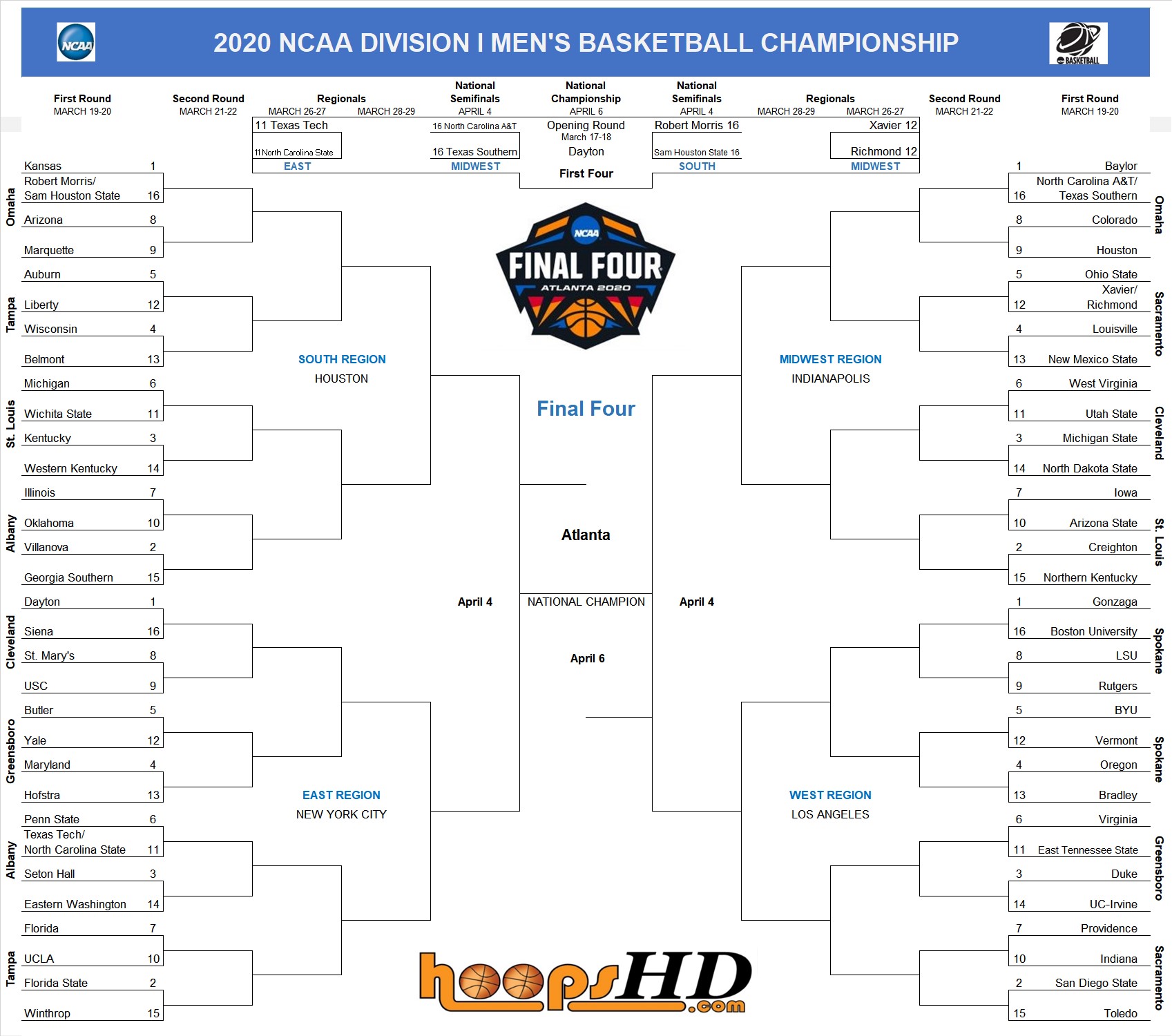
HoopsHD continues its series leading up to Selection Sunday and March Madness, as we simulate what would have happened in TTTW (The Tournament That Wasn’t).  Up next is Selection Sunday!  Eight of the HoopsHD experts evaluated the profiles of every team, including our simulated conference tournament results, and have come up with the NCAA Tournament Bracket.  Chad, Joby, Mike and David get together to reveal that bracket in the same way that the national networks do (no alphabetical order).  Watch our podcast and then check out the final bracket below.  Also keep an eye on the site — we will have a Bracket Challenge available starting Tuesday the 24th!

For those that prefer audio only, click below:

Final Bracket:

Posted in News and Notes | Comments Off on The Tournament That Wasn’t: Selection Sunday!

Keeping up with the Joneses: HoopsHD interviews former UMBC coach Billy Jones

This was supposed to be a big month for the Jones family. We have seen other coaching brothers make the NCAA tourney in recent years (Archie/Sean Miller, Bobby/Danny Hurley, etc.), but this was going to be the year of the Jones. Yale coach James Jones made the tourney last year and had a legendary upset of Baylor in 2016, and after 16 years as a head coach his brother James finally made it this year as head coach at BU. Then the NCAA tourney was canceled and we were left to wonder “what if”. For those of you who thought the history of UMBC basketball began in the 2018 NCAA tourney: think again. HoopsHD’s Jon Teitel continues our 7-part series of Joneses past and present by chatting with Billy Jones about becoming both the 1st African-American basketball player in ACC history and the winningest coach in UMBC history.

You led Towson High School to a state basketball championship in 1963 and a runner-up finish to Allegany in 1964: what did it mean to you to win a title, and what did it mean to you to lose a title? As far as winning a title it does not get any better than that. We lost in the state semifinals during my sophomore year and were committed to winning it all during my junior year. It really meant a lot to the whole community because a Baltimore team had never won the state title. I thought we were good enough to win it again my senior year but 1 of our best players (Ralph Williams) was suspended from the team.

You played forward for Coach Bud Millikan at Maryland: why did he put you in the frontcourt if you were only 6’2”? I played PG in high school and relinquished that duty as a senior because we had a shorter team. I do not know if Bud knew what to do with me: I never questioned him but I was the only Black kid on the team as a sophomore. I just did what I was told and played as hard as I could. Nowadays you just put your best players on the floor like Golden State does but in my mind I was not going to complain.

In December of 1965 you became the 1st African-American basketball player in ACC history: how big a deal was it at the time, and how were you received by ACC fans? It was a big deal but I shared it with my roommate Pete Johnson. I was a 19-year old kid so quite honestly I was naive enough to believe that every other team would be doing the same thing very soon. I was just trying to get an education. Some schools took a long time but it became a bigger deal when I had a chance to look back on it. I was very proud of it back then but am even prouder now. The ACC was no different than the town where I grew up: there were things I could not do in Towson that I still could not do in the ACC. Some motels were pretty abusive with their language and it was rough in some arenas where the only 2 Black people were myself and the guy who was sweeping the floor. I felt a little alone/isolated but just did whatever I had to do. Sometimes I had to have my radar up but the other players did not. There were some road trips where Bud made us all leave the hotel because they would not let me stay there.

You played 2 seasons alongside future Terps coach Gary Williams: what was he like as a player, and could you have ever imagined that he would become a Hall of Fame coach? Gary was tenacious and played very hard. He was very smart so I knew that he could become a good coach because he knew where everyone needed to be on the floor. He was intense enough to motivate other people.

In 1967 you were named team captain: what is the secret to being a good leader? Just to be yourself: I never set out to be captain but just did the right stuff and was honest with the people around me. Some guys are only captains because they are seniors but I did not pull any punches. Rich Drescher was another teammate who was my roommate on the road during my sophomore year. He was from Cambridge, MD, and could not have been a better roommate/teammate. He did not realize how much of a help he was to me.

In 1974 you were hired as head coach at UMBC: how did you get into coaching, and why did you take the job? My high school coach Randy Walker took me under his wing and taught me the rules of the road. I watched him mold teams with all different kinds of players and I wanted to be like him. I was offered the opportunity to become a coach at American and had a 5-year plan to become a head coach. There were not very many Black head coaches at the time but I made a plan to check off every box they could come up with: coming from a good college, having practical experience, coaching the freshman team, etc. I was on a recruiting trip from California, stopped by the UMBC campus, and did not think about it after that. However, once the AD called me back, it felt like a natural fit.

You had 5 straight winning seasons from 1978-1982: how were you able to be so successful for such a long period of time? We had some serious students and found kids up and down the East Coast who were maturing and bought into what we were doing. We had some nationally-ranked teams and worked really hard at it. The key is to get kids who want to play together and play team basketball.

In the 1979 D-2 tourney you had a 3-PT loss to Cheyney State: what was it like facing future Hall of Fame coach John Chaney, and what was the atmosphere like in the UMBC Fieldhouse that night (featuring a school-record 3,600+ fans)? John is a Hall of Famer but we had a taste of them during the regular season after playing at their place. Looking back I think that if we made 1 adjustment we could have won the game. They started shooting the crap out of the ball after we switched to a zone defense: I kept us in a zone and they kept making shots. It was great for us to get some recognition in the community and was good for our psyche. I have been to several games since then but that night it was jumping and the loudest I have ever heard it.

After retiring from coaching you spent several years in the private sector: what kind of work did you do, and what do you hope to do in the future? I never planned to be a coaching lifer and move my kids all over the country. I met with some human resources people to get their insight and they said that my coaching background would help me in HR. I worked for Lockheed in Orlando and then moved to Tupperware before ending up at Disney.

When people look back on your career, how do you want to be remembered the most? It depends on who is remembering! In terms of teammates/coaches associated with the game I just want them to say that I played hard and made Maryland proud and represented the school well both academically/socially. They gave me a scholarship and I gave them my commitment. I want to be remembered for more than just basketball and helping to pave the way for other kids who looked like me. As far as my grandson, I hope he remembers me as Superman and the best player ever! Maryland nominated me for the Legends Hall of Fame, which was a great honor. We are so statistically-based these days so only the record-breakers get the attention, but the guys who play hard and filled their roles are also a big part of the team. To be called a competitor is all that I want.

Posted in Interviews | Tagged , | Comments Off on Keeping up with the Joneses: HoopsHD interviews former UMBC coach Billy Jones

The Tournament That Wasn’t: WAC

HoopsHD continues its series leading up to Selection Sunday and March Madness, as we simulate what would have happened in TTTW (The Tournament That Wasn’t).  Up next is the last of the conference tournaments, the WAC.  New Mexico State was perfect during the regular season against WAC competition and was looking to add three more wins en route to an NCAA Tournament bid.  Would the Aggies get that bid, or would someone else surprise them?  It is time to find out!


WAC QUARTERFINALS

Dayton and New Mexico State were the only two teams in the nation to go undefeated in conference regular season play this year.  Unlike Dayton, however, the New Mexico State Aggies would need an automatic bid, and would have to win 3 games in 3 days in Las Vegas, to advance to the NCAA Tournament.  Up first in the quarterfinals was 8-seed Chicago State, and the Aggies rolled 76-61 behind 18 points from Jabari Rice.  The day’s second quarterfinal saw Thunder Dan Majerle’s Grand Canyon Antelopes get knocked out of the tournament by the Kansas City ‘Roos, 69-57, in a game that was not even as close as the final score.  As the game ended, the rumors began to swirl even more over whether Thunder Dan would be back next season.

The evening games started with 2-seed UTRGV taking on 7-seed Bakersfield.  Despite being a 2 vs 7 game, the teams were only separated by a few games in the final conference standings.  This made it not much of a shocker when Bakersfield pulled off the 78-71 upset, overcoming a 7-point halftime deficit along the way.  In the late game, it was 6-seed Utah Valley upending 3-seed Seattle 81-66 behind 17 points each from TJ Washington and Casdon Jardine.


WAC SEMIFINALS

Up next for New Mexico State was the Kansas City ‘Roos, a team that, if they lost, would be playing in their final ever WAC game as the school was set to return to the Summit League next season.  There was not going be a final celebratory moment on the way out for Kansas City, as the Aggies took care of business, opening a 6-point halftime lead and winning by a final score of 75-65.  Trevelin Queen led his team in scoring, dropping 17 points for NMSU.  One game was left between New Mexico State and perfection in the WAC this season – Saturday night’s championship game.

The Bakersfield Roadrunners were also on their way out of the WAC after this season, with a spot in the Big West Conference waiting for the school next year.  Unlike Kansas City, however, the ‘Runners were not quite done with WAC play yet, as they turned a 3-point halftime deficit into an 86-81 win over the Wolverines of Utah Valley.  Greg Lee was the standout star in this game, scoring 19 points for Bakersfield.  The Roadrunners, whose 2016 WAC Tourney title was the only one by a team not named New Mexico State over the past seven years, were back in the championship game for one final time.


WAC CHAMPIONSHIP

It was top-seed New Mexico State against 7-seed Bakersfield for the WAC Tournament title and a berth in the NCAA Tournament.  New Mexico State was looking to make it 7 out of 8 seasons in the Big Dance while the Roadrunners wanted to leave the WAC with a bang, knocking off the mighty Aggies.  Although Bakersfield played with a ton of heart, and was able to stay within striking distance the entire night, it was clear that New Mexico State was the better team, and in the end they cut down the nets as WAC Champions again, winning 72-62.  Jabari Rice shone in this game for NMSU, dropping 24 points including going 4-for-6 from beyond the arc, to lead his team to perfection against WAC competition this year and a spot in the Big Dance.

Posted in News and Notes | Comments Off on The Tournament That Wasn’t: WAC

Tourney Talk: HoopsHD interviews Liberty SR G Caleb Homesley

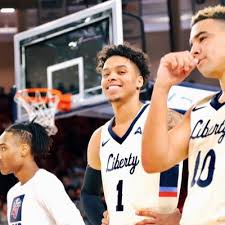
Only 4 teams this season won 30+ games: Gonzaga/San Diego State/East Tennessee State/Liberty. On March 8th the Flames beat Lipscomb 73-57 in the Atlantic Sun tourney title game to earn an automatic bid to the NCAA tournament. Liberty had never won more than 23 games in a season for the majority of its D-1 history before winning 29 games last season and 30 this season while claiming back-to-back NCAA tourney bids. Earlier this week HoopsHD’s Jon Teitel got to speak with Liberty SR G Caleb Homesley about upsetting Mississippi State in last year’s NCAA tourney and the impact of the coronavirus on college basketball.

You grew up in North Carolina: what made you choose Liberty? I was not heavily recruited until I grew a little bit during the summer before my senior year. Liberty made me an offer during my junior year but I put them at the bottom of my list. I tore my ACL as a senior but they were the only school who stuck with me: they felt like family.

After your high school injury you only played 8 games as a sophomore with the Flames before undergoing ACL surgery: how bad were your injuries, and how were you able to get back onto the court? I tore my other ACL as a sophomore. I knew that I would be able to come back after overcoming my 1st injury: I knew what the rehab process would be like but did not want to rush anything.

You play for Coach Ritchie McKay: what makes him such a good coach, and what is the most important thing that you ever learned from him? He is 1 of those guys who is not all about basketball. He wants us to be good players but our relationship is not based on how well I play. He is a father figure to me and is always checking up on me. I did not really believe in what he was doing until after my 2nd surgery.

In the 2019 NCAA tourney you tied a career-high with 30 PTS/5-11 3PM in a 4-PT upset of Mississippi State before a 9-PT loss to Virginia Tech: what did you learn from that postseason run that helped you this season? We were down by 10 PTS toward the end of the Mississippi State game: I remember walking to the huddle during a timeout with 6 minutes left and there was no panic. The loss to Virginia Tech was not fun but we watched the film after that game and learned how to conquer adversity.

You started the season 14-0 before a loss at LSU in late-December (you scored 10 PTS): how good are the Tigers? They were pretty good: that night we got their best shot because they were coming off of a pair of losses. We had a hard time playing at our slow tempo and they dictated the pace a little more in the 2nd half.

In the Atlantic Sun tourney title game earlier this month you scored 16 PTS in a win over Lipscomb to clinch the title: how were you able to get the win after losing at Lipscomb the previous weekend, and what was the feeling like in your locker room afterward? We knew that it would be hard with a title on the line. Our execution was good because our effort was good. The celebration in the locker room was fun: last year we won on the road but this year we got to celebrate at home with our fans.

Earlier this month you were named Atlantic Sun conference POY/conference tourney MVP: what did it mean to you to receive such outstanding honors? Without my teammates I would not have won them. It shows that all of the work I put in and the routine that I stuck to all year long worked. It was evident at the end of the year because I was dedicated to what I was doing.

Each of your top-4 scorers are seniors: how crucial is all of that veteran leadership to your team’s success? It was very crucial. Scottie James was our go-to guy last year but this year he took a step back because there were more guys who could do other things this year: I salute him for that. Myo Baxter-Bell came off the bench even though he could start for any team in the country and Georgie Pacheco-Otriz also allowed other players to do things. Ultimately we are all winners.

What kind of seed do you think that you deserved? Everyone was projecting us around an 11 or 12 seed. Last year we beat a 5 seed and showed that we can play well in big games. I would say we deserve a 12 seed due to our 3 conference losses.

Any thoughts on the impact of the coronavirus on college basketball this month? At 1st I did not take it seriously but now I have realized that it is affecting the entire world. After I heard that the NBA season was postponed I knew that something serious would happen with college basketball. Now we just need to stay safe.

Posted in Interviews | Tagged , | Comments Off on Tourney Talk: HoopsHD interviews Liberty SR G Caleb Homesley