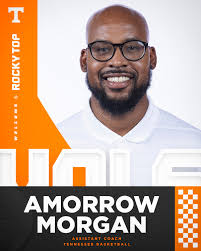
Season preview: HoopsHD interviews new Tennessee assistant coach Amorrow Morgan

CLICK HERE For All of our Preseason Coverage, Including Interviews, Podcasts, and Conference Previews

We are still a couple of months away from the tip-off of a new college basketball season, which means that we have plenty of time to start preparing for the action ahead. We will do so via a series of season previews featuring the best players/coaches in the country. HoopsHD’s Jon Teitel continues our coverage with Tennessee assistant coach Amorrow Morgan, who talked about joining the Vols last spring and his expectations for this season.
You were born/raised in Memphis: what made you choose Idaho State for college? I was just looking for an opportunity. 1 of their assistant coaches had recruited me hard when he was at FIU, so once he moved to Idaho State I went to play for him.

In January of 2010 you scored 30 PTS in a career-high 54 minutes in a 2-PT 3-OT loss at Weber State: could you tell at the time that Damian Lillard (28 PTS in 50 minutes) was going to become a superstar? Yes. I remember vividly a play in the 1st OT. I had been guarding someone else and during a timeout I said that we needed to switch up the matchup on Lillard because he had scored 8 PTS in a row. He ended up making the game-winning layup with his left hand in the final second: it was Dame Time before it became DAME TIME! Even in warmups he was doing things that made me realize he should not be in our conference.

Your FG%/3P% increased during each year you were in college: how were you able to keep improving every single year? I am a firm believer that retention anywhere enhances your chance for success. Our staff did a very good job with development, which stuck with me during my entire coaching career. Assistants put in unseen hours to help their players get 1-2% better each day, and it can do so much for someone’s confidence.

You were named all-conference as both a junior/senior: what did it mean to you to receive such outstanding honors? It was great! I was honorable mention as a sophomore but was 1st-team as a junior. I put in a lot of hours in the gym so to get that notoriety/respect is something I keep with me to this day. I do not know if I would have stayed 4 years had I played in this climate due to the transfer portal: the landscape has completely changed.

You were a 3-time captain: what is the secret to being a good leader? Caring about others, which is still a strength of mine today. I enjoy mentoring people and learning from others, which allows me to give whatever I got every single day to help the team win. I have been in the game for more than a decade. I built great relationship with my teammates and learned how they tick, so I was able to bring the most out of them and motivate them.

You were reportedly headed to Florida State last spring: what made you choose Tennessee instead? I landed at Florida State and was there for about 6 weeks: we went from just 2 players when I arrived to putting together an entire roster. I would never want to jump ship after getting an opportunity…but I have always looked at Tennessee as the cream of the crop. It was a no-brainer for me and I could not turn it down so it made complete sense for me and my family, as my beautiful wife can finally see her family in Arkansas without having to fly back in the middle of the night. It is perfect for me because it is not about me. I get to help the program sustain its success, which has always been my mindset.

You work for Coach Rick Barnes: what makes him such a great coach, and what is the most important thing that you have learned from him so far? I am super-excited to learn from him and be part of his very experienced staff. He loves the game and studies it to keep learning/growing. He is dialed in on the NBA and practice film and individual workouts. His tunnel vision to bring the university a championship has not changed: he might even be hungrier now after back-to-back Elite 8s. He is secure in himself and how he wants to do things: he believes in his own formula because he has seen it work time and time again, but sprinkles in a few new things each year to keep up with the times. He is also a great person: he spent time with me to make sure I was comfortable with the move. He is the entire package and has no holes in his coaching game.

Last year as an assistant at Cal you helped Jeremiah Wilkinson become ACC 6th Man of the Year: what will be it like to face him this year in conference play since he is at Georgia? It is crazy: we will also play another guy I recruited in Andrej Stojakovic, who transferred to Illinois. I have a great relationship with Jeremiah’s family so he is my guy: he had an incredible freshman year and now he is closer to home. I know some of his strengths and some of his weaknesses so we will try to make it a nightmare for him!

1 of your incoming freshmen this year is McDonald’s All-American Nate Ament, who is also a projected lottery pick next summer: how is he looking so far? He is special and keeps improving/learning. Coach is pushing him hard every day to make sure he is prepared to play in the best conference in the sport. He is a coach’s dream: there is no entitlement there and he is not making it about him. He is trying to become the best version of himself and will have a great year for us.

What are your goals for the upcoming season, and what are your expectations for the upcoming season? We want to win a national title and get over the hump to make the Final 4 and play in Indianapolis this season. We have great kids who are working hard every single day to reach the standard that has been set before them by the guys who laid the foundation. We will try to make Coach Barnes proud.
Posted in News and Notes | Tagged , | Comments Off on Season preview: HoopsHD interviews new Tennessee assistant coach Amorrow Morgan

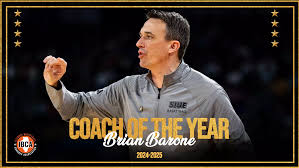
Season preview: HoopsHD interviews SIUE coach Brian Barone

We are still a couple of months away from the tip-off of a new college basketball season, which means that we have plenty of time to start preparing for the action ahead. We will do so via a series of season previews featuring the best players/coaches in the country. HoopsHD’s Jon Teitel commences our coverage with SIUE coach Brian Barone, who talked about making the NCAA tourney for the 1st time in school history last March and his expectations for this season.

Your father Tony Sr. made the 1966 Final 4 as a player at Duke and later was your coach at Texas A&M: how good a player was he back in the day, and how did you like playing for him? He was a 5’9”, 165-pound guard from Chicago who played in the Final 4. He was quick/feisty: I have seen some of the old film and it was cool to watch him play. He had a lot of credibility and is in multiple Halls of Fame: he did some innovative things like behind-the-back passing/dribbling. It was special to play for him: I wish I had appreciated it more because it got cut short after 2 years. He got the best out of me, and I was lucky enough to be around him every day.

In 1998 you finished top-3 in Big 12 with 4.8 APG/2.3 SPG: what is the secret to being a good PG? You must know the game plan and put yourself in a position to take calculated risks, but you must be strategic about when to attack. We were not as good as some of our opponents, so my preparation needed to be very good. I had a high basketball IQ and had some very good college coaches. I took great pride in playing harder than anyone else: I exhausted every ounce of my energy on the court.

After your father left the Aggies to coach in the NBA, you transferred to Marquette and became team captain: what is the key to being a good leader? Relationships: I was not the best player but was able to connect with everyone on my team from freshmen to 5th-year seniors. It was never awkward to room with someone on the road or sit down and eat lunch with them on campus. My effort was never questioned even if I did not take 1000 shots in practice.

You were also named to the conference All-Academic Team: how did you balance your work on the court with your work in the classroom? I was always able to do what I was supposed to do. There is a lot of time away from class because you are doing things for 5 hours/day that other students are not doing. I was not awesome at time management, and it did not always come easy to me, but I always did my work.

2 other coaching mentors who you worked for were Porter Moser/Tom Crean: what was the most important thing that you learned from either of them? Porter has tremendous energy and gets the most out of every day. I saw that when he played for my dad at Creighton: he got the most out of what he was given. He is relentless and brings it every day: he was always willing to study the game, which is why he keeps getting better as a coach each year. For Tom there was no “impossible” task: we would figure it out and push ourselves through whatever we thought we could not do. He worked every single day to figure out how to make you better.

Take me through the 2025 postseason:
In the OVC tourney you beat Tennessee State/Southeast Missouri to clinch the title: how big a deal was it to make the 1st NCAA tourney in school history?
There are a lot of very good coaches who have never had the opportunity to coach in the NCAA tourney. The team overcame injuries/frustration and grew as close as any team I have ever coached. I do not take it for granted and it was great to give our community the feeling of “next-level winning”. We built the culture and had 3 winnings seasons in a row: it was amazing to see everyone embrace our team the way they did. I also enjoyed the value of their efforts because they were part of the ride with us.

In the NCAA tourney you had a 38-PT loss to a Houston team that was 1 shot away from winning a national title: where do the Cougars (58.6 PPG allowed) rank among the greatest defensive teams that you have ever seen? When you watch them on film you really appreciate them. I have studied Coach Kelvin Sampson, who has helped me over the years. I played against Kansas in Phog Allen Fieldhouse in January of 1997 when they were the #1 team in the country, and I recall them being very good. However, when I walked off the court after losing to Houston, I thought that not only were they good enough to win a title…but that they were perhaps the best team I have ever been on a court with.

You lost your top-2 scorers from last year (Brian/Ray’Sean Taylor): how will you try to replace all that offense/leadership? We also lost Desmond Polk, who was with us for 5 years. You must do it by committee: the people who are here have to be who they are. We did a good job of moving the ball and had a couple of primary scorers, so we must continue to defend and play team basketball. Ring Malith has produced at a high level and we will have to identify who we become.

Your brother Tony Jr. is the NCAA assistant director for basketball development/enforcement: what is the best part of having a brother in that job, and what is the not-so-best part (if any)? 1 of the best things about Tony is that he and our dad put the Memphis Grizzlies together before they ever made the playoffs. He has been around the best and scouted the best, and as a “basketball guy” in an entity that does not always have people like that in his position it is unique. He gives me insight into trends that are going on in other places. There has not been anything negative because we do things the right way here, so having him around is not too scary!

What are your goals for the upcoming season, and what are your expectations for the upcoming season? Our expectation is always to win. When I was fortunate enough to get the job I took over a program that never had a consistent winning culture. It took time to get there but I like that there was a build-up: we did not go from never winning to immediately making the NCAA tourney. This offseason I did not get caught up in figuring out the next step, but rather continuing to grow what has got us to where we are. That is the foundation: you must go in every day to affect winning and losing so that it goes in your favor. I believe in our guys and we were able to retain most of them, which is not easy in this era, so the by-product will be an opportunity to win. It will be a new challenge but I am excited about it: they keep telling me I have a job so I keep showing up!

Posted in News and Notes | Tagged , | Comments Off on Season preview: HoopsHD interviews SIUE coach Brian Barone

From Moc to Hawk: HoopsHD interviews Robert Hamblin about Ron Shumate

Some of the best non-D-1 coaches ever were also able to have success after finally making it to D-1: Bo Ryan won 4 D-3 tourneys at Wisconsin–Platteville from 1991-1999 before leading Wisconsin to back-to-back Final 4s in 2014/2015, and Ben McCollum won 4 D-2 tourneys at Northwest Missouri State from 2017-2022 before leading Drake to a school-record 31 wins last season and subsequently getting hired at Iowa last March. Another coach who did some serious damage in D-2 was Ron Shumate: he made back-to-back D-2 title game appearances at Chattanooga in 1976/1977, then made 2 more D-2 title game appearances at Southeast Missouri during a 4-year span from 1986/1989. HoopsHD’s Jon Teitel got to chat with Southeast Missouri emeritus professor Robert Hamblin (who wrote a book about Shumate’s 1992 team) about all that postseason success and what he learned while writing his book.

As coach at Chattanooga, Shumate lost the D-2 title game in 1976 by 9 PTS to Puget Sound, won the D-2 title in 1977 by 9 PTS over Randolph-Macon while being named national COY in the school’s last season before moving up to D-1, and his .695 W/L% remains #2 in school history: how did he end up at SEMO 2 years after resigning from Chattanooga? He took Chattanooga to D-1 but just could not win there after doing so, even though he was 1 of the best D-2 coaches ever. There was a question when his assistant coach was accused of illegal recruiting: the school asked Shumate to fire his assistant, but instead he refused and then decided to resign. He was a late addition to the list of SEMO coaching candidates: he was not high on their list but was so impressive in the interview that he just sold himself to the hiring committee.

I read that in addition to coaching he played the part of showman (having the Chattanooga band play “Rocky Top”, bringing spotlights to his games, etc.): did that continue at SEMO? He hit the ground running and came in with some big boasts. We had been the doormat of the conference for a while, so when he predicted great things nobody believed him…but he delivered. We did not have a Rocky Top theme but he did “talk a good game”: the reporters liked him because he gave them good quotes. Sometimes he would say things that upset the administration, but when they sent him a note he would just ignore it, which was easy to do while he was winning. He spent a decade as the “Hero of Cape Girardeau”. We used to play in Houck Field House: I saw people lined up halfway around the block to get tickets because he was so successful. There was so much controversy about building a new arena that he did not even appear in the program for the opening ceremony.

In 1986 he made the D-2 title game before losing to Sacred Heart by 6 PTS: what do you remember about that game/team? Dick Vitale did the broadcast of the title game, and I was there as well. Coach Shumate made sure his guys were in bed by 9PM while the Sacred Heart players stayed up partying until 1-2 AM. Everyone thought that we would win that game…but 1 of our best players got hurt, which really turned things around.

In 1989 he had a 1-PT OT win over UC-Riverside in the D-2 Final 4 before losing the title game to NC Central: what made him so successful in postseason play? We had a player come off the bench against Riverside who had a great game, but I did not see it in person because I was teaching in London. 1 of his idols was Bobby Knight so he spent ⅔ of his practices coaching defense. That was before the shot clock so if he had a 6-PT lead with 5 minutes left then you might as well go home. He was a master of end-game strategy who would stall it out and let his team make its FTs. He was 1 of the best teachers I ever saw, be it in the classroom or the gym. Defense wins games…and FTs win all the close games.

In 1991 the school made the leap from D-2 to D-1, and you took a sabbatical from your teaching duties to travel with the team and write a book about it called “Win or Win”: how difficult was it for him as a coach, and what is your favorite memory from that year? I debated the athletic director 4 times on campus because I did not think we should make the leap: I won all the debates…but the committee voted 17-0 to go D-1. What most fans do not know is that even as a D-2 program we got D-1 athletes who did not have the grades to qualify elsewhere. However, when we became a D-1 program we only got D-2/D-3 athletes because the best players would go to a school like Missouri. Now I presume they have to play the NIL game but I do not know how they are paying their athletes. We cannot get 5-star players so it is tough: both Shumate and the football coach told me that going D-1 would cost them their jobs…and they were right. The non-revenue sports like softball/track do okay, but there are no “minor” sports. If you cannot win at basketball/football then all the other sports will suffer: for example, we had a great swimming program that has since been canceled. 1 time he gave a Knute Rockne-type halftime speech, but most of the time he would just go to the bathroom. He let me attend most of his practices, but there was 1 where he put brown paper over the windows. Sometimes he would run his guys so hard in sprints that I thought they would all drop. It was nice to travel with the team and ride the bus: we only took an occasional flight. His assistant coach read books all the time but all that Shumate would do was talk basketball: I think he was so successful because he was so obsessive. I am glad that I wrote the book before the recruiting controversy happened. We self-reported the minor violation of NCAA rules, but the fans thought that the administration reported it to the NCAA to void his contract. He sued/lost, but that was not the story that I was telling. I think my book remains 1 of the only ones (if not the only 1) about a team that was moving from D-2 to D-1: https://roberthamblin.substack.com/p/win-or-win-a-season-with-ron-shumate?utm_campaign=post&utm_medium=web

In 2016 he was inducted into the SEMO Athletics Hall of Fame: where does that rank among the highlights of his career? Since he left under a “cloud of scandal” we knew that he would not be inducted until the administration moved on…and once they did he was. I told the athletic director that I would like to pass out free copies of my book to the 1st 500 fans, and he said that was fine. After the women’s game and before the men’s game, Shumate signed copies of the book (which I had already signed) up on the 2nd level of the Show Me Center…and the line went all the way around the arena. He was also inducted into the Chattanooga Hall of Fame so I assume that both of them are among his career highlights.

When people look back on his career, how do you think he should be remembered the most? As a winner, of course, and a dedicated hard worker. I always thought that I worked hard as a professor…but I do not know anyone in ANY profession who worked harder at his job than Shumate did, and he got results. He is 1 of the greatest D-2 coaches ever, but I still wonder why he did not win at D-1. He was tough, but over the past few decades American athletes have been spoiled and do not always like to work hard despite making millions of dollars. We had a 3-year player named Lawrence Wilson who was a great rebounder: he got kicked off the team and we ended up losing the national title game. I later asked Shumate if he thought that he would have won if Wilson was on the team, and he said that they would not have even made the title game if Wilson was on the team: he never 2nd-guessed himself or backed down.

Posted in News and Notes | Tagged , , | Comments Off on From Moc to Hawk: HoopsHD interviews Robert Hamblin about Ron Shumate

The Olympians: HoopsHD interviews 1984 Olympic gold medalist Denise Curry

The NBA Finals date back to 1947 (when they were known as the Basketball Association of America Finals) and the very 1st NCAA tourney was held in 1939. Olympic basketball competition is even older: it debuted as a demonstration event in 1904, and the men’s version became a medal sport in 1936, with the women finally getting their chance to go for the gold in 1976. The United States has dominated Olympic basketball competition from the start: the men have now won 17 gold medals in the 20 tournaments they have participated in during the past 88 years, while the women have won 10 gold medals in the 12 tournaments in which they have competed during the past 48 years. While we must wait 3 years until the 2028 Olympics in Los Angeles, HoopsHD’s Jon Teitel will fill the void by interviewing as many prior Olympic players/coaches as possible. We continue our coverage by chatting with Denise Curry about being 1 of the best players in UCLA history and winning a gold medal in 1984.

You were born in Montana and went to high school in California: what made you choose UCLA? We moved from Montana to Chico, CA, when I was 6 years old, and then we moved to Davis, CA, when I was 8 years old, so Davis is my hometown. Growing up there in the 1960s/1970s I heard about all the Bruins’ success under John Wooden: they had an aura about them. When they showed interest in me it became an easy decision.

In 1978 you won the AIAW National Championship: what did it mean to you to win a title as a freshman in your home gym in the 1st-ever nationally televised women’s championship game? It was 1 of the highlights of my athletic career: no doubt. We had some tough games along the way but the crowd support in the title game was fantastic. I appreciated it more as I got older, but even as a junior I realized how tough it was to win a title.

You qualified for the US Olympic team in 1980: what was your reaction when you learned that the team would not be competing due to a boycott? We knew prior to the qualification tourney in Bulgaria that there was a chance we would not attend the Games. We won the qualification tourney and were ready to go…but President Carter did not change his mind. I got to play 4 years later but many of my teammates did not get that opportunity: we were certainly disappointed at the time. I think Carter was a great man/humanitarian, but I do not know if it made a big difference on the global stage.

You were a 3-time All-American from 1979-1981 and a 1st-Team Academic All-American as a senior: how did you balance your work on the court with your work in the classroom? With a lot of support from my teammates! There was not any “hand-holding” in terms of study hall/tutors, but I knew that I wanted to become a history major and had some friends who told me what classes they thought I would enjoy. I grew up in an academic household with a lot of teachers so there was no question that I would attend college. It was not easy: when I had road trips, I had to negotiate schedule conflicts with my teachers and explain what was going on because I did not want to have to drop any classes. Our coaching staff led by Billie Moore believed that academics came 1st, and we had to take care of business.

You remain the all-time leading scorer (3198 PTS)/rebounder (1310 REB) in school history: did you realize at the time how prolific a player you were, and do you think that anyone will ever break your records? I was fortunate as a freshman to play with senior Annie Meyers, who was a great player/leader. I had a great sophomore year after she graduated, which helped me realize that I could carry a bigger load even though our opponents had game-planned for me accordingly. I knew that I could be successful at that level, and when I made the Olympic team after my junior year I knew that I was in the upper echelon. It has been a long time since I left so I do not know if anyone will break my records. You would probably need to play all 4 years on an outstanding team: I am proud of the job that Coach Cori Close and her current team has done. It is possible, but I am surprised that the records are still there. I did not play with the 3-PT line, so that could also make a difference: I hope someone breaks it.

You qualified for Team USA again in 1984: what did it mean to you to represent your country 4 years after the boycott, and what did it mean to you to win a gold medal in the city where you went to college? It was tremendous! Most of my family were able to attend, as well as some friends/teammates, so I had a lot of support. It was a proud moment and is probably the athletic highlight of my life.

You played pro basketball in Europe and won 5 national championships in 8 years: what was the biggest difference between basketball in the US vs. basketball in other countries? Back then the only opportunity there was to play professionally was overseas. Most players went to Europe/Asia, but some went to South America. I wanted to keep playing through 1984…and then just for fun I played another 6 seasons! I played in Germany/France/Italy and got paid to play the game I loved. I had decided that whenever it felt more like a job than a pleasure I would stop playing, which is why I retired in 1990.

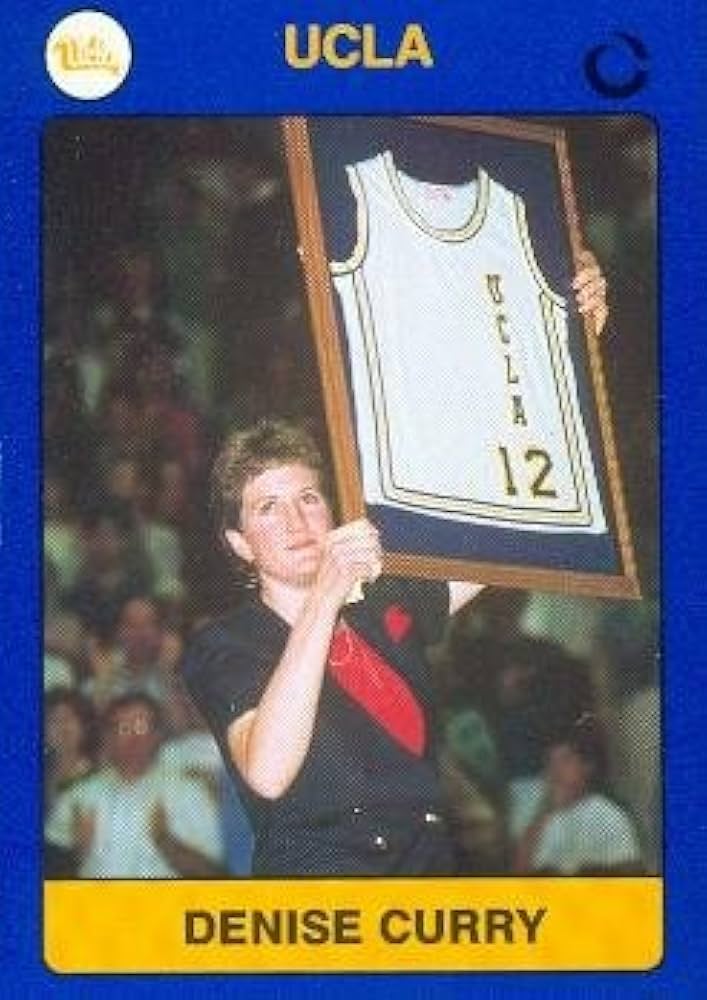
Your #12 jersey was 1 of the 1st 4 retired by UCLA in 1990, you were inducted into the UCLA Athletics Hall of Fame in 1994, you were inducted into the Naismith Memorial Basketball Hall of Fame in 1997, and you were inducted in the inaugural class of the Women’s Basketball Hall of Fame in 1999: was it as exciting a decade as it sounds?! It was very cool! The Naismith Hall of Fame did not even start electing women until the early-1990s (Lusia Harris-Stewart/Nera White in 1992). My dad was a high school basketball coach, so I was around the sport my entire life. Instead of having someone babysit me after school when I was younger, I would attend his practices. It was about loving/playing the game, then going to my dream school, then representing my country in the Olympics. The Hall of Fame was just the cherry on top, because the opportunity was not even there when I was a player.

You had a birthday last week: what did you do for the big day? It was just a low-key day that was very nice. They are not as special when you get older, but this week I am heading to the Bay Area to meet up with friends and see a pair of Valkyries games and a Giants game.

When people look back on your career, how do you want to be remembered the most? I hope that I was a good teammate, was completely invested, and gave my all.

Posted in News and Notes | Tagged , | Comments Off on The Olympians: HoopsHD interviews 1984 Olympic gold medalist Denise Curry

Airplane Mode: HoopsHD interviews Sam Smith about Hall of Famer Chet “The Jet” Walker

Many people think the Chicago Bulls did not exist before Michael Jordan showed up in 1984, but they were formed 2 decades before that and won a Midwest Division title in 1975. That 1975 team included several future Hall of Famers such as Rick Adelman, Jerry Sloan, and Nate Thurmond. The player who scored the most PTS that season (1461) was also a future Hall of Famer: Chet Walker. He originally made a name for himself in Illinois after twice earning 1st-team consensus All-American honors at Bradley, then became a 7-time All-Star in the NBA, and won a title with the 76ers in 1967. He passed away in 2024 but HoopsHD’s Jon Teitel got to chat with legendary Bulls sportswriter/New York Times bestselling author Sam Smith about Chet’s famous nickname and his incredible combination of durability/scoring ability.

His nickname was “The Jet”: who gave him the nickname, and how did he like it? That was an era of alliteration/rhyming, but he was certainly not a “jet” on the court so I am sure that he enjoyed the irony! He was a half-court kind of player and must have gotten a kick out of that, as guys like Pete Maravich/Bob Love were more open-court players. His only teammate who was less of a “jet” was Tom Boerwinkle.

Walker and his mother had originally agreed that he would attend Nebraska: how did he end up at Bradley instead? He told me that it was not as uncommon a situation during that era as it seems today: there were a lot of young Black kids who were taken advantage of back then. For example, Joe Caldwell was ready to go to UCLA…but eventually got “kidnapped” and went to Arizona State. Chet had a similar story. Fred Hoiberg’s grandfather was the coach at Nebraska and had arranged for Chet to come there, but someone else intervened, took Chet to Illinois, and got him registered at Bradley. Chet just wanted to play basketball: it was not like his life’s dream had always been to attend Nebraska. Fred has confirmed the story as well.

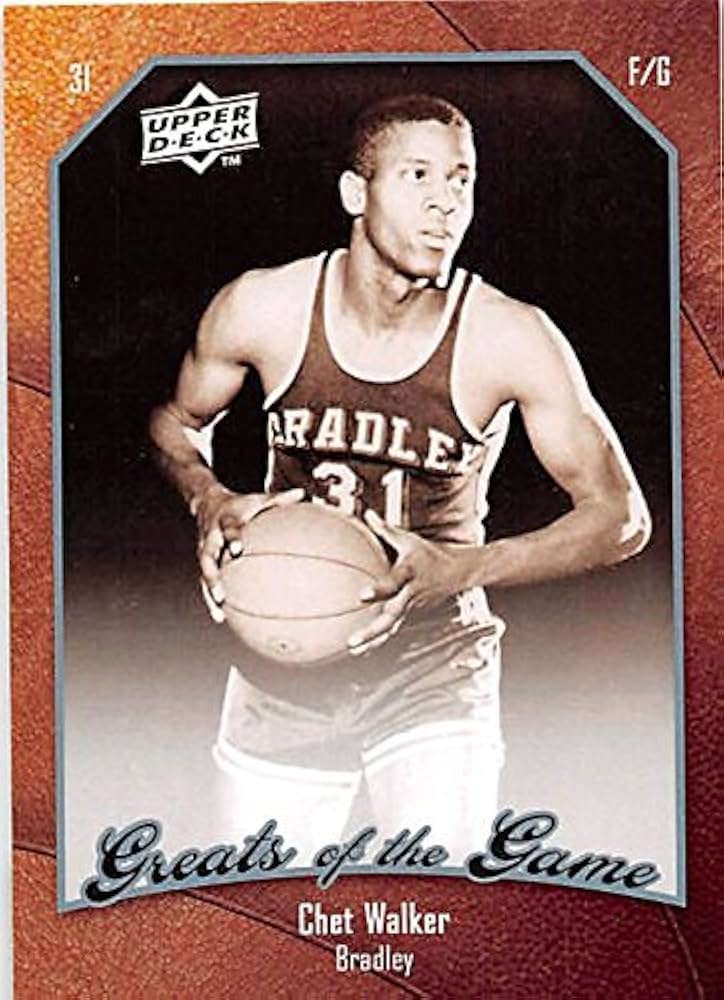
He is the only Bradley player to be named a 2-time All-American and his #31 was retired by the school in 1976: where does he rank among the greatest players in school history? I think that he is the greatest: Hersey Hawkins is the only other contender I can think of, but he was nowhere near the player that Chet was. Hersey scored a lot of points, but that was a result of Coach Dick Versace playing an up-tempo style. Chet elevated the entire program, and when they won the 1960 NIT it was like winning an NCAA title today. He was caught up in the collegiate betting scandal back then and was interviewed by New York County District Attorney Frank Hogan. He did nothing wrong but not everyone agreed: he thought that he was poisoned at a hotel from a meal served by a bellman!

He was drafted 12th overall by Syracuse in 1962 and was named to the NBA’s 1st All-Rookie Team in 1963: how was he able to come in and contribute right from the start? He was just a high-level player with a lot of skills. He was 6’7” and told me that Red Auerbach was interested in drafting him, but Boston decided that John Havlicek would be a better fit because they needed defense more than offense at that time. If you look at the NBA today, Chet was a Kevin Durant/Pascal Siakam-type of player. He was long/lean/athletic, which also describes the premier forward of that era: Elgin Baylor. Chet had all the moves around the basket and was able to walk right into the league and become a scorer. He could have scored even more points had he not been teamed up with Wilt Chamberlain in Philly. He was his team’s “finisher”: when they needed someone to make the final shot, it was Chet.

In 1967 he scored 19 PPG for a 76ers team that won a then-record 68 regular season games en route to winning a title: how big a deal was it for them to snap Boston’s streak of 8 straight championships? It was huge because the Celtics were the greatest dynasty in American team sports history. Wilt was the biggest name in the game but could never get over the hump until Philly got a new coach in Alex Hannum, who ran the triangle offense. Wilt had more help than he had ever had before, and he trusted those guys. Chet and Wilt became close friends: they would travel to Europe together during the summers. There were not many guys who scored 20 PPG while playing with Wilt!

He was a 66% FT shooter in college but in 1971 he led the NBA with 85.9 FT%: how crucial was his FT shooting to his success? He had a great stroke and natural ability. He probably did not shoot better in college because the defenses were focused on him and beat him up.

He graduated as the all-time leading scorer in school history, and a decade later in February of 1972 he scored a team-record 56 PTS for Chicago in a win over Cincinnati: what was his secret to being a great scorer? That 56-PT game was 1 of my favorites. He was an All-Star for several seasons with the Bulls but did not make the All-Star Game in 1972 because it was hard to get noticed with so many other great players in his conference. After he was snubbed, he decided to show everyone that he could score: the only player in Bulls’ history to score more than that was Michael Jordan! He was a soft-spoken guy who was not that outgoing but was very prideful and had the ability to play at the level of the greatest players of that era. He was so difficult to stop due to his size/moves.

He was a plaintiff in a federal antitrust lawsuit against the NBA that was settled in 1976, but after Bulls owner Arthur Wirtz told him that he would be the Bulls “property” if he chose to play again, he decided to retire: what was the reaction to his decision, and did he have any regrets? He was a proud guy and an activist for certain causes. He was involved with Martin Luther King and was close to other NBA leaders like Oscar Robertson. It was not uncommon back then for players to hold out, and before that season Norm Van Lier/Bob Love both held out. The Bulls led Golden State 3-2 in the playoffs but ended up losing the series 4-3. Dick Motta was both coach/GM and he thought that the 2 hold-outs should not receive a playoff share, so Chet was unsure about coming back due to the way Motta treated his players. Milwaukee had great interest in signing him, and he wanted to go there, but he was nobody’s “property”, so he just walked away. I think that he would have liked to play a couple more years, but he got into the entertainment industry, won an Emmy, and became friends with Muhammad Ali.

He appeared in more than 1000 games but never missed more than 6 games in any of his 13 seasons: what was the key to his durability? He was the ultimate iron man. Basketball players have such amazing physical abilities but if they got hurt back then they could get cut. Chet played 80 games almost every single season. His statistics were good, but he was overlooked by Hall of Fame voters for many years because he played with Wilt. He was 1 of the truly elite players of his era and a good shooter and reminds me of Shai Gilgeous-Alexander: he could get into space and create his own shot. His size/elusiveness makes me think that he could have led the league in scoring.

He was inducted into the Hall of Fame in 2012 and passed away in 2024: when people look back on his career, how do you think that he should be remembered the most? He won an NBA title…but most people only remember Wilt from that team. He was 1 of the elite players of his era, an iron man, a committed player representative who stood up for his teammates. He is someone who players of the current era should recall because they are standing on the shoulders of guys like Chet/Oscar, who helped introduce free agency into the NBA. He was 1 of the great figures in the history of the game despite being overlooked. He resented the fact that the 76ers and Bulls never retired his number, probably because he divided his career between the 2 franchises and it was not popular in society back then to be an activist.

Posted in News and Notes | Tagged , , | Comments Off on Airplane Mode: HoopsHD interviews Sam Smith about Hall of Famer Chet “The Jet” Walker

Going for the Gold: HoopsHD interviews FIBA AmeriCup Team USA member Jerian Grant

For those of you who cannot wait to see how your favorite college basketball players do at the next level when the NBA season tips off in October, you can still see some great former college players this month at the 2025 FIBA AmeriCup. USA Basketball announced its roster last week, which includes many former college stars like Tyler Cavanaugh (2016 NIT MVP at GW), Jack Cooley (2013 1st-team All-Big East at Notre Dame), and Jahmi’us Ramsey (2020 Big 12 Freshman of the Year at Texas Tech). 1 of the players with the most NBA experience on Team USA is Jerian Grant: he spent 5 years with the Knicks/Bulls/Magic/Wizards, made the playoffs twice, and was top-15 in the league in 2018 with 7.3 assists/36 minutes. Jerian is preparing to head to Nicaragua as he tries to win a gold medal, but HoopsHD’s Jon Teitel got to chat with him about choosing Notre Dame for college and the 10-year anniversary of his sensational senior season.

You went to DeMatha High School in Washington, DC: what made you choose Notre Dame? Notre Dame coach Mike Brey also went to DeMatha, and when I went on campus the connection was there right away.

As a senior you were named consensus 1st-team All-American: what did it mean to you to receive such outstanding honors? It meant everything and showed that all the hard work I put in had paid off.

Take me through the 2015 postseason:
You were named MVP of the ACC tourney: how on earth were you able to beat Duke/UNC on back-to-back nights in Greensboro?
It is 1 of my best basketball memories. Being on the list of ACC tourney MVPs (along with legends like Bob McAdoo/James Worthy/Tim Duncan) is special, and to beat 2 great schools like that was amazing.

In the Elite 8 you scored 15 PTS but missed a 3-PT shot at the buzzer in a 2-PT loss to undefeated Kentucky: how close did you come to pulling off the upset in the final game of your college career? We were 1 shot away from a historic run. We felt very confident…but the Wildcats had some special players as well.

You finished your career in the top-5 in school history in APG/SPG: what is the key to being a great PG? Taking care of the ball. Coach Brey taught us all to be smart with the ball, which made me a great PG.

You were selected 19th overall by your hometown team in the 2015 NBA Draft…and were traded to the Hawks and then the Knicks later that evening: what did it mean to you to get drafted? It was a dream come true: it is what everyone wants to do when they grow up and was a special moment in my life.

In the 2017 Eastern Conference 1st round as a player for Chicago you won the 1st 2 games in Boston to become the 1st 8-seed to ever go up 2–0 against a 1-seed in a best–of–7 series: what the heck happened after that?! They were a #1 seed and would not go away. Rajon Rondo was our starting PG so losing him to injury was tough, but I got to play some good minutes and it was a great experience.

You won the Italian league/Italian Cup in 2022, were named EuroCup MVP in 2023, won EuroLeague/Greek League titles in 2024, and won the Greek Cup in 2025: what is the key to winning championships? Having great teammates and playing the right way. Whatever league I am playing in, I will do whatever it takes for my team to win.

Your father Harvey played in the NBA, your brother Jerai has played pro basketball overseas for the past 15 years, your brother Jerami won a gold medal at the 2020 Olympics, and your uncle Horace won 4 NBA titles: who is the best athlete in the family? That is a tough 1. Jerai is very athletic…but I do not think anyone is QUITE as athletic as Jerami!

Last week you were named to Team USA’s FIBA AmeriCup roster: any predictions for Nicaragua later this month? There is only 1 goal: to win a gold medal!

Posted in News and Notes | Tagged , | Comments Off on Going for the Gold: HoopsHD interviews FIBA AmeriCup Team USA member Jerian Grant