The start of November means that the regular season is right around the corner: FINALLY! We take this time to recognize the best players in college basketball from the 2025 exhibition season. HoopsHD’s Jon Teitel has reviewed all the numbers and is ready to announce his picks for the 5 best performances from the past few weeks based on all-around stats for power conference/mid-majors/non-D-1 players. If you think that he has overlooked anyone then feel free to tweet us your comments.
POWER CONFERENCE G: Anthony Roy, Oklahoma State (28 PTS/5-10 3PM/12 REB in 2-PT OT win over Auburn) G: PJ Haggerty, Kansas State (27 PTS/11-14 FG/10 AST in win over Newman) F: Cameron Boozer, Duke (33 PTS/4-7 3PM/12 REB in win over UCF, 24 PTS/23 REB in 7-PT win at Tennessee) F: Yaxel Lendeborg, Michigan (31 PTS/10-16 FG/12 REB in 2-PT loss to Cincinnati, 25 PTS/10-15 FG/10 REB in 1-PT OT win at St. John’s) C: Nate Bittle, Oregon (20 PTS/9-18 FG/12 REB/0 TO in win over Utah)
MID-MAJOR G: Derin Saran, UC Irvine (27 PTS/11-19 FG/11 REB in 4-PT win over ASU) G: Keon Thompson, Stephen F. Austin (43 PTS/12-14 FG/19-19 FT in 5-PT OT win over Sam Houston) F: Jaquan Scott, Arkansas-Pine Bluff (24 PTS/10-15 FG/10 REB in 8-PT win at Little Rock) F: Isaac Garrett, Oakland (18 PTS/7-7 FG/12 REB/0 TO in win over Alma College) C: Matt Van Komen, Marshall (18 PTS/7-9 FG/12 REB in win over Alice Lloyd, 18 PTS/13 REB in win over Davis & Elkins)
NON-D-1 G: Tremaine Dixon, Mississippi College (24 PTS/4-8 3PM/0 TO in loss at Southeastern Louisiana) G: Dougie Peoples, College of Idaho (22 PTS/7-14 FG/0 TO in loss at Wyoming) F: Dexter Stratton, Cal State San Marcos (14 PTS/3-4 3PM/10 REB in OT loss at UCSD) F: Tim Hall Jr., West Florida (12 PTS/5-6 FG/12 REB in loss at South Alabama) C: Evin Eversole, Alice Lloyd (17 PTS/4-12 3PM in loss at Marshall)
Posted inNews and Notes|Comments Off on Handing out the Hardware: Exhibition players of 2025
The marketplace for college athletes to engage in Name/Image/Likeness (NIL) deals was created in 2021 after the NCAA v. Alston case and now it seems like every college is ready to start spreading the wealth. There are already more than 100 “collectives” either in operation or being formed. They allow alumni/fans/whoever to donate money to assist a specific school in creating opportunities for student-athletes to make some money off of their celebrity. We have reached out to many collectives and will try to interview representatives from as many of them as possible to see how each of them operates. HoopsHD’s Jon Teitel continues our coverage with Geoff Shyatt of Rocky’s Collective, who discussed what his group is about and what it has accomplished so far.
You were a walk-on basketball player at Clemson: how good a player were you back in the day, and how did you 1st get into coaching? I was a good high school player who had some D-2/D-3 opportunities, but I knew that I wanted to coach so I walked on for my father Larry (who was the Clemson head coach at the time). I did not want to go the manager route, so I spent a couple of summers networking to form better relationships. I got to work with Coach Bobby Knight during 1 of his last seasons at Texas Tech. I also formed a good relationship with Coach Mike Young and ended up getting an assistant job at Wofford.
You are co-founder of an NIL collective called “Rocky’s Collective” that was formed in 2023: how complicated was it to create (if at all), and why did you do it? I saw that revenue sharing was on the horizon. My good friend Derek Hoffman and I flew out to Sacramento to see Asheville face UCLA in the 2023 NCAA tourney. On the flight back home, we talked about what we wanted to do, then met with a CPA/tax attorney to make sure that everything was set up correctly for a non-profit.
How much interaction do you have with Athletic Director Janet Cone/Coach Mike Morrell (if any)? Coach Morrell has been a good family friend for a long time so I talk to him and his staff regularly. I am based in Charleston but when I come to town I will pop in to say hi to Janet if she is free. Now that things are up and running I am not in touch with them on a weekly basis, but if we want to host a golf tourney then I will make sure it is not conflicting with a school fundraiser.
Your collective focuses on basketball: how/why would you decide to open it up to other sports? Basketball is the flagship program there since there is no football team here: it generates the most buzz around town. As collectives were created around the country, I heard that there was pushback from some athletic departments about “stealing their donors”. Asheville is not a million-dollar market, so we thought that basketball was the best plan of attack. As we got the word out, we scheduled 3 social events to educate people about who we are and how we function. I do not know if we will opt-in next year, as that is the school’s decision, but we are realistic about the amount of money we can raise, which could/will change if they opt-in.
You are the Director of Basketball Operations at ESQ Agency: how do you balance your day job with your NIL job? The collective was time-consuming when we started it. I spent a good amount of time in Asheville because a lot of my family lives there, but so does Derek so he can handle most hands-on meetings.
Your brother Jeremy spent several years as a college assistant coach and your father Larry spent over 45 years as a head/assistant coach in college and the NBA: who is the best coach in the family? My dad: no question! Had Jeremy stayed in the industry I think he might have become a head coach by now. His last job at Wyoming ended right before COVID, and now he works with my former college roommate representing coaches.
A majority of this year’s Bulldog roster began their college careers at other schools: how crucial is the transfer portal to your team’s success? Coach Morrell has a great outlook on roster construction: he builds a core group of guys who want to be there at the highest level of talent that he can get. Much of the roster consists of guys who are from/around the North Carolina area, then he uses the portal to supplement any holes. It is not going anywhere anytime soon: we have seen some guys transfer up while others transfer down.
People are obviously free to do whatever they want with their hard-earned money…but do you ever have any second thoughts about whether you should be encouraging your donors to do something else like fight cancer/reduce homelessness? As a donor you should be as fully educated as possible, whether it is through the collective or the athletic department. People should donate to whatever they feel has the most worth/value. If someone owns a local business and has a nephew with childhood cancer, but they want to donate money to our collective because they are a fan of the program, then we are not forcing their hand by any means.
Do you think the NIL model can be as effective at a Big South school, and what is the biggest difference between your collective and those at high-major schools (if any)? Most high-major schools have football as their flagship sport that generates more money, so I think it is easier to tap into alumni from a big college town that packs 100,000 fans into its football stadium.
In the past couple of years, we have heard about a variety of off-court incidents including gambling/hazing/etc.: how concerned are you about entering contractual relationships with teenagers who might end up behaving badly? I am not very concerned: we have several guys on our legal team who oversee contracts/procurement, and we have certain clauses in there about anything detrimental to Asheville athletics.
Posted inNews and Notes|TaggedGeoff Shyatt|Comments Off on Name, Image, and Lots of money: HoopsHD interviews Geoff Shyatt of Rocky’s Collective
Chad, David, and Rocco run through all 22 Under the Radar conferences in this special preseason preview. We talk about who we think will be in the mix to win each league, and who could end up making some noise come March. UC Irvine is a strong team out of the Big West, Liberty looks really strong out of Conference USA, the Missouri Valley and Sun Belt Conferences are up for grabs, the and MAC has a lot of teams to keep an eye on. We discuss all that, and more! And, as we do every week, we close with the UTR Top Ten.
And for all you radio lovers, below is an audio only version of the show…
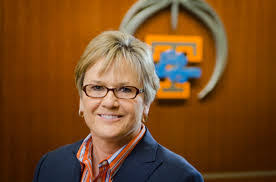
The NBA Finals date back to 1947 (when they were known as the Basketball Association of America Finals) and the very 1st NCAA tourney was held in 1939. Olympic basketball competition is even older: it debuted as a demonstration event in 1904, and the men’s version became a medal sport in 1936, with the women finally getting their chance to go for the gold in 1976. The United States has dominated Olympic basketball competition from the start: the men have now won 17 gold medals in the 20 tournaments they have participated in during the past 88 years, while the women have won 10 gold medals in the 12 tournaments in which they have competed during the past 48 years. While we must wait 3 years until the 2028 Olympics in Los Angeles, HoopsHD’s Jon Teitel will fill the void by interviewing as many prior Olympic players/coaches as possible. We continue our coverage by chatting with Women’s Basketball Hall of Famer Holly Warlick about her fellow Hall of Famer Candace Parker’s time in Knoxville and the pair of gold medals she won in 2008/2012.
Candace was born in St. Louis, grew up in Illinois, and was named national high school POY in 2003/2004: what made her choose Tennessee? I think Pat Summit: simple as that. We gave her a chance to get better and play in front of a big crowd on a big stage…and she made it even bigger. Everything lined up for her to carry on the tradition here and she relished the opportunity.
In February of 2005 the school announced that she would be redshirting due to a knee injury she had suffered the previous summer: how bad was the injury, and how was she able to get back onto the court? It is hard to lose your star player, but it was also hard on her. Great athletes never want to sit out and wonder if they will ever play again at the same level they were at. Candace worked at her craft and went to rehab and did what she was supposed to do. It took commitment/training, and she was always willing to put in the hours. God gave her great athletic ability but what made her special is that she was in the gym a LOT every day outside of practice.
In March of 2006 she became the 1st woman to ever dunk in an NCAA tourney game: what was the reaction like when the crowd saw her dunk? Anytime they see a woman dunk they go nuts…and our bench went nuts as well! It is fun to watch because you do not get to see it too often, but she made it look easy.
In 2007 she was named national POY, won an NCAA title, and was named tourney MOP: how on earth was she able to do all of that again in 2008 despite suffering a dislocated shoulder in an 8-PT win over Texas A&M in the Elite 8? It is just her drive: she loves the game and tries to do everything with perfection. She had a lot of individual success but also found a way to bring her team in and play together with the goal of winning titles. She loved the team success/camaraderie: we had a talented team and when everyone has the same goal there is no jealousy.
In 2008 she was named D-1 Academic All-American of the Year: how was she able to balance her work on the court with her work in the classroom? Discipline. It was an expectation on our team that you would not miss class. She was disciplined on the court, and it carried over into the classroom.
The day after winning the 2008 title she was drafted 1st overall by the Los Angeles Sparks, and 6 months later she became the 1st WNBA player to be named ROY/MVP in the same season: how was she able to come in and dominate right from the start? Talent…but she does not settle on her talent: she takes it to the next level. She is driven and sets goals for herself and puts things in perspective. Her work ethic increased after she turned pro because it was her job and she took it very seriously.
She played for Team USA in the 2008/2012 Olympics: what did it mean to her to represent her country, and what did it mean to her to win a pair of gold medals? It was extremely important to her. She played with a lot of talented friends and anytime you can represent your country it is a tremendous honor/blessing.
In addition to all of her on-court success, she is the president of women’s basketball for Adidas, an analyst/commentator for the NBA/NCAA, and is part-owner of Angel City FC in the National Women’s Soccer League: is there anything she does that surprises you, or is she just 1 of those people who succeeds at everything she does in life? What I love about Candace is that she is willing to sign autographs and has a kind heart and is excited when she comes back to campus. Not all players who have done what she has done will give back: she had a lot of help along the way and has put herself in position to make a difference for women’s basketball by helping others. It did not happen by chance: she has a good business mind and has done well for herself, but also wants to further the game.
She retired in 2024 as a 3-time WNBA champ/2-time WNBA MVP/2020 WNBA DPOY, and yesterday she was elected to the Women’s Basketball Hall of Fame: when people look back on her career, how do you think that she should be remembered the most? As 1 of the best players who ever put on a Lady Vols uniform. She gives back to the community and has represented herself with a great deal of pride/honor.
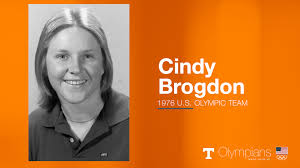
The NBA Finals date back to 1947 (when they were known as the Basketball Association of America Finals) and the very 1st NCAA tourney was held in 1939. Olympic basketball competition is even older: it debuted as a demonstration event in 1904, and the men’s version became a medal sport in 1936, with the women finally getting their chance to go for the gold in 1976. The United States has dominated Olympic basketball competition from the start: the men have now won 17 gold medals in the 20 tournaments they have participated in during the past 88 years, while the women have won 10 gold medals in the 12 tournaments in which they have competed during the past 48 years. While we must wait 3 years until the 2028 Olympics in Los Angeles, HoopsHD’s Jon Teitel will fill the void by interviewing as many prior Olympic players/coaches as possible. We continue our coverage by chatting with Women’s Basketball Hall of Famer Holly Warlick about her former college teammate Cindy Brogdon’s time in Knoxville and the silver medal she won in 1976.
Cindy was named state tournament MVP during each of her 4 years at Greater Atlanta Christian School: how big a deal was it when she became the 1st woman in the state of Georgia to receive a full college athletic scholarship in the 1970s? I did not meet her until she arrived here, but I am not surprised that she was the 1st.
Most female players of that era used a 2-handed set shot: why did she decide to use a 1-handed jump shot? It was unique: it seemed like anyone who shot from long-range used 2 hands back then, and very few people strayed away from that.
She won a silver medal with Team USA at the 1976 Olympics: what did it mean to her to represent her country, and what did it mean to her to win a silver medal? I know that she was extremely honored to be on that team at such a young age. It was well-deserved because I know her talent: she was proud to represent our country.
She began her college career at Mercer: why did she decide to transfer in 1977, and what made her choose Tennessee? She chose Tennessee due to her experience with Pat Summit, who was her teammate on the Olympic team. She wanted to be on a bigger stage and it was a huge get for our program. She was a scoring machine who elevated our team.
In the 1979 AIAW tourney you and Cindy helped the Lady Vols reach the Final 4 before losing to Louisiana Tech: how close did you come to winning it all? Every year we came close but could not get over the hump. Cindy was huge in us getting that far and a big reason why we competed for titles.
Her 3204 career PTS ranks 2nd in AIAW history: what was her secret for being such a great scorer? She was a fantastic offensive player who had 3-PT range even before the 3-PT line existed. Not too many people back then had her range.
She also had 1028 career REB: how did she balance her scoring with her rebounding? Pat believed in defense/rebounding so it was just expected of Cindy in addition to her scoring ability. She was big/stocky and knew how to position herself to get rebounds. She was expected to do that every day.
She was a 3-time All-American: what did it mean to her to receive such outstanding honors? That was a reward based on the time that she put in at the gym. It did not happen overnight: she took a lot of shots and did a lot to become an All-American. To do it 3 times was the ultimate goal, in addition to trying to win a title. She was proud of that and we were all proud of her: she helped put Tennessee on the map early in Pat’s career.
After graduating she became an All-Star with the New Orleans Pride of the Women’s Professional Basketball League, and in 2002 she was inducted into the Women’s Basketball Hall of Fame: where does she rank among the greatest players in school history? I consider her 1 of the best because I played with her and knew her ability. Now the sport has gotten more athletic with people playing different positions, but she was really good at her craft and was 1 of our best forwards in addition to Tamika Catchings/Candace Parker. She did so much for our team to help us win.
After retiring as a player, she became a high school teacher/coach: when people look back on her career, how do you think that she should be remembered the most? As a prolific scorer: that was her thing. I am a PG so I tried to find her every time we came down the court because she made me look good!
It’s our annual four part special!! We’ve got four conference previews in one post. In the American we discuss how good Memphis is (or isn’t, depending on who you ask), and whether or not a team like North Texas, UAB, or Tulane can overtake them. The Atlantic Ten looks to be slightly improved this year, and many teams have improved their OOC schedules, which should help their metrics. VCU is the favorite, but we also like Dayton, and even think George Washington might be able to sneak into the field. The Mountain West has several good teams in San Diego State, Utah State, and Boise State who all seem to be built for possible NCAA Tournament runs despite major roster turnovers. Gonzaga and Saint Mary’s will once again be strong in the WCC, but we also like this San Francisco team and think they could be dancing. We discuss all that, and more!
AMERICAN PREVIEW:
ATLANTIC TEN PREVIEW:
MOUNTAIN WEST PREVIEW:
WEST COAST PREVIEW:
And for all you radio lovers, below are audio only links to all the shows: