Season preview: HoopsHD interviews St. John’s special assistant Paul Pressey

CLICK HERE for all of our extensive Preseason Content

As the summer comes to a close we can rejoice in the fact that college basketball is right around the corner! The season will tip off in a couple of months at the Champions Classic on November 5th at Madison Square Garden featuring a doubleheader of Kansas vs. Duke and Michigan State vs. Kentucky. To get you ready we will spend the preseason speaking with as many players/coaches as possible. We begin our coverage with St. John’s special assistant Paul Pressey. After leading his alma mater to the 1st 4 last March, Coach Chris Mullin stepped down in April and was replaced by former Arkansas coach Mike Anderson. To help create his future staff, Anderson turned to the past and selected his former Tulsa teammate/roommate Pressey to be his special assistant. HoopsHD’s Jon Teitel got to chat with Paul about winning the 1981 NIT and working for Gregg Popovich in San Antonio.
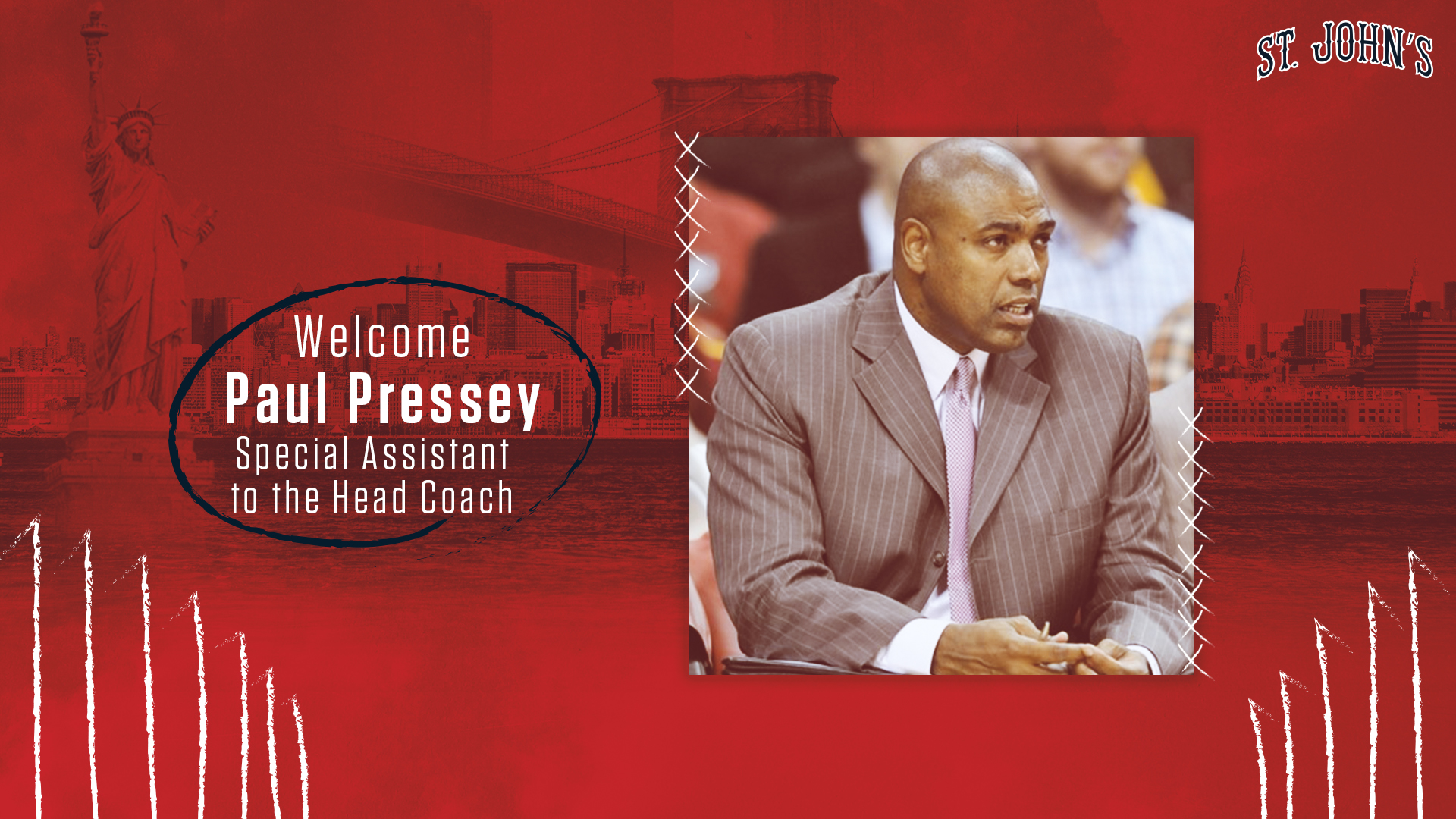
Your nickname was the “Rubberband Man”: how did you get the nickname, and how did you like it? The Spinners had a song by that name. I loved it because it identified the way I played: I had a 7’1” wingspan and could cover a lot of space. Coach Nolan Richardson gave me the nickname in college. Our theme song/intro music was “Ain’t No Stopping Us Now” by McFadden & Whitehead, and that is just the way we played.

You began your collegiate career at Western Texas under Coach Richardson, where you finished 37-0 and won the NJCAA national title: how was your team able to maintain its focus for the entire season, and what was the most important thing he ever taught you? I think we went 27-5 during my 1st year there, which I thought was pretty good. However, after we came up short and realized that there was no next year for the sophomores we just felt so bad for them. They gave us the vision that we had to find a way to get back there and win it all. Coach Richardson played 10-11 guys per game: he would sub in 5 guys at a time because we were such a strong team. We never had any letdowns because there was so much competition between the starters and the bench players.

After following Coach Richardson to Tulsa you were named MVC Newcomer of the Year and led the nation with 96 STL: how were you able to come in and contribute so quickly, and did you feel like you were the best defender in the country? Coach Richardson took me and several of my teammates from our title team as well as Mike Anderson and we just came in like gangbusters and did not miss a beat. Nobody expected anything out of us as the new kids on the block but we were already a team.

Take me through the 1981 NIT:
You had a 4-PT win over UTEP, who was coached by Richardson’s mentor Don Haskins: what did it mean to Coach Richardson to beat his mentor? He was a chip off the old block: a lot of Nolan’s ideals came from Don and it was a big win for us. Don was proud of Nolan but crushed at the same time.

You had 20 PTS/9 AST/7 STL in a 2-PT win over West Virginia: where does that rank among the best all-around games of your college career? It was probably 1 of my best games because of the stage that it was on. Playing against a high level of competition every day really prepared me for those games.

NIT MVP Greg Stewart made the game-winning shot with 30 seconds left in a 2-PT OT win over Syracuse to clinch the title: how did that title compare to the NJCAA title, and what was the reaction like when you got back to campus? I was excited for Greg because we played a lot of years together side by side: to see him step up in his backyard of New York was just wonderful. For a little town of Tulsa to beat Syracuse in their own state was a big win for our university. People were cheering us until we were almost in tears.

In 1982 you were named MVC POY/All-American: what did it mean to you to win such outstanding honors? I just give a lot of credit to my teammates. Everyone made sacrifices for each other and I was able to thrive on both ends of the floor. We were all about winning and we got that from Coach Richardson.

What are your memories of the 1982 NCAA tourney (Rob Williams scored 26 PTS in a 4-PT win by Houston)? I cried: it really hurt me. We had a chance to beat them but they hit some big shots down the stretch. We were in our backyard at Oral Roberts and it was my last year. I knew that I would be losing some great teammates and a great coach who helped me grow as a player and as a young man. All of the seniors in the locker room after the game had tears in their eyes.

In the summer of 1982 you were picked 20th overall by Milwaukee (7 spots behind Sleepy Floyd): did you see that as a validation of your college career, or the realization of a lifelong dream of reaching the NBA, or other? It was a dream but a far-fetched dream. I wanted it to happen but felt that I would just get my degree and maybe get into coaching. I thought that I might get picked in the 2nd or 3rd round but never thought I would go in the 1st round. I had about 8 turnovers in the Aloha Classic and twisted my ankle so I thought that I had blown my chance, but I went to the pre-draft camp in Chicago and my stock went back up.

In both 1984 & 1986 you lost to the eventual champion Celtics in the Eastern Conference Finals: was it frustrating to keep facing those legendary Celtics’ teams, and do you think anyone could have beaten them back then? Hold on: you have to go back to my rookie year…when we swept them in the 1983 Eastern Conference Semifinals! After that it was a great challenge to play Boston/Philly/Detroit: there were so many good teams back then that there was minimal room for error.

In 1986 you finished 6th in the NBA All-Star Slam Dunk Contest: what kind of dunks did you do, and how amazing was it to see 5’7″ Spud Webb win it all? I was a player who could dunk in traffic but guys like Spud and Dominique Wilkins were “highlight dunkers”. I could do 1-handed cuff dunks and hook dunks but those 2 could do anything!

You were named to the All-Defensive team for 3 straight years in the mid-1980s: what is the key to being a great defender, and who was the hardest player you ever had to guard? There is no single best opponent I ever faced but Bernard King/Michael Jordan/Larry Bird/Dr. J are right at the top of the list. They were the key players on their teams at the time and you always had to be on your toes even if they did not have the ball. I always believed in taking the challenge of making my opponent work for his shot. Defensively you just need to have some inner pride and make the other guy earn his keep.

In 1992 you were an assistant coach with Golden State when you had to come out of retirement due to so many injured players on your roster, and after playing 18 games you got injured as well: how were you able to make the unusual transition from coach to player, and did you feel it was just karma after you got injured yourself? I had a torn calf muscle that forced me to the sideline. I became a free agent that summer and Don Nelson asked me to be an assistant coach for him. He said that if someone went down I would be the 1st guy he activated. It was the best of both worlds in terms of the opportunity: I had always wanted to coach and give something back to the younger guys. I got activated after Tim Hardaway went down and my 1st game was against Chicago: I held Jordan to 30 PTS!

You spent 6 seasons as assistant to Gregg Popovich in San Antonio, where the Spurs won their 1st-ever NBA title in 1999: what makes him such a great coach? Coach Pop just knows how to communicate with people. He is no-nonsense but wants you to have fun while you are doing your job. I want to keep doing this until my hair turns all gray!

Your daughter Angela made it to the 2007 Final 4 as a volleyball player at Cal and your sons Phil/Matt played basketball at Missouri: is it a coincidence that you have such an athletic family, and do your kids credit at least some of their success to genetics? Of course: their mother was an all-around athlete who had a basketball scholarship! Our kids have good genes and we always preached to them to pick a sport. Angela was a 3-time All-American in high school and later became a 4-time All-Pac-10 volleyball player.

At Missouri your 2 sons played for your new boss Mike Anderson, who became your teammate/roommate at Tulsa after your Western Texas team beat Mike’s Jefferson State team in the 1980 NJCAA title game: how did his relationship with your family affect your sons’ decisions to play for him? It is nice when you know the coach very well: he will help them grow and understand the basics of becoming a young man. We have done vacations with the Anderson family for a long time so my kids have known his kids for many years. My boys went to some of his camps when he was head coach at UAB. They were excited about his fast-paced style and made their own decisions.
Posted in Interviews | Tagged , , | Comments Off on Season preview: HoopsHD interviews St. John’s special assistant Paul Pressey

Liberty for All: HoopsHD interviews New York Liberty head coach Katie Smith

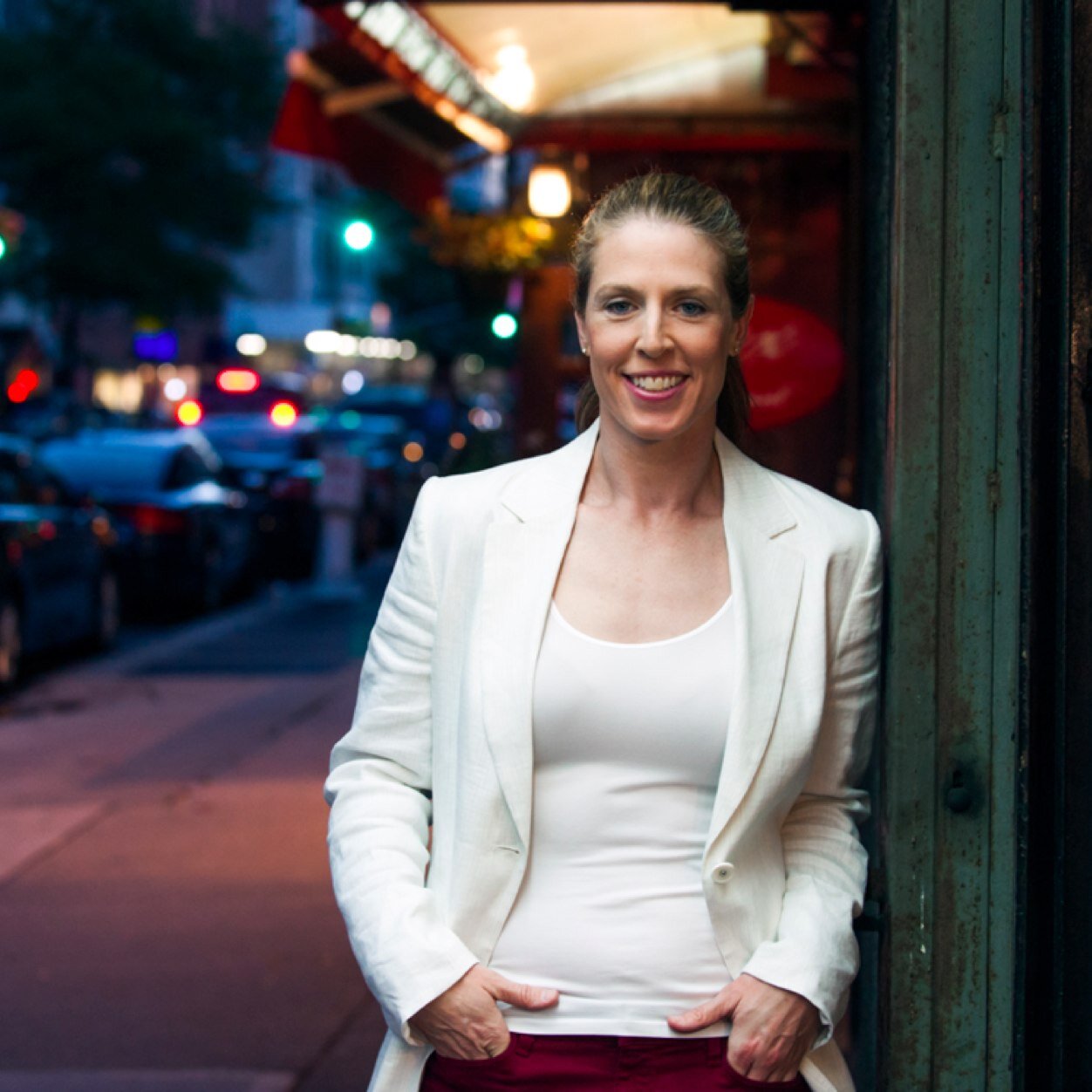
Last weekend’s mass shootings in El Paso and Dayton have given rise to renewed calls to prevent gun violence, but the New York Liberty have been working on this and other important social issues for the past several years. This year’s topic is the mass incarceration of women: the Liberty hosted a panel discussion with experts/activists/policymakers on Thursday and on Sunday they will host a youth basketball clinic for youth with incarcerated family members. Earlier today HoopsHD’s Jon Teitel got to chat with Liberty head coach Katie Smith about her Hall of Fame playing career and the importance of her team’s push for equality and social progress.

In the 1993 NCAA tourney title game as a freshman at Ohio State you scored 28 PTS in a 2-PT loss to Texas Tech: where does tourney MOP Sheryl Swoopes’ performance (a title-game record 47 PTS) rank among the most amazing that you have ever seen? It was huge but it was more than just that 1 game. Sheryl had an amazing season and was putting up absurd numbers all year long. It was a tight game in the final so every bucket counted.

In 2001 as a player for Minnesota you led the WNBA with 23.1 PPG and you remain the all-time leading scorer in women’s pro basketball history with almost 8000 PTS during your ABL/WNBA careers: what is the key to being a great scorer? Obviously being able to knock down shots but you also need the mentality to always be probing for shots. You need good decision-making, the ability to finish at the rim, and then get to the line and make some FTs. There are many layers to it but you need to stay aggressive.

You won 2 straight ABL titles with the Columbus Quest in 1997/1998 and later won 2 WNBA titles with Detroit and were named 2008 Finals MVP: how were you able to play your best when it mattered the most? It is about the habits that you build during practice and taking game-like shots. It is just another game even when the stakes are higher in the playoffs so you need to stay relaxed and just do what you do every day while relying on your training. You cannot get too amped up even if you did not sleep very well the night before.

You won 3 straight Olympic gold medals from 2000-2008: what did it mean to you to represent your country, and what did it mean to win 3 gold medals? It was really unbelievable. I grew up watching the Olympics and had so much pride watching our athletes represent our country. I tried to work toward that and was so full of pride representing not only my country but also my family/hometown/university. To say that you are the best in the world also does not hurt!

Your father/brothers all played college football and your sisters-in-law both played college sports: who is the best athlete in the family? I think I am pretty close and would put my money on me. My brothers were big so it was hard to score against them in the post, and my sister-in-law Carol Ann was an All-American basketball player at Minnesota.

In 2016 you were named 1 of the top-20 WNBA players of all-time: how has the women’s pro game changed over the past 2 decades? The players are such great/talented athletes: there are post players with guard skills and bigs who can stretch the floor. The personalities and the way they use their platform for causes they love is also key. It is so hard to make a WNBA team when you see the level of competition on the court every night.

In 2017 you were named head coach of the New York Liberty: how is it going so far, and do you think that Tina Charles is going to join you in the Hall of Fame 1 day? It is going well. We are trying to really build something here with a combination of young players/veterans so we need to keep plugging away each day. I am enjoying the process as we try to get better. I think Tina will be in the Hall 1 day and has had a phenomenal career.

In 2018 you were inducted into both the Naismith and Women’s Basketball Halls of Fame: where did that rank among the highlights of your career? It topped it all off. It is not something you set out to do 1 day: you just go about your business every single day as hard as you can. It was unreal but made me feel good that what I did was respected/appreciated by others. The best part was reminiscing about my career and the fun times I had.

The Liberty have tackled several social issues over the past 2 years, from wearing Black Lives Matter t-shirts before a game in 2016 and organizing a UNITY-themed panel discussion focusing on racial injustice and gun violence in 2017: what are some of the issues that are most important to you, and what was your reaction after hearing about the gun violence in Dayton last weekend (about 1 hour west of where you went to college in Columbus)? All of those issues matter to me and we can all have a voice. We need to stand up for those who do not have a voice. It was hard to hear about the gun violence in Dayton but I hope things can get changed/addressed to help our country do better. I also think diversity/inclusion is huge so that we can bring the best of everything to the forefront. Everyone has something to give and is important.

On Thursday the team addressed the issue of the mass incarceration of women via a panel discussion featuring Topeka Sam (Founder and Executive Director of The Ladies of Hope Ministries, which helps the formerly incarcerated) and Jamila Davis (co-founder of womenoverincarcerated.org), and on Sunday the team will host a youth basketball clinic for children with parents in prison: why is this issue so important, and what can we do to try to resolve it? It was not an issue I was really aware of before so it was an important topic during our panel on Thursday to learn about the numbers of women in prison and how it affects their children. It is such an important issue and was very eye-opening for me. It is special to see that our players want to do more and give back to the community: I am very proud of our team/organization.

Posted in Interviews | Tagged , , | Comments Off on Liberty for All: HoopsHD interviews New York Liberty head coach Katie Smith

Puppet Ramblings: Foreign Tours, and Summer/Fall Season That Doesn’t Exist, But Should

So, here is a quick test to see if you like college hoops a little too much.  Simply ask yourself this question…

Did you pay FloHoops $30 so you could watch the teams that are on foreign tours this month??

If you answered yes, then you may have a problem.

I answered yes.

Okay, so foreign tours basically work like this.  Each school is allowed to go on one every four years.  I forget all of the specifics and am too lazy to look it up (fortunately this lack of motivation is not frowned upon at Hoops HD), but players are not allowed to miss any classes, which is why virtually all foreign tours take place in the summer.  Other rules are that they’re allowed ten days of full practice prior to leaving, incoming freshmen and transfers are allowed to travel and play with the team, and although I don’t know this for sure I believe they’re allowed to play up to five games.  Some of these foreign teams that schools have played are REALLY good.  Others have featured players that probably wouldn’t have been able to make a high school varsity team.  So, it’s not hard to find really tough games or really easy games depending on what a coach’s philosophy is.  Now, I don’t think a scout or an analyst could look at any of these games and really get anything out of them, but that’s not really what they are for.  It’s a chance for a team to get some extra practices in as well as some actual game experience, bond as a team, and see a part of the world that most of the players probably haven’t.  And, that’s what West Virginia, Seton Hall, Xavier, Georgia Tech, Delaware, Wright State, Georgetown, Syracuse, Washington, and Texas Tech are going to be up to this month.  I do think it gives them a competitive advantage, and it’s a great option for any school to take advantage of every four years when they’re allowed to do so.

But, why stop there??  Most people reading this probably don’t realize this, but men’s and women’s basketball are basically two of the only college sports that don’t compete in the offseason, or ‘non-championship season’ as it’s called.  In men’s and women’s soccer they play five or six games in the spring.  In baseball and softball I believe they can play up to 13 games in the fall.  Men’s and women’s golf has tournaments in the fall.  LaCrosse plays games in the fall.  But for basketball, they get nothing in the summer and fall.

So, here is my brilliant rule change for the day….

From the start of the athletic new year (July 1st) up until the official start of practice in late September, allow teams to have 18 full days of practice and six additional games against other college teams, including other div1 teams.  If they want to have all their practices and games over the summer, that’s fine.  If they want to play a few over the summer and a few more after classes start, that’s fine.  If they don’t want to play in all six games and only want to play in three or four, that’s fine.  If they don’t want to play in any, that’s fine.  But make it an option.  Have the rules be consistent with all other college sports that play games in the ‘non-championship season,’ most importantly that they cannot miss any class.  But, give teams that option so they can grow as a team and get some extra games in.  That way when the season starts there hopefully won’t be so much rust.  And once every four years, they can do a foreign tour.

Posted in News and Notes | Comments Off on Puppet Ramblings: Foreign Tours, and Summer/Fall Season That Doesn’t Exist, But Should

The Hoops HD Report: July Session

Chad, David, and Jon Teitel are back for the July Show, and they basically have….nothing.  Or at the very least, very little.  We begin with the countdown clock to show how much time is left until the start of the season!!  What a highlight!!  After that, we actually talk about some basketball related topics such as the TBT, the Pan Am games, the notice of allegations at NC State, and the recent youth camps that the NCAA set up.  After that, we close by once again going to the extremely enthralling countdown clock!!!

And for all you radio lovers, below is an audio only version of the show…

Posted in Hoops HD Report, Podcasts, Videocasts | Tagged | Comments Off on The Hoops HD Report: July Session

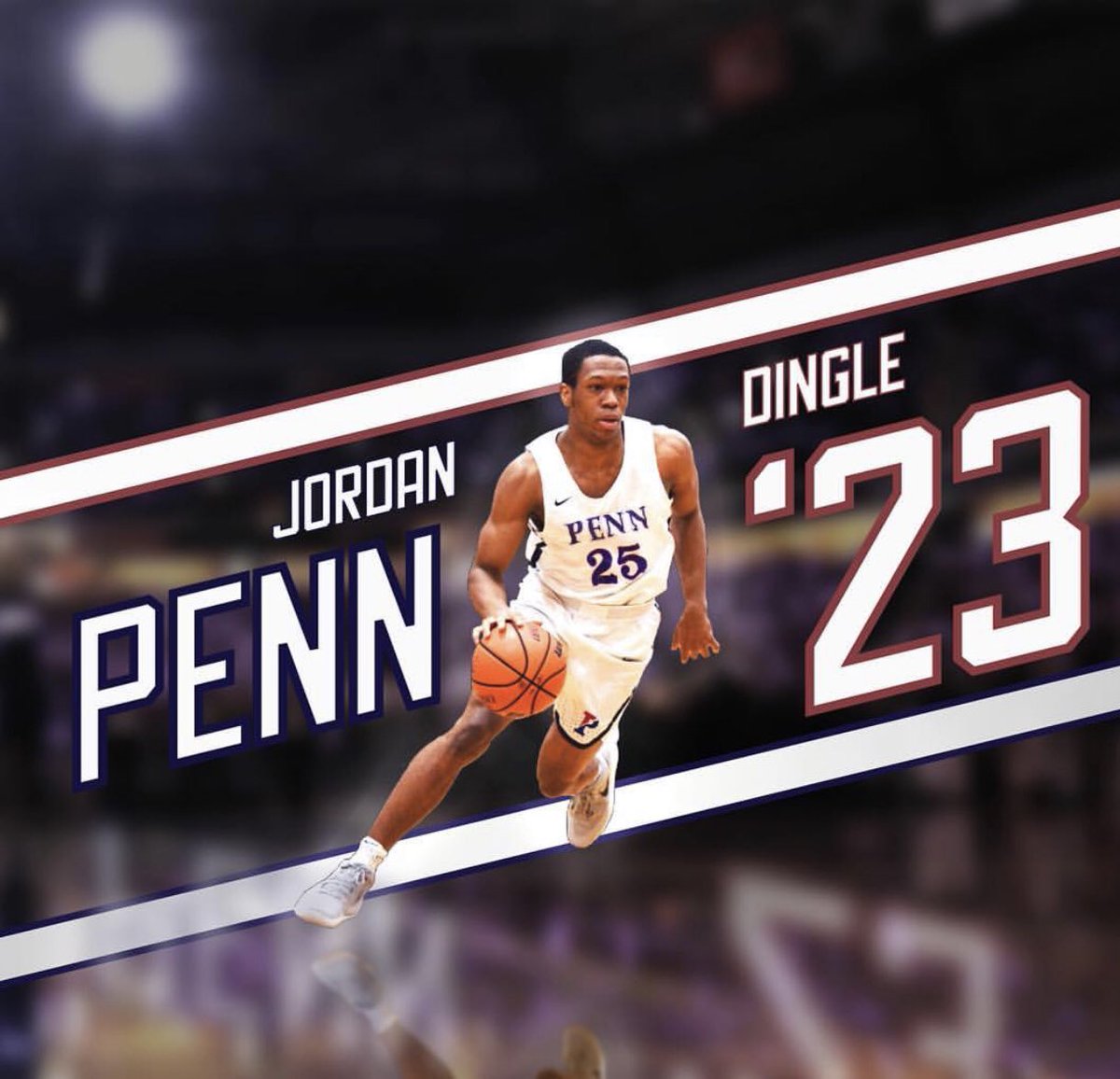
Welcome to the Palestra: HoopsHD interviews incoming Penn freshman Jordan Dingle

What a long strange season it was for the Quakers last year: 12-4 in non-conference play including a sweep of the Big 5, 3 consecutive OT games in February, 3 straight wins to finish regular season play and sneak into the Ivy tourney, then found themselves tied with Harvard with 8 minutes left before losing in the semifinals. Coach Steve Donahue lost a trio of senior starters from last year (Antonio Woods/Jake Silpe/Max Rothschild) but returns the potential Ivy POY in AJ Brodeur. As for the freshmen-to-be, it is a geographically diverse class with 5 players who hail from 5 different states (Florida/New Jersey/New York/Ohio/Pennsylvania). Earlier today HoopsHD’s Jon Teitel got to chat with incoming Penn freshman Jordan Dingle about why he chose the Quakers and where he ranks within his very athletic family.

You began your high school career at Lawrence Woodmere Academy: what made you switch to Blair Academy? There were a few things that caused the switch. 1 of the main reasons was so that I could get used to being away from home so I would not be shell-shocked during college. Obviously the chance to learn from a really successful coach while having a challenging schedule was also important.

Last year you reclassified from the Class of 2018 to the Class of 2019: how has your game improved over the past 12 months? My game has matured a lot. The coaching staff at Blair helped craft me into the player I am: they helped me see the game in a new way. I am a lot more patient and 100% more skilled because I see the game differently. My father trained me for awhile so my skills were always there: I just needed the mental piece.

This past season at Blair you went 22-4 while winning a Mid Atlantic Prep League title and a New Jersey Prep A state title: what did it mean to you to win a pair of titles? It meant everything and then some. Wherever I go I do not want to be another name that is just passing through. My coach told me that he had 50 other Jordan Dingles in his gym before I arrived, and that made me want to be the captain who led him to the 1st pair of titles in his career. We all put in a tremendous amount of hard work and grew so much as a team from September through February.

1 of your teammates was Jabri Abdur-Rahim, who just announced his own college decision last week: what makes him such a great player, and how do you think he is going to do at Virginia next year? I think that he is going to do great. Virginia plays differently than Blair so it will certainly be an adjustment but I have no worries about him. His father Shareef played a long time in the NBA and has shown him the ropes: that extra set of eyes teaching him all of the little things that matter has made a huge difference. You can tell that he has moves that not many other high school players have because of his dad: it is reflected in his game.

You had several scholarship offers: what made you choose Penn last September? Primarily the fact that Wharton is the best business school in the country. I have always seen myself as more than just a basketball player and I want to do other things in my life like working on Wall Street or running my own business. Philly is much like New York City and I am very familiar with it, plus Penn has a great non-conference schedule. I am used to playing against high-major guys so it just clicked for me.

How do you plan to balance your work on the court with your work in the classroom? I will look to get some help from the other guys on the team. Anything worth having requires a lot of hard work. I will go through a lot of adversity but I will find a way because it is something that I want to do and I am not about to let my family down.

You have stated that Penn coach Steve Donahue reminds you of your high school coach Joe Mantegna: how so? Coach Donahue is very smart and is big on analytics. The other thing that jumped out to me was his coaching history: he has been able to have success at many different schools. All players are different but he was able to break it down for me how he helped Reggie Jackson go from BC to the NBA draft. He has a great track record and I am big on consistency.

You are 1 of 5 incoming freshmen (along with Lucas Monroe/Jonah Charles/Max Martz/Maxwell Lorca-Lloyd): which of the other 4 has impressed you the most so far? I cannot say that any 1 of them has impressed me the most. They are all gym rats like me and are very serious about basketball as we all try to become the best players that we can be. I know what I will get from them on the court every day.

Your father Dana made the 1996 Final 4 as a player at UMass and your uncle Daniel played basketball at Temple: who is the best athlete in the family? It is a tricky bloodline because even though my dad made it to the Final 4 he ended up losing to his cousin Allen Edwards at Kentucky (whose brothers Doug/Steve were also great basketball players). We also have a couple of NFL players in the family so it is very tough to say…but I will to go ahead and put my money on myself! I am a lot stronger now than any of them were at my age: I would be shocked to find out that they could jump higher or run faster than I can. I played with a couple of future Big 10 football players at Blair and I could potentially have played high-major football as well.

What did you do for the big birthday last weekend? This was my 1st birthday at home in the past 4 years because I am usually traveling for an AAU game so it was nice to just relax. I had brunch with my mom and went to a BBQ with my friend: it was nice to not have to worry about preparing for a game!

Posted in Interviews | Tagged , | Comments Off on Welcome to the Palestra: HoopsHD interviews incoming Penn freshman Jordan Dingle

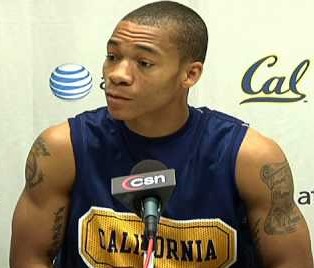
TBT Preview: HoopsHD interviews Pac-12 Hall of Famer Jerome Randle

Now that the NBA draft is in the books, your 2 main opportunities to see some basketball in the months ahead are the NBA Summer League and The Basketball Tournament. The TBT is an open-application, single-elimination tourney featuring 64 teams and offering $2 million in winner-take-all prize money. There will be 8 regionals during July in Columbus/Greensboro/Lexington/Memphis/Salt Lake City/Wichita/Richmond/Syracuse, followed by the final 3 rounds during August in Chicago. We continue our preview coverage with Jerome Randle, who graduated as the leading scorer in Cal history after leading the program to its 1st conference title in 50 years. He has spent most of the past decade playing pro basketball overseas but will be playing for Eberlein Drive next month as he tries to help them win the $2 million grand prize. HoopsHD’s Jon Teitel got to chat with Jerome about winning a conference title and being a great FT shooter.

You grew up in Chicago: what made you choose Cal? If it was my choice at the time I would have stayed close to home. I was a big Dee Brown fan and wanted to attend Illinois but they were more interested in guys like Sherron Collins/Jon Scheyer so I turned them down. Cal was the biggest school to offer me early and I heard that they were part of a guard-led conference. They were consistent in showing me a lot of interest.

You played in all 33 games as a freshman: how were you able to come in and contribute right from the start? I always knew that the talent was there: I just needed to learn how to play the game the right way, such as making the correct read on a pick-and-roll. Once I got to Cal I knew that my talent would eventually take the right course.

You played your final 2 years for Hall of Fame coach Mike Montgomery: what made him such a great coach, and what was the most important thing that you ever learned from him? He allowed me to be myself. My 1st 2 years Coach Ben Braun was really structured. I was going to leave but after Coach Montgomery took over I just asked him for a chance and believed that he would do the right thing. He put us in a position to be successful.

You also led the school to a conference title and scored 21 PTS in an NCAA tourney win over Louisville: how big a deal was it to win a conference title for the 1st time in 50 years? It was big for me because it was history. To come in and create our own history without anything really given to us was a memorable moment.

You graduated with several career records including 1835 PTS/252 3PM: what is the key to being a great scorer/shooter? I had to work to become that. I was a decent shooter but did not become a great scorer until my junior year. I was really strong so it became easy to shoot deep threes but I still worked really hard every summer.

You also are the best FT shooter in school history at 88.1%, thanks in part to making 40 in a row as a senior: what is the secret to making FTs? During games growing up when I was at the line my mom would yell out, “They are free: that is why they call them free throws!” She made me practice them every night and I tried to make them all because I did not want to hear her yelling at me all the time.

After going undrafted in 2010, you have spent several years abroad where you have won many awards (including LKL Finals MVP in 2016 and NBL MVP in 2017) and in 2018 you became the 1st player to lead the NBL in both PPG/APG since your coach Andrew Gaze did so in 1989: what is the biggest difference between basketball in the US vs. basketball overseas? Here in the states the best players are the most athletic but in Europe the best players are the smartest. In college I had to use my ability more than anything else but overseas they have all these strategies to figure out to how to beat your opponent. It was really a positive for me to go abroad and learn the mental part of the game.

In 2017 you were named to the Pac-12 Hall of Fame: where does that rank among the highlights of your career? That would have to be up there. I was unable to accept the award in person (which pissed me off a bit!) but to be among the all-time greats like Chauncey Billups was very big for me. I am just happy that they recognized all of my hard work.

Next month you will play for Eberlein Drive in the TBT: how is the team looking, and what will you do with your share of $2 million if you win? The team is looking great! We do not have the exact same roster as last year but we will play hard. We have a lot of great leaders and I am happy to showcase my talent on national TV. I am not a huge spender so if I win any money I will probably just put it in the bank.

Posted in Interviews | Tagged , | Comments Off on TBT Preview: HoopsHD interviews Pac-12 Hall of Famer Jerome Randle