
CLICK HERE for all of the Hoops HD Preseason Articles, Interviews, and Conference Previews
WEST COAST
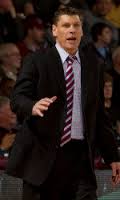
Mark Few has coached Gonzaga for 17 years heading into this season, and never failed to qualify for the NCAA Tournament. In fact, counting Dan Monson’s final year at the helm, the Zags have now made 18 straight trips to the Big Dance. No one else in the conference can even sniff that type of success. Two other teams, however, have accounted for the majority of the conference’s successes outside of Spokane. St. Mary’s and BYU are the only other WCC teams to earn NCAA bids since 2008, and the only other two teams to even play in a WCC Championship game in that time! (Pacific did go to the NCAA Tournament in 2013, but they were a member of the Big West then). Last season, though the Zags were a bubble team heading into Championship Week, Mark Few’s team won the league’s automatic bid, got an 11 seed, and promptly advanced to the Sweet 16 with wins over Seton Hall and Utah, before losing to Syracuse by 3 points in regional semifinal. BYU and St. Mary’s both made the NIT with the Cougars advancing to the semifinals in that event. As for the rest of the conference . . . Pepperdine played in the CBI, and everyone else started their offseason early.
This year, we expect much of the same as Gonzaga, St Mary’s and BYU look to be the class of the conference again and all three could be vying for NCAA Tournament bids. However, the offseason has shown us that the rest of the conference seems to be done being a bunch of lapdogs. The biggest offseason move came from Santa Clara, a program whose athletic department wants them to become Top 25 caliber, and certainly made the right first move bringing in new head coach Herb Sendek, former conference coach of the year in both the ACC and Pac-12. Big coaching moves were also made by San Francisco, bringing in Kyle Smith, a guy with lots of WCC ties and who engineered a remarkable turnaround the last few years on the east coast with Columbia. Pacific and Portland both brought in head coaches with known names and NBA ties – Damon Stoudamire at Pacific and Terry Porter at Portland. Although it may take a few years for these programs to elevate themselves, the days of the West Coast Conference being a three team league appear to be nearing their end.
Predicted Order of Finish
1. Gonzaga – Despite struggling at times last season and then losing a majority of their scoring in the offseason, Mark Few has completely reloaded this team and they should be even better than last time around. Nigel Williams-Goss (Washington) and Jordan Mathews (California) are the key newcomers, transferring in from Pac-12 schools and possibly forming one of the best backcourt pairings in the nation. Down low, the key will be just how healthy Przemek Karnowski is as he returns from last year’s season-ending back injury. He will get help though, notably from another transfer from a power conference – Johnathan Williams III from Missouri.
2. St. Mary’s – Almost everyone on the roster returns from last season’s squad that won 29 games and led the nation in shooting percentage. The Gaels non-conference schedule was the biggest reason for their exclusion from last year’s Tournament, and they have upgraded it this year with non-conference trips out of the State of California to play Dayton and UAB, plus a road trip to Stanford. All signs point to a very good year.
3. BYU – The Cougars may be without several very important pieces from last season, most notably Kyle Collingsworth, but Nick Emery and Kyle Davis do return and will be joined by Eric Mike and T.J. Haws (Tyler’s brother) who have both returned from missions. A key factor could be the play of Elon transfer guard Elijah Bryant, the CAA Rookie of the Year two seasons ago.
4. Santa Clara – Herb Sendek takes over a program committed to closing the gap with the top three teams, and has assembled a squad that could be a dark horse candidate to do that as early as this season. All five starters do return for the Broncos from last season, led by senior Jared Brownridge who should surpass the 2000 career points scored mark this year.
5. Pepperdine – Two of the team’s top three scorers from last season are gone. It will be tough for Lamond Murray, Jr. to carry that much scoring weight, and there do not appear to be enough other pieces here to make any serious noise.
6. Loyola Marymount – Adom Jocko’s decision to turn pro after last season hurt, but the Lions will at least remain competitive with Brandon Brown, Shamar Johnson and Steven Haney, Jr. back.
7. San Francisco – Ronnie Boyce III is the only double digit scorer returning for new head coach Kyle Smith. Smith, who coached at Columbia the past few years, has WCC ties, having been an assistant at both San Diego and St. Mary’s. His first team in the City by the Bay is a very young one, so don’t expect much this season.
8. Portland – Terry Porter is a big name coaching hire, but the team he takes over lost 20 games last season and probably won’t be much better than that this one.
9. Pacific – Another new head coach with a known name takes over, as Damon Stoudamire gets the call in Stockton. The athletic department is committed to improving the basketball program, but it will take time.
10. San Diego – Lamont Smith is still cleaning house and continuing his rebuild of the Toreros program. This year will be a long one – maybe a very long one.
Throwback Thursday: The 1980 NCAA Tournament
For Chad Sherwood’s West Coast Conference Preview – CLICK HERE
For Jon Teitel’s interview with Loyola Ramblers head coach Porter Moser – CLICK HERE
For the countdown clock to tomorrow’s season opener – CLICK HERE
In the 2016-17 season premiere of Throwback Thursday, we look back at a major checkpoint year in the NCAA Basketball Tournament. The field consisted of 48 teams and was the second year in which teams would be formally seeded in each region. Most notably, this was the first season in which the restriction on the number of teams from a conference would be lifted.
For the ACC, this meant that North Carolina, Maryland, Duke, NC State and Clemson could all appear in the NCAA Tournament. For the Pac-10, Oregon State, Arizona State, Washington State and UCLA were invited. For the Big 10, Indiana, Ohio State, Iowa and Purdue were invited.
The East regional started harmlessly enough – the top 3 seeds of Syracuse, Maryland and Georgetown advanced to the Sweet 16 along with Iowa. Georgetown beat Maryland in a match of DC foes (just up the road in the Spectrum in Philadelphia), but Lute Olson’s Iowa team crashed the party with upset wins against Syracuse and Georgetown to clinch a bid to the Final Four in Indianapolis.
The Mideast regional started with Penn trying to pull a repeat Cinderella run – the Quakers were the 12th and final seed in the region but managed to upset Washington State in the first round. Duke would end Penn’s run with a 52-42 win in the 2nd round and would also stun top-seeded Kentucky 55-54 in the Sweet 16 at Rupp Arena in a revenge game from 2 years earlier in the 1978 national championship. Purdue (like Iowa earlier) took full advantage of their at-large status in the NCAA Tournament that would not have been available the year before. They beat La Salle and St. John’s to set up a matchup with Indiana in the Sweet 16. Purdue would also avenge their NIT championship loss to Indiana from the year before and beat Indiana 76-69. Purdue then defeated Duke to advance to the Final 4. After Duke’s loss, head coach Bill Foster moved on to South Carolina and opened the door for a young head coach at Army to become Duke’s next head coach. That coach, you ask? Mike Krzyzewski.
In the Midwest regional, this was as about as close as you could get to chalk holding up throughout the regional. Top-seeded LSU was able to advance to the Elite 8 with wins over Alcorn State and Missouri. Texas A&M was able to upset North Carolina in a double-OT game in the 2nd round, but would end up losing to Louisville in overtime in the Sweet 16. Even though Louisville and the Doctors of Dunk played in what amounted to a road game in Houston’s Summit against A&M, they had little trouble in knocking out LSU to earn the 3rd ticket to the Final Four.
The real Island of Misfit Seeds was in the West region. The top 3 seeds (DePaul, Oregon State, BYU) would all lose their opening games in the 2nd round despite 1st-round byes. UCLA upset DePaul in a rematch of the prior year’s West regional final and would beat Ohio State to advance to the Elite 8. Clemson beat Utah State and BYU in the first 2 rounds of the NCAA Tournament and beat the Cinderella team of Lamar in the Sweet 16. Lamar (coached by Billy Tubbs) was the 10th seed and scored upset wins over Weber State and Oregon State before bowing out to Clemson. UCLA would beat Clemson 85-74 to earn the 4th and final ticket to Indianapolis.
Despite being in the heart of Big 10 country, neither Iowa nor Purdue were able to win in their respective semifinal games. Purdue would defeat Iowa 75-58 in the 3rd place game, however. As for the other two teams, Louisville would edge out Iowa in the semifinal game and ended up defeating Larry Brown’s UCLA team in the national championship by a 59-54 score. Ultimately, if you go in the official history books at NCAA headquarters, you’ll also see “VACATED” because of NCAA violations against UCLA.
As for the 1980 Final Four, click here to see the official NCAA video.