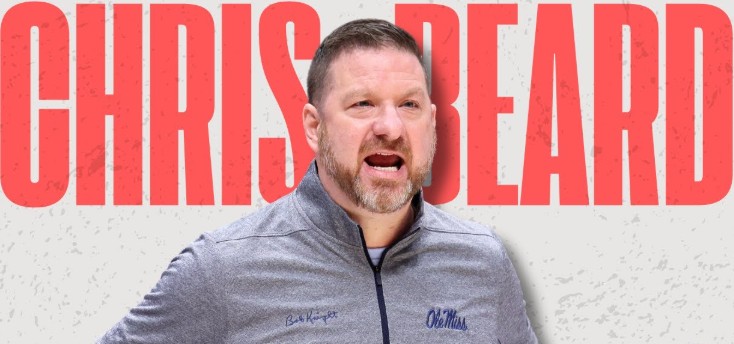
We are less than 5 weeks away from the tip-off of the new college basketball season, which means that we have plenty of time to start preparing for the action ahead. We will do so via a series of season previews featuring the best players/coaches in the country. HoopsHD’s Jon Teitel continues our coverage with Mississippi coach Chris Beard, who talked about his great success in March and his expectations for this season.
I heard that after graduating high school you turned down offers to play college basketball to become a student manager at Texas: why? That is a little inaccurate: I begged a lot of places to let me play for them. I played for a pair of Texas Hall of Fame high school coaches and fell in love with the game and wanted to play for as long as I could. I applied to a D-3 school but then they had a coaching change, so the opportunity was taken away from me. I went to Texas at the last minute and decided to room with my high school teammate. I called myself a “4-year redshirt”, but later met Coach Tom Penders and his assistants, who gave me an opportunity that I did nothing to deserve. A couple of years later I had another opportunity to play at Concordia Lutheran and prepared to transfer there, but eventually decided to transfer back to Texas. The bottom line is that I love this sport, and when I finally reached the idea of going along the coaching route, I never looked back.
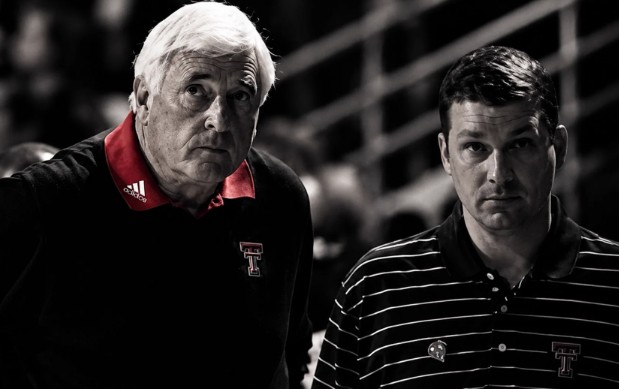
In 2001 you were hired as an assistant to Hall of Fame coach Bob Knight at Texas Tech: what made Knight such a great coach, and what was the most important thing that you ever learned from him? I try to put a lot of reflection into this and a couple of things come to mind. He was disciplined when coaching the team every day: it was a relentless pursuit of success. A lot of people can “do” that but very few can sustain that. He just did not let up: most people are not wired to keep their foot on the pedal non-stop. There was never a bad day/practice because the standard never changed. The other big concept was preparation. I had some previous success as a coach but Knight said it best: “Everybody wants to win…but only a few elite people want to PREPARE to win”. It is a choice: we prepared every day for practice so that our players would know what to expect during a game. Most coaches watch practice film and then shift to game prep, but every day for 8 years he would watch practice film.
You were a head coach at several different smaller schools before being hired at Texas Tech in 2016: what is the biggest difference between coaching at a Power 5 school and coaching somewhere else? In most ways, there is no difference, because you are trying to put a team together and win games. We are trying to teach our guys about life through basketball and graduate them and also be part of the community we live in. Some of the best coaches I ever faced were in D-2. The outside stuff is different, such as the media talking about you, which can lead to a lot of distractions. There are a lot of off-court responsibilities, so you must learn how to maximize the 24 hours you get each day. At this level you must respectfully tell some people “No” so that you can stay focused on your team. There are fewer distractions at a small college, but your staff is also smaller. I feel like I have gotten better at delegating things over the years.
Take me through the magical 2019 postseason:
You were upset by West Virginia in the Big 12 tourney quarterfinals: how were you able to get your team refocused on the NCAA tourney? I do not remember a lot of the wins as I get older, but I still remember the losses. Some coaches/players say they would rather have an early exit in the conference tourney so that they can rest up for the NCAA tourney, but I am 100% on the other side: if they are going to hand out a trophy, then I want to win it. We were prepared so you must recognize that Coach Bob Huggins is a Hall of Famer for a reason: they were playing their best when it mattered the most. Their backs were against the wall and they tried to win the conference tourney so they could get into the Big Dance. I always felt a responsibility during conference tourneys to provide a good experience for our fans who traveled for it. The 1st domino was giving our guys a full day off both mentally/physically. It was 1 of my favorite teams ever because I coached them hard. We decided to “learn and burn” by reviewing what happened but not dwelling on it. We met up in a movie theater in Lubbock: I had a hard conversation with the team, then I took a match and literally burned the stat sheet. We did not pick the right trashcan and were worried that we might burn the theater down! That phrase was used all the way to Monday night and the team embraced it.
In the NCAA tourney you beat 3 straight top-2 seeds (Michigan/Gonzaga/Michigan State) to reach the title game before losing to Virginia in OT: what is your favorite memory from that remarkable run? Those 3 opponents had 3 different styles of play. Michigan was a high-executing offensive team with a coach in John Beilein who subsequently went to the NBA, but our defense held serve. Gonzaga was the 1-seed with multiple NBA players: that game was about as well as we could play, and the Bulldogs did so as well. We talked about having the courage to play aggressively: Tariq Owens had a huge block on a jump shot, and Jarrett Culver found Davide Moretti for a big shot at the end after we ran the “Jordan-to-Kerr” play (www.youtube.com/shorts/BVGZib1le8g). I can count on 1 hand the # of times I have told my team that our goal is not to be tougher than our opponent, but rather to match their toughness while finding a way to win. There were times that we played tougher than the Spartans, and Coach Tom Izzo later said that we played so tough that we deserved to win. It was a great run and I will always be proud of those guys.
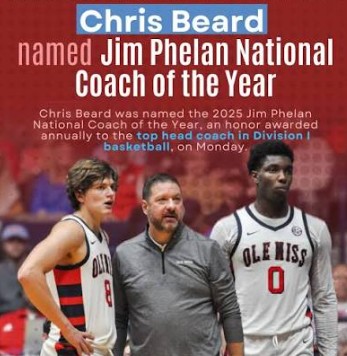
In 2025 as coach at Mississippi, you won the Jim Phelan Award as national COY: what did it mean to you to receive such an outstanding honor? After educating myself on the history of that award we did not take it for granted: it is a “we” award. When you inherit a new job, you are always fighting against time while trying to get things done. We had a good season thanks to good players/staff and exceeded everyone’s expectations. We had some assistant coaches who left some very good jobs at other schools because they believed in our vision.
You have led 4 different schools to the NCAA tourney over the past decade and are undefeated in your 6 opening-round games: what is the key to winning games in March? The year before I was hired at Little Rock I also reached the postseason as coach at Angelo State: we had a team that was good enough to win the D-2 tourney and were a free throw away from reaching the Elite 8. All those teams featured good players who embraced the goal of not just reaching the tourney but winning it. When you get to a “win or go home” moment (as opposed to a 7-game NBA playoff series), that is what makes the tourney so special. We try to put our organization into that must-win scenario several times during the regular season so that it will not be a unique experience in the postseason. It is always a little risky to do that as a coach, but there are some key games every season that we compare to the NCAA tourney (such as playing a pair of games with only 1 off day in between). Our plan has to be finding a way to win: we cannot get too high/low and just need 1 more point than our opponent when the buzzer goes off. It all comes down to 40 minutes, and we try to tap back into that experience.
You are 1 of 6 active SEC coaches who has won at least ⅔ of his career games: I know it is hard to face talented opposing rosters in conference play, but what is it like to face such talented opposing coaches night after night? You need to want to be in this fight. I am not a big cliché guy but whoever said “pressure is a privilege” is exactly right. This is why we all chose a long time ago not to have a Christmas break and (hopefully!) not a spring break. Nobody is making you play in the SEC: they chose to do this, which is important to remember. It can make some people wilt, but this is what we signed up for. Growing up I would play basketball in the local rec center and then go play outdoors. We always wanted to play against the best: the gym was popping, and if you lost then sometimes you would have to wait 4 hours to get back onto the court. I understand the pressure of winning, but I do not recall any games that were not a 1-possession game. You get to play on national TV against a team with several NBA prospects and a Hall of Fame coach in front of a sold-out crowd: you must want the heat!
Your roster has a nice mix of players from foreign countries (Argentina/France/Australia), transfers from Power 5 schools (ASU/Florida/Seton Hall), and freshmen (Yohance Connor/Jaron Saulsberry/Daniel Patton): what sort of recruiting philosophy do you have? Above all, we are just trying to get the best players we can from all over the world who fit our culture and want to win. Basketball is a global game and if you can compete in the SEC then you can compete on the national stage. Ultimately, we want guys who want to play together. You also want to find some in-state players who have a connection to our school.
What are your goals for the upcoming season, and what are your expectations for the upcoming season? Our goal is always the same: can we become a team, establish an identity on both ends, and give ourselves a chance to win the game. We will not shy away from expectations: we are trying to put together a team that can play/win on Monday night. Sometimes you have a “probable” path but mostly you have a “possible” path. We have enough talent in our locker room, so it comes down to how you play. We want to get better as the year goes on and keep that compass aligned to develop into a winner.