We are less than 11 days away from the tip-off of the new college basketball season, which means that we have plenty of time to start preparing for the action ahead. We will do so via a series of season previews featuring the best players/coaches in the country. HoopsHD’s Jon Teitel continues our coverage with Penn assistant coach Ronald Moore, who talked about the Quakers’ magical season last year and his expectations for this season.
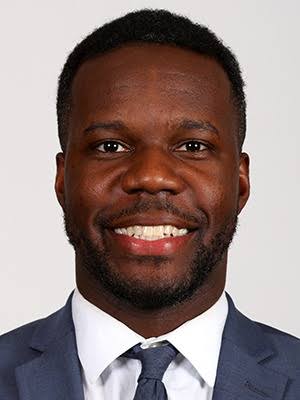
As a player at Siena, you were named 2nd-team All-MAAC in 2009 and 1st-team All-MAAC in 2010: what did it mean to you to receive such outstanding honors? It is always good to get individual accolades, but I could not have won those without my great teammates pushing me every day in practice. We were connected both on and off the court.
In the 2009 NCAA tourney you scored 11 PTS in a win over Vanderbilt, and in the 2010 NCAA tourney you made a 3-PT shot at the end of the 1st OT and another 3-PT shot at the end of the 2nd OT in a win over Ohio State (www.youtube.com/watch?v=MabKVav_JZk): what is the secret to pulling off an upset in March? You need to prepare for that all season long. Coach Fran McCaffery does that via a grueling non-conference schedule, and it is a result of the constant work that we put in. If you want to execute on the big stage then confidence is definitely a key.
You graduated with 823 career AST, which remains the most in school history: what is the key to being a great PG? It is a mixture of things. You need guys around you who can put the ball in the basket by being ready to catch/shoot outside or catch/finish inside. Fran allowed me to use my speed to my advantage and our offense was catered to my game.
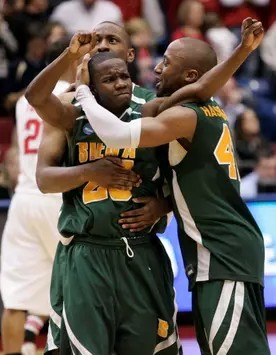
You went undrafted in 2010 but spent the next decade playing pro basketball overseas: what is the biggest difference between basketball in the US and basketball in other countries? The pro style in Europe is more similar to the NCAA than the NBA based on the schemes, but there is a lot more physicality in Europe. This era in the US seems a little bit softer: in Europe you must be able to play through contact to be successful.
In 2017 you were inducted into the Siena Athletics Hall of Fame: where does that rank among the highlights of your career? It is always an honor to be viewed as a Hall of Famer on any level. Siena was my 2nd home and the place where I met my wife: I go back every year to visit a school that was such a big part of my career. It meant a lot for them to recognize both my individual career and the team goals that we were able to accomplish.
Fran hired you as his assistant last year at Penn: what makes him such a great coach, and what is the most important thing that you have learned from him so far? He is a player’s coach: he allows guys to be themselves and gives them the confidence to do so. I think the players before/after me would echo that sentiment, and it was evident last year if you look at the turnaround we had at Penn. Every player wants to have a coach who truly believes in them and gets the best out of both him and the entire team. Sitting alongside him on the bench now, I see his attention to detail in pointing out the mistakes to our guys so we can constantly get better. He likes to preach that every game comes down to 1-2 possessions and I can see what goes into it: I believe he is a Hall of Fame coach.
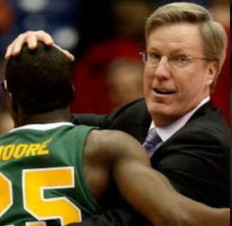
Last fall Penn was picked to finish 7th in the Ivy preseason media poll, but finished 3rd in the league and became the first #3 seed to win the Ivy tourney thanks to a pair of OT wins over the top-2 seeds (Harvard/Yale) despite not having your leading scorer Ethan Roberts: did you think an NCAA tourney bid was possible at this time last year, and how did winning a title as a coach compare to winning a title as a player? The frustrating part is that I like to think I had some control of the outcome when I was a player…but I do not have as much control from the sideline! I knew we had some potential last fall, but I would be lying if I said that I knew we would win an Ivy tourney title. It takes weeks/months to put in a new system and learn what to do and what not to do. However, ss the season went on, by mid-January I thought that on any given day we could win a title.
Your best returning player is 2026 Ivy tourney MVP TJ Power, who led the conference with 43.2 3P% and scored 44 PTS in the Ivy title game win over Yale (the 3rd-highest scoring game in school history: www.youtube.com/watch?v=4Crsrn1d2DY): what makes him such a great player? I have only known TJ for a year, but Fran recruited him out of high school back when he was at Iowa. He is such a great kid and understands the bigger picture after coming here from Duke/Virginia. In today’s era kids often think they know it all, but TJ can take a coach’s knowledge and put it into play on the court. We knew he was capable of being a great player, and it was great to see how he put the team on his back in the title game. Having him stay with us this year, I think he will carve out a legacy for himself at Penn because the sky is the limit.
Your cousin John Salmons played in the NBA, your uncle Jimmie Baker played in the ABA, and your brother Chuck played pro basketball overseas: who is the best athlete in the family? I will always say myself: we were literally arguing about this an hour ago! All my relatives had great success but kept pushing me, which increased my competitive nature and taught me what potholes to avoid. I will share this interview with them once it gets posted!
What are your goals for the upcoming season, and what are your expectations for the upcoming season? I was all about setting the bar high as a player and nothing has changed for me as a coach. Ivy League champion is the standard we have set after last year, and I think it is attainable when you look at the pieces we have brought in this year. I think we can get a seed that gives us a chance to make a run, and if we are playing a good brand of basketball in March then I think we can win a game or 2. We need to make the players truly believe they can do that while also taking it 1 game at a time.