The Olympians: HoopsHD interviews 2-time Olympic gold medalist Gail Goestenkors

The NBA Finals date back to 1947 (when they were known as the Basketball Association of America Finals) and the very 1st NCAA tourney was held in 1939. Olympic basketball competition is even older: it debuted as a demonstration event in 1904 and the men’s version became a medal sport in 1936, with the women finally getting their chance to go for the gold in 1976. The United States has dominated Olympic basketball competition from the start: the men have won 15 gold medals in the 18 tournaments they have participated in during the past 84 years, while the women have won 8 gold medals in the 10 tournaments in which they have competed during the past 44 years. Those of you who were looking forward to the 2020 Olympics opening ceremonies in Tokyo on July 24, 2020 will have to wait an extra 364 days, as the coronavirus caused a postponement until July 23, 2021. Due to the absence of college basketball since mid-March, HoopsHD’s Jon Teitel decided to fill the void by trying to interview as many prior Olympic players/coaches as possible so that you have something to read this summer while not watching the Summer Games. We continue our coverage by chatting with Gail Goestenkors about winning a pair of gold medals in 2004 & 2008. Today marks the 12th anniversary of team USA beating Australia 92-65 to clinch a gold medal.

(photo credit: usab.com)

As a player at Saginaw Valley State you were an NAIA All-American/conference MVP, went 114-13 in 4 years, and remain #2 in school history with 348 STL/469 AST: how good a player were you back in the day, and what is the key to being a good PG? I was not the best player on the team but I was the most valuable. I walked onto the team but was a really hard worker with great passion for the game. I would do whatever it took for us to be the best team that we could be. We went to 4 NAIA national tourneys and made a couple of title games. People saw that I made everyone else better, which is something I loved to do.

In 1992 you were hired by Duke as the youngest head coach at a major D-1 program: did you feel ready to run the show at age 29, especially at a school where the men’s team was coming off back-to-back titles? I actually did for 2 reasons. Lin Dunn was the head coach at Purdue and really helped prepare me to be a head coach: I was in charge of almost every different aspect of the program during my time there (budget, speaking engagements, etc.). Being very well-rounded gave me the confidence to be a head coach. I was naïve and doubted myself going against some of the best coaches in the business in the ACC but was ready to jump in.

In the 1995 NCAA tourney your team’s 120 PTS vs. Alabama was the 2nd-most ever scored in an NCAA tourney game: where does that 121-120 quadruple-OT loss rank among the most devastating of your career? It is not 1 of the most devastating because it was our 1st time in the tourney so we were happy to get in. We put our heart/soul/spirit into everything but Alabama had an All-American in Niesa Johnson and was coming off of a Final 4 appearance. 1 FT could have made the difference but we were still learning/building.

In the 1999 NCAA tourney you had a 6-PT win over 3-time defending national champion Tennessee to advance to your 1st Final 4, then beat Georgia before losing to Purdue in the title game: how on earth did Chamique Holdsclaw miss her 1st 10 shots, and was it weird to face the Boilermakers since you were a former assistant there and 2 of your own players had transferred from Durham to West Lafayette? Chamique is 1 of the greatest players of all-time but we were fortunate that she had 1 of her worst games of all-time against our triangle-and-2 defense. It was going to be their 4-peat year but we learned a lot from facing them in the regular season. That win kind of put us on the map. We played really well against Georgia but were really tight during our 1st title game. I think it was difficult for those 2 transfer players and it was a tough situation for everyone involved.

In 2002 you became the 1st ACC team to go 19-0 after winning the regular season title/conference tourney: how did you do it with only 8 players after losing 2 transfers during the season? That was a difficult year for us but 1 of our best years as far as our record. I also had an assistant coach named Joanne Boyle who was in the hospital with a brain tumor but it really brought us together. It was 1 of the tightest teams I have ever been a part of and we all pulled together. Everyone was happy and knew that they would get to play out of necessity. We played with such a degree of confidence because everyone felt very needed.

In January of 2003 you trailed UConn by 17 PTS before Jessica Foley made a 3-PT shot at the buzzer in a 1-PT win in Hartford: did you think the shot was going in, and how big a deal was it to break the Huskies’ 69-game home-court winning streak (which is tied for the 4th-longest in women’s basketball history)? I give credit to the players, specifically Alana Beard who led by example. We could hear her in the locker room telling the team that it was not going to happen. If you watch the end of that game it was 1 of the best endings you will ever see. Lindsey Harding pushed the ball up at the end and our bench stood up because we knew that Jess’s shot was going in. She got fouled but the refs did not call it. Anytime you can beat UConn at home it means a lot.

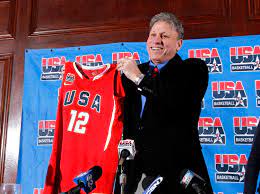
You were an assistant coach for team USA at the 2004/2008 Olympics: what did it mean to you to represent your country, and what did it mean to you to win a pair of gold medals? It was an incredible gift: if you are passionate about the game then you dream of playing in the Olympics. I was not good enough so my dream changed to coaching in the Olympics: it was a great honor. Anne Donovan and I were assistants in 2004 and she asked me to be her assistant in 2008.

You swept Maryland twice during the 2006 regular season by double-digits (your 14th straight win over the Terps), had an 8-PT loss to them in the ACC tourney semifinals in Greensboro, and in the NCAA title game Kristi Toliver scored 16 PTS including a 3-PT shot with 6 seconds left in regulation en route to a 3-PT OT win and the program’s 1st-ever national title: what are your memories of playing them 4 times in a 3-month span? It became a great rivalry. The ACC was the hottest conference back then as UNC was also in the Final 4. That title game is 1 that I will probably never get over. We were up by 13 PTS at halftime and I felt pretty good about it but I could feel us tightening up a little bit. As a coach you go through all of the things you would have done differently. We had 6’7” Alison Bales switch out on Toliver, who made a lot of daggers in her career: we might have been her 1st 1. We were deflated and it gave them so much confidence.

In 2007 you became the 1st ACC team to finish the regular season undefeated but had a 1-PT loss to Rutgers in the Sweet 16 in Greensboro: how were you able to keep your team focused for 30 straight games, and what does it take to go undefeated? It takes a great coaching staff that can help the players stay focused and players who are driven to succeed. We always wanted our practices to be more difficult than our games so that we would be accustomed to having a winning mindset. We were focused on being efficient with the basketball and having players who were motivated to be successful at everything they did. The more you win, the more confident you become, so we felt that we would win even if the game was close.

You were a 5-time national COY at Duke from 1999-2006 and were inducted into the Women’s Basketball Hall of Fame in 2015: when people look back on your career, how do you want to be remembered the most? That I was a hard worker/good person who did things the right way. I was an exceptional teacher and helped make people better. I have been out of coaching for a while but hopefully I am not done yet!
Posted in Interviews | Tagged , , | Comments Off on The Olympians: HoopsHD interviews 2-time Olympic gold medalist Gail Goestenkors

The Olympians: HoopsHD interviews 3 people about 2016 Olympic gold medalist Cheryl Reeve

The NBA Finals date back to 1947 (when they were known as the Basketball Association of America Finals) and the very 1st NCAA tourney was held in 1939. Olympic basketball competition is even older: it debuted as a demonstration event in 1904 and the men’s version became a medal sport in 1936, with the women finally getting their chance to go for the gold in 1976. The United States has dominated Olympic basketball competition from the start: the men have won 15 gold medals in the 18 tournaments they have participated in during the past 84 years, while the women have won 8 gold medals in the 10 tournaments in which they have competed during the past 44 years. Those of you who were looking forward to the 2020 Olympics opening ceremonies in Tokyo on July 24, 2020 will have to wait an extra 364 days, as the coronavirus caused a postponement until July 23, 2021. Due to the absence of college basketball since mid-March, HoopsHD’s Jon Teitel decided to fill the void by trying to interview as many prior Olympic players/coaches as possible so that you have something to read this summer while not watching the Summer Games. We continue our coverage by chatting with David Berri (sports economist/professor at Southern Utah), Pat Borzi (sportswriter for MinnPost), and Jim Souhan (sports columnist for the Star Tribune) about Cheryl Reeve winning 4 WNBA titles and a gold medal in 2016. Today marks the 10th anniversary of the final game of Cheryl’s 1st season as head coach of the Minnesota Lynx…which was subsequently followed by 7 straight trips to the Western Conference Finals and a quartet of championships.


Cheryl started at PG for 4 years at La Salle and her 420 career AST remains #4 in school history: how good a player was she back in the day? Pat Borzi: I never saw her play in college but you have to be pretty good/smart to start at the point for 4 years. Jim Souhan: I never got to see her play, but from conversations with her and others over the years I believe that she was a good/smart college PG with excellent ball handling skills.

She was also nominated to be a Rhodes Scholar and received an NCAA Post-Graduate Scholarship in 1988: how smart a player was she back in the day? David Berri: She told me once that she studied computer programming so she was a very smart person. JS: I have no doubt that she was a smart player but I would be hesitant to equate academic intelligence with basketball intelligence. The smartest guards in basketball history are not necessarily those who got the best classroom grades.

She is a 2-time WNBA COY: what did it mean to her to receive such outstanding honors? DB: She does not seem to care very much. Coaches tend to focus on their players so you will not find very many who talk about things like that. Professors work very differently! PB: Reeve likes to say that those are really team awards. She credits her players/assistants/staff for buying in and executing the game plan. She was really fortunate: Seimone Augustus was already here, then GM Roger Griffith acquired Lindsay Whalen/Rebekkah Brunson and drafted Maya Moore, which became the nucleus of their 4 championship teams. JS: I am sure that those awards were gratifying but as a leader she is always careful not to celebrate her individual accomplishments: she credits her players/organization. This is both humble/smart: she does not need to call attention to herself to receive accolades and she knows that in her position she needs to demonstrate selflessness.

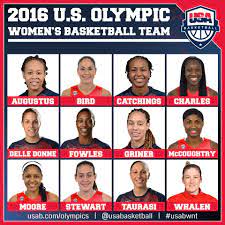
She was an assistant coach for team USA at the 2016 Olympics: what did it mean to her to represent her country, and what did it mean to her to win a gold medal? DB: I think that it meant a lot to her. PB: As Reeve herself will tell you, representing your country is something special. That gold medal is as meaningful to her as all of her WNBA championship trophies: maybe even more so. JS: I covered her at the 2016 Olympics. I think that she was proud to represent her country and loves working with elite players. I think what made the experience particularly gratifying was the ability to coach 4 of her own Lynx players (Seimone Augustus/Sylvia Fowles/Maya Moore/Lindsay Whalen), as well as winning the gold medal.

She won 2 titles as an assistant coach in Detroit and 4 titles as head coach in Minnesota: what is her secret to winning championships? DB: She would claim that it is the players but if you look at any pro sports league there is nobody from the past decade with a better record than Cheryl. She told me that not a single NBA team has called her for an interview. I do not think that she would accept an NBA assistant job but would at least talk to them about a head coaching job. PB: Her emphasis on defense/rebounding, as well as unselfishness/commitment to the team and a willingness to do whatever has to be done, even at personal sacrifice. JS: She is an excellent strategist who tries to stay ahead of the analytics curve. She surrounds herself with good people, works like crazy, and connects with her key players. However, no basketball coach wins without talent. Her personnel moves have been the key: trading for Lindsay Whalen, getting lucky enough to draft Maya Moore, acquiring Sylvia Fowles, etc. Without great players she would not have won all of those championships.

In the decisive Game 5 of the 2016 WNBA Finals Nneka Ogwumike scored 12 PTS and grabbed an offensive rebound and made the game-winning shot in a 1-PT win by LA: where does that rank among the most devastating losses of her career? DB: Some coaches dwell on their losses but I have never talked to her about that. PB: That was the toughest loss of her career: I am unsure if she has even watched the full video of that game. JS: That would probably be the hardest loss for both her and the franchise. If they had won that game then they would have won 5 titles in 7 years, including 3 in a row!

Where does she rank among the greatest coaches in WNBA history? DB: I think that she is #1. PB: She and Van Chancellor (former Houston coach) are the only coaches with 4 WNBA titles. However, she has the highest regular-season winning percentage and the most playoff wins in league history…so you tell me! JS: I believe that she is the greatest coach in league history. Van Chancellor won 4 straight titles early in league history, but the league is so deep/talented/competitive right now that I would elevate Reeve’s overall record above his.

How much of her success was based on Minnesota drafting Maya Moore 1st overall in 2011? DB: Cheryl would give a lot of credit to Maya but last year they had a winning record without her. My expectation this year is more positive than most other people. The team did not completely collapse when Maya left and Maya could not have won all of those titles by herself. PB: Maya was a big piece of it, and so was convincing Augustus (a relentless scorer) to become a lock-down defender. Augustus’ willingness to accept that role (which she was great at) made all of the winning possible. Had Augustus told Reeve to pound sand then we would not be having this conversation. JS: Without Maya, Reeve would have had to find another star to win titles. Without Maya, the Lynx probably would have been a good/consistent playoff team but they needed Maya or someone like her to win titles…and there are not many players like her.

In 2019 she was named WNBA Executive of the Year: how does she balance being a coach with being a GM? DB: It is hard to separate those 2 things out so that is a tough 1. Coaches are around their team all the time but as a GM you need to be detached so you can trade a player if it is not working out. I imagine it was hard for her to trade Seimone Augustus last year. I remember Coach Cotton Fitzsimmons saying once that he hoped Charles Barkley would not retire on his team because he did not want to hang onto him for too long. Even Bill Belichick got rid of Tom Brady because he felt it would be insane to give a big contract to a guy his age. It is really hard to play as a 40-year old against faster guys who are half your age. PB: Several other WNBA coaches serve in both roles. It is easier than doing so in the NBA because there is not as much player movement once the season starts. JS: I do not think that it has been a difficult adjustment. She always had a large say in personnel decisions and still collaborates with key people in the organization. Her eye for talent and fit has always been a key to the Lynx’s success.

When people look back on her career, how do you think that she should be remembered the most? DB: 4 titles in 7 years is pretty impressive, especially the way that she did it. They were not all in a row so she had a championship-contending team for 8-9 years, which is a long time. It is different than Houston winning 4 titles when the league was not as competitive so what she did the past decade means more. As the league grows it will become different with many more teams. Cheryl put together a team that dominated a league where everyone essentially had an All-Star team. If Milwaukee plays Detroit right now it is not a challenge for the Bucks, but the WNBA only has 12 teams and is the hardest league in America for a player to get into. PB: As a winner. I bet that she will want to be remembered as an advocate for women/social justice as well since that is a big part of who she is. JS: As someone who does a podcast with Reeve, I think that she should be remembered simultaneously as a great coach, a social justice champion, and an excellent basketball executive. She will probably be widely recognized as the best coach in league history and should get a chance to coach in the NBA someday.

Posted in Interviews | Tagged , , , , | Comments Off on The Olympians: HoopsHD interviews 3 people about 2016 Olympic gold medalist Cheryl Reeve

2020 NBA Mock Draft (Version 1.0)

The NBA Draft is scheduled to take place on October 16th and until then we will do our best to predict where everyone will get selected. Some websites do their mock drafts based on “best player available” but we try to focus on team needs: for example, if a team like Minnesota already has Karl-Anthony Towns at the 5-spot then they are probably not selecting a center with the #1 overall pick. Please see our 1st round predictions below and then tweet us your comments regarding what looks good and what might need a re-pick.

#. TEAM: NAME, POSITION (SCHOOL/YEAR OR COUNTRY)
1. Minnesota: Anthony Edwards, SG (Georgia/FR)
2. Golden State: LaMelo Ball, PG (INTL)
3. Charlotte: Obi Toppin, PF (Dayton/SO)
4. Chicago: James Wiseman, C (Memphis/FR)
5. Cleveland: Deni Avdija, SF (Israel)
6. Atlanta: Onyeka Okongwu, PF/C (USC/FR)
7. Detroit: Isaac Okoro, SG/SF (Auburn/FR)
8. New York: Killian Hayes, PG (France)
9. Washington: Tyrese Haliburton, PG (Iowa State/SO)
10. Phoenix: Devin Vassell, SG (Florida State/SO)
11. San Antonio: Aaron Nesmith, SG/SF (Vanderbilt/SO)
12. Sacramento: Patrick Williams, SF/PF (Florida State/FR)
13. New Orleans: Precious Achiuwa, PF (Memphis/FR)
14. Boston: Cole Anthony, PG (North Carolina/FR)
15. Orlando: Theo Maledon, PG (France)
16. Portland: Saddiq Bey, SF (Villanova/SO)
17. Minnesota: Tyrese Maxey, SG (Kentucky/FR)
18. Dallas: RJ Hampton, PG/SG (INTL)
19. Brooklyn: Josh Green, SG (Arizona/FR)
20. Miami: Kira Lewis, PG (Alabama/SO)
21. Philadelphia: Jahmi’us Ramsey, PG/SG (Texas Tech/FR)
22. Denver: Jaden McDaniels, SF/PF (Washington/FR)
23. Utah: Nico Mannion, PG (Arizona/FR)
24. Milwaukee: Jalen Smith, PF (Maryland/SO)
25. Oklahoma City: Isaiah Stewart, C (Washington/FR)
26. Boston: Tyrell Terry, PG (Stanford/FR)
27. New York: Xavier Tillman, PF (Michigan State/JR)
28. LA Lakers: Vernon Carey, PF/C (Duke/FR)
29. Toronto: Tyler Bey, SF/PF (Colorado/JR)
30. Boston: Daniel Oturu, C (Minnesota/SO)

Posted in CBB | Comments Off on 2020 NBA Mock Draft (Version 1.0)

The Olympians: HoopsHD interviews Duane Rankin about 2016 Olympic gold medalist Monty Williams

The NBA Finals date back to 1947 (when they were known as the Basketball Association of America Finals) and the very 1st NCAA tourney was held in 1939. Olympic basketball competition is even older: it debuted as a demonstration event in 1904 and the men’s version became a medal sport in 1936, with the women finally getting their chance to go for the gold in 1976. The United States has dominated Olympic basketball competition from the start: the men have won 15 gold medals in the 18 tournaments they have participated in during the past 84 years, while the women have won 8 gold medals in the 10 tournaments in which they have competed during the past 44 years. Those of you who were looking forward to the 2020 Olympics opening ceremonies in Tokyo on July 24, 2020 will have to wait an extra 364 days, as the coronavirus caused a postponement until July 23, 2021. Due to the absence of college basketball since mid-March, HoopsHD’s Jon Teitel decided to fill the void by trying to interview as many prior Olympic players/coaches as possible so that you have something to read this summer while not watching the Summer Games. We continue our coverage by chatting with Duane Rankin, Phoenix Suns Insider for the Arizona Republic, about Monty Williams winning a gold medal in 2016. Today marks the 4th anniversary of team USA beating Serbia 96-66 to clinch the gold medal.

In the summer of 1994 Monty was drafted 24th overall by the Knicks (2 spots ahead of Charlie Ward): did he see that as a validation of his college career, or the realization of a lifelong dream of reaching the NBA, or other? Coming from where he grew up in Virginia to make it to the NBA was special for him.

In 2005 he won an NBA championship as a coaching staff intern with San Antonio: what did it mean to him to win a title? He learned under Coach Gregg Popovich, who left his mark on him as both a coach and a person. That is his coaching mentor.

In 2010 he was hired by New Orleans and made the playoffs in his very 1st season: how was he able to come in as the youngest head coach in the NBA at age 38 and be successful right from the start? He learned from both Popovich and Nate McMillan. The key is having a good work ethic and never skipping any steps.

In February of 2016 his wife Ingrid died after her car was struck head-on by a vehicle that crossed lanes after losing control: how have he and his 5 children been able to deal with such a tragedy? Faith: he is all about faith and belief. It has been tough, very tough, but Coach is a true believer and that can pull you through even something that tragic.

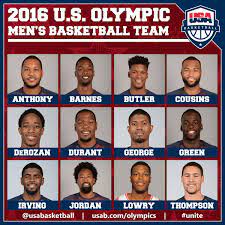
That summer he served as an assistant to Mike Krzyzewski for team USA at the 2016 Olympics: how did he like working for Coach K, and what did it mean to him to win a gold medal? Just being part of that experience enabled him to build relationships with not only Coach K but also with those players.

Last year he was hired as head coach in Phoenix: what has been the best part of year #1, and what has been the not-so-best part? He was the best thing the Suns did last summer. The best thing he did was implement his style of play and get his players to buy in. Without that, Phoenix would not have ended the season the way it did (by going a perfect 8-0 in the bubble). The Suns had bad stretches of basketball but that is not all on the players. He did take ownership for not getting the team ready at times.

What has it been like for him to be an African-American NBA coach during this year of pandemic/police/protest? He is a natural competitor, a fighter, and a believer in truth so eventually he was going to say or do something. He felt like he was not doing anything at first and just watching from afar so he got involved and has stayed involved ever since.

Posted in Interviews | Tagged , , | Comments Off on The Olympians: HoopsHD interviews Duane Rankin about 2016 Olympic gold medalist Monty Williams

The Olympians: HoopsHD interviews 2-time Olympic gold medalist Doug Bruno

The NBA Finals date back to 1947 (when they were known as the Basketball Association of America Finals) and the very 1st NCAA tourney was held in 1939. Olympic basketball competition is even older: it debuted as a demonstration event in 1904 and the men’s version became a medal sport in 1936, with the women finally getting their chance to go for the gold in 1976. The United States has dominated Olympic basketball competition from the start: the men have won 15 gold medals in the 18 tournaments they have participated in during the past 84 years, while the women have won 8 gold medals in the 10 tournaments in which they have competed during the past 44 years. Those of you who were looking forward to the 2020 Olympics opening ceremonies in Tokyo on July 24, 2020 will have to wait an extra 364 days, as the coronavirus caused a postponement until July 23, 2021. Due to the absence of college basketball since mid-March, HoopsHD’s Jon Teitel decided to fill the void by trying to interview as many prior Olympic players/coaches as possible so that you have something to read this summer while not watching the Summer Games. We continue our coverage by chatting with Doug Bruno about winning a pair of gold medals in 2012/2016. Today marks the 4th anniversary of team USA beating Spain 101-72 to clinch a gold medal in 2016.


You played for Hall of Fame coach Ray Meyer at DePaul: what made him such a great coach, and what was the most important thing that you ever learned from him? He gave me an opportunity to play and I am so blessed. He was an unbelievable competitor and just good to/for people. I was never 1 of the best players but he said that I was 1 of the hardest workers he ever had and I am very proud of that. Back then the Bulls practiced right after we did and 1 of their players who befriended me was Jerry Sloan, who just passed away. He would stick around and play 2-on-2 with the college kids. After I became a coach we did camps together: he was such a giving person that it was his idea to call it the Bruno-Sloan camp. Everything I have in basketball I got from Ray. Jerry is in the Hall of Fame as a coach but was also a really really good player and great defender. He would not shave and eat a raw onion before every game so that it would give him an edge over his opponent! He was unbelievably competitive and if they kept stats for on-the-ball charges he would have led the league every season.

On December 9, 1978, you were coach of the Chicago Hustle when you beat the Milwaukee Does 92-87 in the very 1st women’s professional basketball game in the United States: how big a deal was it at the time, and were you ready to be a pro basketball coach at the tender age of 27? When you are 27 you feel that you can do anything but in hindsight I probably was not even close to being ready. I do not know about the impact but we played at the old Milwaukee Arena that Al McGuire would sell out when he was coaching at Marquette. I had played there before so I knew the arena. My 5 starters were pioneers in their own right: it was not like the WNBA.

You later spent 8 years as associate men’s head coach at Loyola-Chicago: what is the biggest difference between coaching men and coaching women? When you talk about strength up the middle of an athlete (head/heart/guts), there is no difference because it transcends gender. There are some physical differences on the court that allow you to do things a little differently but from a pure coaching perspective I always treated my women’s team the same as a men’s team: preparation/workload/etc. Some men’s players have the misconception that athleticism means you do not need to learn the fundamentals. The best ones understand that you need to build the foundation from the ground up, even though fans/media watch the game from the rim down. I remember watching the “Last Dance”: all of Michael Jordan’s movements were grounded in well-executed/fundamental footwork. Women do not think “I am athletic: therefore I am”.

In November of 2011 your alma mater named the court at McGrath-Phillips Arena after you: what did it mean to you to receive such an outstanding honor? I was really touched/honored but I tried to give it back so they could do it again when my career was done. There were 4-5 boosters who put some substantial dollars into our program to make that happen because they wanted to do something for me. I do not want a car/house: I would rather have something go into the program so I am prouder that these generous benefactors helped out our program.

Take me through the 2014 NCAA tourney as coach at DePaul:
You had a 104-100 win over Oklahoma: how was your blood pressure doing by the end of the highest-scoring regulation game in NCAA women’s tourney history? Coach Sherri Coale and I have a similar philosophy so it was 1 of those games where we both just let it rip. Tourney games tend to be lower-scoring but it was a great ballgame.

Your team made a season-high 14 threes in a 9-PT upset of #2-seed Duke: where does getting your 600th career win at Cameron Indoor Stadium rank among the highlights of your career? I do not keep track of such things as they are happening but will appreciate it after the fact. To beat a storied program like Duke on their home court as a lower seed was my only concern: you are really in survive-and-advance mode. I just remember being excited for my players in the moment: that is what I remember about that game.

You were an assistant to Geno Auriemma with team USA at the 2012/2016 Olympics: how did you like working for Geno, and what did it mean to you to win a pair of gold medals? It is an honor to work for USA Basketball. As a young coach I felt that I would do anything to join the staff. In February of 2006 I got a call in my office from Carol Callan at USA Basketball, who has been there for a long time. She said she would like me to be head coach of the U-18/U-19 teams and would give me a couple of days to think about it because it was a 2-year commitment. I told her that I only needed 3 seconds to agree to take the job! We had some great players like Tina Charles/Maya Moore and we won a pair of gold medals. A few years later I got a call from Geno asking if I would be interested in working for him. At the time the bylaws stated that the USA coaching staffs were made up of 3 pro coaches and 1 college coach but they eventually changed it to 2 from the WNBA and 2 from college. It was great to work with all of our staff members at every stage of the process. Jen Rizzotti/Chris Dailey also helped out with the program all the way through. The Olympics are the most celebrated athletic event in the world with something like 10,000 athletes from 200 countries. The World Championships are just basketball so they are a bigger deal inside FIBA, just as the World Cup is bigger within FIFA. The media has not celebrated the World Championships as much as they have celebrated the World Cup but FIBA has now changed the nomenclature to call it the World Cup. Geno was great to work with, as was Jerry Colangelo/Martin Dempsey. All of the men’s players like Kobe Bryant/LeBron James and the coaches like Mike Krzyzewski/Jim Boeheim treated us very well so it was fun. We also had some special players who made it worthwhile.

Your team has earned the BIG EAST Team Academic Award in 9 of the past 10 seasons for having the top GPA in the conference: how much importance do you place on academics? It is vitally important: we choose to coach college basketball because they are student-athletes. In the modern-day discussion about whether athletes should get paid the only way we can currently pay them is in the form of getting an education, so we need to maximize the opportunity that is offered to them.

You are 1 of 5 schools to have appeared in 17 straight NCAA Tournaments and with a 28-5 record this past season you were looking to make it 18 in a row before everything was cancelled in March due to the coronavirus: what was your reaction when you heard the news, and how has it affected your life either on or off the court? There were 8-9 schools who had already qualified by earning their way in, including us after winning our conference tourney on March 9th. You have to feel bad for all of your players who put their blood/guts into playing for a championship, especially our 2 special seniors in Kelly Campbell/Chante Stonewall who worked really hard to get there. We had a heartbreaking loss to Texas A&M a couple of years ago so we were really on a mission this year. We thought that we would be a top-4 seed in 1 of the regions and were really excited about getting the 1st 2 rounds at home. We would eventually have to play 1 of the juggernauts but were in a good place to win a tourney game. I also feel bad for the schools that would have been making the NCAA tourney for the very 1st time. As a coach you have to pull yourself together and explain to your team that a pandemic is bigger than sports. I had to help them put it in perspective during that infamous 24-48 hour window. After we won we ran out the door to recruit on March 10th/11th while our players were off and were getting ready for our 1st practice on the 12th when the news came out, so we just sat there as a team and talked about trying to manage our grief. It hurt to lose a game…but you have to truly grasp the bigger picture of families losing loved ones. Like everyone else I am spending more time with my family but I really miss the interaction with my players. Some people say that relationship-building occurs off the floor but it is interconnected to coaching them on the floor.

You ran a girls basketball camp every summer for the past 40 years: what makes your camp different from other camps? I have done camps for 43 years total: Coach Sloan and I did day camps for 3 years. My name is still on the brand but this is the 1st year I am not working the camp myself. I tried to coach every drill and work on the court with my players every day. We have been successful due to a curriculum that maximizes the girls’ growth not just in basketball but also emotionally/socially. Our camp staff does a great job of teaching girls how to grow into independent young women who learn how to achieve goals outside of basketball, which is what I am proudest of. Camps are dying because parents’ discretionary dollars are going to travel basketball. It does not have to be an either-or situation but some athletes choose to spend money on their own personal trainers. I am proud that our numbers have sustained us throughout the years while other great camps across the country are no longer in existence. I have had great women on my staff that helped young girls to stand on their own and try to achieve their personal/professional goals.

You are already a member of the DePaul Athletics Hall of Fame, the Chicagoland Sports Hall of Fame, the Illinois Basketball Coaches Hall of Fame, and the National Italian-American Sports Hall of Fame, and in January you were named 1 of the 12 finalists for the Women’s Basketball Hall of Fame: what makes you such a great coach, and are we going to see you on the podium at Knoxville 1 day? I sincerely believe that you go into sports for the opportunities to compete/achieve, either as a player/coach. I do not think that you should get into sports to make a Hall of Fame. I am honored to have made some Halls of Fame and to have been named a Finalist for the Women’s Hall of Fame but I am a coach because I like the day-to-day work. There are plenty of women’s coaches who are not in the Naismith Hall of Fame even though their achievements have far surpassed some of the men’s coaches who are already in there. I believe that your time needs to be consumed with the achievement of that day, and when it is all said and done if the celebrity happens then I will not throw it back but it is not why I coach and it is not my philosophy. We are also trying to grow the game and get people to come watch us, but if women’s sports are not covered as much as men’s sports then it is not easy to compete sociologically. I watched the Bulls before the Jordan years when they were bad and nobody showed up back then: the coverage precedes the viewing. As a Cubs fan I remember for years when they did not open the upper deck…but the team was still covered by the media.

Posted in Interviews | Tagged , | Comments Off on The Olympians: HoopsHD interviews 2-time Olympic gold medalist Doug Bruno

The Olympians: HoopsHD interviews Kent Babb about 2004 Olympic bronze medalist Allen Iverson

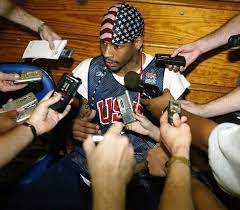
The NBA Finals date back to 1947 (when they were known as the Basketball Association of America Finals) and the very 1st NCAA tourney was held in 1939. Olympic basketball competition is even older: it debuted as a demonstration event in 1904 and the men’s version became a medal sport in 1936, with the women finally getting their chance to go for the gold in 1976. The United States has dominated Olympic basketball competition from the start: the men have won 15 gold medals in the 18 tournaments they have participated in during the past 84 years, while the women have won 8 gold medals in the 10 tournaments in which they have competed during the past 44 years. Those of you who were looking forward to the 2020 Olympics opening ceremonies in Tokyo on July 24, 2020 will have to wait an extra 364 days, as the coronavirus caused a postponement until July 23, 2021. Due to the absence of college basketball since mid-March, HoopsHD’s Jon Teitel decided to fill the void by trying to interview as many prior Olympic players/coaches as possible so that you have something to read this summer while not watching the Summer Games. We continue our coverage by chatting with Kent Babb, author of “Not a Game: The Incredible Rise and Unthinkable Fall of Allen Iverson”, about Allen Iverson making the NBA Finals in 2001 and talking about practice. Today marks the 16th anniversary of Iverson scoring 16 pts vs. Australia in Olympic round-robin pool play.

At Bethel High School Iverson was named AP High School POY in both football/basketball and won the AAA Virginia state title in both sports: which sport was he best at, and which 1 did he enjoy the most? I am a little skeptical that he was actually a better football player than basketball player, mostly because of his size. Iverson was so quick/dominant on the basketball court in a sport that showcases the individual and actually allows speed to overshadow size. I do not doubt that he was a terrific football prospect so maybe I just find it hard to believe that he was better at anything than he was at basketball.

In 2 years at Georgetown he set the school record for career scoring average (22.9 PPG) and was named Big East DPOY both years: how was he able to balance his offense with his defense? The offensive success was due to the fact that Coach John Thompson just turned him loose, which is something he had never done before, and Iverson could cut through opposing defenses on the way to the basket like nobody else could. The defense was a combination of Thompson’s system/Iverson’s speed. He was fearless and nobody could match him in terms of quickness, which gave him the ability to run down the floor and set up before pretty much anybody else. He did not care how big/skilled his opponent was: Iverson was happy to mix it up on the court and then try to get a steal no matter what.

In the summer of 1996 he was drafted 1st overall by Philadelphia (becoming the shortest 1st overall pick ever at 6’ tall): did he see that as a validation of his college career, or the realization of a lifelong dream of reaching the NBA, or other? I think it was simpler than any of that. He was getting an NBA contract, which to him meant providing for his mother/girlfriend/baby daughter/disabled sister. He also liked helping out his friends from Newport News, and for the first time in any of their lives 1 of them had access to a seemingly bottomless pit of money. I am sure that deep down there was some pride in being the top overall pick but Iverson never struck me as anyone who needed validation. He did, however, need money.

In 1997 he was named NBA ROY after averaging 23.5 PPG/7.5 APG/2.1 SPG: how was he able to come in and dominate right from the start? At that time the NBA was still mostly a big man’s league. Michael Jordan was the outlier, and it was his speed/perimeter game/detail-oriented approach that made him so dominant despite an overall lack of size (and Jordan was 6’6”). Iverson, though, caught everybody by surprise and was just so much faster than everybody else. The fact that he also was not scared of taking the ball to the hoop, no matter who was waiting for him there, was just something that was almost impossible to game plan for defensively.

Take me through the 2001 playoffs:
He finished the regular season by being named MVP: how much extra pressure did that put on him to try to lead the 76ers to a title? Iverson put pressure on himself because he knew that the Sixers were short on talent, especially in a head-to-head match-up against the Lakers. This is the first time that Iverson kind of took on a Jordan-like approach: not relying only on his own natural gifts but also on some conditioning/nutrition/training. It was never the same as Jordan, or as most other elite athletes, but for Iverson it was the best that he would ever do. I think that if the Sixers had known he would take those things that seriously then they would have added more talent around him…but it would have been foolish to think that Iverson was going to work that hard.

In the Eastern Conference Semifinals he scored 54 PTS in a Game 2 win, watched Vince Carter score 50 PTS in a Game 3 loss to Toronto, scored 52 PTS in a Game 5 win, and had 21 PTS/16 AST in a 1-PT win in Game 7 after Carter’s long jumper at the buzzer bounced off the rim: did the series simply turn into a 1-on-1 battle to see who was the best player on the court? Iverson saw every match-up as a one-on-one battle, usually against the biggest star on the other team. There was no way that he was going to let Vince Carter upstage him, even if there is an argument to be made that the Raptors had the better top-to-bottom team.

In Game 1 of the Finals he scored 48 PTS in a 6-PT OT win over the Lakers (their only loss during that postseason): why did he decide to step over Tyronn Lue after hitting a crucial shot in the final minute? To him this was a respect thing: he had learned days earlier that Lue had been imitating Iverson during Lakers’ practices. He refused to pass, would not stop talking s—, and took crazy shots every chance he got. That pissed Iverson off, especially since he did not see Lue as someone who deserved to be on the same court as him, let alone as a comparison to him. It obviously made sense for Lakers’ coach Phil Jackson to use somebody to mimic Iverson from a strategy/preparation standpoint but Iverson did not see it that way. He saw a middling player acting like Iverson as a sign of disrespect, and stepping over Lue was his way of expressing his anger at being insulted like that.

In the 2002 Eastern Conference 1st round he scored 31 PTS in a 33-PT loss at Boston in the decisive game 5 (Paul Pierce scored 46 PTS/8-10 3PM as the Celtics made a playoff-record 9 threes in the 4th quarter), then 4 days later made his legendary “we’re talking about practice” comments: how much importance did he place on practice during his playing days, and should we care since it obviously did not keep him from having a great career? I think that the 2001 season showed what Iverson could have become. If he had truly been dedicated to training/nutrition/fundamentals then it is possible he would have been among the top-10 or top-15 players of all-time, not just 1 of the top-10 or top-15 pound-for-pound players of all-time. It is hard to know whether he would have won a championship because the Lakers were just so dominant during that time, but he would have had other chances. I have gone back and forth on this: if he had actually trained like that then he would have lost some of the “everyman” quality that makes him so legendary. Iverson almost literally rolled out of bed (whenever that was) and went to the arena. What we saw was unvarnished raw talent. If he had taken himself and his game more seriously, would he have been as fun? Maybe it would have taken away from what we loved about Iverson to begin with so I am unsure which version I would have preferred: I will always wonder though.

Former referee Tim Donaghy said that in a January 6, 2007 game between Denver and Utah he and the other 2 refs agreed not to give Iverson any favorable calls as a way to “teach him a lesson” for criticizing referee Steve Javie a few days earlier: do you think that is true, and how was Iverson viewed by the referee community? Iverson talked s— to everybody, including the officials. Some officials thought that he was entertaining/childlike but others got pissed off. I do not know the truth of that Donaghy story personally but I would not doubt it.

He was inducted into the Hall of Fame in 2016: when people look back on his career, how do you think that he should be remembered the most? Everybody says this but it is true: his heart and refusal to quit is why I fell in love with Iverson’s game. I wrote in my book that he was identifiable, unlike a lot of other NBA stars, because he was small and drank and smoked and ate wings. Everybody wanted to be like Mike but nobody actually thought that was possible. You kind of did think that you could be like Iverson because he was not superhuman, although he had superhuman skills. The fact that he preferred cheap beer/crappy bars just grew that legend. He is all of us who never grew to 6’3” or taller.

Posted in Interviews | Tagged , , | Comments Off on The Olympians: HoopsHD interviews Kent Babb about 2004 Olympic bronze medalist Allen Iverson