2020 Draft Preview: HoopsHD interviews Kentucky prospect Nate Sestina

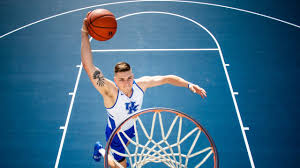
On May 1st the NBA’s Board of Governors voted to postpone the Draft Lottery and Draft Combine in Chicago due to an abundance of caution regarding the coronavirus pandemic. In addition to all of the seniors who have wrapped up their college careers, the early-entry deadline for underclassmen was August 3rd and the NBA deadline is approaching on August 17th. The lottery has been postponed until August 20th and the draft itself is scheduled to take place virtually on October 16th. We will spend the upcoming months interviewing as many members of the 2020 draft class as possible. HoopsHD’s Jon Teitel continues our coverage by chatting with Nate Sestina about playing at Kentucky and what it would mean to him to get drafted.

You were born/raised in Pennsylvania: what made you choose Bucknell to start your college career? I did not have any D-1 offers until my senior year but after getting invited to Bucknell’s recruiting camp I made a bit of a name for myself. They asked me about my grades, followed me for the rest of the year, and then offered me a scholarship. I fell in love with the campus/architecture/town: just everything. It felt like home and the coaching staff was great at presenting everything so I could not pass it up. I committed that August and the rest is history.

In January of 2019 you scored a career-high 32 PTS/11-11 FG in a win over Holy Cross: was it just 1 of those situations where literally every shot you put up seemed to go in because you were “in the zone”? That is the best way to put it. I am a faithful kid so I give all credit to God. After seeing my 1st 2-3 shots go in I just kept putting them up and my teammates kept feeding me the ball and getting me open.

You finished that season 2nd in the conference with 8.5 RPG: what is the secret to being a good rebounder? Positioning is important but you also need the will to rebound. It takes energy and you have to read the ball as it comes off the rim and give a little bump to your opponent.

What made you choose Kentucky for your grad transfer year, and what makes John Calipari such a great coach? I had never really lived in a city before but fell in love with Lexington. It gave me a chance to meet new people and diversify myself. What separates Coach Cal from everybody else is the relationships that he develops with his players. You have the best gear, you get to use state-of-the-art facilities, you travel/eat well, etc. It might sound corny but he really is a father to all of us: none of his former players will have anything bad to say about him. I really noticed that during my visit.

Last year you were 2nd on the team with 40.7 3P%: what is the key to making shots from behind the arc when you are 6’9”? Just getting as many game-speed reps as you can during practice. You also have to be in great shape: assistant coach Kenny Payne (who was hired by the Knicks last week) really helped us with that. Our whole team was in incredible shape, which allowed to make 3-PT shots late in games. My sister Kristin actually taught me to shoot the ball with a high release so that it would not get blocked.

You were also named to the SEC 1st-Year Academic Honor Roll: how were you able to balance your work on the court with your work in the classroom? I give all of that credit to my parents. They are educators who recently retired after 37 years of teaching so I always made sure to do my best to get As and Bs. Grad school was different after doing it for 4 years at Bucknell at a high level. I did not have as many classes at Kentucky so the time-management was the easiest part for me. My classes were at night so I had all day to work out/practice/get my homework done.

You entered the 2020 SEC tourney as the #1 seed but then learned that the SEC/NCAA tourneys were canceled due to the coronavirus: what was your reaction when you 1st heard the news, and do you think that it was the right decision? When the initial news broke about the SEC tourney being canceled I felt glad that at least the NCAA tourney was still on. We were on the bus heading home when my mom called to tell me that the NCAA tourney had been canceled, and then I realized that my college career was over. Looking back now I definitely think that it was the right decision: I selfishly wanted to make a run at a national title but the safety of others is more important. As bad as it hurt in March, I am glad that we did not play, and we are still dealing with the coronavirus.

Your brother Andrew played college basketball, your mother Rachelle was a college swimmer, and your grandfather Richard played college football: who is the best athlete in the family? That is tough. I will exclude myself but my grandfather is an incredible athlete: he is 85 years old and still golfs every day! My sister Kristin was also a dominant high school player.

You are 1 of several Wildcats who might get drafted this year (including Ashton Hagans/Tyrese Maxey/Immanuel Quickley/Nick Richards/Kahlil Whitney/EJ Montgomery): which of them do you think will end up becoming the best pro player? That is a hard 1 as well because I want them all to be successful. Immanuel really made a name for himself this year and put a lot of time/effort into that. He did not play the way he wanted to as a freshman but came back as a sophomore and put in a lot of work: I think that he will play until he is 40 because he loves the sport so much. Tyrese has been a superstar since age 13 and Ashton is a great PG. If I had to choose just 1 then I might go with Immanuel due to longevity.

Last month it was reported that you signed a contract to play in the Ukrainian SuperLeague: what would it mean to you to get drafted by an NBA team, and if you do not get drafted then are you heading to Ukraine? We were looking at the contract that they sent over but never signed anything because I wanted to make sure it was a good fit. To get drafted would be a dream come true after lots of trials/tribulations. My journey has been super-unconventional but if I do not get drafted it is fine: we will just figure out somewhere else to go and hopefully I can play for a really long time.

Posted in Interviews | Tagged , , | Comments Off on 2020 Draft Preview: HoopsHD interviews Kentucky prospect Nate Sestina

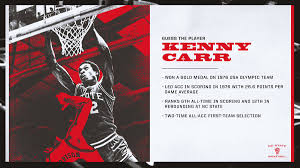
The Olympians: HoopsHD interviews Tim Peeler about 1976 Olympic gold medalist Kenny Carr

The NBA Finals date back to 1947 (when they were known as the Basketball Association of America Finals) and the very 1st NCAA tourney was held in 1939. Olympic basketball competition is even older: it debuted as a demonstration event in 1904 and the men’s version became a medal sport in 1936, with the women finally getting their chance to go for the gold in 1976. The United States has dominated Olympic basketball competition from the start: the men have won 15 gold medals in the 18 tournaments they have participated in during the past 84 years, while the women have won 8 gold medals in the 10 tournaments in which they have competed during the past 44 years. Those of you who were looking forward to the 2020 Olympics opening ceremonies in Tokyo on July 24, 2020 will have to wait an extra 364 days, as the coronavirus caused a postponement until July 23, 2021. Due to the absence of college basketball since mid-March, HoopsHD’s Jon Teitel decided to fill the void by trying to interview as many prior Olympic players/coaches as possible so that you have something to read this summer while not watching the Summer Games. We continue our coverage by chatting with NC State Communication Strategist Tim Peeler about Kenny Carr winning a gold medal in 1976. Today is Kenny’s 65th birthday so let us be the 1st to wish him a happy 1!

Carr played with future Olympic teammate Adrian Dantley at DeMatha Catholic, and Sidney Lowe/Dereck Whittenburg later came from DeMatha to help lead NC State to the 1983 NCAA title: how did Hall of Fame coach Morgan Wootten keep convincing his best players to head south to Raleigh? Coach Norm Sloan had a lot to do with it. He sent his top assistant to recruit Dantley but Wootten told him to keep his eye on Carr because he would eventually become an All-American. After Carr came Hawkeye Whitney and others: there are probably a dozen guys who came here to play for Sloan/Jim Valvano. When Sloan left in 1980 to go to Florida they hired Wootten to coach here for about 3 days before he pulled a Bobby Cremins and decided that he wanted to stay a high school coach.

In 1974 he was named 1st-team Parade All-American along with future stars like Moses Malone/Phil Ford: how good a player was he in high school, and how did assistant coach Eddie Biedenbach recruit him to NC State? He was among the best players in the nation at the time. He was a big burly guy who did a lot of scoring inside. He grew up as a football player but also had the ability to step out and make some jumpers.

After David Thompson led the ACC in scoring for 3 years in a row Carr led the conference in scoring for 2 years in a row in 1976/1977: what was his secret for being a great scorer? His ability to get offensive rebounds. He was a completely different player than David but he had a similar intensity, which helped him make the Olympic team. He had the ability to go fight once he was motivated.

In 1976 he averaged 26.6 PPG/10.3 RPG: how did he balance his scoring with his rebounding? I only saw him play on TV but he was a big power forward, whereas David was a small forward.

He was a 2-time All-American: what did it mean to him to receive such outstanding honors? It meant everything to him because that is exactly what he came here to be. NC State was coming off of an amazing 3-year run from 1973-1975 that included an undefeated season and an NCAA title. They could have been in the running for 3 straight titles and Kenny came here to extend that legacy by playing with David for 1 year and then kept it going after David left.

He played for Coach Dean Smith at the 1976 Olympics: how did he like playing for his archrival school’s coach, and how close did he come to missing the team due to his inability to run a mile under a certain time? Dean always required his players to run a mile under a certain time. Kenny was 1 of the best players they had but if he had not run it in the required time then he would have indeed been left behind. There were a lot of players from the area who scrimmaged together.

What did it mean to him to represent his country, and what did it mean to him to win a gold medal? Kenny will tell you to this day that he was 1 of the last true college champions: there were Olympic boycotts in 1980/1984, then we won a bronze in 1988 before the pros took over in 1992. He is still very proud of that and said it was the most fun he ever had playing basketball.

In the summer of 1977 he was drafted 6th overall by the Lakers (1 spot ahead of Bernard King) after becoming the 1st Wolfpack player to ever leave early for the NBA: did he see that as a validation of his college career, or the realization of a lifelong dream of reaching the NBA, or other? The NBA allowed the 1st group of “hardship” players that year and he was 1 of the 1st. He obviously thought that he had done everything he needed to do in college. Some players go pro based only on their potential but he did it based on performance. He was a beast in college even though he never played in the NCAA tourney. Had he not been injured during his 1st 2 years I think that he would have had a different career trajectory.

He played 10 seasons in the NBA and his 51 FG% remains top-100 in NBA history: what made him such a good shooter? A lot of it had to do with the fact that he was such a good rebounder who made a lot of put-backs. He also had a nice jump shot, which you would not expect from a big man.

He retired in 1987 and became CEO of Carr Construction in Portland after starting the company out of his basement while playing for Portland: how was he able to make such a smooth transition from the sports world to the real world? If you look at his life up until that point he always wanted to accomplish different things. He bought a house that needed some work, spent some time doing that, and got his general contractor license: he threw everything into that and just made it grow.

When people look back on his career, how do you think that he should be remembered the most? For all of the basketball success that NC State has had, Kenny is as accomplished a player/businessman as anyone who we have produced. As part of that 5-year string of scoring champions he made his legacy as 1 of the best players in the country: it is hard to maintain that consistency over time. He proved that he could do whatever was needed to be successful but it is a shame that he never got to play in the NCAA tourney: if he had a chance to play in 3 of them like David did then I think he could have taken the team to bigger heights and had an even larger legacy. You might think that Pete Maravich is 1 of the best players ever…but he did not do much in the NCAA tourney.

Posted in Interviews | Tagged , , | Comments Off on The Olympians: HoopsHD interviews Tim Peeler about 1976 Olympic gold medalist Kenny Carr

2020 Draft Preview: HoopsHD interviews agent Ronnie Zeidel

On May 1st the NBA’s Board of Governors voted to postpone the Draft Lottery and Draft Combine in Chicago due to an abundance of caution regarding the coronavirus pandemic. In addition to all of the seniors who have wrapped up their college careers, the early-entry deadline for underclassmen was August 3rd and the NBA deadline is approaching on August 17th. The lottery has been postponed until August 20th and the draft itself is scheduled to take place virtually on October 16th. We will spend the upcoming months interviewing as many members of the 2020 draft class as possible, as well as the people helping them along the way. HoopsHD’s Jon Teitel continues our coverage by chatting with Ronnie Zeidel, Founder/President of RZA Sports, about working for Adam Silver and what sets him apart from other agents.


You went to high school with Duane Causwell: could you tell back in the day that he would be good enough to become 1 of the lucky ones to stick around the NBA for more than a decade? No. When he 1st came to Cardozo High School he was just a 7-footer with a football in his hands. He was kind of clumsy at 1st but was clearly athletic enough to block shots/rebound and his offense got significantly better by his senior year. He was probably 1 of the best shot-blockers in the nation during his final season. He worked really hard to make the NBA and learned how to play defense from Coach Ron Naclerio and then John Chaney at Temple. Now you need to be able to stretch the floor even if you are a 4 or 5 but back then you could work as a traditional big man and survive.

You previously worked for the Knicks in scouting: what do you look at when evaluating a player, and how can you tell whether a player is good enough to make it in the NBA? There are many attributes to look for but the game has changed a lot over the years. Today teams look for 3 things beyond talent: length, athleticism, and the ability to shoot the ball. Back in the day you could be a power forward/center who played with his back to the basket but now there are 4-5 guys on the floor who can shoot the ball at a high level. I also look for guys who have a tremendous work ethic, where they come from, and whether they will work as hard on the court as I do off the court. Analytics were not a thing in the 1990s: I have become a believer to a certain degree but I still believe in the eye test. Outside of the top-10 in the draft it is hard to predict exactly how good someone will be but I want to see what he does on the floor. IQ is a huge part of it, especially if you watch a guy play in person 3/4/5 times. My old boss Ed Tapscott had a simple line: “Can the guy freaking play?” I am all about the eye test…but you need to have the eye! Making the NBA and thriving once you get there are 2 different things: every team has a star or 2, then a few key starters, and then a bunch of rotation guys. There is nothing wrong with being a role player who sticks around for 10-12 years like my old friend Royal Ivey. Everyone has a different perspective.

You also worked for Adam Silver in the past: what was he like, and what makes him a good Commissioner? I have been in the basketball industry for more than 28 years and have never come across a more intelligent person than Adam. He is great at delegating but is also on top of everything across the board. He develops relationships with so many different kinds of people in all departments within the industry (media/owners/foreign countries/etc.) and has always had a vision for making the game more global. Even though he has only been Commissioner for a few years he has spent many years learning the ropes as Deputy Commissioner. He is a great manager of people and interacts so effectively with league employees, the media, the entertainment industry, and the players themselves. He knows what the forefathers of the league have built and he has taken it to the next level: he is always the smartest person in the room and can look ahead to the future and really plan/execute like no other.

You have also advised companies in industries such as performance beverages/apparel/TV production: which industry did you enjoy the most? There are certain aspects of each job that I really enjoyed and I loved working in every category. Building SLAM Magazine from nothing after everyone laughed in our face is probably what I am proudest of. There were 7-8 of us who just grinded it out and eventually created the best basketball magazine in history. As an agent I love finding the right “partners” and guiding these young men both on and off the court. They put their careers in the palm of my hand and I take that to heart. I am blessed to work/grow with them. I treat every client of mine as if he was in my son, meaning would I put my son Grady in the situation I am about to put them in if Grady was in their shoes? I love what I do and hope to continue to grow and help guide more terrific young men.

You helped develop both SLAM Magazine and XXL Magazine: how has the magazine industry changed over the past few decades? The #1 thing is the Internet specifically and digital media in general, which was nonexistent when we started out. I launched those magazines in the 1990s when publishing still mattered at the print level. The print publications that decided not to invest in the digital marketplace and embrace social media all failed. Part of the reason I left SLAM is that at the time the parent company did not invest properly and I did not see any growth potential beyond my first 15 years there, but a few years ago a good friend of mine bought SLAM and he and Dennis Page are doing a great job of taking it to the next level. The market has changed tremendously: I am a huge believer in tangible media but I understand people who want to read stuff on their phone.

1 of the athletes you previously worked with was Kobe Bryant: what was he like, and how stunned were you to learn of his passing last January? I have been very blessed to work with many amazing athletes including Vince Carter/Elton Brand/Paul Pierce/Steph Curry. I 1st met Kobe at the 1996 McDonald’s All-American Game in Pittsburgh when SLAM was just 1-2 years old at the time. He was a fun-loving kid with a big smile on his face: we knew that he was a great player but nobody could have imagined how great he would eventually become. The thing I remember most is how nice/open/transparent he was. I would see him 1-2 times/year after he was drafted: we would just touch base in the locker room and talk about life. I was very disappointed to see the Kobe-Shaq situation and some of the accusations mae against Kobe: he had a 4-5 year period in the middle of his career where not a lot of other players liked him, but he eventually matured and became a man. He created the “Mamba Mentality” and became all about winning championships. Everyone has their ups and downs but I admire how he came back to be a tremendous teammate/superstar/family man: I think that he is the 2nd-best 2-guard to ever play the game. I ended up really respecting him and loving his work ethic and the man/player/teammate he became. He also had so many accomplishments and did so many good things off the court. There are a lot of athletes who have passed away during the past 3 decades but “stunned” does not even cover my reaction to Kobe’s passing: I even cried at one point and felt devastated. That has never happened to me before. It was shocking to the world to lose someone of that stature at such a relatively young age.

The NCAA tourney was canceled last March due to the coronavirus: what was your reaction when you 1st heard the news, and do you think that it was the right decision? I remember being in Utah on a recruiting trip with some buddies. I am a huge St. John’s fan and was watching them kicking Creighton’s butt so I was super-excited. I was shocked that the Big East and NCAA tourneys were canceled…but as someone who lives in New York it was hard to see us losing hundreds of people to the virus every single day. It was completely the right decision and even if they held a tourney without fans it would not have been safe. I just believe we should all follow the advice of the doctors and scientists and stay cautious: after all, this is just a game and we are talking about lives here.

Do you think that college players should be paid, and if so then how do we keep it from spiraling out of control? I do not think that a swimmer/lacrosse player who is not bringing in any revenue to a school should be paid. It is definitely a privilege to get a college scholarship, but if a basketball player is helping generate millions of dollars for his school then I think he should be getting paid. I think it should be the same amount of money across the board but I do not know what the right # should be. The 2nd thing you asked is the million-dollar question but I do not think that anyone has the right answer. I do not think the NCAA wants them getting paid but nobody is watching Ohio State football just because they like the sport: they want to see a team that might win a championship, and as great as coaching is in sports the players are the keys to winning a ring.

What sets you apart from more “traditional” agents, and what is it like to be an NBA agent in 2020? There are no “basketball” agents in this country who have worked on the team side, media side, league side, AND the agency side like I have, so that alone is a huge edge. I am much more well-rounded than your typical agent and much more experienced across the board. Most agents just start out as an agent and keep doing that for 20-30 years: they do not have the diversity that I do. I dedicate 100% of my time to my job: I worked in several different parts of the basketball industry for 25 years before becoming an agent a few years ago. I got some offers to join other agencies but wanted to do it my own way even though there are some really good agencies out there. There is less room for error but more opportunity for growth. This is a difficult year for everybody: I am just happy that me and my family are healthy. I have 2 great rookies in Steven Enoch/David DiLeo but there are no pre-draft workouts this summer, which makes it more difficult for exposure. Steven has done 26 Zoom interviews so there is a lot of interest, but there is no combine/summer league for him to demonstrate his skills. Both of them are going overseas to Spain, which is the 2nd-best league in the world outside of the NBA. There are no mini-camps so teams cannot work guys out, which makes it hard to give advice to players who are deciding whether or not to declare early or to veterans who want to stick around. You just have to take it 1 day at a time. If any of the 4 pro sports leagues can figure this out it is the NBA because they have done it the right way with a bubble…plus we should never underestimate Adam Silver.

What are some of the trickiest parts of the basketball landscape that you help your clients navigate, and how do you do so? If you get drafted then you have to get settled in a new city, but most pro basketball players go overseas because the NBA only has a few hundred players and only 40-45 new rookies each year. When a guy signs with me it is not about getting a job, but rather carving out a career and finding an opportunity to begin that growth in year #1. I talk to my guys about building a resume and how a career is a marathon and not a race. A higher paycheck is not always the right answer: I am a big believer in finding the “right” basketball situation first and then the money will come after that. The 1st rung on the ladder is an entry-level position: you need to work really hard/develop your game and then your next job will move you up a notch. You cannot build a resume in 6 months: it takes 4-5 years of continued growth and remaining healthy. I take my responsibility very seriously: I look at talent but also guys who want to grow. They rely on me and I want to do the best job that I can for them in return.

What would it mean to your clients to get drafted, and what is the plan if they do not get drafted? If Steven gets drafted he has an out clause and will come back to the US, but only if it is the right deal. If not then he will have a great year in Spain playing for a great organization. I think that David will probably remain in Spain for the entire season: it could be too disruptive to bring him back this fall but do not be shocked to see him on an NBA roster during the 2021-22 season.

Posted in Interviews | Tagged | Comments Off on 2020 Draft Preview: HoopsHD interviews agent Ronnie Zeidel

The Olympians: HoopsHD interviews Oliver Fortenberry about 1936 Olympic gold medalist Joe Fortenberry

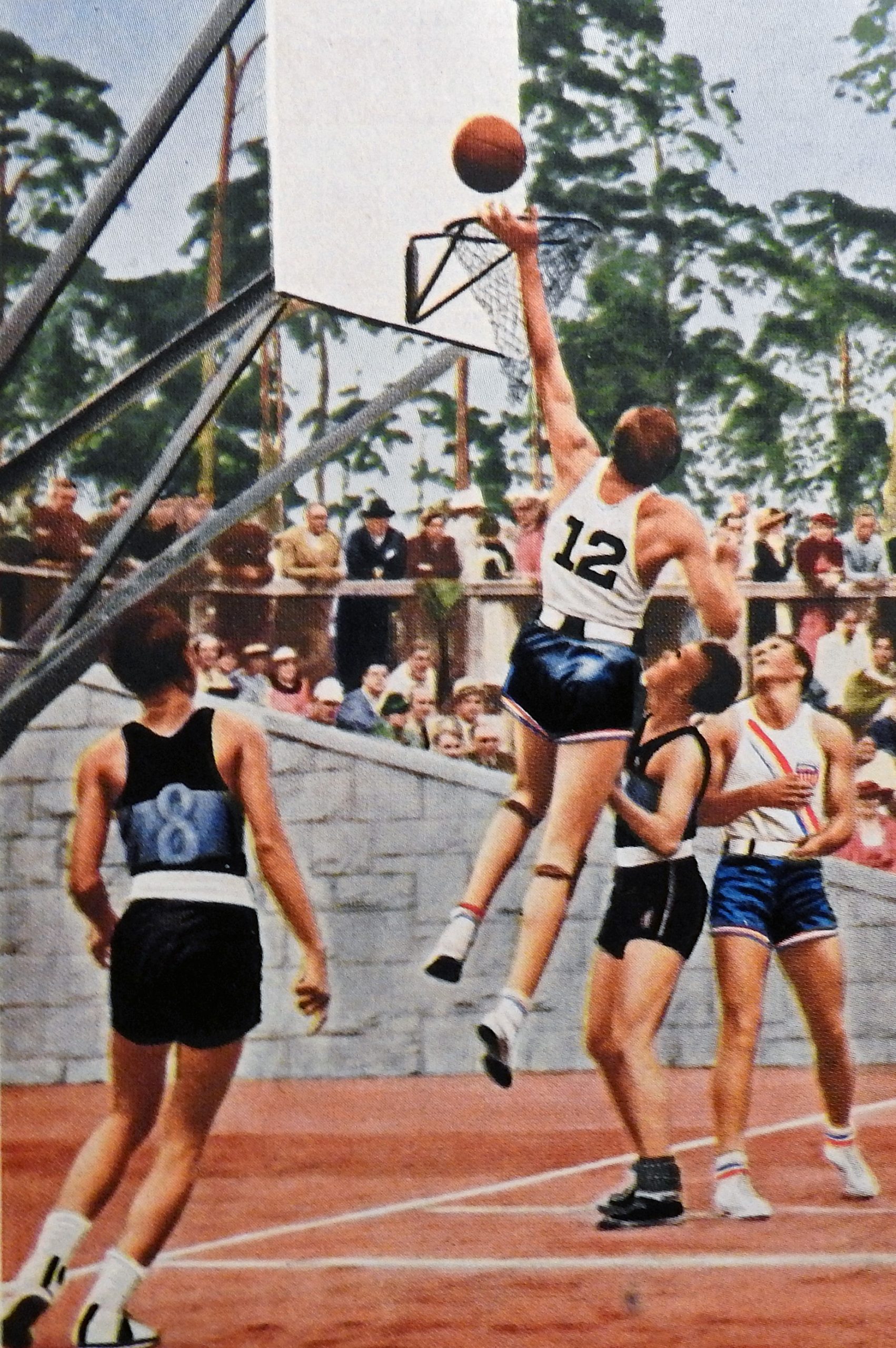
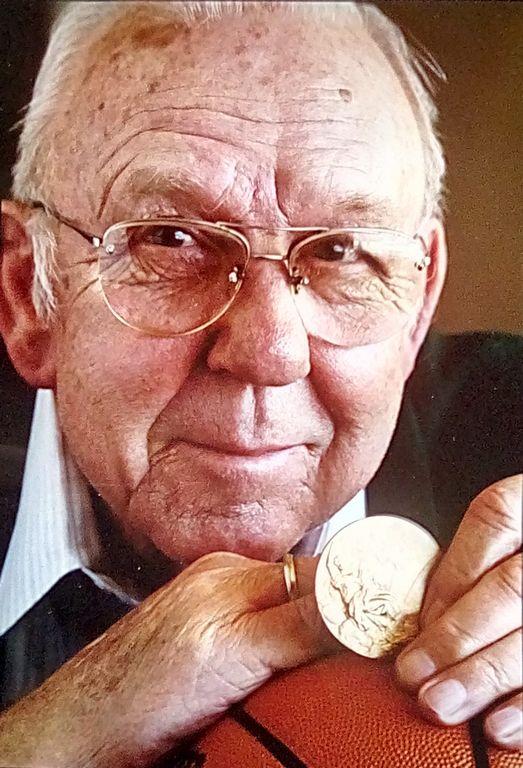
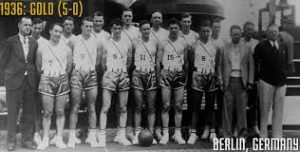
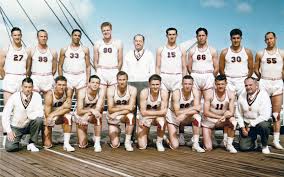
The NBA Finals date back to 1947 (when they were known as the Basketball Association of America Finals) and the very 1st NCAA tourney was held in 1939. Olympic basketball competition is even older: it debuted as a demonstration event in 1904 and the men’s version became a medal sport in 1936, with the women finally getting their chance to go for the gold in 1976. The United States has dominated Olympic basketball competition from the start: the men have won 15 gold medals in the 18 tournaments they have participated in during the past 84 years, while the women have won 8 gold medals in the 10 tournaments in which they have competed during the past 44 years. Those of you who were looking forward to the 2020 Olympics opening ceremonies in Tokyo on July 24, 2020 will have to wait an extra 364 days, as the coronavirus caused a postponement until July 23, 2021. Due to the absence of college basketball since mid-March, HoopsHD’s Jon Teitel decided to fill the void by trying to interview as many prior Olympic players/coaches as possible so that you have something to read this summer while not watching the Summer Games. We continue our coverage by chatting with Oliver Fortenberry about his father Joe winning a gold medal in 1936. Today marks the 84th anniversary of Joe scoring a game-high 8 PTS to help team USA beat Canada 19-8 to win the 1st-ever Olympic basketball gold medal.

(photo credit: Rich Hughes)

(photo credit: mcphersonsentinel.com)

(photo credit: amarillo.com)

(photo credit: usab.com)

Your father was born/raised in Texas: what made him choose West Texas A&M for college? After graduating from Happy High School they paid his tuition and were located right down the road. Times were tough but he got to play basketball, which he loved to do. He was born in a little town called Leo that does not exist any more and grew up on a farm. He later moved to the city of Joy and then back to Happy!

He was nicknamed “College Joe”: who gave him the nickname, and how did he like it? Nobody called him that when I knew him so the nickname did not stick. He was born in 1911 and was almost 40 when I was born. Everyone in Amarillo knew him and just called him Joe.

He was captain of team USA at the 1936 Olympics, which was the very 1st to include basketball: how big a deal was it at the time? It was a big deal here but was very controversial whether they would even get to go. Some college teams like LIU did not even play in the Olympic Trials. They played all over the country including Madison Square Garden. They played the AAU championships in Denver: when I lived there and people heard my last name they would ask me if I was related to him. His name was as big as LeBron James back then: people rooted for him even if he was on the opposing team. In Colorado back in the day if you were 18 years old then you could drink beer that was 3.2% alcohol. I remember watching the last episode of “The Fugitive” with a friend and drinking beer: when my friend’s parents got home they were unhappy…until hearing my last name!

Adolph Hitler tried to institute a rule that any Olympic basketball player taller than 6’1″ was disqualified but the Olympic Committee overruled him, so instead Hitler made the basketball teams play outside on dirt courts: how did your dad feel about getting picked on by Hitler (and living to tell about it) as part of a team nicknamed “the tallest team in the world” that had an average height of 6’5’’? From what I gather that is not right: it was the FIBA people who wanted to institute a 6’2” height limit and the German Olympic Committee thought that it would be better to play outdoors…which was fine until it rained during the final game! The main problem was the “Berg” basketball, which was lightweight and would move around in the wind. I believe the FIBA official was R. William Jones, who was the same guy who ordered 3 seconds added to the clock at the end of the controversial 1972 gold medal game: it seems like he was gunning for the US for most of his career!

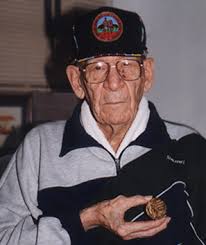
He scored a game-high 8 PTS in the 19-8 win over Canada in the title game that was played outdoors in wind/rain on a muddy clay court: what did it mean to him to represent his country, and what did it mean to him to win a gold medal? He just loved the idea of it. He did not consider it that big a deal until people came around to interview him every 4 years starting in the 1980s. He was as humble as you could be and kept his medal in a shoe box: he was not a self-promoter. Pop said they were all captains: it was not that big a deal. He was the high scorer: there were 14 guys on the roster but they could only suit up 7 for each game. The Universal team played a steady/controlled style while the McPherson team was the 1st helter skelter type of team. He was rankled that only the 7 guys in the gold medal game got to stand on the podium and receive a medal: it was only later that medals were created for the entire team. There were no further Olympics until 1948 so there was no holdover from 1 to the next, but if they held it in 1940 then I think that the US would have won another gold medal. After coming back from WWII there was a new crop of younger guys but he played 1 season for Lee Tires.

He was a 3-time AAU All-American and won AAU national titles with the Globe Refiners in 1936 and the Phillips 66ers in 1940: was he considered 1 of the best players of his era? He was considered the best big man of his era. There was a guy named Ace Gruenig who won more titles but Pop was better: I asked him about it and he did not puff himself up. When they 1st opened the Hall of Fame they inducted 8-10 AAU players (including Ace) but they have not put any more AAU guys in since then. He should be in there, as should his team: hopefully he will get in next year. He invented dunking/goaltending and won the very 1st gold medal. They had to get rid of the center-jump after each basket because he always won the tip. There was a running clock back then so they scheduled a 40-minute game each hour with very little turnaround time: that is another reason the scores were so low. Pop played 2 games at the Olympics: he scored 21 PTS vs. the Philippines and 8 PTS vs. Canada in the gold medal game. The 66ers ruled the roost during the 1940s and won something like 8 out of 11 AAU titles and dominated the Olympic teams in 1948/1952, but faded away after the NBA started paying higher salaries.

According to a 1936 New York Times article by Pulitzer Prize-winning sports reporter Arthur Daley, your 6’8” dad was credited with being the 1st person to ever dunk a basketball in an organized game: how did he come up with the idea, and how was he able to still dunk at age 55?! I have never shared this story before. There was a hoop at the barn in Happy where he would practice layups. He noticed there was a warped/loose board on 1 side of the barn so he would just lay the ball into the hoop, and that is how it started: it was just kind of an accident. His 1st dunk during a game was in college: his coach told him to never do it again because it was not elegant nor a part of the game so he did not do it again until after graduating. The McPherson teams usually did it during warmups as an intimidation factor: my dad, Willard Schmidt, and 1-2 others. It was not as violent as when Darryl Dawkins was shattering backboards a few decades later. The reason he could still do it at 55 was because he was a great athlete. He was fleet of foot and had a huge wingspan: he had a standing reach of 9’! I saw him do it in our driveway after I was trying to dunk a ball myself. He was not a lumbering big man: he boxed, ran the hurdles, and even played tight end. He was a bare-knuckles prizefighter: each town would have their champ competing against the champs from other towns. A champ from Clayton came down to Happy 1 time and was hooting and hollering because my dad was not present. My dad finally pulled up and was exiting his car when the guy from Clayton sucker-punched him. Pop swung back while still in the car, cold-cocked the guy, told the promoter to give his money to his mother, and then drove off. My cousin heard that story from someone who was there. He had the biggest fists of anyone you have ever seen: I measured them once and they were 15”. His wrists were almost 10” around and were solid bone.

In 1957 he was inducted into the Helms Amateur Basketball Hall of Fame: where did that rank among the highlights of his career? He liked it and was glad that it happened. I am also trying to get him into the Texas Hall of Fame. I filled out the form and they were all excited but he did not get in.

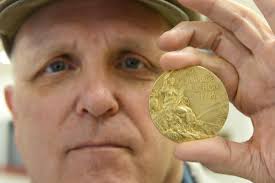
In 2017 you brought his gold medal to the PBS show “Antiques Roadshow” where it was appraised at $100,000-$150,000: where do you keep it, and how much money would someone have to offer you to sell it? Before I did that I kept it in a box under my bed…but now it is in a safe deposit box at a bank in Amarillo! It is not simply mine to sell because I have 2 sisters: we would need at least $500,000 to send everyone’s kids to college. It would take some life-changing money to make me sell it.

He passed away in 1993: when people look back on his career, how do you think that he should be remembered the most? As the dominant player of the 1930s and 1 of the true game-changers. He invented the dunk/goaltending but was humble about it: he ought to be in the Hall of Fame. I never got to see him play: his final game was in 1949 at a tourney in Amarillo. I did get to watch him shoot: I am sure that he missed but I never remember it. He could make hooks with either hand out to the FT line and set shots out to 20’. All of his shots went in with a lot of authority, almost like a dunk. He had an incredible shot and would shoot his FTs underhanded like Rick Barry.

For more info about the 1936 US Olympic team check out “Sporting Labor in the Hollywood Studio System: Basketball, Universal Pictures, and the 1936 Berlin Olympics” by Professor Alex Kupfer at: https://cinema.usc.edu/spectator/35.2/2_Kupfer.pdf and “Netting Out Basketball 1936” by Rich Hughes at: www.amazon.com/Netting-Out-Basketball-1936-Remarkable/dp/1770679707

Posted in Interviews | Tagged , , | Comments Off on The Olympians: HoopsHD interviews Oliver Fortenberry about 1936 Olympic gold medalist Joe Fortenberry

The Hoops HD Report: August Session

Chad is joined by a full Hoops HD panel.  They discuss the #WeAreUnited movement, the constantly shifting college landscape due to Covid-19 and it’s possible impact on the college basketball season, the desperate need for reform in college athletics, playing in bubbles, and much more!

For Rocco Miller’s proposal about possibly playing college hoops inside a bubble – CLICK HERE

And for all you radio lovers, below is an audio only version of the show…

Posted in Hoops HD Report, Podcasts, Videocasts | Comments Off on The Hoops HD Report: August Session

The Olympians: HoopsHD interviews Jack Herron about 1948 Olympic gold medalist Jesse Renick

The NBA Finals date back to 1947 (when they were known as the Basketball Association of America Finals) and the very 1st NCAA tourney was held in 1939. Olympic basketball competition is even older: it debuted as a demonstration event in 1904 and the men’s version became a medal sport in 1936, with the women finally getting their chance to go for the gold in 1976. The United States has dominated Olympic basketball competition from the start: the men have won 15 gold medals in the 18 tournaments they have participated in during the past 84 years, while the women have won 8 gold medals in the 10 tournaments in which they have competed during the past 44 years. Those of you who were looking forward to the 2020 Olympics opening ceremonies in Tokyo on July 24, 2020 will have to wait an extra 364 days, as the coronavirus caused a postponement until July 23, 2021. Due to the absence of college basketball since mid-March, HoopsHD’s Jon Teitel decided to fill the void by trying to interview as many prior Olympic players/coaches as possible so that you have something to read this summer while not watching the Summer Games. We continue our coverage by chatting with former Oklahoma State player Jack Herron about Jesse Renick winning a gold medal in 1948. Today marks the 72nd anniversary of Jesse scoring 2 PTS in a 65-21 win over France to clinch the gold medal.

(photo credit: hof.chickasaw.net)

(photo credit: teamusa.org)

Renick’s nickname was “Cab”: how did he get the nickname, and how did he like it? He got the nickname during high school and everyone on his college team called him “Cab”. His real name was Jesse Bernard Renick.

He was born/raised in rural Oklahoma and began his college career at Murray State where he scored almost 20 PPG: why did he decide to transfer to Oklahoma A&M, and how did he like playing for Hall of Fame/Olympic coach Henry Iba? He grew up near Murray State and did not have a gym nearby so he played outdoors on dirt courts. He was in his prime by the time he played for Iba and was very strong/tough. His scoring average dropped to around 6 PPG but it was common for most transfers to Stillwater to only score in single-digits. He was a very good defensive player both in college and AAU ball.

He was the 1st 2-time All-American in school history: what did it mean to him to receive such outstanding honors? I do not think that many of Iba’s players tried to be an All-American: it was just the result of being a great player on a great team. I worked hard to get him inducted into the Oklahoma Sports Hall of Fame.

The day after the invasion at Pearl Harbor in 1941 he enlisted in the Navy and served until WWII was over: what impact did his service have on him either on or off the court? He never mentioned the war to me when I used to visit him but he deserves a lot of credit for being a veteran. Fellow Cowboy Bob Kurland called all of the WWII veterans the real heroes.

He was a 2-time AAU All-American with the Phillips 66ers in 1947/1948: how did he like having Kurland as a teammate? I think that was a significant factor in his ability to make the 1948 Olympic team along with several of Adolph Rupp’s Kentucky players. They were good friends and proud to have made the Olympics.

He was captain for team USA at the 1948 Olympics: what did it mean to him to represent his country, and what did it mean to him to win a gold medal? He kept the medal in his pocket and showed it to anyone who wanted to take a look! The other players must have thought highly of him since they named him captain, and it was a big honor as well to represent his country since he was a veteran.

He is 1 of only 3 Native Americans (along with Billy Mills/Jim Thorpe) to win an Olympic gold medal: how proud was he of his heritage, and how proud were his people of him? The Chickasaw nation is very proud of that fact. Renick did not make a big deal out of it himself but all of the great athletes were like that. I am sure he was also friends with Allie Reynolds, who was nicknamed “Super Chief”.

After the Olympics he coached the 66ers to the 1950 AAU national title and later worked as a coach at the Albuquerque Indian School: what made him such a good coach? He lost in the 1949 AAU Finals after winning 6 national titles in a row so I am sure that rubbed him the wrong way but he bounced back in 1950. He had a good record with the 66ers as a coach.

In 1999 he was inducted into the Oklahoma State Hall of Fame: where did that rank among the highlights of his career? Now we are a sports-oriented nation so people look back on his career favorably and give him his due, which is a great recognition that he deserved.

He passed away later that year: when people look back at his career, how do you think that he should be remembered the most? Similar to Kurland: he was a man of integrity and a great athlete. He came from a small poverty-stricken town but was able to become successful and reach great athletic heights. I think that he would simply want to be known as a fine man, which he was. There are only a handful of consensus All-Americans in OSU history and he is 1 of them.

Posted in Interviews | Tagged , , | Comments Off on The Olympians: HoopsHD interviews Jack Herron about 1948 Olympic gold medalist Jesse Renick