The Olympians: HoopsHD interviews 1984 Olympic gold medalist Lea Henry

The NBA Finals date back to 1947 (when they were known as the Basketball Association of America Finals) and the very 1st NCAA tourney was held in 1939. Olympic basketball competition is even older: it debuted as a demonstration event in 1904, and the men’s version became a medal sport in 1936, with the women finally getting their chance to go for the gold in 1976. The United States has dominated Olympic basketball competition from the start: the men have now won 17 gold medals in the 20 tournaments they have participated in during the past 88 years, while the women have won 10 gold medals in the 12 tournaments in which they have competed during the past 48 years. While we must wait 3 years until the 2028 Olympics in Los Angeles, HoopsHD’s Jon Teitel will fill the void by interviewing as many prior Olympic players/coaches as possible. We continue our coverage by chatting with Lea Henry about her connection to Pat Summitt and winning a gold medal in 1984.

You were born/raised in Georgia: what made you choose Tennessee for college? My dad played college basketball, so I was basically born with a ball in my crib: he also coached me for a couple of years during high school. I grew up not far from Auburn and was a huge Tigers fan, but they did not have a strong program at the time. I saw that Tennessee coach Pat Summitt was recruiting players from Georgia so my dad called her to see if I could attend her basketball camp. She said there was a National Sports Festival taking place in Colorado Springs with a South regional in Memphis and that I should go there. I made the South team and later made the US junior national team. I was also considering Louisiana Tech/UCLA, but after my 1st visit to Tennessee I knew that I wanted to go there.

You played PG for Coach Summitt and then spent 2 years as her grad assistant: what made her such a great coach, and what was the most important thing that you ever learned from her? She just had a knack for getting the best out of her players via motivation. Most players were afraid of her but not me: we had a close relationship, so I wanted to please her (as if she was a parent). The players respected her…while also having a little fear. We were all good offensive players, but she focused a lot of our practice time on defense.

In the 1982 Elite 8 you played 43 minutes in a 1-PT OT win over USC: how on earth were you able to beat a team featuring future Hall of Famer Cynthia Cooper and the McGee twins? That was when their program was starting to become powerful, but we were already 1 of the most respected teams in the country and Pat always had a game plan. We were just a better team: they were younger but we were tougher.

In the 1983 Sweet 16 you played 45 minutes in a 7-PT 3-OT win over Mississippi: what is the key to winning games in OT in March? The key is your mindset: we were in great shape and we expected to win. Pat was the 1st women’s college coach to use male practice players, which made us tougher. We spent a lot of time in the weight room and Pat expected us to win and pushed us to win. If we lost a game then it was horrible, but I was the same way when I coached.

You were All-SEC as a senior and a 2-time Academic All-American: how did you balance your work on the court with your work in the classroom? I was well prepared and found that high school was harder than college. Whatever I am doing, I want to do the best I can. Studying and going to class was just part of my day. Pat provided us with academic tutoring so if I was struggling with a class then I would get some help. I did not have a big social life and was very committed to my academics/athletics.

You played for Team USA at the 1984 Olympics: what did it mean to you to represent your country, and what did it mean to you to win a gold medal while playing for your college coach? It was by far the highlight of my career as a player: it is an understatement to say that it was a dream come true. I told my father when I was a kid that I wanted to play in the Olympics, and he told me to work hard and make good decisions along the way. Having Pat as our Olympic coach made it off-the-charts special. We had a great bond since I was her PG, but she created a grad assistant position that allowed me to lead the guys’ practice squad against her team. I also did some color commentary, which gave me a different perspective. I asked Coach Billie Moore what I had to work on to improve my chances of making the Olympic team, and she gave me a handwritten list of workouts I could do to improve my quickness. Pat told me to start playing racquetball, and eventually I was able to finish sprints not that far behind Teresa Edwards. Once you win a gold medal it is how you get introduced the rest of your life: people really admire it, and I could have never done it without Pat. She knew that she could count on me because I would run through a brick wall for her. I was in the starting lineup, which was important to me. It meant so much to my entire family: when we were standing on the podium with the flag being raised, my grandfather said he stood up at attention in his living room while watching us on TV!

In the 2002 NCAA tourney as head coach at Georgia State you had a 30-PT loss to the Lady Vols: what was it like to face your former coach in Knoxville? I knew they were going to do that because we did not have the talent they had, but it was still special. I had Pat come speak to my team because I had talked about her so much and they loved her: you would have thought that the president had walked into the room! She was so humble that it was like we were talking to a regular person off the street. We had a small guard who could take you off the dribble: Kara Lawson was a great player but could not stop her. We were only down by single-digits midway through the 2nd half and Pat was so proud of me.

In January of 2009 you had a 13-PT win over Old Dominion: how big a deal was it to defeat Coach Wendy Larry and her 17-time defending conference champs? I knew Wendy very well, but her team had a lot of injuries that year. It was a big win for us, but there were other circumstances involved. Wendy came outside after the game, saw me, and screamed, “Get it while you can!” I recall playing at ODU during my very 1st game as coach at Mercer: I had a 6’3” player named Andrea Congreaves who was 1 of the best players in the country. We won the game, which was 1 of the highlights of my career: it was a “guarantee game” where they paid us $5000, which was a lot back then.

You were inducted into the Tennessee Lady Volunteer Hall of Fame in 2005, the Georgia Sports Hall of Fame in 2006, and the Georgia State Hall of Fame in 2019: where do these rank among the highlights of your career? They are all very special and important, but they do not define you. I have served on some Hall of Fame committees, but have not yet made the Women’s Hall of Fame…even though every other PG who played on an Olympic team has made it. I played with several other Hall of Famers at Tennessee, but went my own way and moved on with my career after graduating. I still treasure those memories, but my family is the most important thing to me. I might have been successful at other programs but wanted to be around my family, which I will never regret. I made those 1st 2 as a player but Georgia State was my 1st Hall of Fame as a coach.

You have spent the past several decades running the L&G Camp of Champs: what makes your basketball camp different from other ones? When I was a little girl, I loved going to basketball camps. I would beg my dad to let me go for 2 weeks and he said I would have to figure out how to pay for the 2nd week. I made a commitment to myself that after retiring as a player I would give back my providing opportunities to children. We hold a camp for 2 weeks at my dad’s former school with 160-170 kids each week, which is a win. Now we have some kids whose parents attended in the past, so it is like a family. I am married to Greg Manning, who was a great player at Maryland for Coach Lefty Driesell before being drafted by the Nuggets. We decided to start a business and host a camp. We incorporate basketball to teach kids some character education. We started with 11 programs but eventually were doing 65 per summer. It is geared toward underprivileged kids and we send staff to several sites to follow our curriculum.

Posted in News and Notes | Tagged , | Comments Off on The Olympians: HoopsHD interviews 1984 Olympic gold medalist Lea Henry

Season preview: HoopsHD interviews new High Point head coach Flynn Clayman

CLICK HERE For All of our Preseason Coverage, Including Interviews, Podcasts, and Conference Previews

We are still a couple of months away from the tip-off of a new college basketball season, which means that we have plenty of time to start preparing for the action ahead. We will do so via a series of season previews featuring the best players/coaches in the country. HoopsHD’s Jon Teitel continues our coverage with new High Point head coach Flynn Clayman, who talked about starting his new job last spring and his expectations for this season.

You played D-1 basketball at Colorado State/Troy, then played 1 year at the University of the Cumberlands, where you led the nation with 48.1 3P%: what is the secret to making shots from behind the arc? A lot of hard work/early mornings/late nights! I had a soft touch, but to reach that percentage it takes years of consistent work (day in and day out).

You spent 4 years playing pro basketball overseas: what was the biggest difference between basketball in the US and basketball in other countries? The IQ aspect of players over there, who learn how to play team basketball from a younger age then kids in the US. They might not be as physically talented, but they had an advantage over athleticism because they knew how to compete.

How did you 1st get into coaching? I had a ton of injuries during college, and when I was playing in Israel my hip started to go out on me again. I loved the game and wanted to get into coaching, so I got to coach in Australia and work with some really good players. That is also where I met Coach Alan Huss, and it worked out.

You spent the past 2 seasons as associate head coach to Huss at High Point, where you directed the top-2 offenses in Big South history: what made your offense so effective? The biggest parts are shot selection/skill development. It sounds so simple…but you need to teach guys how to get shots at the basket, get to the FT line, and get open threes. That is what they will need to do if they want to play at the pro level.

You have won 3 postseason games during each of the past 2 years: what is the key to winning games in March? It starts with having great players! Last year we got over the hump and won our conference tourney, which was due to our depth. At Southern Utah we were a unanimous preseason favorite 1 year…but our best player broke his wrist toward the end of the regular season, and we were done.

Last April you were hired to replace Coach Huss: why did you take the job, and how is it going so far? This is a dream place to work, and the university has been growing for the past 20 years. I was very fortunate to be selected: there were sitting D-1 head coaches who wanted to come work here.

You have a very experienced backcourt including Chase Johnston/Vincent Brady II/Rob Martin/Scotty Washington: how crucial will your guards be to your success this year? I love our guard play. We also have PG Conrad Martinez who transferred from Arizona. We have 2 true PGs in Rob/Conrad, while Vincent/Scotty are long athletic wings who can drive/shoot. Chase is a remarkable shooter who might end up top-20 on the D-1 career 3PM list (while passing Steph Curry!).

Your wife Katie is an assistant coach for the women’s team at High Point: does having another coach in the family make life easier or harder? It is different than your average family since we are often on the road for games/recruiting…but she makes it all work. She does 2 jobs while I only do 1: we both handle pick-and-rolls, but she handles everything else. She is a truly special woman.

You have a birthday coming up this month: any plans for the big day? Not yet, but my wife might be planning a little something. I am not a big celebration guy, but I am sure we will do something nice.

What are your goals for the upcoming season, and what are your expectations for the upcoming season? The expectations are very clear: we expect to be a conference champ, which is different from when I got here 2 years ago. Goals can be limiting so we just want to be the best we can possibly be every single day and let the results fall where they may.

Posted in News and Notes | Tagged , | Comments Off on Season preview: HoopsHD interviews new High Point head coach Flynn Clayman

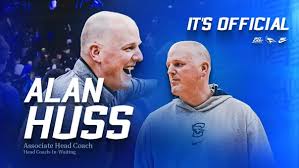
Season preview: HoopsHD interviews new Creighton associate head coach Alan Huss

CLICK HERE For All of our Preseason Coverage, Including Interviews, Podcasts, and Conference Previews

We are still a couple of months away from the tip-off of a new college basketball season, which means that we have plenty of time to start preparing for the action ahead. We will do so via a series of season previews featuring the best players/coaches in the country. HoopsHD’s Jon Teitel continues our coverage with Creighton associate head coach Alan Huss, who talked about returning to his alma mater last spring and his expectations for this season.

You made 3 NCAA tourneys as a player for Dana Altman at Creighton: what makes Dana such a great coach, and what was the most important thing that you ever learned from him? His organization/process. Even more than most coaches, he does not deviate from what has worked for him over the years. Even if things start to go awry, he will stay with it. He holds you to the standard becuase he has found consistent success with it.

From 2010-2014 as head coach of 1 of the top high school programs in the nation at La Lumiere School you went 62-0 at home: did it reach a point where you just expected to win every time that you stepped onto your home court? Whenever you coach at a place like that you usually have the most talent in the game, so we were often the heavy favorite no matter where we played. High school basketball is different than college: there were only about 7-8 games/year where our opponent was evenly matched with us.

As head coach at High Point, you were named conference COY during each of the past 2 years: what did it mean to you to receive such outstanding honors? It means that we had good players and a great staff! Head coaches often get too much credit and too much blame. The staff did a great job of helping the guys with their strengths/weaknesses and got them to buy into something bigger than themselves.

You also won 3 postseason games during each of those 2 years: what is the key to winning games in March? You must start with good fortune: so much of it is about matchups, being healthy, having the right mojo, ensuring that your leadership has some urgency regarding the name on the front of their jersey, etc. We had all that in abundance: it is certainly more about the players than the coach at that point in the season.

Last April you returned to your alma mater as “head coach in waiting” under Greg McDermott (for whom you spent 6 years as an assistant from 2017-2023): why is it your “dream job”, and any idea what year you will get to stop waiting? When you are as successful as Coach McDermott and are a transformational presence like he is, you get to decide your own timeline. I am ready to take the 2nd seat and watch him work wonders. I wanted to return here because Creighton has been such a big part of my life. They deserve a lot of credit for helping humble me. The best thing that Coach Mac did was to teach me that I did not have a future as a pro basketball player, so I hope that I can give back and help others experience the same great things that I did during their time here.

You are part of a sensational staff that includes a pair of guys with multiple NCAA tourney appearances as head coaches (Derek Kellogg/Steve Merfeld) and a guy who played pro basketball in 9 different countries (Trey Zeigler): what is it like to have all that experience together on 1 sideline? That is the beautiful thing about high-major college basketball. When you get to a place like this you get a great diversity in thought. Guys who have navigated the world of pro basketball have a slightly different perspective than people like me who have only worked in amateur basketball. We are fortunate to have a bunch of guys who bring a lot of different things to the table, and I am excited to learn from each of them.

Last year the team had its highest GPA ever: how do you ensure that your players can balance their work on the court with their work in the classroom? That starts with recruiting: you need to get the right people into your program. 1 of Greg’s non-negotiables when it comes to expectations is that he demands unselfishness, whether it is in the classroom or on the court. Unselfish people naturally do well in those situations, and Greg is hyper-focused on that quality, which sets us up to do exceptionally well.

1 of your new additions this year is transfer PG Blake Harper, who was 2025 conference POY/ROY at Howard: how is he looking so far? He has been tremendous. He had a unique journey because he was not highly recruited out of high school, but really changed his body before entering college. He can make plays for others, make his own plays in the post, and is an elite facilitator who makes everyone better.

In November Creighton will be 1 of 18 teams participating in the Players Era Festival in Las Vegas, with back-to-back games against a pair of 2025 NCAA tourney teams in Baylor/Iowa State: what do you think is the best part (the NIL money/stiff competition/other)? I would go with D: all of the above! When you pair the high-level competition with our guys getting compensated and the chance to be in Vegas, it makes the decision a no-brainer for us.

What are your goals for the upcoming season, and what are your expectations for the upcoming season? Our deal is simple: we have so many new pieces that we are trying to remake our program on both offense/defense. Now that the 4-time conference DPOY (Ryan Kalkbrenner) is gone, we need to find ourselves and figure out what fits this group on defense and what our ceiling is. We are excited about our offensive possibilities, but we need to be a bit more creative. We need to win a few battles internally and see how our group comes together.

Posted in News and Notes | Tagged , | Comments Off on Season preview: HoopsHD interviews new Creighton associate head coach Alan Huss

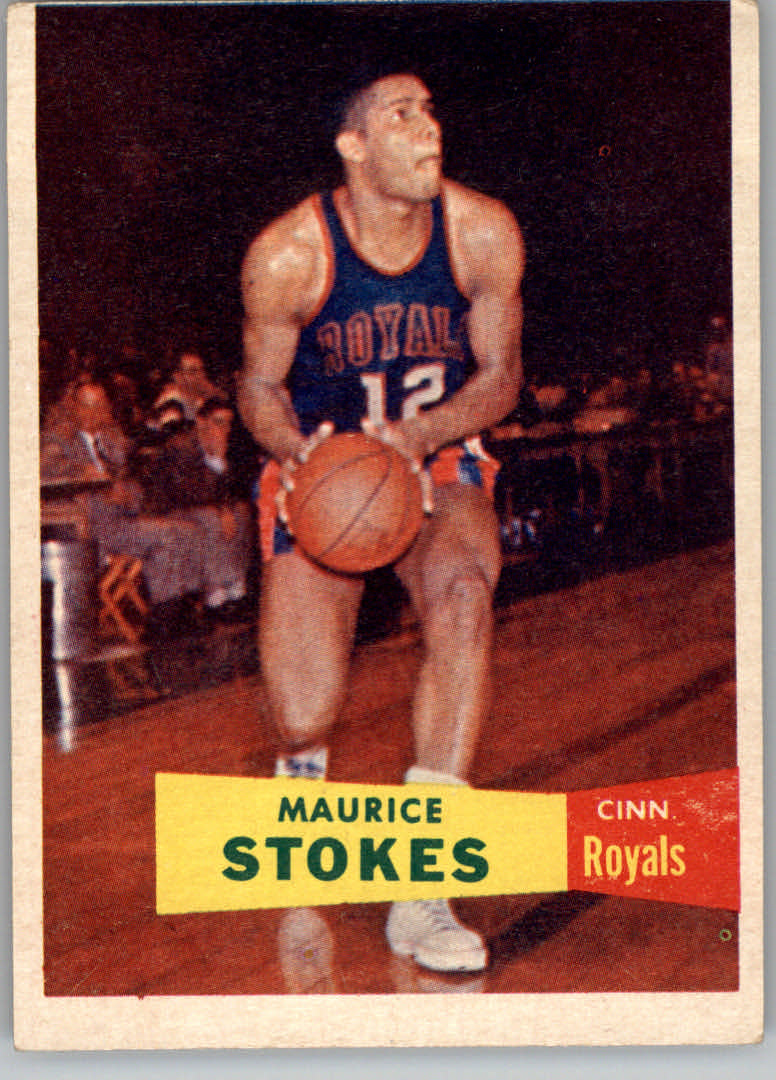
Only the Good Die Young: HoopsHD interviews Pat Farabaugh about Maurice Stokes

For a guy whose playing career ended at age 24, Maurice Stokes was still able to put together quite an impressive resume. He was named NIT MVP in 1955, NBA ROY in 1956, broke the NBA record for REB in 1 season in 1957, and made his 3rd straight All-Star Game in 1958. Even after his career-ending injury in 1958 he still lived for more than a decade and inspired everyone around him before passing away in 1970. HoopsHD’s Jon Teitel got to chat with Pat Farabaugh (St. Francis University professor of communications and author of “An Unbreakable Bond: The Brotherhood of Maurice Stokes and Jack Twyman”) about Maurice’s fantastic feats and lasting legacy.

Stokes grew up in Pittsburgh and led Westinghouse High School to back-to-back city championships in 1950/1951: what made him choose St. Francis for college? St. Francis coach Skip Hughes had Maurice on his radar and built a relationship with him. He had a few other offers, but his choice was primarily made due to Skip. Maurice’s teammate/friend Eugene Phelps was also invited onto the team that winter, which certainly helped them get Maurice in September of 1951.

He averaged 26.5 RPG as a junior, 26.2 RPG as a senior, and his 39 REB in a game vs. John Carroll in January of 1955 remains tied for the 6th-most in NCAA history: how was he able to be so dominant on the glass while standing just 6’7”? He was a very cerebral player who had very good instincts. He also had quick hands/feet and was very strong.

In the 1955 NIT the Red Flash finished 4th: how on earth was he named MVP?! Just look at his stats: 29 PTS/20 REB vs. Seton Hall, 21 PTS/22 REB against Holy Cross, 43 PTS/21 REB against Dayton, and 31 PTS/24 REB/10 AST in an OT loss to Cincy. The New York media was a little critical because he was so unselfish. It was an incredible individual performance.

He was also named an All-American that year: what did it mean to him to receive such an outstanding honor? It meant a lot to Maurice but it meant everything to the school: I would argue he remains our most famous alumnus. I was born the year that he died so I never got to meet him, but he put the institution on the map and set us up for all the players who followed.

He was selected 2nd overall by Rochester in the 1955 NBA Draft: did he see that as a validation of his college career, or the realization of a lifelong dream of reaching the NBA, or other? Abe Saperstein of the Harlem Globetrotters was trying to get him. Maurice wanted to compete against the best, and even though the NBA was still in its infancy; that was where the best players were. He was a perfectionist, so he wanted to see how his ability stacked up against others in the NBA.

He averaged 16.8 PPG/16.3 RPG as a rookie and was named ROY: how was he able to make such a smooth transition from college to the pros? I would not describe it as “smooth”: new players got beat up pretty good as a hazing ritual, and he was 1 of just a few African-American players in the NBA at the time. It was a trying year for Stokes: there was racism, especially when he played in St. Louis, and the other big men in the league tested him. His 1st year at St. Francis was also rough: he moved to a rural campus with just a handful of African-American students, and after his freshman year his brother died in a car accident.

During his 3 years in the NBA from 1955–1958 he had 3,492 REB (more than any other player) and 1,062 AST (#2 to Celtics’ PG Bob Cousy), and he is one of a handful of NBA players who recorded 4 consecutive triple-doubles: how was he able to balance all the different aspects of his game? He could do it all, so Royals coach Bobby Wanzer let him bring the ball up in transition. He was a student of the game and understood it well. He had a knack for rebounding but also piled up the assist numbers. In addition to Wanzer, the Royals’ owners gave him the green light to showcase his talents. I give their leadership a lot of credit for letting him play his game so that his talent could shine through.

During the final game of the regular season in 1958, he was knocked unconscious after driving to the basket and hitting his head on the court. A few days later after the only playoff game of his career, he became ill on the team’s flight back to Cincinnati, and later suffered a seizure and was left permanently paralyzed due to post-traumatic encephalopathy: what was the reaction like when people learned the tragic news? He was initially misdiagnosed as having something viral. People followed the NBA back in the 1950s…but the league had nowhere near the popularity it enjoys today. His accident was covered in newspapers, but it did not have staying power.

His friend/NBA teammate Jack Twyman became his legal guardian, which is depicted in the 1973 film “Maurie”: how unbreakable was their bond? They were both from Pittsburgh and played against each other in a city park and then again in the NIT. Jack was a shooter who never saw a shot he did not like, which sometimes frustrated Maurice, and they were not particularly close while they were teammates. After his injury, Jack would visit him in the hospital and they built a close friendship. Jack took on a lot of the burden to help Maurice pay his medical bills, became his legal guardian to take care of his finances, etc.

He died at age 36 from a heart attack in 1970, and per his final wish he was buried in the Franciscan Community Cemetery on the campus of St. Francis: when people look back on his career, how do you think that he should be remembered? He was a great player who was on a trajectory to be mentioned with guys like Bill Russell/Wilt Chamberlain, but I hope they primarily remember what happened after his injury. His perseverance was incredible: his daily therapy sessions often lasted more than four hours; he never missed a vote in an election after his accident; he regularly made gifts for his nurses, doctors, therapists and friends. He had limited mobility, but made the most of his life by building relationships. He would often help someone who was in a real funk get into physical therapy and see the positives: he was a glass-half-full guy. Twyman is also a big part of the story: in his 20s he made his entire home wheelchair-accessible on the chance that Maurice might move in with him some day. Jack’s kindness and selflessness are inspiring.

*TO SEE A VIDEO THAT SAINT FRANCIS PRODUCED ABOUT STOKES & TWYMAN, GO TO: www.youtube.com/watch?v=CiuEmqlmp18

Posted in News and Notes | Tagged , , | Comments Off on Only the Good Die Young: HoopsHD interviews Pat Farabaugh about Maurice Stokes

The Olympians: HoopsHD interviews 2020 Olympic gold medalist Dan Hughes

The NBA Finals date back to 1947 (when they were known as the Basketball Association of America Finals) and the very 1st NCAA tourney was held in 1939. Olympic basketball competition is even older: it debuted as a demonstration event in 1904, and the men’s version became a medal sport in 1936, with the women finally getting their chance to go for the gold in 1976. The United States has dominated Olympic basketball competition from the start: the men have now won 17 gold medals in the 20 tournaments they have participated in during the past 88 years, while the women have won 10 gold medals in the 12 tournaments in which they have competed during the past 48 years. While we must wait 3 years until the 2028 Olympics in Los Angeles, HoopsHD’s Jon Teitel will fill the void by interviewing as many prior Olympic players/coaches as possible. We continue our coverage by chatting with Dan Hughes about his incredible coaching tree and winning a gold medal in 2020.

You played baseball/basketball at Muskingum University: how good of an athlete were you back in the day, and how did you 1st get into coaching? I was an average college basketball player who did not get onto the court a lot: I was a better baseball player. At age 7 my parents took me to watch the local high school basketball team and all I did was focus on the coach: from that day on it was all that I wanted to do.

After 6 years as an assistant coach for the Toledo men’s basketball team you became an assistant for the women’s team in 1996: what is the biggest difference (if any) in coaching men vs. coaching women? It is the most-asked question of my career. I do not find a lot of differences so I did not do anything differently. I think my style of coaching fit the women well: I tried to approach it by figuring out how the players learn the game.

You were a 2-time WNBA COY in 2001/2007: what did it mean to you to receive such outstanding honors? It was nice. Seeing the players celebrate and attend the press conference showed that we were all in it together. I felt there were some other years I might have deserved that award more, but you move on quickly after it is handed out.

You are the only coach in WNBA history to win a playoff series with 4 different franchises (Charlotte/Cleveland/San Antonio/Seattle): how were you able to have so much success while coaching in so many different cities? 1 of the better things I did as a coach was play to the strengths of my teams. If you are looking for the “Dan Hughes system” I would defy it because all those teams came at it differently. I maximized what we did well, which in turn gave confidence to the players.

In 2018 you won a title in your 1st year as coach of Seattle (and the team won another 1 in 2020 in the “Wubble” while you were away due to a high risk of COVID infection): did your role/style/philosophy change due to having such a ridiculously talented roster (Sue Bird/Jewell Loyd/Breanna Stewart/etc.)? Yes: I did not coach my Cleveland teams the same way that I coached my Seattle teams. Even though I was not right there with them in 2020, I was able to delegate/empower my staff every day via phone/text. I was very open to change and there were 2 influences who helped the most with that. 1 was Pat Summitt: I was constantly amazed at how she changed even though she was so successful. The other influence was the San Antonio Spurs organization, who also tried to find a better way even while winning titles.

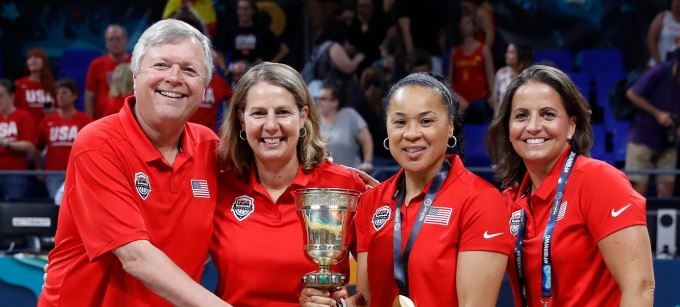
You were an assistant coach for Team USA at the 2020 Olympics: what did it mean to you to represent your country, and what did it mean to you to win a gold medal? Nothing means more in my coaching career than that. I spent 8 years working on the Olympic player selection committee, which was also special, but it was great to be coaching with a staff that included Dawn Staley (my 1st PG in Charlotte), Cheryl Reeve (my assistant in Cleveland), and Jen Rizzotti (who played for me in Cleveland). To go through that during the COVID era and finally win a gold medal meant a lot: it was the last time that I ever coached in a meaningful game.

In addition to Cheryl/Jen/Dawn your incredible coaching tree includes Becky Hammon/Suzie McConnell-Serio/many others: what is the secret to being a great mentor? There is a certain amount of fortune in that: I did not screw them up! I follow all my former players/assistants closely and get a lot of enjoyment out of that. For example, Becky will face Cheryl in the WNBA tonight when Minnesota travels to Las Vegas. Becky will try to break the franchise record of 12 wins in a row…which I set when I coached San Antonio in 2012! Empowering leaders was 2nd nature to me, although it is harder than it sounds. When you do that (especially with PGs), you must also intertwine your role as head coach to put the team in proper perspective. I feel very fortunate: I probably had the greatest arsenal of PGs that any coach has ever had, which made our teams look organized. That was a bit of my secret sauce: I gave them confidence, and we worked together so that the team would be talented going forward, which I am very proud of because they have all gone on to do some amazing things.

After retiring from coaching, you spent more than 2 decades as a TV analyst: how did career #2 compare to career #1? I never had a lot of hobbies besides listening to music, so broadcasting was my goal rather than getting out on the links. I loved it because it was the closest that anything ever came to coaching. Back in the day before a lot of money came into the WNBA, we were double-dipping in a lot of ways, which kept me sane. During the offseason I knew that I could do 15-20 games, which allowed me to pick up things just from being at shootaround and watching games. I met a lot of incredible people (such as Rick Barnes) and I got to work for ESPN at the NCAA women’s tournament for many years.

You have spent the past couple of years as Chief Basketball Advisor at VReps: what does that involve, and any predictions for how AI will impact coaching in the near or far future? It is an interesting story. I met Shawn Cooper (who developed VReps) a while ago and was very impressed by what he wanted to do. Shawn would often come to our practices when I went to Seattle, and then he reached out to me after I got out of coaching. He takes basketball apps and does some amazing things from a teaching standpoint. He came here to Ohio and when I put on the virtual reality gear it blew me away. The NBA is at the cutting edge of so many things including “Launchpad”, where they join forces with a young company that is trying to move basketball technology forward. We became a participant earlier this year and had a project in Dubai that went well. I think the NBA will roll out some things soon with VReps to teach the game across the world. I supply teaching/learning skills from basketball and it has given me great joy to move the game along.

When people look back on your career, how do you want to be remembered the most? At the core of everything, I want it to be about relationships. I hope they say that the people I coached/coached with went on to do great things. When people talk about what your former players/assistants have done: THAT is the legacy. I have won championships/gold medals…but it is another thing to see everyone else have success at multiple levels. Here is a stat for you: 14 of the last 16 WNBA champs were coached by either me, 1 of my former players, or 1 of my former assistants! I do not know if anyone else will have those kinds of numbers.

Posted in News and Notes | Tagged | Comments Off on The Olympians: HoopsHD interviews 2020 Olympic gold medalist Dan Hughes

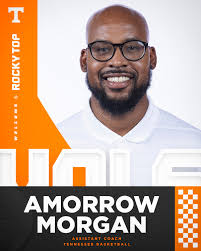
Season preview: HoopsHD interviews new Tennessee assistant coach Amorrow Morgan

CLICK HERE For All of our Preseason Coverage, Including Interviews, Podcasts, and Conference Previews

We are still a couple of months away from the tip-off of a new college basketball season, which means that we have plenty of time to start preparing for the action ahead. We will do so via a series of season previews featuring the best players/coaches in the country. HoopsHD’s Jon Teitel continues our coverage with Tennessee assistant coach Amorrow Morgan, who talked about joining the Vols last spring and his expectations for this season.

You were born/raised in Memphis: what made you choose Idaho State for college? I was just looking for an opportunity. 1 of their assistant coaches had recruited me hard when he was at FIU, so once he moved to Idaho State I went to play for him.

In January of 2010 you scored 30 PTS in a career-high 54 minutes in a 2-PT 3-OT loss at Weber State: could you tell at the time that Damian Lillard (28 PTS in 50 minutes) was going to become a superstar? Yes. I remember vividly a play in the 1st OT. I had been guarding someone else and during a timeout I said that we needed to switch up the matchup on Lillard because he had scored 8 PTS in a row. He ended up making the game-winning layup with his left hand in the final second: it was Dame Time before it became DAME TIME! Even in warmups he was doing things that made me realize he should not be in our conference.

Your FG%/3P% increased during each year you were in college: how were you able to keep improving every single year? I am a firm believer that retention anywhere enhances your chance for success. Our staff did a very good job with development, which stuck with me during my entire coaching career. Assistants put in unseen hours to help their players get 1-2% better each day, and it can do so much for someone’s confidence.

You were named all-conference as both a junior/senior: what did it mean to you to receive such outstanding honors? It was great! I was honorable mention as a sophomore but was 1st-team as a junior. I put in a lot of hours in the gym so to get that notoriety/respect is something I keep with me to this day. I do not know if I would have stayed 4 years had I played in this climate due to the transfer portal: the landscape has completely changed.

You were a 3-time captain: what is the secret to being a good leader? Caring about others, which is still a strength of mine today. I enjoy mentoring people and learning from others, which allows me to give whatever I got every single day to help the team win. I have been in the game for more than a decade. I built great relationship with my teammates and learned how they tick, so I was able to bring the most out of them and motivate them.

You were reportedly headed to Florida State last spring: what made you choose Tennessee instead? I landed at Florida State and was there for about 6 weeks: we went from just 2 players when I arrived to putting together an entire roster. I would never want to jump ship after getting an opportunity…but I have always looked at Tennessee as the cream of the crop. It was a no-brainer for me and I could not turn it down so it made complete sense for me and my family, as my beautiful wife can finally see her family in Arkansas without having to fly back in the middle of the night. It is perfect for me because it is not about me. I get to help the program sustain its success, which has always been my mindset.

You work for Coach Rick Barnes: what makes him such a great coach, and what is the most important thing that you have learned from him so far? I am super-excited to learn from him and be part of his very experienced staff. He loves the game and studies it to keep learning/growing. He is dialed in on the NBA and practice film and individual workouts. His tunnel vision to bring the university a championship has not changed: he might even be hungrier now after back-to-back Elite 8s. He is secure in himself and how he wants to do things: he believes in his own formula because he has seen it work time and time again, but sprinkles in a few new things each year to keep up with the times. He is also a great person: he spent time with me to make sure I was comfortable with the move. He is the entire package and has no holes in his coaching game.

Last year as an assistant at Cal you helped Jeremiah Wilkinson become ACC 6th Man of the Year: what will be it like to face him this year in conference play since he is at Georgia? It is crazy: we will also play another guy I recruited in Andrej Stojakovic, who transferred to Illinois. I have a great relationship with Jeremiah’s family so he is my guy: he had an incredible freshman year and now he is closer to home. I know some of his strengths and some of his weaknesses so we will try to make it a nightmare for him!

1 of your incoming freshmen this year is McDonald’s All-American Nate Ament, who is also a projected lottery pick next summer: how is he looking so far? He is special and keeps improving/learning. Coach is pushing him hard every day to make sure he is prepared to play in the best conference in the sport. He is a coach’s dream: there is no entitlement there and he is not making it about him. He is trying to become the best version of himself and will have a great year for us.

What are your goals for the upcoming season, and what are your expectations for the upcoming season? We want to win a national title and get over the hump to make the Final 4 and play in Indianapolis this season. We have great kids who are working hard every single day to reach the standard that has been set before them by the guys who laid the foundation. We will try to make Coach Barnes proud.

Posted in News and Notes | Tagged , | Comments Off on Season preview: HoopsHD interviews new Tennessee assistant coach Amorrow Morgan